Nearly 30 years separate the composers Ondřej Kukal (b. 1964) and Jiří Teml (born in 1935), and a similar amount of time separates their two works: Symphony No. 1 (1999) and The Labyrinth of Memory (2025), but in these two works, we have an interesting overview of modern Czech symphony writing.
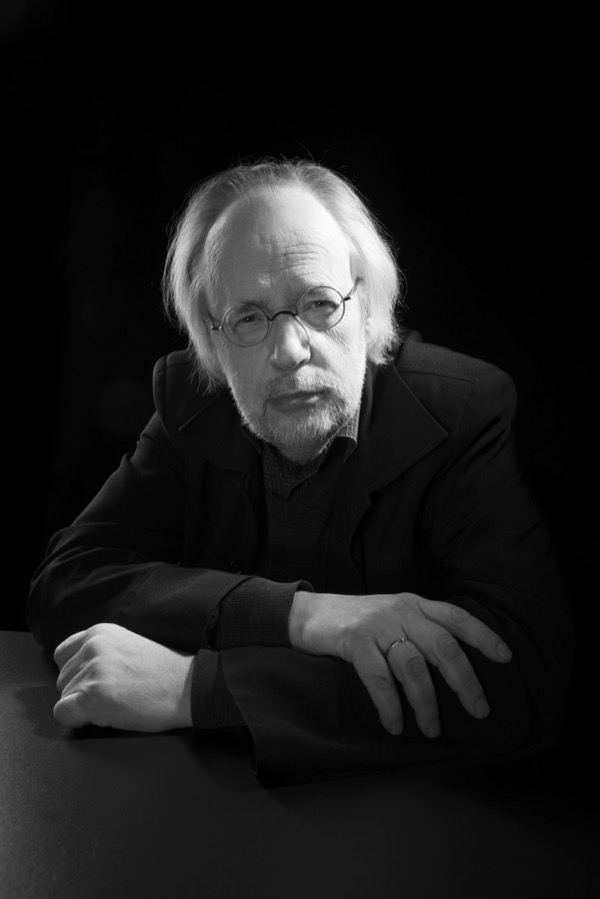
Ondřej Kukal, 2026 (photo by Václav Jirásek)

Jiří Teml, 2026 (photo by Václav Jirásek)
Violinist, conductor, and composer Ondřej Kukal began writing his Symphony No. 1 while with the South Bohemian Chamber Philharmonic in České Budějovice, completing the work in 1999 in Bamberg on a scholarship from the Bavarian government. Its premiere with the South Bohemian Chamber Philharmonic on 20 April 2000 was conducted by the composer and in 2005, it was awarded the annual prize of the Czech copyright collecting society (OSA).
In 2003, when he was scheduled to conduct the opening concert of the Prague Spring festival, Kukal was struck down with an inflammation of the brain (viral meningoencephalitis) that caused amnesia. It removed him from the musical world for a couple of years, and since then, he has divided his musical life into 2 parts: ‘before’ and ‘after’ his illness. He didn’t lose his musical memory and could continue his life as a composer. Kukal resumed composition in 2004 but has reduced his conducting and violin-playing obligations.
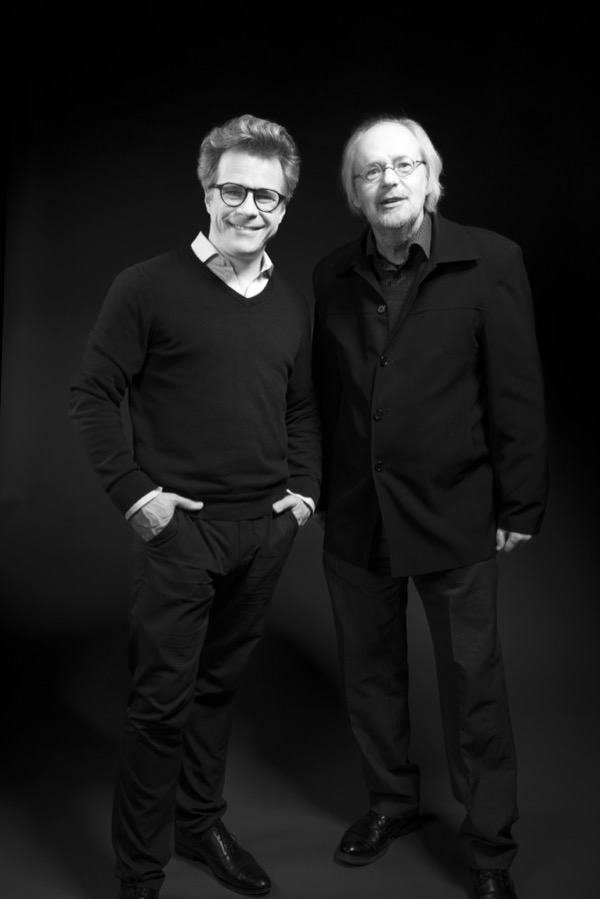
Jakub Hrůša and Ondřej Kukal (photo by Václav Jirásek)
The height of his ‘before’ works is the Symphony No. 1, and the composer says that in many ways, it foreshadows his ‘after’ works. It’s a powerful, sombre work, with important elements occurring in the timpani (especially the opening). A particularly important role is played by concise passages of ascending and descending groups of chromatic tones that recur in different instrumental parts and octaves. Other sections of the work are marked by sharp rhythms, almost Stravinsky-esque. Complex rhythms and expressive melodic modes, brightened by the use of the glockenspiel, drive the work.
The third movement is full of motion, always moving forward, as the climax of the work.
Ondřej Kukal: Symphony No. 1, Op. 15, “With Glockenspiel” – III. Allegro energico
Two long movements (I and III) are bracketed by short dividing movements (II and IV). The final short movement, Epilog, brings the work to a satisfying ending, closing with one last chime on the glockenspiel.
Jiří Teml’s Labyrint paměti (The Labyrinth of Memory) was written on commission for the Czech Philharmonic, and its premiere was scheduled for 2020. Delayed by the COVID lockdown, it was finally performed on 5 February 2025 as part of the composer’s 90th birthday celebrations.
Teml says the work is very autobiographical and is ‘a kind of reminiscence’ of his life. There are toys from his childhood and times of illness, matching happiness and times of difficulty. At the same time, the composer says that creating these parallels does not make it ‘simple or schematic, for even contrast involves connecting elements. ‘I can’t write a theme and then come up with a completely different one, just to create an opposition. The latter theme must be based on the former one’.
The early death of his parents placed Teml in the Redemptorist monastery in Libějovice u Vodňan where he discovered music, particularly organ music. His early attempts at composition were driven by his own autodidactism, but when he started playing jazz and dance music, his musical horizons expanded. He started working in radio as a music programmer at the regional radio station in Pilsen and later moved to the Prague studios, where he remained for twenty years. He’s worked with a large range of music ensembles, from children’s choirs, folk music ensembles, to classical music, writing concertos for violin, French horns, oboe, and keyboard instruments, writing chamber music, cantatas, and children’s operas.
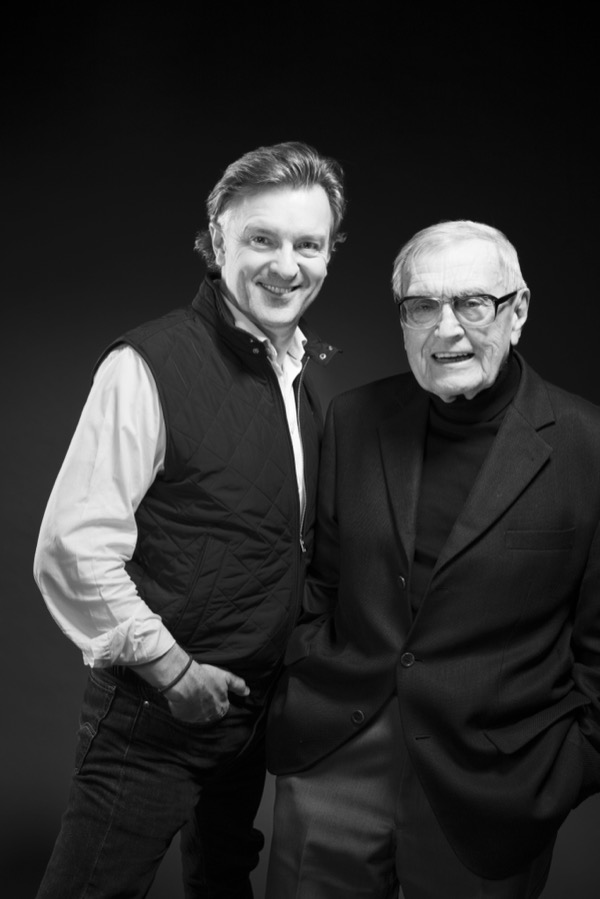
Tomáš Netopil and Jiří Teml (photo by Václav Jirásek)
Labyrint paměti (The Labyrinth of Memory) does not have a specific program, but the work’s subtitle, Symphonic Image, prompts the listener to imagine what might be there. At the end of the work, the musical dynamics fall while the melody ascends in an ascending string of tones that gradually fade away, just like memories.
In a sense, the two works couldn’t be more different, one coming from the early part of a composer’s career and the other from the pen of a 90-year-old composer, but they both have a depth and urgency of structure that tells the listener much about both the composers and the complexities of Czech music. It’s a highly satisfying recording that leaves the listener much to ponder.
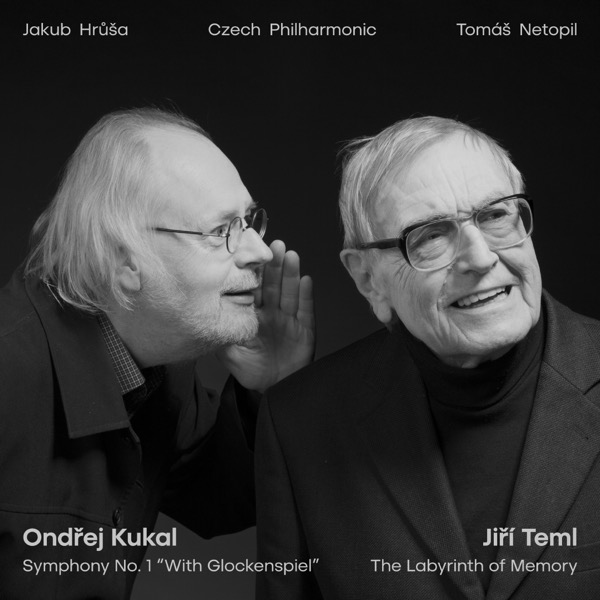
Ondřej Kukal: Symphony No. 1 (With Glockenspiel) & Jiří Teml: The Labyrinth of Memory
Czech Philharmonic, Jakub Hrůša (Kukal); Czech Philharmonic, Tomáš Netopil (Teml)
Animal Music ANI 150
Release date: 26 June 2026 (digital); 10 July 2026 (physical)
For more of the best in classical music, sign up for our E-Newsletter