The prolific Russian-Soviet composer Nikolai Myaskovsky (1881-1950) is sometimes referred to as the “Father of the Soviet Symphony.” Throughout his career, ranging from pre-Revolutionary Russia to the late Stalin era, he composed a total of 27 symphonies.
In terms of style, his symphonic output bridges the late-Romantic traditions of Glazunov, Tchaikovsky, and Rachmaninoff, as well as the influences of Scriabin, with Soviet-era demands for accessibility and optimism.
In his symphonies, Myaskovsky wrote tonal music featuring rich melodies and colourful orchestration with a sometimes melancholic or brooding character. He was the Soviet Union’s most honoured symphonist, and to commemorate his death on 8 August 1950, let’s put together a beginner’s listening guide.
Nikolai Myaskovsky: Symphony No. 5 in D Major, Op. 18 (BBC Philharmonic Orchestra; Edward Downes, cond.)
Entry Points
It’s always difficult to know where to start, but for getting to know Myaskovsky’s symphonic oeuvre, why don’t we start with his Fifth Symphony? Myaskovsky himself noted that “his first symphonies, written between 1908 and 1918, were pessimistic in tendency.” His Fifth Symphony adopts a much more positive attitude, which the composer called a relaxation for him.
Even though it was written during a time of war, this work is bright and colourful, with folk flavours borrowed from Glazunov. It is often called the “First Soviet Symphony,” and it uses a traditional four-movement structure.
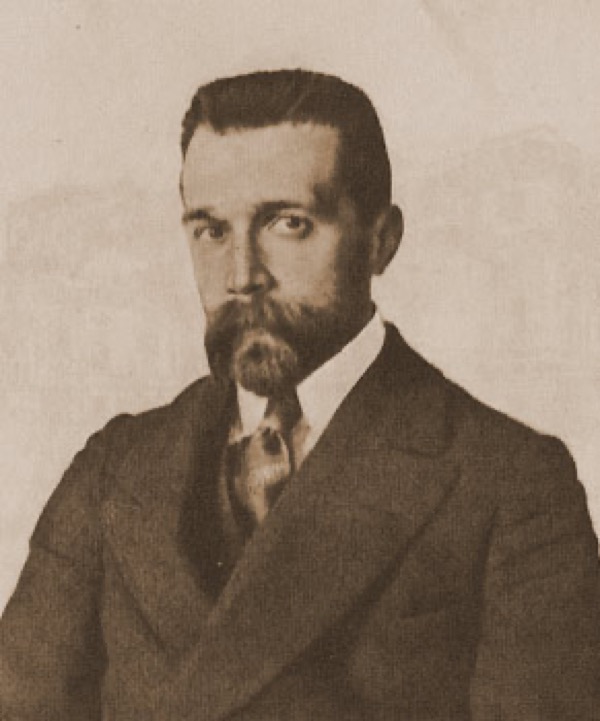
Nikolai Myaskovsky
As Myaskovsky later recalled, “the majority of the themes of the Fifth Symphony occurred to me during the war in the most varied circumstances, which were mostly peaceful enough, although in the zone of the front.”
The work was highly popular with audiences, and critics loved its pastoral atmosphere and folk-like themes. Without doubt, this symphony features brilliant music that gives testimony to Myaskovsky’s technical mastery of form and instrumentation.
However, not everybody was a fan, specifically not other Russian composers. His fellow student and friend at the St. Petersburg Conservatory, Sergei Prokofiev, called the work “uninspired, inept, old, and without the least direction in sound.” He even compared the finale to “some sort of hopeless Glazunov.”
Nikolai Myaskovsky: Symphony No. 25 in D-flat Major , Op. 69
Beauty and Resilience
Myaskovsky had composed his First Symphony in 1908, and it clearly defined his musical direction. As he wrote in his autobiographical notes of 1936, “I felt that it was in this sphere that I would always be able to express myself with the greatest readiness.”
Myaskovsky was never avant-garde in the Western sense of the term, but he combined the Russian traditions with harmonic and formal characteristics of a newer era. Like many of his colleagues, he was at times severely criticised by the Communist Party.
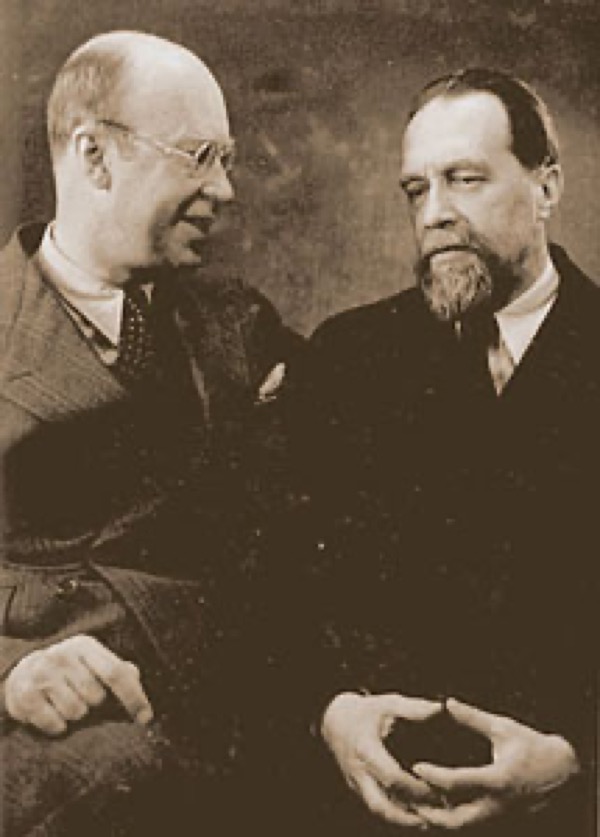
Nikolai Myaskovsky with Sergei Prokofiev
While his music was hardly subversive or damaging to the regime, he was attacked by name in the famous Soviet decree of 1948. While the criticism was being read out, somebody supposedly whispered to him, “An historic decree,” to which Myaskovsky replied, “not historical but hysterical.”
Composed in 1946 and revised in 1949, Myaskovsky’s Symphony No. 25 is a heart-warming and late-Romantic work with beautiful themes. It’s probably not the most popular of his symphonies, but that opening “Adagio” is fabulous. Just listen to the gorgeous Slavic melody that oozes peace and serenity.
Soviet commentators heard an epic portrayal of the Fatherland in the opening movement, and there are plenty of Russian themes in the Finale. The work does have an appealing pastoral character, with the composer expressing his joy of life after the horrors of World War II.
Nikolai Myaskovsky: Symphony No. 6 in E-Flat Major, Op. 23 (USSR State Symphony Orchestra; Yurlov Russian Choir; Kirill Kondrashin, cond.)
Core Masterpieces
The Symphony No. 6 by Nikolai Myaskovsky was composed between 1921 and 1923, and it is the largest and most ambitious of his 27 symphonies. It has been described as “probably the most significant Russian symphony between Tchaikovsky‘s Pathétique and the Fourth Symphony of Shostakovich.”
Myaskovsky was a typical introvert, concealing and suppressing “the subjective elements of composition.” And in his Sixth Symphony we find a deeply saturated inner world, in which he identifies himself as an heir to Romantic symphonism and to Tchaikovsky.
This symphony opens with a descending chordal theme, and according to the composer, he thought of it when a Soviet Procurator concluded his speech with the call “Death, death to the enemies of the revolution!”
Myaskovsky might also have remembered that his father, an engineer and general of the Russian army, “was torn to pieces by the revolutionary mob in 1918.” As Iosif Rayskin writes, “this later found musical expression in Myaskovsky’s Sixth Symphony. The finale relies on the contrast between songs of the French Revolution and an old Russian sacred chant.”
Among quotations of the “Dies Irae” and a moving epilogue, the work contains some of Myaskovsky’s most poetic music. The themes of death are everywhere, and while Soviet interpreters heard the struggles of the young Soviet state, the subtext might well have been much more personal.
Nikolai Myaskovsky: Symphony No. 16 in F Major, Op. 39 (Russian Federation Academic Symphony Orchestra; Evgeny Svetlanov, cond.)
The Aviation Symphony
Since the early 1920s, Nikolai Myaskovsky was a leading figure in Soviet music and a professor at the Moscow Conservatory. As one of the regime’s most respected symphonists, Myaskovsky increasingly incorporated heroic elements in his compositions to align with state demands that music should inspire collective progress.
The buzzwords of the 1930s were technological advancement, particularly in aviation. Myaskovsky’s Symphony No. 16, subtitled “Aviation Symphony,” makes this programmatic tie to aviation progress and a tragic air disaster.
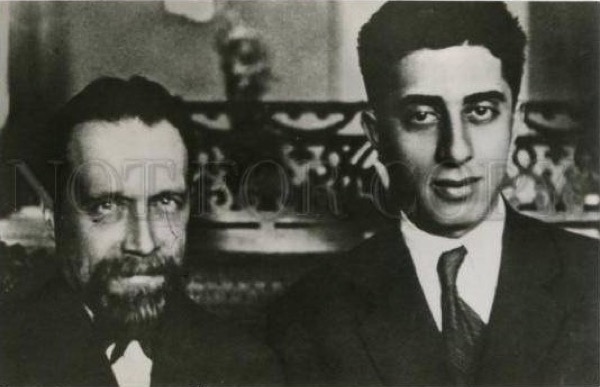
Aram Khachaturian and Nikolai Myaskovsky (1930s)
Composed between 1935 and 1936, Myaskovsky had to consult with authorities to align its musical themes with the official narrative. The work was inspired by the crash of a massive Tupolev ANT-20 aircraft named “Maxim Gorky” during an aerial demonstration. It killed 45 people, and the third movement serves as a funeral march evoking this catastrophe.
The finale was based on Myaskovsky’s song “The Aeroplanes Are Flying in the Sky,” which was seen as an example of heroic themes and collective spirit. In his original programme note, Myaskovsky described the work as embodying “heroic optimism and the triumph of the human spirit, emphasising broad themes of resilience and progress.”
The Soviet press was enthusiastic, and Sergei Prokofiev, who attended the premiere, praised it for its masterful construction and beauty. Myaskovsky was more guarded, as he felt that the “content, technique, and harmony were second-hand.” Officially, however, Myaskovsky was considered a pillar of the Soviet symphonic tradition.
Nikolai Myaskovsky: Symphony No. 3 in A Minor, Op. 15 (Russian Federation Academic Symphony Orchestra; Evgeny Svetlanov, cond.)
Scriabin’s Shadow
Let’s step back in time and feature a powerful early work, the two-movement Symphony No. 3 dating from 1914. Written just before the outbreak of the First World War, it carried, according to Myaskovsky, “the mark of deep pessimism.” Myaskovsky was suffering from depression during this time, as he felt old by comparison with his colleagues after having commenced his studies at a relatively advanced age.
Myaskovsky dedicated the work to the composer and critic Boris Asafiev, as the two-movement structure emerged from a phase of symphonic experimentation. The work has a distinct Russian character through its thematic intensity and orchestral texture.
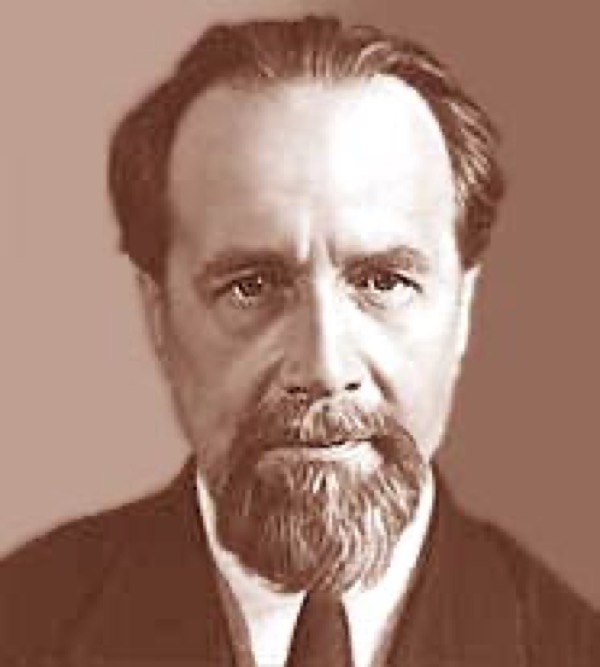
Nikolai Myaskovsky
In terms of harmony, it features a post-romantic palette marked by pronounced chromaticism and dissonance. It is almost atonal in spots, but the tonic anchor of A minor appears at cadential resolutions.
Some scholars suggest that this language reflects the influences of Alexander Scriabin’s early mystical period, “evident in rumbling chromatic openings and motivic density, while diverging from stricter classical tonality via bitonal overlays and augmented intervals.
It is a highly emotional work with a rather depressive undertone that draws on Tchaikovsky and Scriabin. In essence, it bridged classical Russian forms with emerging Soviet musical developments.
Nikolai Myaskovsky: Symphony No. 23 in A Minor, Op. 56 (Russian Federation Academic Symphony Orchestra; Evgeny Svetlanov, cond.)
A Lifetime in Symphony
The early symphonies, written before the revolution, are complex and subjective works. Highly chromatic and pessimistic, these traits persisted to some degree in later symphonies. However, under the Soviet regime, Myaskovsky had to constantly adapt his musical thinking.
Myaskovsky was not confrontational, and his musical language became more optimistic and accessible. He glorified Soviet life in a Russian village in his Symphony No. 12, and during the war he was evacuated to the Caucasus region. He made studies of regional folk music, and incorporated them into his symphonies.
In his last symphonies, Myaskovsky unapologetically returns to the nineteenth-century tradition of Tchaikovsky, Glazunov, and Rachmaninoff. At that time, Myaskovsky was gravely ill. He underwent a serious operation for stomach cancer, and he retreated to a wooded dacha overlooking the left bank of the Moscow River.
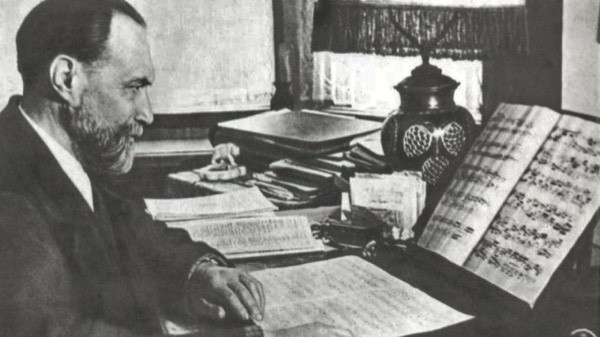
Nikolai Myaskovsky
Myaskovsky completed his final Symphony No. 27 in C minor in early November 1949, and he heard the work in a piano reduction on New Year’s Day 1950. However, he never lived to hear the orchestral premiere. Posthumously, this symphony was awarded the Stalin Prize.
While Myaskovsky’s contemporaries Stravinsky and Prokofiev attempted to overturn tradition while courting critical fury and public outrage, he did not ascribe particular significance to “the last word in musical technique and invention.”
As Boris Asafiev wrote, “Myaskovsky sought to forge a path from the living past of Russian music, through the stormily pulsating present to the prophetic gift of the future.” The stylistic shifts in his symphonies were long seen as a retreat into ideological conformity, but more recent scholarship suggests that these shifts reflect personal maturation and broader Soviet cultural dynamics.
For more of the best in classical music, sign up for our E-Newsletter
Nikolai Myaskovsky: Symphony No. 27 in C Minor, Op. 85 (Russian State Symphony Orchestra; Valery Polyansky, cond.)