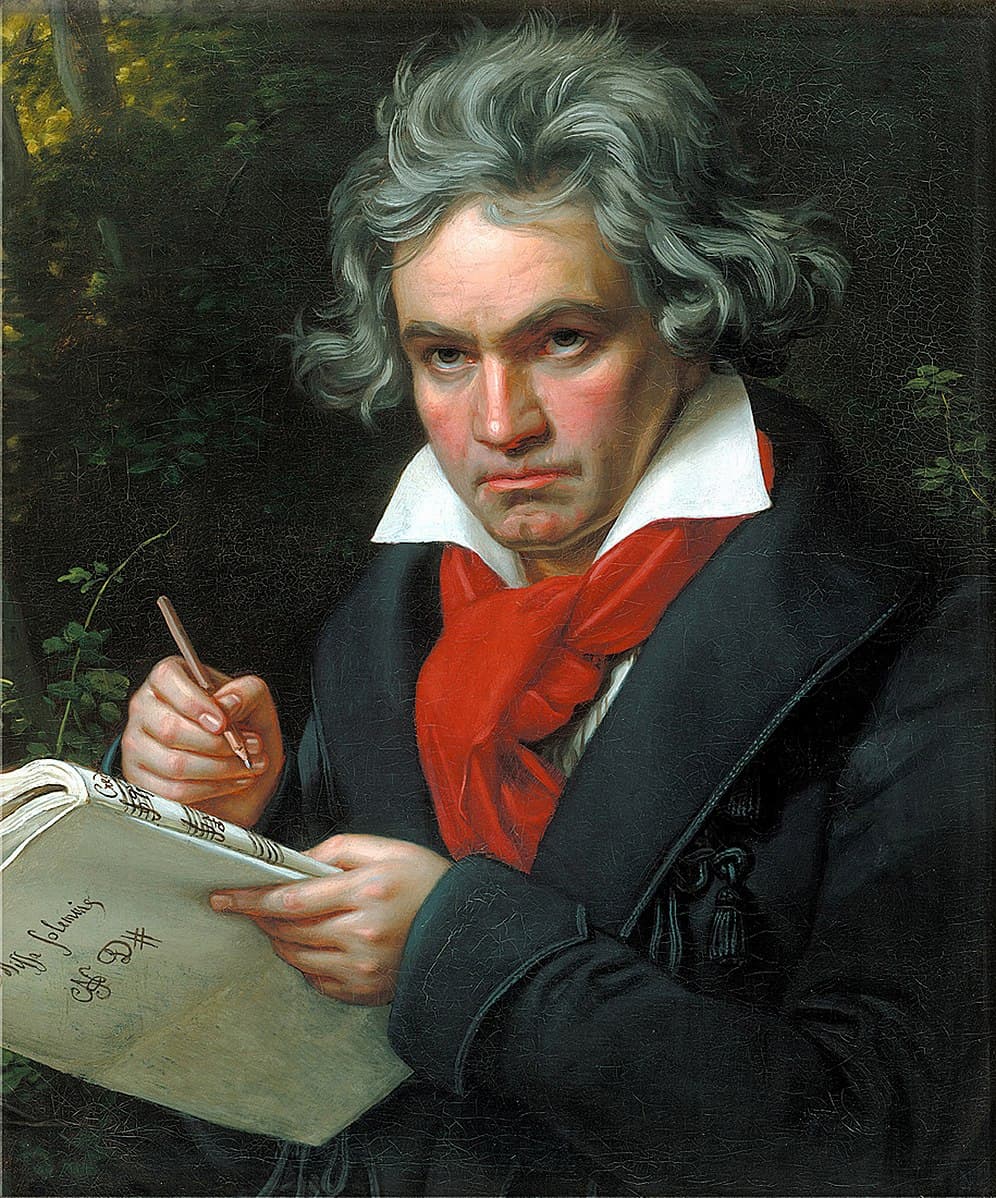
Ludwig van Beethoven was a composer who changed what music was allowed to be.
Before him, composers largely worked within inherited forms and social expectations. After him, music became more defiant, confrontational, and autobiographical.
If you had exactly one hour to understand why Beethoven matters – not just why he’s famous, but why he reshaped Western music – this is the hour.
Together, these seven movements show how Beethoven expanded scale, drama, and psychological depth across every genre he wrote in.
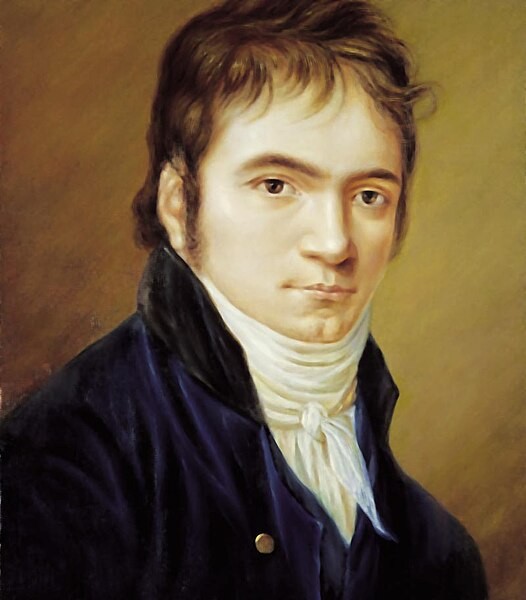
Christian Horneman: Ludwig van Beethoven, 1803 (Beethovenhaus Bonn)
Piano Sonata No. 8 in C minor, Op. 13, “Pathétique” – II. Adagio cantabile – 5:30
Composed: 1798–99
By his late twenties, Beethoven was already straining against the limits of Classical era decorum.
His eighth piano sonata – nicknamed the Pathétique (Passionate) – has gripped audiences with its emotional volatility for generations, and its slow movement remains one of the most personal things he ever wrote.
The Adagio cantabile sings with almost operatic warmth and radiates a deeply moving vulnerability that, compared to other contemporary solo piano works, feels revolutionary.
Symphony No. 3, “Eroica”, Op. 55 – I. Allegro con brio – 16:00
Composed: 1803–04
Speaking of revolutionary, this symphony – and this movement in particular – is one of the most radical pieces of classical music ever written.
The Eroica Symphony didn’t just stretch the symphonic form. It shattered musicians’ and listeners’ expectations of scale, emotion, and extramusical meaning.
Originally dedicated to Napoleon (Beethoven later tore up the title page in disgust after Napoleon crowned himself king), the symphony ultimately became a meditation on heroism itself.
The first movement’s relentless drive, violent dissonances, and unprecedented length announce a new musical language.
Coriolan Overture, Op. 62 – 7:00
Composed: 1807
Inspired by a Shakespearean tragedy about the ruthless Roman general Coriolanus, this overture distills Beethoven’s dramatic instincts into pure sound. It’s short, stark, and merciless.
The violent opening chords portray inner conflict, while the fragile secondary theme suggests vulnerability or even moral doubt.
The Coriolan shows Beethoven mastering narrative compression, creating an entire psychological tragedy without words – just seven minutes long.
Piano Concerto No. 4 in G major, Op. 58 – II. Andante con moto – 7:30
Composed: 1805–06
Few movements in music history are as quietly revolutionary as this one.
The piano enters alone, speaking gently, almost pleadingly, before the orchestra responds with harsh, clipped chords.
Keep in mind that this was not the traditional way for soloists to enter in 1805. This entrance helped to introduce the Romantic era idea of a strong soloist engaged in lively conversation with – and sometimes opposition to – the orchestra.
String Quartet No. 14 in C-sharp minor, Op. 131 – Adagio ma non troppo e molto espressivo – 8:00
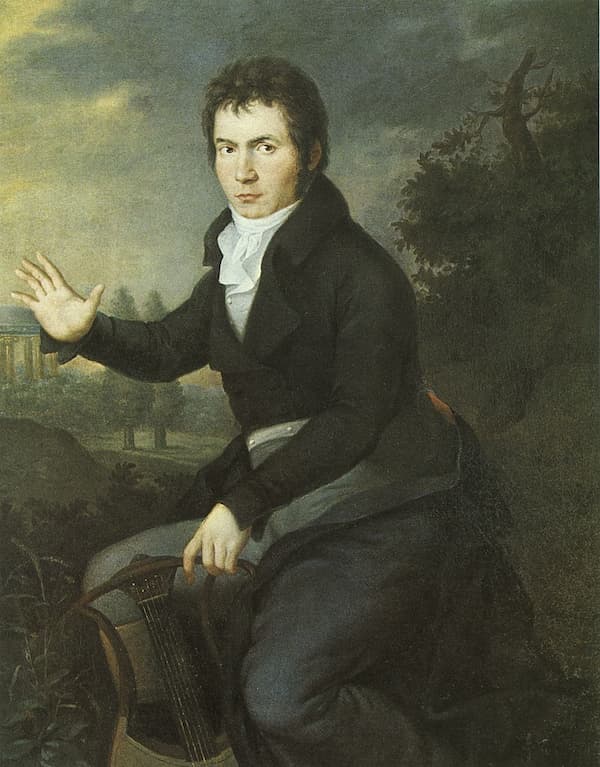
Joseph Willibrord Mähler: Ludwig van Beethoven, ca 1804–1805 (Vienna Museum)
Ludwig van Beethoven: String Quartet No. 14 in C-Sharp Minor, Op. 131: I. Adagio, ma non troppo e molto espressivo (Hagen Quartet)
Composed: 1826
By the time Beethoven wrote his late string quartets, he was completely deaf, with all the social isolation that comes with the diagnosis.
The first movement of Op. 131 opens not with brilliance, but with a quiet, searching introspection, made all the more moving by the fact that Beethoven only ever heard it in his inner ear. This opening fugue unfolds at a slow pace, its lines intertwining with aching inevitability.
The technically thorny late quartets baffled Beethoven’s contemporaries – some people feared he had gone insane – but today they stand as some of the most forward-looking music of the 19th century.
Piano Sonata No. 23 in F minor, Op. 57 “Appassionata” – III. Allegro ma non troppo – 8:00
Composed: 1804–05
The Appassionata Sonata is Beethoven at his most relentless, and its final movement is a study in controlled fury.
There is no triumphant resolution here, only momentum, struggle, and collapse.
This piece rejects the Classical era tradition that musical conflict must end in victory. This time, Beethoven offers something more honest instead: persistence without consolation.
Symphony No. 6, “Pastorale”, Op. 68 – 9:00
Composed: 1808
Beethoven’s Sixth Symphony – nicknamed his “Pastorale” because it portrays natural scenes of a brook babbling and a thunderstorm rumbling – reflects Beethoven’s deep love of rural life.
But unlike some earlier programmatic music, it is, as Beethoven wrote, “more an expression of feeling than painting.”
Historically, the Pastoral expanded what symphonic music could depict: extramusical events as well as emotions of inner peace, gratitude, and belonging.
It proves that Beethoven’s revolution included tenderness as well as the force from his Eroica Symphony and Coriolan Overture.
Conclusion
Taken together, this hour of music shows why Ludwig van Beethoven remains one of the most consequential figures in Western music history.
Piano sonatas, symphonies, concertos, chamber music, and overtures: he redefined what all of these genres could express, whether emotionally, structurally, intellectually, or even philosophically.
More than two centuries later, Beethoven’s music still feels as urgent as it ever has. This hour explains why his work didn’t just survive music history; it changed it forever.
For more of the best in classical music, sign up for our E-Newsletter