Johann Sebastian Bach is known as a composer of precise intellectual rigour. But beneath the carefully calibrated precision of his music lies a deep current of messy sorrow.
Again and again over the course of his career, Bach returned to themes of grief, remorse, and resignation, all expressed through the vehicle of his extraordinary compositional technique.
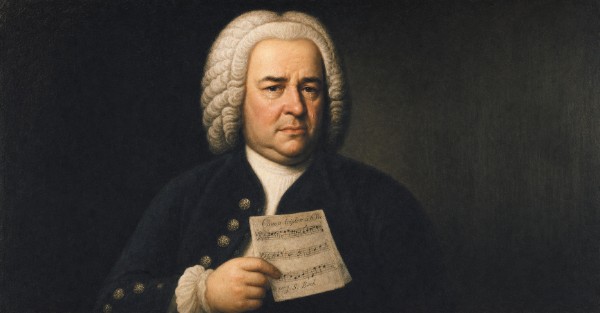
Image created by ChatGPT
Today, we’re looking at some of the saddest music Bach ever wrote. From the devastating arias of the massive Passions to movements for solo violin and cello, these works reveal how Bach transformed remorse, fear, mourning, regret, and exhaustion into music that continues to comfort us even today.
“Erbarme dich” from the St Matthew Passion, BWV 244
Few movements in Western music communicate remorse as nakedly as “Erbarme dich” from the St. Matthew Passion. (“Erbarme dich, mein Gott” translated means “Have mercy, my God.”)
It appears in the Passion after Peter denies Christ.
The tragic aria features intertwined vocal and violin lines. The tempo is measured and the harmony steady. Bach does not allow the music to resolve emotionally; it circles its sorrow instead.
The St. Matthew Passion represents Bach at the height of his creative powers. At the time of its composition, he was working in Leipzig and writing large amounts of church music, fusing operatic expressiveness with religious modesty and his own deeply felt Lutheran beliefs.
“Es ist vollbracht” from St. John Passion, BWV 245
“Es ist vollbracht” (“It is finished” or “It is accomplished”) from Bach’s St. John Passion commemorates another famous moment in the life of Christ: the moment where Jesus proclaims “it is finished” just before dying on the cross.
The alto sings Christ’s final words and proclaims comfort for “debilitated souls”, declaring that “the night of mourning” is coming to an end.
There is a lively, rousing middle section describing how Christ’s sacrifice triumphs “with power / and brings the battle to a close” – but this brief glimpse of glory quickly vanishes, and the melancholy, worshipful theme returns for the repetition of the phrase “Es ist vollbracht.”
Ich habe genug, BWV 82
The phrase “Ich habe genug” (“I have enough” or “I am content”) is the colloquial name of this cantata, which Bach wrote for the feast of the Purification of Mary.
That feast pays tribute to Mary’s ritual purification forty days after giving birth to Jesus. It also commemorates the story of Simeon, a devout man from Jerusalem who sees the infant, recognises him as the Messiah, and prophesies to Mary about the heartbreak that Jesus’s fate will someday bring to her.
Written for bass voice and obbligato oboe, the opening aria unfolds in long mournful phrases that immediately call to mind the famous “Erbarme dich” theme from the St. Matthew Passion.
This is fitting given that each work mirrors events in Christ’s life, one portraying his death, the other the first prophecy of it.
The oboe, traditionally associated with pastoral warmth, here sounds fragile, vulnerable, and lonely.
Weinen, Klagen, Sorgen, Zagen, BWV 12
If any work could be called Bach’s autopsy of grief, it is this cantata, whose title translates to “Weeping, Lamenting, Worrying, Fearing.”
In it, Bach sets words that were likely written by the Weimar court poet Salomon Franck. Those words explore how believers in Christ will face all manner of trials and tribulations, but through them all, they will be able to take refuge in him.
It suggests to the listener how to sit with sorrow.
“Crucifixus” from the Mass in B minor, BWV 232
The “Crucifixus” is built on a relentlessly descending chromatic bass line: an old Baroque device for expressing heartbreak and loss.
Historically, the Mass in B minor is a retrospective work, assembled near the end of Bach’s life and drawing on earlier compositions.
Sarabande from the Suite No. 5 for Solo Cello in D minor, BWV 1011
Bach’s Cello Suite No. 5 stands apart from the others due to its scordatura tuning: i.e., Bach asking the cellist to tune the cello’s highest string down from A to G. This darkens the instrument’s tone and alters the way it resonates.
This quietly meandering sarabande is one of the only movements in all six Bach cello suites that doesn’t include any chords or double-stops, just a solitary cello player playing one note at a time. The presence of the single player creates a uniquely lonely – and intimate – atmosphere of grief.
Unlike the Passion movements or cantatas, the sadness of the cello suites has no text and no narrative.
Despite this, audiences have still heard a tragic story in the notes, and it has often been played in a context of mourning. For instance, Yo-Yo Ma played this movement the year after the September 11th terrorist attacks as the victims’ names were read in New York.
Adagio from the Violin Concerto in E major, BWV 1042
At first glance, this concerto might feel like an unexpected inclusion for this list, as its outer movements are bright and confident.
However, the inner Adagio movement is withdrawn and introverted – maybe even worried. The solo violin sings long, suspended, operatic lines over a gently pulsing bass. The orchestra murmurs a pillowy backdrop of sound while the violin floats above it.
The end effect is a noble and tightly buttoned-up portrayal of contemplative grief.
Chaconne from the Partita No. 2 for Solo Violin in D minor, BWV 1004
In 1720, Bach went on a business trip to the Karlsbad spa, accompanying Prince Leopold of Anhalt-Köthen. He was gone for two months.
When he returned, he found out his wife had died and been buried in his absence, leaving him a widower with four young children to raise.
His second partita for solo violin dates from around this time, and the final movement – the Chaconne – is so huge and so grief-stricken, some people have theorised that Bach drew on feelings he had about his wife’s death while writing it.
Built from a simple repeating harmonic pattern, the Chaconne expands over the course of fifteen minutes into an enormous emotional structure, featuring variations that rage, recede, and ultimately rebuild.
Ricercar a 6 from The Musical Offering, BWV 1079
In 1747, three years before his death, Bach visited the court of the music-loving ruler Frederick the Great, where his son Carl Philipp Emanuel Bach was working as a musician.
Bach travelled to Potsdam, where he met Frederick and played on his fortepianos (then a cutting-edge keyboard instrument).
Frederick – a composer himself – gave Bach a theme to improvise on. He did so, and the process inspired Bach’s The Musical Offering, a collection of canons and fugues.
According to legend, this six-voice fugue from the collection was specially requested by Frederick. It pushes counterpoint to its limits while simultaneously exploring an austere melancholy. This is intellectualised, painstakingly crafted sadness.
Variation No. 25 from the Goldberg Variations, BWV 988
Harpsichordist Wanda Landowska nicknamed this variation from the Goldberg Variations “the Black Pearl” for its dark elegance.
In this variation – the 25th of the set – the tempo slows drastically, the harmony grows chromatic and unsettled, and the melodic lines seem to hesitate under their own weight.
Placed late in the Goldberg cycle, the variation feels like a last descent into darkness before the eventual return to light. But taken on its own, it is bleak and lonely, and its ending is whisper-quiet.
Conclusion
Across cantatas, Passions, instrumental suites, and late contrapuntal works, Bach expresses a sorrow that is held in place by discipline, faith, and form.
These pieces rarely offer immediate consolation. Instead, they teach the listener how to remain with grief: to listen without resolution, to sit with loss rather than transcend it.
Nearly three centuries later, this music continues to resonate not because it explains suffering, but because it recognizes it. In Bach’s hands, sadness and grief aren’t things to be solved: it’s taken for granted that they’re part and parcel of the human experience.
For more of the best in classical music, sign up for our E-Newsletter