The vibrant Russian composer Nikolai Rimsky-Korsakov composed fifteen operas, and since he was associated with a group of five prominent composers known as the “Mighty Handful,” let’s commemorate his passing on 21 June 1908 by exploring five of his most celebrated and colourful operas.
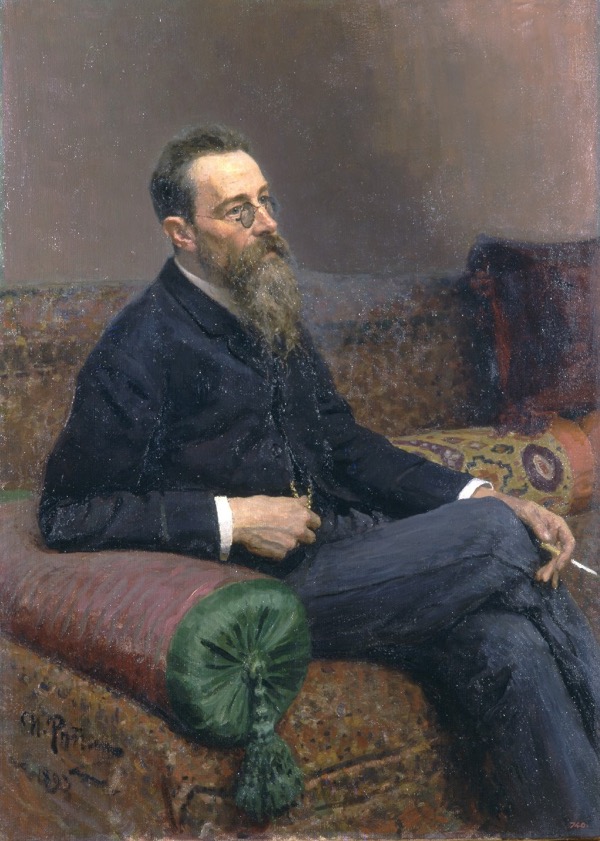
Nikolai Rimsky-Korsakov (portrait by Ilya Repin)
Nikolai Rimsky-Korsakov: Mlada, “Procession of the Nobles”
Tsar Saltan
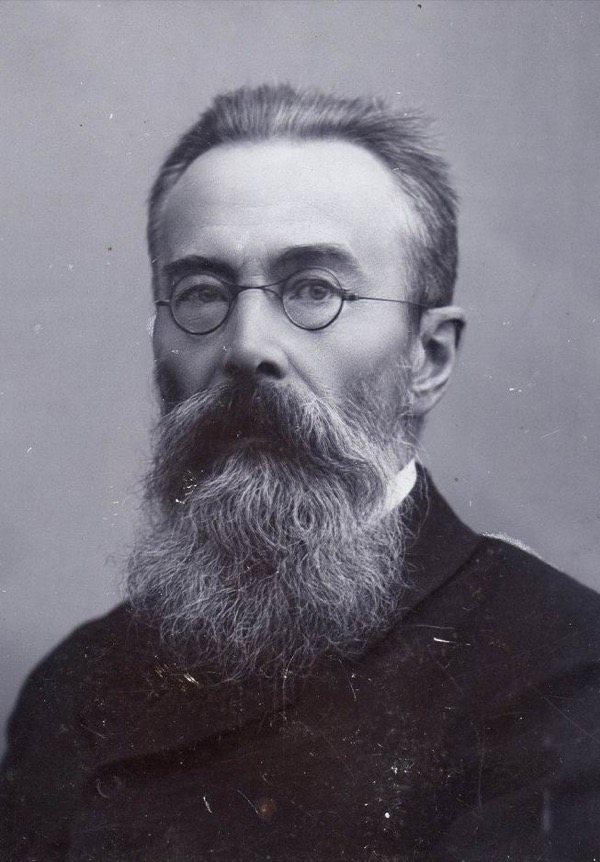
Nikolai Rimsky-Korsakov
Rimsky-Korsakov is probably known best for his orchestral works, but his operas offer a wide variety of orchestral effects and some very fine vocal writing. What has been most popular are excerpts and suites from his stage works.
The operas of Rimsky-Korsakov fall into three broad categories: historical dramas, folk operas, and fairy tales and legends. As he wrote in 1902, “In every new work of mine I am trying to do something that is new for me.”
And that brings us to Tsar Saltan, our first celebrated opera by Nikolai Rimsky-Korsakov. And even if you’ve never heard of this opera, you will immediately recognise a brief orchestral interlude titled “Flight of the Bumblebee.”
Nikolai Rimsky-Korsakov: Tsar Saltan, “Flight of the Bumblebee”
The Story of Prince Gvidon
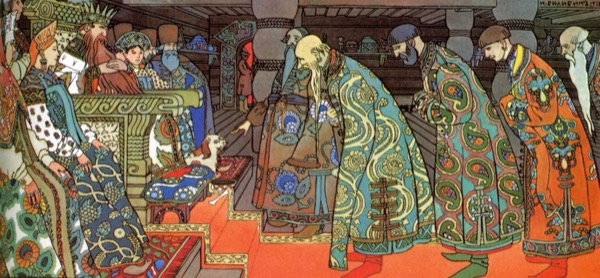
Ivan Bilibin illustration from The Tale of Tsar Saltan
The opera itself is based on a 1831 poem by Alexander Pushkin, who subsequently turned it into a Russian fairy tale. Anything coming from Pushkin is rather complicated in terms of plot, but let’s try to provide a quick summary.
Tsar Saltan marries the youngest of three sisters after she promises to bear him a heroic son. Her sisters are jealous, and they deceive the Tsar into believing that his wife has given birth to a monster.
Mother and child are sealed in a barrel and cast into the sea, eventually washing ashore on the magical island of Buyan. The child, Prince Gvidon, grows into a hero and rescues the magical Swan-Princess.
Nikolai Rimsky-Korsakov: Tsar Saltan, “Aria of the Swan-Princess”
The Bumblebee Prince
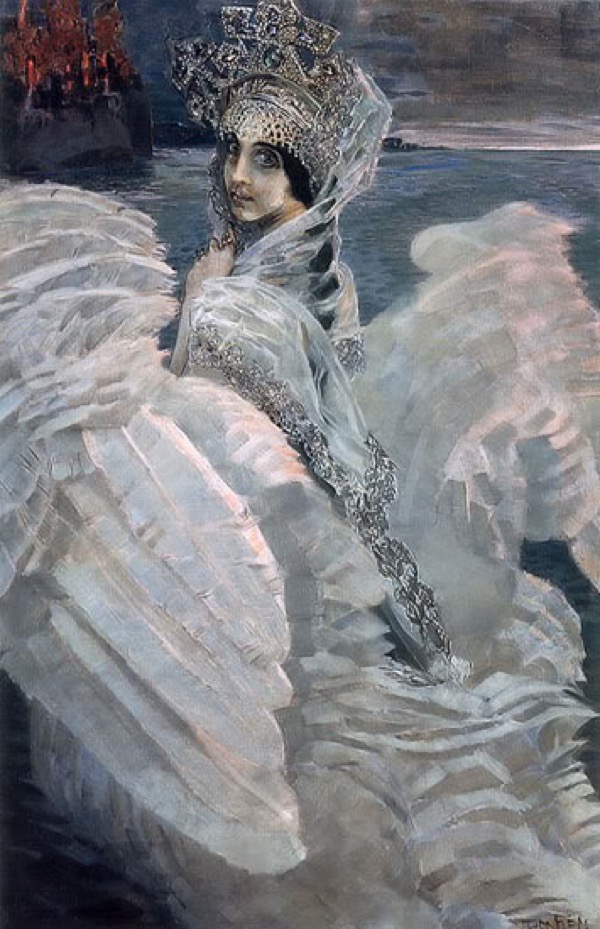
The Swan Princess (Rimsky-Korsakov opera scene)
Prince Gvidon secretly visits Tsar Saltan in the form of a bumblebee, and when the Tsar visits Buyan, he discovers that Gvidon is his son. He reunites with his wife, forgives the guilty sisters, and celebrates Gvidon’s marriage to the Swan-Princess.
The opera dates from around the turn of the 20th century, and the bumblebee is first heard in the flute, and later, in the clarinet. There is also a Russian melody, and the two elements combine to create a realistic and highly convincing ambience of teeming insects. And I am sure you have heard plenty of arrangements and transcriptions. Just have a listen to what Yuja Wang can do!
“Flight of the Bumblebee” (arr. G. Cziffra for piano)
The Golden Cockerel
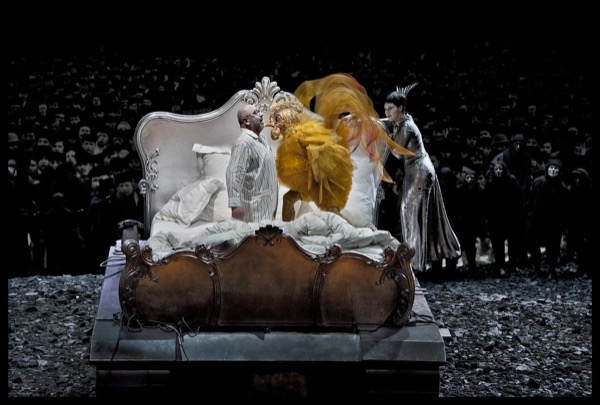
The Golden Cockerel
Russian folklore and literature are incredibly rich in colourful tales of supernatural magic with decidedly down-to-earth morals. And the fairy tale of the “Golden Cockerel,” written by the great Alexander Pushkin in 1834, is no exception.
For Rimsky-Korsakov, who had basically retired from active composition, it provided the perfect inspiration to caricature the precarious political situation in Russia. In the end, he composed an opera in three acts with a short prologue and an even shorter epilogue that has been called a “razor-sharp satire on the autocracy of Russian imperialism.”
Rimsky-Korsakov: The Golden Cockerel, “Hymn to the Sun”
A Magic Rooster
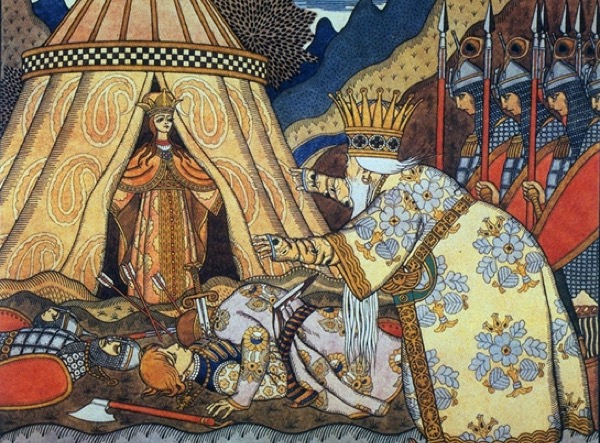
Ivan Bilibin illustration: The Shemakha Queen and Tsar Dodon
A mysterious Astrologer appears before the curtain in the prologue and announces the story of the inept Tsar Dodon, who believes that his country is in danger from a neighbouring country ruled by a beautiful Tsaritsa.
The Astrologer presents the Tsar with a magic Golden Cockerel, who is able to see into the future and predict that the Tsaritsa will take over his country. Dodon goes to war, however, the Golden Cockerel makes sure that the Tsar falls hopelessly in love with the beautiful Tsaritsa as soon as he lays eyes on her.
The Tsaritsa plays along and performs a seductive dance, inviting the Tsar to consummate the relationship, but he is just too clumsy. A wedding is organised, and the Astrologer reappears, reminding the Tsar that he has granted him a wish.
Nikolai Rimsky-Korsakov: The Golden Cockerel, “Aria of the Shemakhan Queen”
All Just an Illusion
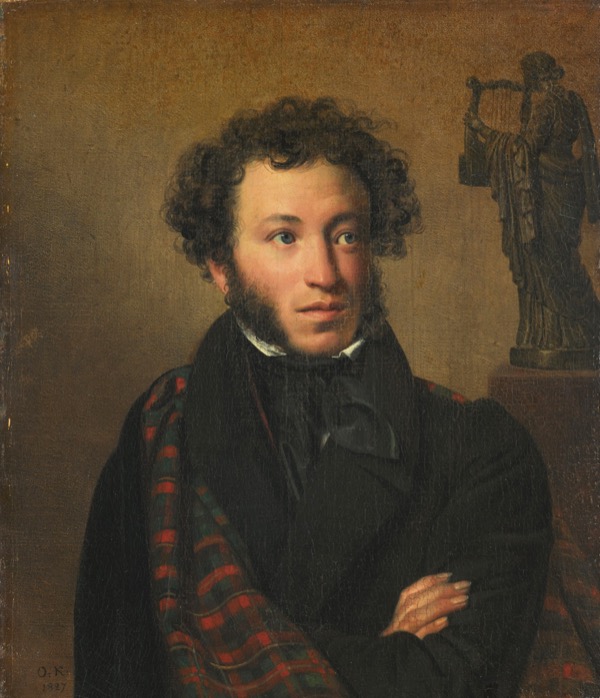
Alexander Pushkin (portrait by Orest Kiprensky)
When the Astrologer demands the Tsaritsa, Dodon kills him with a vicious blow. Loyal to his master, the Golden Cockerel pecks through the Tsar’s jugular; the sky darkens, and when the light returns, the Tsaritsa and the cockerel are gone.
In the epilogue, the Astrologer again comes before the curtain, reminding the audience that everything they saw was an illusion. The work premiered on 7 October 1909, but Rimsky-Korsakov was not able to see his opera on stage, as he had died on 21 June 1908.
Alexander Glazunov and Maximilian Steinberg created an orchestral suite in four movements from the opera. It is very easy to follow, as the first movement depicts “Tsar Dodon in His Palace,” and the second shows “Tsar Dodon on the Battlefield.” The third movement, “Tsar Dodon and the Queen”, may remind you of Scheherazade, and the final movement, “The Wedding and Lamentable End of Dodon,” rises from a joyous celebration to a tragic climax.
Nikolai Rimsky-Korsakov: The Golden Cockerel Suite
The Legend of the Invisible City of Kitezh and the Maiden Fevroniya
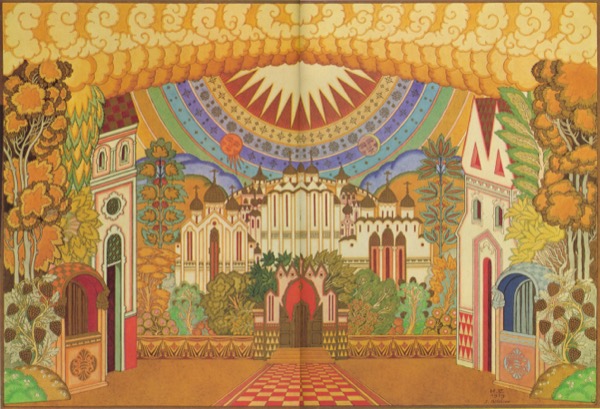
Ivan Bilibin illustration: The Invisible City of Kitezh
For our next opera, also immortalised in a beautiful orchestral suite, we turn to The Legend of the Invisible City of Kitezh and the Maiden Fevroniya. Now that’s a pretty lengthy title, but the opera actually combines two Russian legends. First, we find Saint Fevroniya of Murom, and then the city of Kitezh, which became invisible when attacked by the Tatars.
Essentially, the libretto combines the history of the Mongol invasion of 1223 with pantheistic folklore and Christian mystery. Rimsky-Korsakov composed the opera in 1903/04, but it was not performed until 1907.
As you can tell from the introduction, it all takes place in medieval Russia, and the devout maiden Fevroniya falls in love with Prince Vsevolod, the heir to the city of Kitezh. However, before they can marry, the invading Tatars attack and kidnap Fevroniya.
Nikolai Rimski-Korsakov: The Legend of the Invisible City of Kitezh and the Maiden Fevroniya, “Blessed Queen of Heaven”
The Russian Parsifal
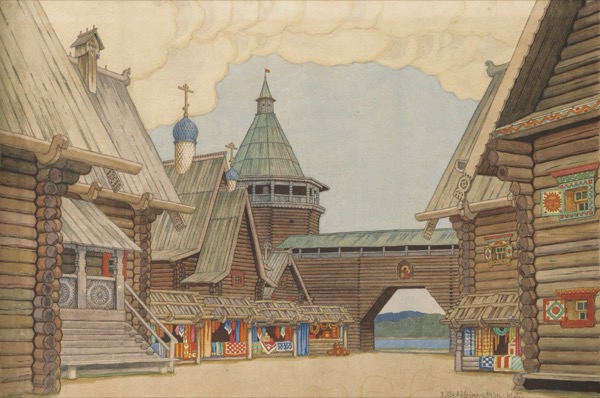
Ivan Bilibin illustration: Architecture of Kitezh
They force the drunken traitor Grishka to guide them to Kitezh, but divine powers protect the city with a mystical veil. Vsevolod is killed trying to defend the city, but Fevroniya forgives Grishka and undergoes a spiritual transformation. She joins Vsevolod in the heavenly Invisible City, symbolising redemption and eternal peace.
The four-movement orchestral suite was arranged in 1907 by Rimsky-Korsakov’s son-in-law and student, Maximilian Steinberg. The opening “Hymn to Nature” depicts the forest world of Fevroniya, and there are plenty of bird calls and an atmosphere of spiritual calm.
“The Bridal Procession” is taken from Act 2, and it evokes folk celebration and ceremonial grandeur, but the darker undertone already foreshadows the invasion. The most dramatic music sounds in “The Battle of Kerzhenets,” with the clash between the defenders of Kitezh and the invading forces. It is battle music with wild hoofbeats in a spectacular orchestral scene.
“The Apotheosis of Fevroniya” is all about spiritual transfiguration as she is reunited with Vsevolod in the heavenly Invisible City. The music is powerfully radiant and luminous, ending in an ecstatic, transcendent close of eternal peace.
Kitezh might well be Rimsky-Korsakov’s finest opera, and it is often referred to as the “Russian Parsifal.” And the composer considered this work to be his final artistic statement.
Nikolay Andreyevich Rimsky-Korsakov: Legend of the Invisible City of Kitezh and the Maiden Fevroniya Suite (Prague Symphony Orchestra; Václav Smetáček, cond.)
Sadko
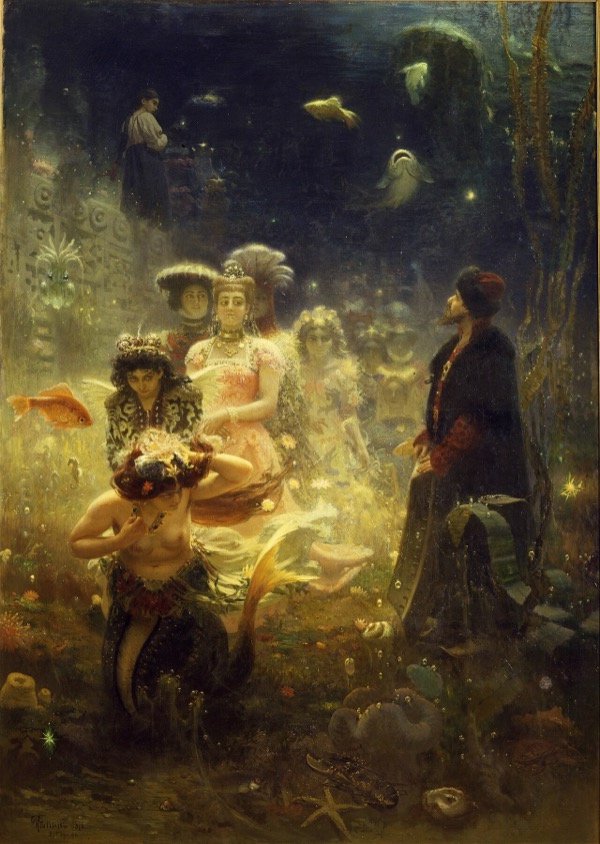
Ilya Repin: Sadko in the realm of the Sea Tsar
For another opera on a historical figure, we turn to Sadko, a wealthy member of a seafaring commercial guild, who dedicated a church in Novgorod in 1167. He was a legendary figure in the bardic narratives, recovered and recorded by folklorists in the 18th and 19th centuries.
The basic story tells how Sadko is transported to the realm of the Sea Tsar, a character in East Slavic folktales. He is sent there specifically to provide music to accompany the dance at the marriage of the Sea Tsar’s daughter.
The dancing grows so frenzied that the surface of the sea surges and threatens to destroy all the ships. To calm the sea, Sadko smashes his gusli, the oldest East Slavic multi-string plucked instrument. Soon, the storm dissipates, and Sadko reappears on the shore.
Rimsky-Korsakov loved that story, and in 1867, he composed what is sometimes called the first symphonic poem written in Russia. Sadko, Op. 5, was very popular, and it quickly became a concert classic in Russia.
Nikolai Rimsky-Korsakov: Sadko, Op. 5 (CSR Symphony Orchestra, Bratislava; Ondrej Lenárd, cond.)
From Tone Poem to Magical Opera
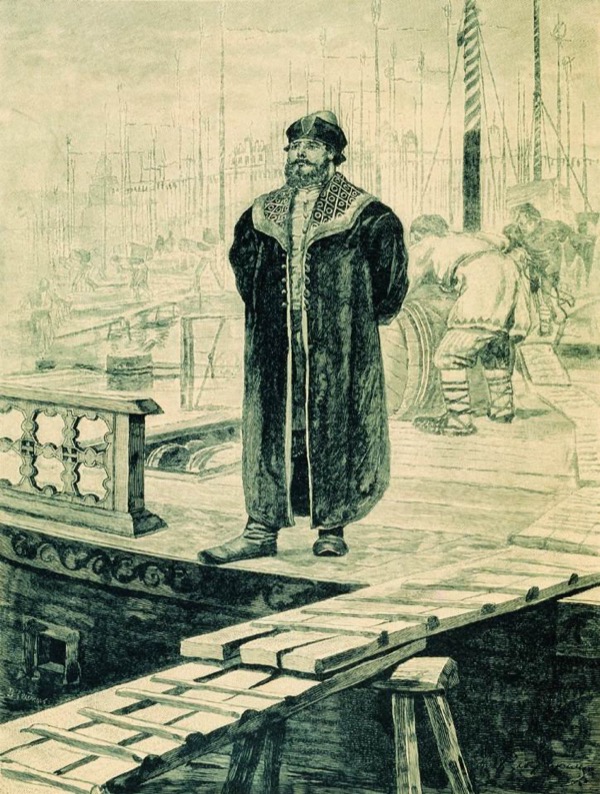
Illustration of Sadko the minstrel
Commentators quickly realised that this opposition of the real and fantastic worlds would make a great story for an opera. A basic scenario was sent to Rimsky-Korsakov in 1894, and the most characteristic passages from the tone poem found their way into the opera.
The opera actually unfolds like a procession of beautifully coloured scenes, as the story had to be adjusted to meet the opera’s dramatic requirements. Here, Sadko is a poor but ambitious minstrel from Novgorod who dreams of wealth and adventure.
After being mocked and cast out by merchants, Sadko encounters the magical Sea Princess Volkhova. She falls in love with him and presents him with a golden fish to bring him fortune. Indeed, he becomes a wealthy merchant and sails the seas, but years later, he is sacrificed to appease the Sea King.
Nikolai Rimsky-Korsakov: Sadko, “Song of the Viking Guest”
The Legendary “Song of India”
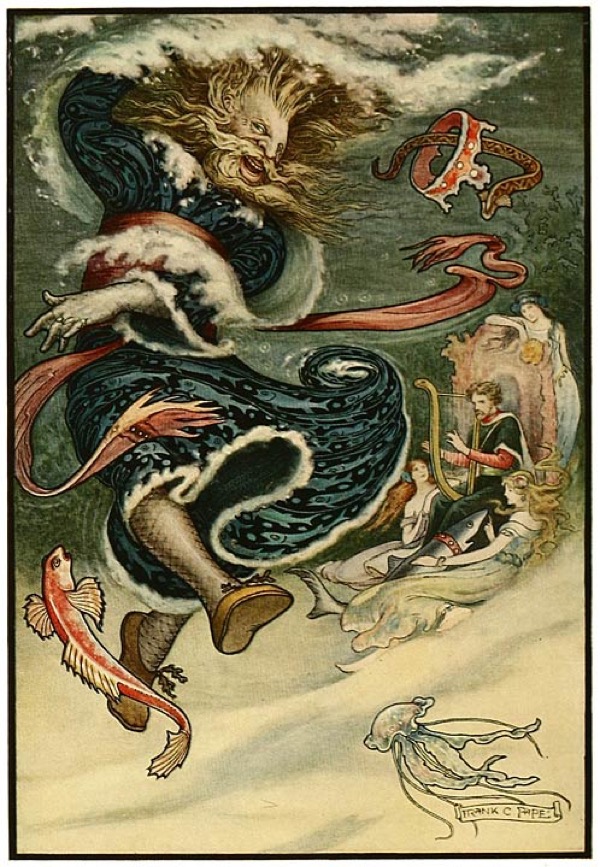
Frank C. Pape illustration: The Water Tsar dances (Russian Fairy Book, 1916)
In the underwater kingdom, Sadko marries Volkhova, but when the rule of the pagan sea powers comes to an end, he is sent back to the human world. Volkhova transforms into a river, and Sadko is reunited with his faithful wife Lyubava as the people of Novgorod celebrate his return.
The best-known music in Sadko is in the fourth scene, when the foreign traders address the Novgorod crowd at the nouveau-riche Sadko’s request. The “Viking Trader’s Song” became a recital favourite, while the Indian Trader’s, also known as “Song of India,” is a staple in semi-classical background music across the world.
Nikolai Rimsky-Korsakov: Sadko, “Song of India”
The Snow Maiden
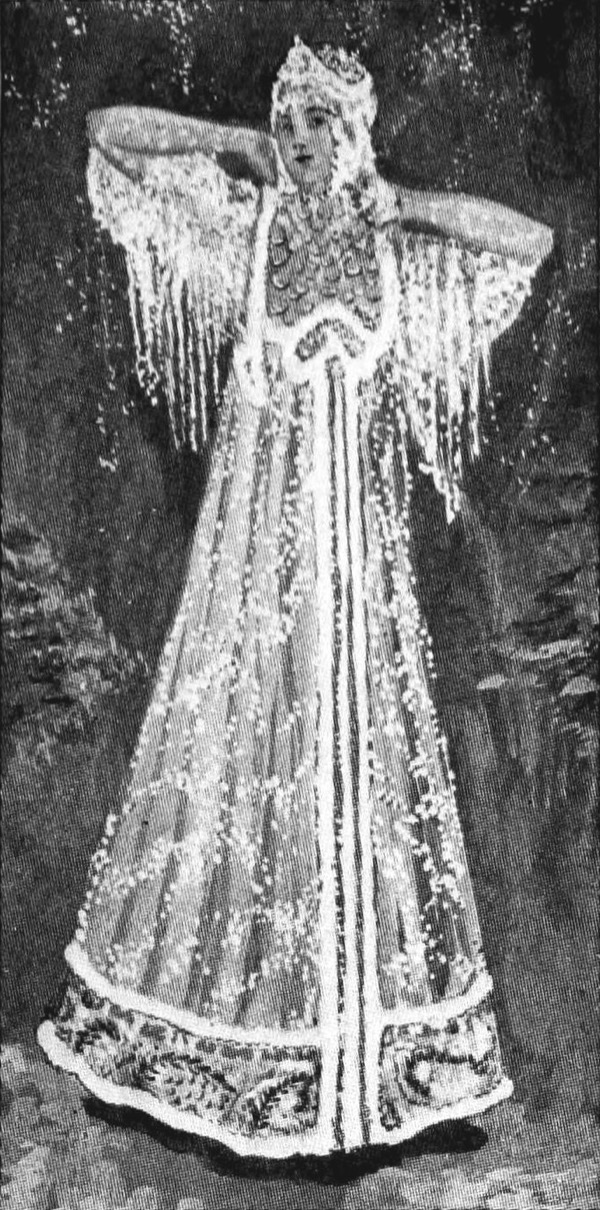
The Snow Maiden (from Victrola Book of the Opera)
The opposition between the eternal forces of humanity and nature is a motif in countless folk and fairy tales in Russian folklore. We find the interaction of mythological and half-mythical characters with real people, and the dramatist Alexander Ostrovsky turned the vivid and famous tale of the Snow Maiden into a theatrical play.
The story goes that an old and childless couple make a little girl out of snow, and by a sudden miracle, the snow maiden comes to life. They take her home and live a happy life, but one day, as the Carnival arrives in town, the snow maiden becomes curious about the human world.
Exploring the Carnival grounds, she meets and falls in love with a shepherd named Lel. In due course, she also experiences human greed, jealousy, and pettiness. When Spring arrives, Lel plays her favourite song on the flute, and tears roll down her cheeks. Suddenly, overcome with love, her feet begin to melt, and falling onto the damp earth, the snow maiden vanishes.
Nikolai Rimsky-Korsavov: The Snow Maiden, “Snow Maiden’s aria”
A Masterclass in Russian Musical Storytelling
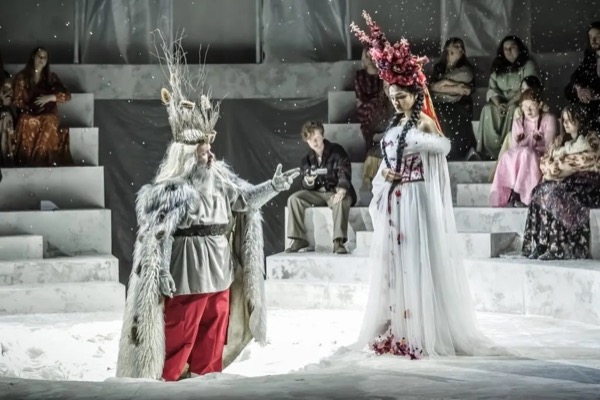
The Snow Maiden
This basic story was once again altered for dramatic reasons, but Rimsky-Korsakov started work on the opera in 1880. In terms of music, he organised his materials into three specific categories. The first is a complex of leitmotifs associated with various characters.
The second includes rounded melodies used to express lyrical and decorative set pieces, and the third consists of transient motifs that temporarily characterise individual movements. They are sometimes used as a foundation in the orchestra, but they don’t serve an operatic end.
The opera was greatly admired in Russia almost from the beginning, yet it was comparatively neglected in the West. It premiered in 1882 and was warmly received, with Rimsky-Korsakov considering it one of his finest works.
Western opera houses initially viewed The Snow Maiden as too specifically Russian, but today it is widely regarded as one of Rimsky-Korsakov’s most poetic and beautiful scores. One thing is for sure: in his operas, Rimsky-Korsakov knew how to tell a good story in music. They certainly continue to sparkle with musical magic and storytelling charm.
For more of the best in classical music, sign up for our E-Newsletter