The history of classical music is centuries long, and generations of myths have formed around famous composers like Bach, Beethoven, Mozart, and Tchaikovsky.
Some of these stories are simple misunderstandings, while others strike at the heart of a composer’s biography.
Today, we’re looking at ten of the most common classical music myths and digging for the true stories. Did Salieri really kill Mozart? Was Paganini a murderer? Did women really never compose great music?
Let’s separate fact from fiction.
Myth: Bach had twenty children running around the house.
A brief documentary about the Notebooks for Anna Magdalena Bach
It’s a well-known bit of classical music trivia that Johann Sebastian Bach had twenty children, and many music lovers imagine him composing with a house full of babies and toddlers.
However, the birth dates of those twenty children were spread out between 1708 and 1742, meaning that a number of the Bach children had moved out of the house before their siblings were even born.

The Bach Family © Oxford Bach Soloists
Moreover, many of them died young. Bach had seven children with his first wife, Maria Barbara Bach, but only four lived to adulthood. He went on to have thirteen more with his second wife, Anna Magdalena Bach, but only six of those children lived to adulthood.
The most crowded the house would have been was around 1725, when there was a newborn, two toddlers, two preteens, and two teenagers. Still a large household by modern standards, but not the circus of twenty young kids that’s sometimes imagined.
Learn more about what happened to all twenty of the Bach children.
Myth: Salieri killed Mozart.
A scene from Amadeus featuring Mozart and Salieri
This myth had its start in the 1780s, when Wolfgang and his father, Leopold, grumbled to each other in their letters that Italian composers were being given better commissions and jobs than Austrian composers. At the time, father and son reserved special scorn for Antonio Salieri. (That said, there is evidence that Wolfgang’s antagonism toward him gradually softened later in life.)
After Mozart’s death, Salieri actually taught music to his son, Franz Xaver Mozart, who was only four months old when Wolfgang died.
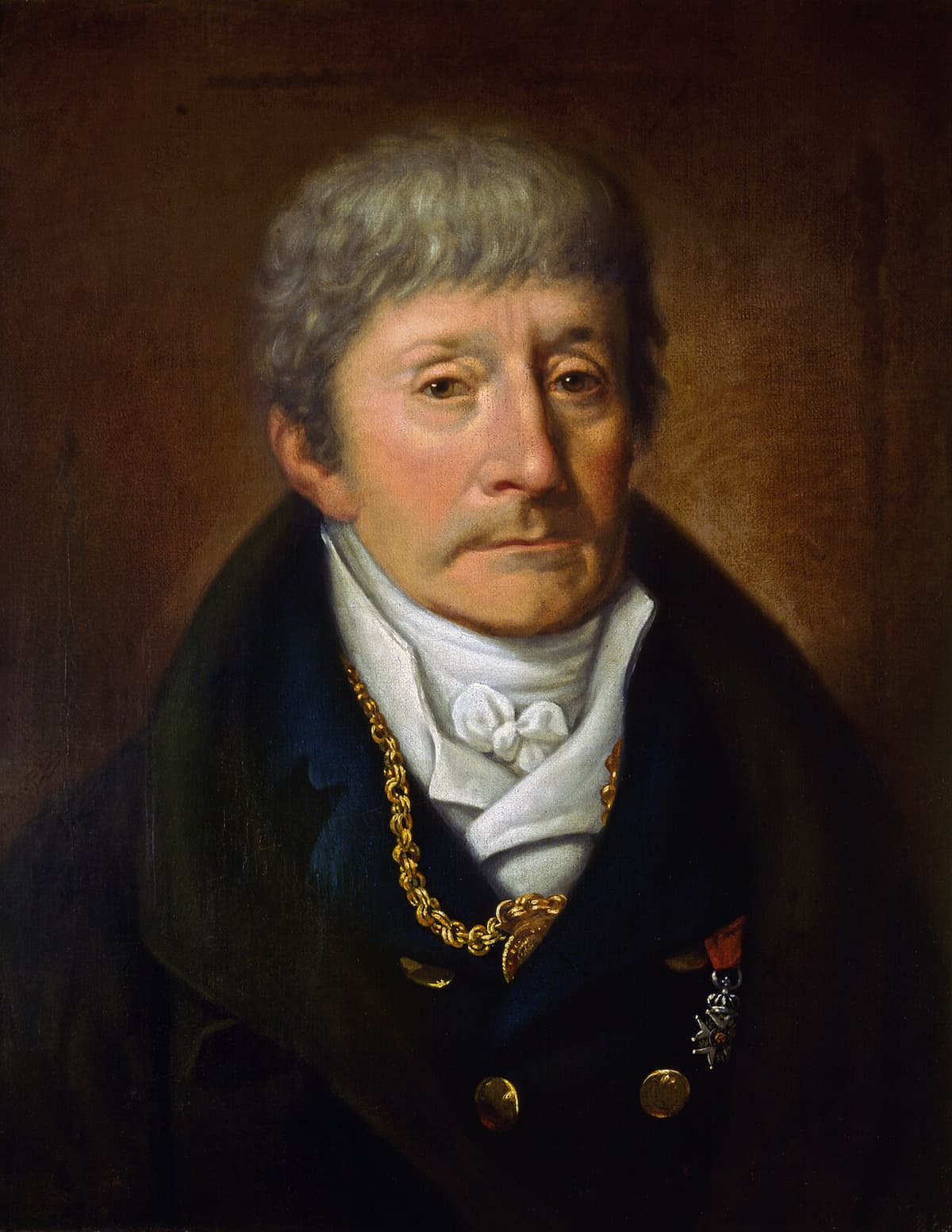
Antonio Salieri © Wikipedia
Decades after Mozart’s death, his widow Constanze mentioned that her husband felt he was being poisoned during his final illness. However, given that she hired Salieri to teach their son, it seems unlikely she ever thought Salieri was the murderer.
The rivalry between Italian and Austro-Germanic composers continued into the nineteenth century. In 1803, Carl Maria von Weber, a cousin of Constanze’s who was also a professional rival of Salieri’s, suggested that Salieri may have poisoned Mozart.
In the early 1820s, Salieri’s health deteriorated as he developed dementia. Unsubstantiated rumours started spreading that he’d confessed to murdering Mozart. Even if he had, his confession would have meant nothing, given his mental health at the time.
In 1830, Alexander Pushkin wrote a play called “Mozart and Salieri” in which Salieri does indeed poison Mozart. In the 1890s, Rimsky-Korsakov wrote an opera based on the play.
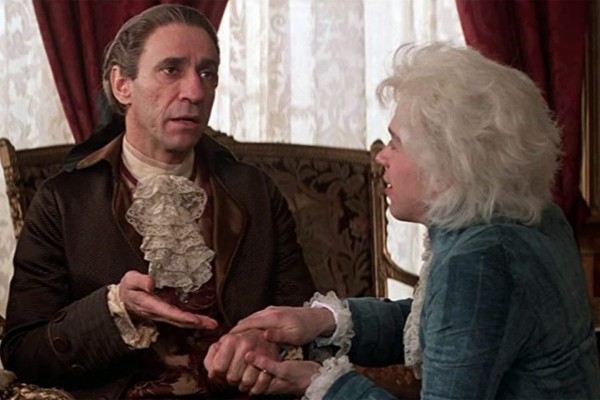
Salieri and Mozart in Miloš Forman’s 1984 film Amadeus
The mythology behind the Salieri/Mozart relationship got a second wind in the twentieth century thanks to the 1984 movie Amadeus (and the 1979 play that inspired the film).
But the short answer is: no, there is not nearly enough evidence to believe Salieri poisoned Mozart.
Here’s our article about how historically accurate the movie Amadeus was.
Myth: When he went deaf, Beethoven just stopped hearing.
An excerpt from a BBC documentary demonstrating what Beethoven’s hearing troubles might have been like to experience
Beethoven’s hearing didn’t just gradually fade away. That would have been preferable to the nightmare that actually unfolded.
His hearing deteriorated over the course of years, and he suffered from some form of tinnitus during many of them.
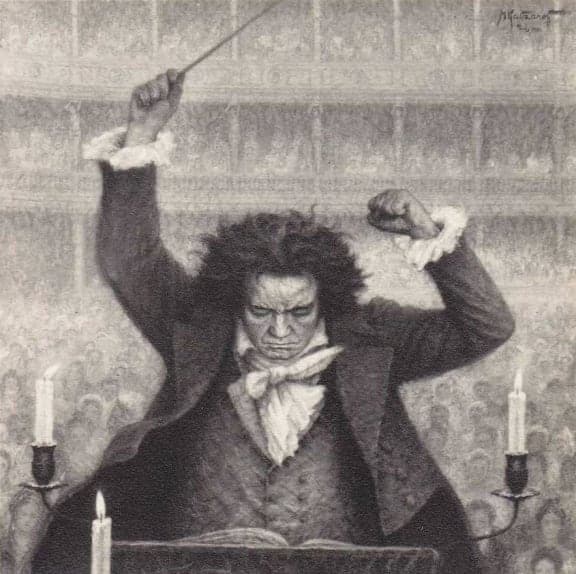
Beethoven conducting
According to the Mayo Clinic, tinnitus is defined as “when you experience ringing or other noises in one or both of your ears.”
In 1801, he wrote to his friend Franz Wegeler:
“My ears are buzzing and ringing perpetually, day and night. I can with truth say that my life is very wretched; for nearly 2 years past, I have avoided all society, because I find it impossible to say to people, I am deaf!”
When listening to his music, it’s important to remember he was not composing in silence; he was composing while also hearing excruciating noises and distortions.
Learn more about how torturous Beethoven’s deafness was.
Myth: Women weren’t talented composers.
A brief documentary on women composers
In years past, the question has been asked many times: why did women composers not write great music?
The truth is, they did. Women like Fanny Mendelssohn, Clara Schumann, Louise Farrenc, Amy Beach, Ethel Smyth, and others wrote extraordinary music.
If you look at period newspapers, there are many more pieces by women being played than you’d guess based on modern classical music programs.

The truth is, societal barriers often kept them from publishing, performing, and promoting their work in the way men could. In addition, after their deaths, there were patriarchal cultural systems at play that emphasised the work of men while erasing women’s.
An inborn lack of talent, or an inability to write great music, was never the problem.
We’ve written a lot about women composers. Here is a list of ten of the best nocturnes written by women that all classical musicians should know.
Myth: Paganini sold his soul to the devil and killed a woman.
Brief documentary on Paganini’s “deal with the devil”
Violinist Niccolò Paganini’s extreme virtuosity and ghostly appearance led to wild rumors, including that he had sold his soul to the devil in exchange for his virtuosity.
In 1834, the New-England Magazine ran a biographical article of Paganini. That article mentions a rumour that he had murdered a wife or mistress…but also emphasizes that this was just a rumour.
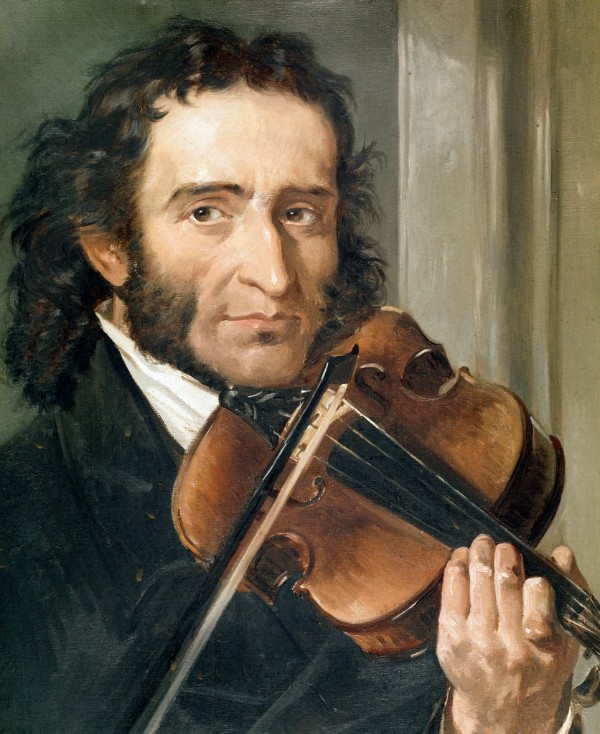
Niccolò Paganini
Nevertheless, the story took on a life of its own. Later retellings of the story suggested that Paganini had used his victim’s intestines to create violin strings, or even trapped her soul inside his violin.
Turns out the truth was much more prosaic: Niccolò Paganini was brilliant and practiced a lot, and he got to be very good at what he did, and he didn’t kill anyone.
Learn more about the life and music of Paganini.
Myth: Liszt was a womanizer for his entire life.
Franz Liszt had countless romantic affairs in his younger years. We even wrote an article about ten of Liszt’s love interests.
However, once he reached middle age, he entered into a relationship with the deeply religious Princess Carolyne zu Sayn-Wittgenstein. The only reason they didn’t marry was because the princess was already wed; she’d been forced into a marriage in her teens. Although she pursued an annulment, by 1861, it became clear that her efforts would be unsuccessful.

Princess Sayn-Wittgenstein in 1847
Nevertheless, even though they never married, the princess and Liszt were husband and wife in everything but name. During this time, she helped Liszt to transition from touring virtuoso to composer. He was also deeply affected by the deaths of his son in 1859 and daughter in 1862.
Buffeted by these life changes, in 1863, at the age of 52, he moved to a monastery outside Rome and took up residency in a small, modest apartment there. By 1865, he had taken minor orders. His womanizing days were over.
Myth: There was a riot during the premiere of Stravinsky’s Rite of Spring.
A recreation of the 1913 Rite of Spring choreography
The 1913 premiere of Igor Stravinsky’s The Rite of Spring sparked loud protests and arguments in the Paris audience, but calling it a “riot” is an exaggeration, as musicologist Linda Shaver-Gleason wrote here in 2018: Did Stravinsky’s The Rite of Spring incite a riot at its premiere?
Turns out, the music as experienced by people in the resonant balcony would have made a disorienting impression, and the ballet’s “primitive” character would have caused aristocrats to laugh, which would have, in turn, upset other music lovers more receptive to the avant-garde.

Dancers from The Rite of Spring, 1913
There are no firsthand accounts attesting to anything approaching a riot until 1915, when Carl Van Vechten wrote that a fellow audience member sitting behind him had “beat rhythmically on the top of my head with his fists.”
The piece’s bold rhythms and modern choreography may have titillated the audience, but it didn’t cause mass chaos.
Myth: Debussy and Ravel were Impressionist composers.
Debussy’s “Nocturnes” and “Images”
The music of Debussy and Ravel is often compared to Impressionist painters like Monet, but both of them rejected the label.
In 1908, Debussy wrote to a music publisher friend:
“Imbeciles call [what I am trying to write in Images] ‘impressionism’, a term employed with the utmost inaccuracy, especially by art critics who use it as a label to stick on Turner, the finest creator of mystery in the whole of art!”
For his part, Ravel discounted the idea that the term could be applied to music.
Debussy preferred the descriptive term “Symbolist”, but it never really caught on.
Myth: We know that Tchaikovsky died by suicide.
Tchaikovsky’s sixth symphony, premiered days before his death
On 1 November 1893, Moscow was in the midst of a cholera outbreak. That night, Tchaikovsky went out to a restaurant with friends. A waiter informed him that there was no boiled decontaminated water left, but Tchaikovsky asked for a glass anyway.
Three days later, he began exhibiting symptoms of cholera. By the early morning of 6 November, he was dead.
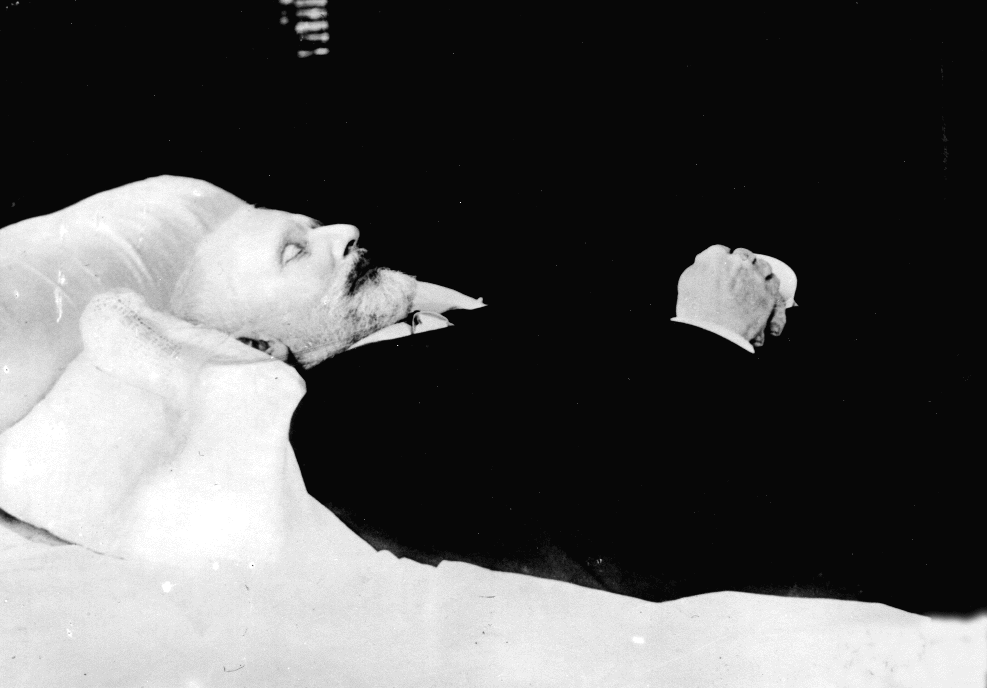
Tchaikovsky on his death bed
There are a few other theories about what happened.
One suggestion is that Tchaikovsky did catch cholera…but from a male prostitute.
Another theory is that his homosexuality or his attraction to his nephew was about to be revealed, and Tchaikovsky was ordered by an ad-hoc, informal jury of colleagues to die by suicide. Others have suggested that the Tsar himself ordered the suicide.
Historians still argue today about what happened, but there isn’t 100% conclusive evidence in any direction. The official story is still that Tchaikovsky accidentally caught cholera at the restaurant.
Learn more about Tchaikovsky’s illness and death.
Myth: Composers were gods.
Composers were not gods, despite listeners’ attempts over the centuries to canonise them.
They were and are human beings with flaws, insecurities, and daily struggles. They were always preoccupied with making a living, sustaining relationships with their friends and families, and falling in and out of love.
The power of their music comes from their ability to express the complex human experiences they all lived through. That – and not any kind of supernatural talent – is why we’re still listening to the great composers today.
For more of the best in classical music, sign up for our E-Newsletter