Between 1865 and 1882, Jules Massenet (1842–1912) wrote a series of 7 orchestral suites, beginning in Venice in 1865. He called it a Symphonie en fa when it was submitted as one of his Prix de Rome compositions. A performance of the symphony in Paris drew criticism from critic Albert Wolff, who called it a ‘wretched little’ work that ‘had to be carried off to the nearest chemist’s to be revived and then taken home again by its composer’. Massenet changed the title, saying it was a suite, not a symphony. Others complained about Wolff’s ‘cruel treatment of a young composer’.
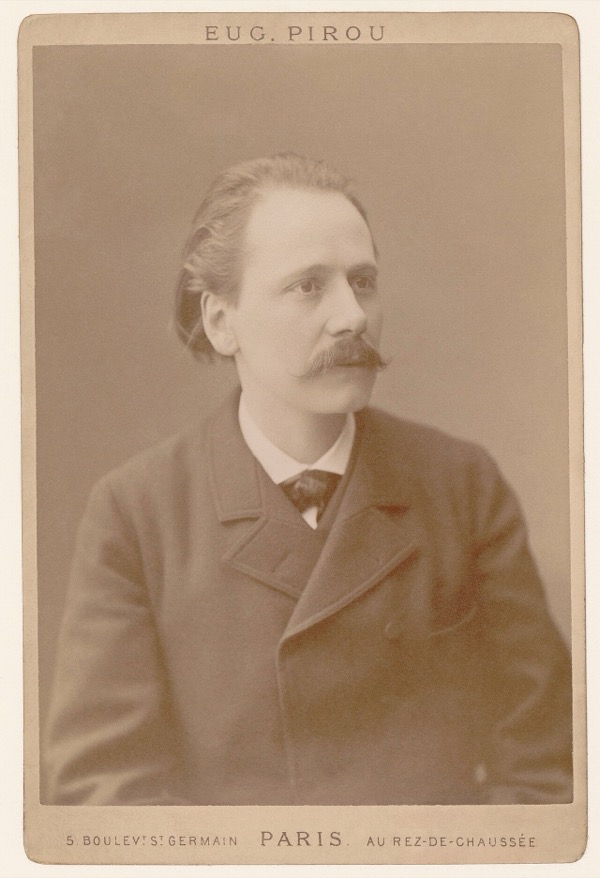
Jules Massenet (by Eugène Pirou)
Following this first Orchestral Suite, Massenet’s next works were given more descriptive titles:
Orchestral Suite No. 2, Scènes hongroises – 1870
Orchestral Suite No. 3, Scènes dramatiques – 1875
Orchestral Suite No. 4, Scènes pittoresques – 1874
Orchestral Suite No. 5, Scènes napolitaines – 1876
Orchestral Suite No. 6, Scènes de féerie – 1881
Orchestral Suite No. 7, Scènes alsaciennes – 1882
Massenet never wrote a symphony, and each orchestral suite remains in a world of its own.
In the final orchestral suite, we see a bittersweet picture of a lost land. Alsace, lost to France after the Franco-Prussian War, became part of the new German Empire in 1871. France ceded more than 90% of Alsace and 25% of Lorraine. France didn’t regain it until the end of WWI and the Treaty of Versailles. Immediately, German was banned, and French was restored as the language of the territory. France lost it again during WWII and regained it in 1945.
At the first performance of his suite, premiered in March 1882 with Edouard Colonne’s orchestra, a nostalgic program by Alphonse Daudet was added.
The work opens with Dimanche matin (Sunday Morning). Daudet paints a picture of a Sunday morning in an Alsatian village: the streets are empty because everyone’s at church, except for a few older adults sitting in front of their houses in the sun. Parts of the service drift in as whispers of a familiar chorale in the air.
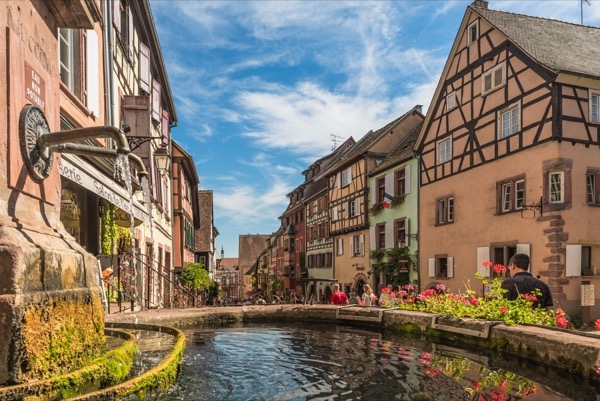
Alsace street
Jules Massenet: Suite No. 7, “Scènes alsaciennes”: I. Dimanche matin (New Zealand Symphony Orchestra; Jean-Yves Ossonce, cond.)
When everyone’s out of church, they go to the local tavern, with the music evoking the building’s leaded window-panes, covered with hops and roses, while we hear the voices of the foresters as they set out for the hunt.
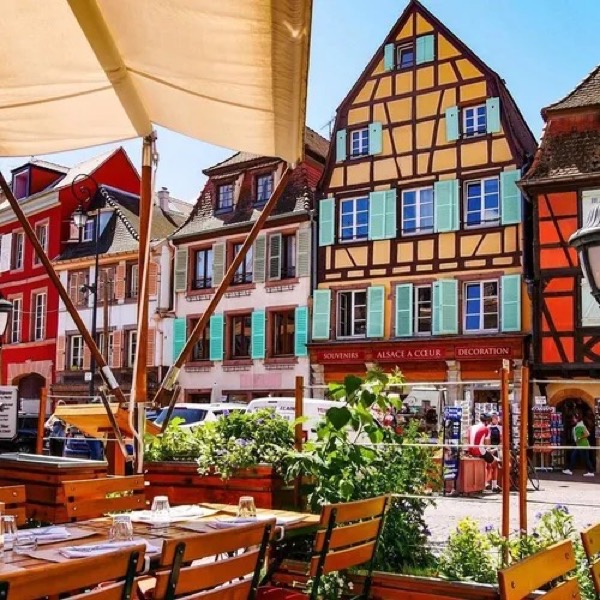
La Taverne Alsacienne, Ingersheim
Jules Massenet: Suite No. 7, “Scènes alsaciennes”: II. Au cabaret (New Zealand Symphony Orchestra; Jean-Yves Ossonce, cond.)
For the third movement, we’re Sous les tilleuls (Under the Lime Trees), accompanying a courting couple, holding hands, under the lime trees.
Jules Massenet: Suite No. 7, “Scènes alsaciennes”: III. Sous les tilleuls (New Zealand Symphony Orchestra; Jean-Yves Ossonce, cond.)
In the last movement, the boys and girls dance in the village square. The sound of a drum beating the retreat reminds everyone, both in the village and in the audience, what was lost when France had to give Alsace to Germany. Everything goes silent before the dance resumes.
Jules Massenet: Suite No. 7, “Scènes alsaciennes”: IV. Dimanche soir (New Zealand Symphony Orchestra; Jean-Yves Ossonce, cond.)
Massenet never wrote a work entitled Symphony; these orchestral suites were as close as he came.
Composed nearly 40 years before Alsace returned to France, Massenet’s Alsatian scenes are filled with regret for the past and a reminder of the injustice the country still felt after its defeat in the Franco-Prussian War a decade earlier. Massenet’s skill at painting pictures in music, aided by Daudet’s scenario, brings the Sunday to mind for everyone. It’s a particular picture of a time and place that comes to life in the hands of a master.
For more of the best in classical music, sign up for our E-Newsletter