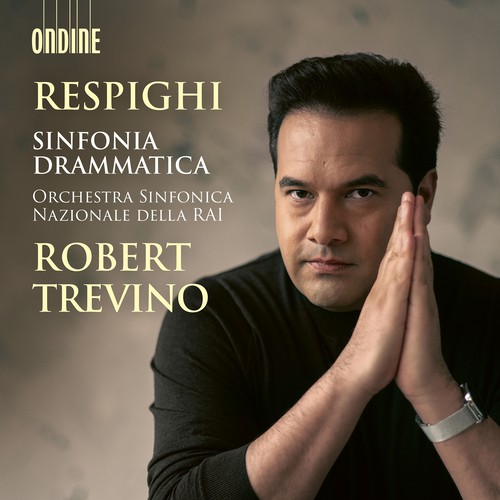
For many, the name Ottorino Respighi is synonymous with his Roman Trilogy, a set of three fantastically colourful works for orchestra depicting scenes of ancient Rome in a brilliant, cinematic style. Nestled further back in Respighi’s oeuvre is the grand, imposing Sinfonia Drammatica, a recording of which has just been released by Robert Treviño and the Orchestra Sinfonica Nazionale della RAI.
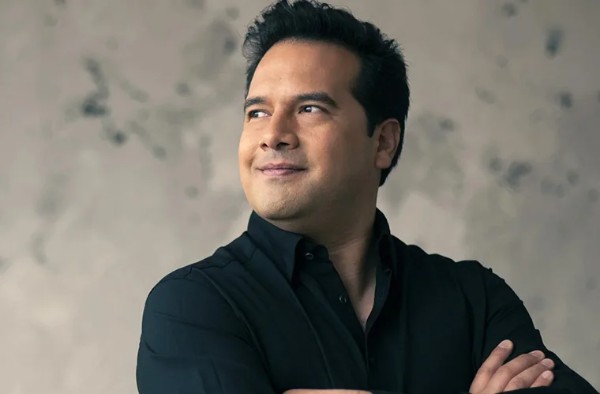
Robert Treviño © Tommy Ga-Ken Wan
Robert, the Principal Guest Conductor of the RAI, released an acclaimed set of recordings of the famous Roman Trilogy back in 2023, and for him the project was an opportunity to explore the lesser-known work that rests in the shadows of the much-loved Fountains of Rome, Pines of Rome and Roman Festivals. With the Ondine label and RAI, both long-term collaborators, at his side, Treviño offers us a powerful recording of a rare gem of the orchestral repertoire.
Written in 1913, just before the outbreak of World War I, the Sinfonia Drammatica, while not a programmatic work, certainly feels prescient of the chaos that lay just ahead. The ending of the symphony, for example, takes the form of a relentless march that leaves as much uncertainty as it does resolution.
Robert talks to me about the process of recording the Sinfonia Drammatica, from the first rehearsals right up to the release, along with having the opportunity to delve into this rarely heard monumental work.
RELEASE DAY! Respighi – Sinfonia Drammatica
It’s impossible to think of Respighi without thinking of the Roman Trilogy. How does this work relate to the Trilogy, if at all?
The Sinfonia Drammatica is not a piece of music that has the same level of orchestrational pyrotechnics. It’s not a work of art that is trying to ‘describe’ anything with painting in sound. It’s trying to talk about a very serious subject, a very basic idea, kind of in the tradition of old romanticism, where they would talk about ‘love’ or ‘death’ and then comes this ‘absolute’ music which is evocative of this emotion and this drama.
People say that Respighi is so flashy and light, or that it’s cinematic without any depth, but I don’t agree with that. I think the Roman Trilogy has a lot of depth, and this piece [the Sinfonia Drammatica] is only depth. It’s really intense; it’s a very difficult piece to put together, and I think it shows that the composer has this much deeper range in what he writes and what he thinks. Looking back, having now completed this piece, I can see its influence on other works.
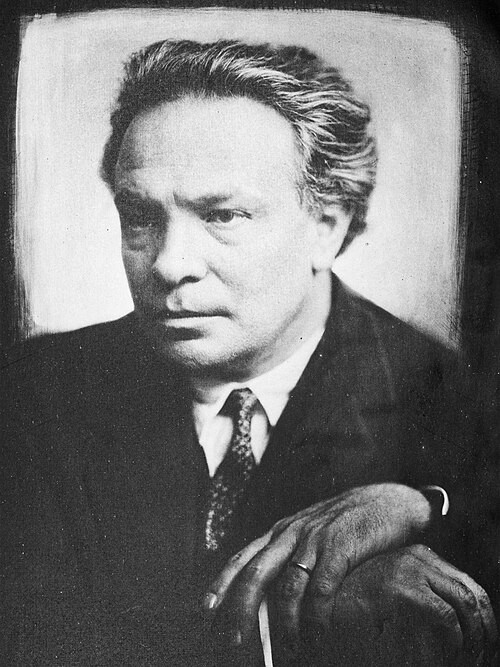
Ottorino Respighi, 1927
How do you see that influence manifesting itself in Respighi’s later works?
I hear a lot of the orchestrational elements of the Trilogy already in this piece. There are certain techniques he uses, things like the organ pedals and orchestral piano, that you can see happening later on. Similarly, things like the string section being reduced down to eight players to play some lush thing are used again later, and you can hear that.
What influences can you hear in the Sinfonia Drammatica itself?
It’s a piece that’s very much in the German tradition, because of how he works with the motifs, and the influence of Schoenberg‘s evolving variations. You have very basic motifs, and the music is constructed around them. It’s really a ‘symphony’ in that sense. It has its formal structure, but the finale is really weird, with this march that continues all the way to the end.
I remember when I was studying the score, I got to that part and really felt I was looking at a person who was seeing the armies marching to the front lines and into the trenches. All that happened before leads to this sudden arrival. It’s intense.
The final moments of the symphony aren’t exactly conventional. Is this ending a full stop or a question mark?
I had this weird idea that we could finish playing this piece and then go straight into something like Shostakovich 7. The question Respighi asks is, ‘Now what?’ And Shostakovich shows us what comes next.
There’s no optimism at the end of the Sinfonia Drammatica. There’s a sense of finality and tragedy, yet it remains open-ended.
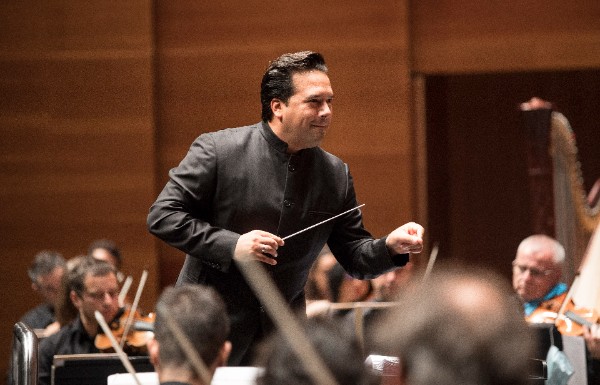
Robert Treviño, 2020
Do you have any favourite moments in this work?
I love the second movement so much because of this really deep, sinister, but also very bold melody that comes in the strings. I have this monolithic feeling of the sound when the orchestra’s playing that. And then what comes next is so contrasting, this wispy, nostalgic type of music, which reminded me so much of Rimsky-Korsakov, or this Rachmaninoff type of nostalgia.
It’s not only an amazing contrast of gestures, but there’s an oscillation in the piece between hinting at Italy’s Futurist movement, which is just around the corner, and at the same time this idea of [Ravel‘s] La Valse, where he’s turning around and saying goodbye to the Europe he remembered. This work was intense for the orchestra.
How did the orchestra respond to this piece, both in rehearsals and in the recording sessions?
Only about one person had played the piece before, and that’s really saying something! The orchestra were very confused at first. It doesn’t help that the material isn’t so easy to read – there’s not a brand new edition or anything. We had to just go through the piece very technically at first. The harmonies, the chromaticism, they’re not easy.
In the album liner notes, I remember writing that we know what the great masterpieces are now. We know that we have this journey to go up a mountain, and that we will arrive at the summit, and with a piece like Mahler 9 or Ein Heldenleben, we’ve cleared out some trees and put some nice stone paths down, and sometimes we even have alternative paths because of all the work that’s been done before us.
With a piece like this, Respighi, which is no less complicated and no less of a huge journey, you stand at the base of the mountain, and you see nothing but dense forest. The first rehearsal is just getting into the forest, taking the machete and bushwhacking. Then you get to the top, but you don’t see it because you’re still in the trees, so you have to go down and take bigger machines and cut more things, and you still don’t see the vista, but you can get up a bit more.
You keep doing that until eventually you can finally see the view, and this takes time. I knew that we’d managed, because even before we hit the record button, I could already see the musicians playing with this anticipation and excitement. In the end, it became a piece that everyone felt really deeply moved by. It was really quite a journey.
Concerto OSN – L’estremo lascito di Mahler per Robert Treviño e l’Orchestra Rai
You have collaborated with both RAI and Ondine for some time now. How did it feel to embark upon this ambitious project with such close colleagues?
As a conductor, you really have to know the way, and fortunately, with RAI, I’ve worked with them for so many years now, and they know me so well. At the first rehearsals, the concertmaster said to the orchestra, ‘We don’t know how we’re going to record this piece, but we know Robert knows the way, so we just trust him, and he’s going to get us there.’
That was the mindset of the orchestra, and that was because of the relationship we have.
I hope this recording will inspire people to do the piece more often. I’m very proud of the emotional integrity the orchestra brought to this recording. It’s a deeply emotional and satisfying piece to play.
I’m lucky because Ondine gives me a very big canvas, and they say, ‘What do you want to record?’ We have very fruitful conversations because of our long collaboration. I remember they weren’t sure about doing this piece, but I convinced them, and when they received the final edit, they said, ‘We’re really proud that we did this.’
With a piece that hasn’t been recorded so much before, do you, as a conductor, feel a weight off your shoulders, knowing the recording won’t be compared to as much as before it?
I actually feel the opposite. I feel much more weight on my shoulders when recording something lesser-known that I believe in.
When it comes to doing a piece that’s very well-known, I don’t care about what other people have done already. If I cared, I wouldn’t be a musician, because I’d be constantly paralysed by the thought of what other people were doing.
I need to be truthful to myself and truthful to the composer. With a piece that’s well known, I choose to record it because I believe I have something to add to the discourse. Whether people like it or appreciate it or think it’s valuable, that’s not for me to say. I’m not looking to do something different; it’s more that I believe there is something different the piece deserves that hasn’t been explored yet.
When it comes to recording a lesser-known piece, you have the orchestra, you have the label, you have the public all saying, ‘Why the hell are you recording this piece?’ Well, my answer is because I believe in it.
So in doing that, I actually feel more pressure to do well, but in the moment, I don’t think about it. I think about that only during the preparation. We have to have a conviction about the possibility of things, because we don’t work in such absolutes.
We believe in what we are going to create to the extent that we can convince people that it’s worth listening to or participating in. It’s part of the nature of the profession, of the art form.
For more of the best in classical music, sign up for our E-Newsletter