The disastrous premiere of Rachmaninoff’s first symphony is one of the most infamous events in classical music history.
Today, we celebrate the sweeping Russian romanticism of Sergei Rachmaninoff, but in 1897, his long-awaited First Symphony debuted to confusion, hostility, and one of the most vicious reviews ever published.
When you learn the details of the story, it’s shocking to learn how close the young composer came to abandoning composition entirely.
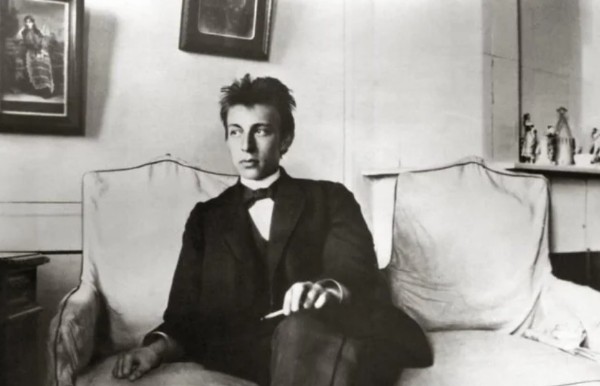
Sergei Rachmaninoff
Today, we’re looking at the story of the premiere of Rachmaninoff’s first symphony, exploring why it went so wrong, and looking at how the experience shaped the later blockbuster masterpieces he’d eventually write.
Rachmaninoff’s First Attempts at a First Symphony
The seeds of Rachmaninoff’s first symphony were planted in the academic year of 1890–1891, when Rachmaninoff was seventeen and in his final year at the Moscow Conservatory.
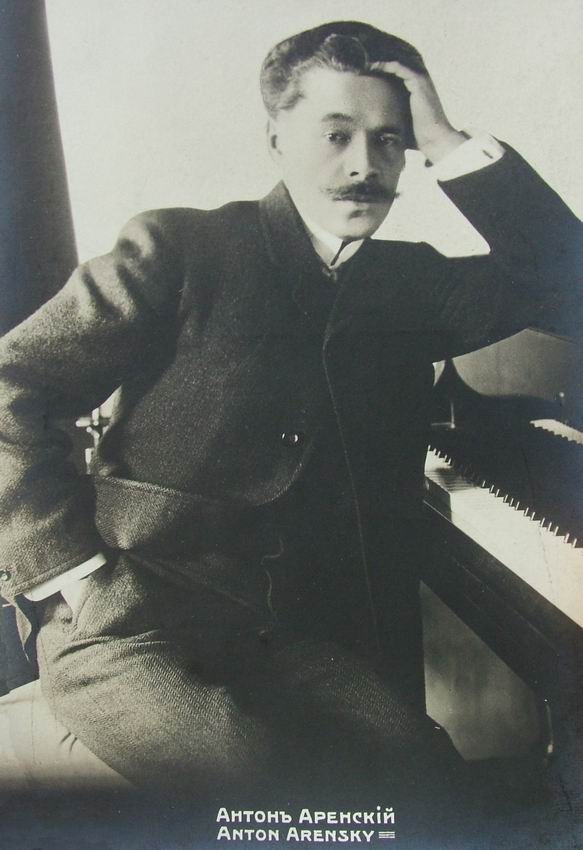
Anton Arensky, 1895
One of his composition teachers, Anton Arensky, suggested that Rachmaninoff should try to write a symphony.
He accepted the challenge and penned a full-size four-movement work, using Tchaikovsky’s Fourth Symphony as a model.
Only the first movement of that work survives. Today, it is known as his Youth Symphony.
Sergey Rachmaninov: Symphony in D Minor, “Youth” (St. Louis Symphony Orchestra; Leonard Slatkin, cond.)
Unfortunately, Arensky wasn’t impressed. But Rachmaninoff wasn’t dissuaded, and he continued composing.
He wrote his first piano concerto in 1891. That same year, his transcription of Tchaikovsky’s Manfred Symphony for piano duet won him Tchaikovsky’s praise. (In fact, in future, when Tchaikovsky needed piano transcriptions, he would hire Rachmaninoff.) He also orchestrated his Caprice Bohémien and wrote a few other shorter orchestral pieces, too.
Sergey Rachmaninov: Caprice Bohemien, Op. 12 (Ireland National Symphony Orchestra; Alexander Anissimov, cond.)
After those projects, and his graduation from the Moscow Conservatory, he felt ready to try his hand at a symphony again.
The Composition of Rachmaninoff’s First Symphony
Rachmaninoff began jotting down preliminary ideas for his first symphony in September 1894. It was written between January and October 1895.
(For context, this was two years after the death of Tchaikovsky and the premiere of Tchaikovsky’s Pathétique Symphony.)
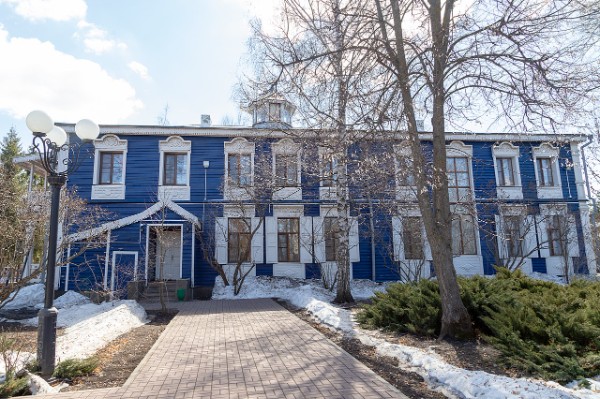
Ivanovka
Rachmaninoff wrote it at Ivanovka, the summer residence of his aristocratic relatives, the Satins.
The bucolic estate was located 600 kilometers southeast of Moscow, far away from the hustle and bustle of the city.
Rachmaninoff’s cousin (and future sister-in-law) Sophia Satina wrote about the estate:
“The small village of Ivanovka adjoined our estate. Endless fields stretched around us, merging on the horizon with the sky. In the distance, in the west, the belfry of our parish church, located five miles from Ivanovka, was visible. In the north is someone’s windmill, to the east is nothing but fields, and to the south is our aspen forest. For many miles around Ivanovka, these aspen trees and our garden near the house were the only trees among the fields, and therefore this aspen tree was a refuge for hares, foxes, and even wolves sometimes running from somewhere….”
Despite the isolation and lack of distractions, composing the symphony proved to be a slog.
In the summer of 1895, he wrote that he was putting in seven hours a day of composing, and still had not finished. By the tail end of the project, in autumn, he was putting in ten-hour days. Finally, he finished on 7 October 1895.
Arranging the First Performance
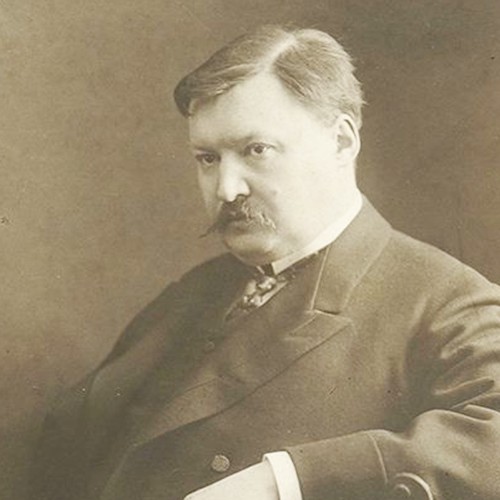
Alexander Glazunov
At this point, he ran into the challenge that all young composers do: finding an orchestra to perform his new work. He wrote to his Moscow Conservatory contacts to get their advice.
Professors Alexander Glazunov and Sergei Taneyev connected him with philanthropist and music publisher Mitrofan Belyayev, a colourful figure whose day job was buying lumber for his family business, and who used his fortune to fund performances of works by various Russian composers.
Glazunov and Taneyev, without having seen the symphony draft, assured Belyayev of Rachmaninoff’s talent. On their recommendation, Belyayev agreed to finance a performance, with Glazunov on the podium.
Glazunov had conducted a performance of Rachmaninoff’s early orchestral fantasy The Rock the year before, so the choice made sense…on paper, at least.
Sergey Rachmaninov: The Rock, Op. 7 (Slovak Radio Symphony Orchestra; Stephen Gunzenhauser, cond.)
But when Rachmaninoff actually sat down to perform a piano version for Taneyev, the professor was unimpressed. He told Rachmaninoff, “These melodies are flabby, colourless – there is nothing that can be done with them.”
In response, Rachmaninoff re-attacked the score he had edited so many times already, desperate to make it work.
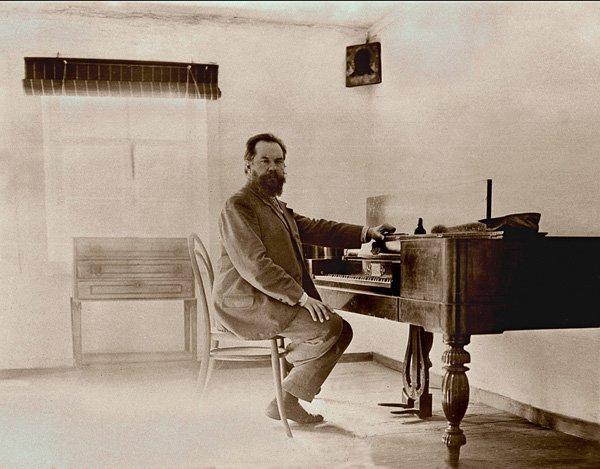
Sergei Taneyev
The Rehearsals of the First Symphony
Despite this inauspicious start, Rachmaninoff’s first symphony entered rehearsals with Glazunov on the podium.
At one of the rehearsals, elder composer Nikolai Rimsky-Korsakov came up to Rachmaninoff to tell him, “Forgive me, but I do not find this music at all agreeable.”
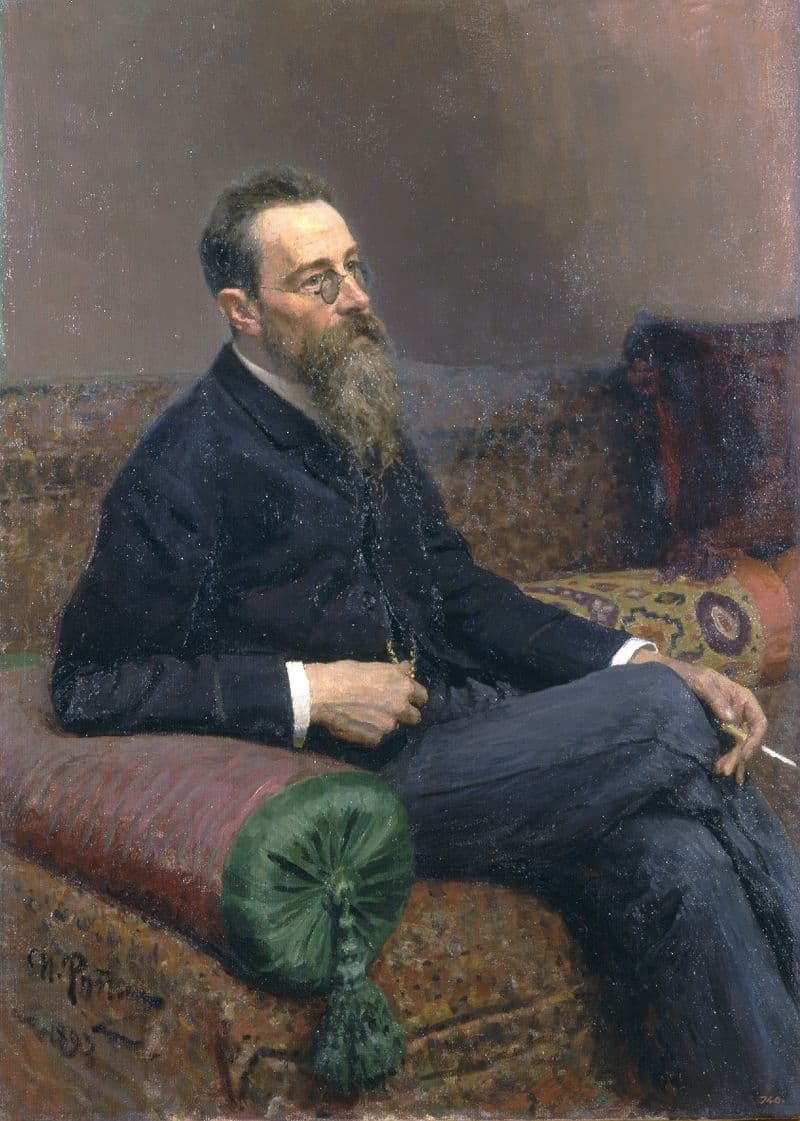
Repin: Nikolai Rimsky-Korsakov
Rachmaninoff began to feel deeply anxious about the symphony to the point that he had trouble composing anything else while awaiting its fateful premiere.
The more Rachmaninoff found out about how the premiere was shaping up, the more cause for concern he had.
First, Glazunov was not conducting well.
Rimsky-Korsakov once wrote of Glazunov:
“Slow by nature, maladroit and clumsy of movement, the maestro, speaking slowly and in a low voice, manifestly displayed little ability either for conducting rehearsals or for swaying the orchestra during concert performances.”
One witness claimed that during his rehearsals for Rachmaninoff’s first, Glazunov was “standing motionless on the conductor’s rostrum, wielding his baton without animation.”
Second, Glazunov was an alcoholic, and it is unclear how sober he was at the rehearsals leading up to the concert. His student Dmitri Shostakovich would later remember how Glazunov kept alcohol in his desk drawer and surreptitiously drank it through a tube.
Third, Glazunov was making cuts to Rachmaninoff’s score…without asking permission.
And as if all that weren’t enough, Rachmaninoff also found out that there would be two other premieres by other composers on the program, meaning less rehearsal time for the symphony…and Glazunov didn’t care for his work any more than Taneyev had.
This wasn’t just because he was drunk or because of Rachmaninoff’s youth; this was because Glazunov simply never connected with Rachmaninoff’s music, ever. “There is a lot of feeling,” Glazunov once said, “but no sense whatever.”
Years later, Rachmaninoff would gift him a copy of the score of his fourth piano concerto. Glazunov proceeded to leave it in his taxicab.
An increasingly stressed Rachmaninoff tried raising his concerns with Glazunov, but it was no use. It became increasingly clear that the deck was stacked against him.
The Disastrous Premiere
Rachmaninoff Symphony No.1, Kochanovsky, NRPO
A few days before Rachmaninoff’s 24th birthday, the symphony premiered in St. Petersburg. Predictably, it was a disaster.
Another conductor, Alexander Khessin, wrote of the concert:
“The Symphony was insufficiently rehearsed, the orchestra was ragged, basic stability in tempos was lacking, many errors in the orchestral parts were uncorrected; but the chief thing that ruined the work was the lifeless, superficial, bland performance, with no flashes of animation, enthusiasm, or brilliance of orchestral sound.”
The performance was so bad that Rachmaninoff fled the concert hall before it was over.
St. Petersburg-based composer and critic Cesar Cui, motivated by politics and an anti-Moscow and anti-progressive bias, wrote an infamous review of the symphony. It has since gone down in the annals of classical music criticism as one of the most brutal ever.
“If there were a conservatory in Hell, and if one of its talented students were to compose a programme symphony based on the story of the Ten Plagues of Egypt, and if he were to compose a symphony like Mr. Rachmaninoff’s, then he would have fulfilled his task brilliantly and would delight the inhabitants of Hell. To us, this music leaves an evil impression with its broken rhythms, obscurity and vagueness of form, meaningless repetition of the same short tricks, the nasal sound of the orchestra, the strained crash of the brass, and above all, its sickly perverse harmonisation and quasi-melodic outlines, the complete absence of simplicity and naturalness, the complete absence of themes.”
What Rachmaninoff Took Away From the Premiere
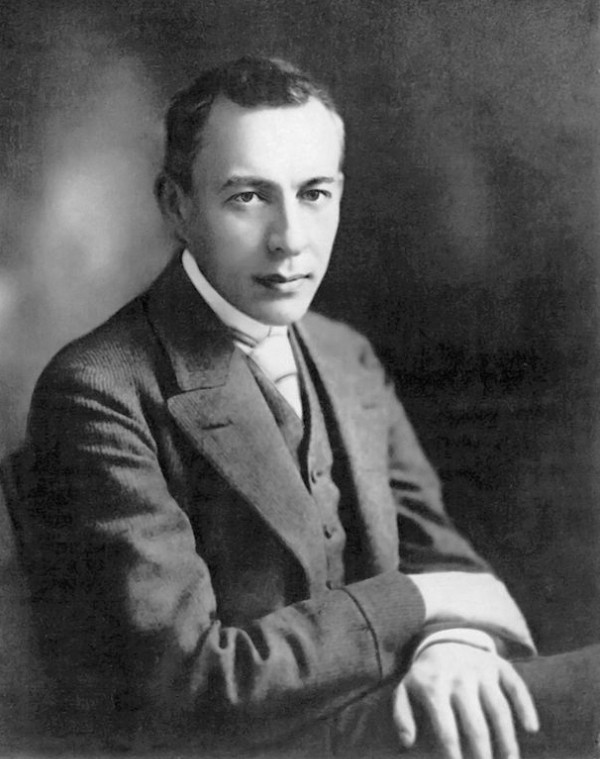
Sergei Rachmaninoff
Rachmaninoff took a breath to process all that had happened.
A little over a month later, he wrote to fellow composer Alexander Zatayevich a letter about the premiere, “though it is difficult.”
He wrote that he wasn’t particularly bothered by the bad reviews, but he was despondent over the fact that the symphony “did not please me at all after its first rehearsal.”
He also wrote, “I am amazed – how can a man with the high talent of Glazunov conduct so badly? I speak not merely of his conducting technique (there’s no use asking this of him), but of his musicianship. He feels nothing when he conducts – as if he understands nothing!”
He concluded by writing, “At present I’m inclined to blame the performance,” although he also admitted, “Tomorrow, probably, this opinion, too, will change.”
He declared that he would take the symphony up again in the future and assess its worth then. If he wasn’t pleased with it, he would, he announced, “tear it up.”
How Rachmaninoff Recovered – And Came Back Better Than Ever
Rachmaninoff had made sketches for a second symphony, but, suddenly shaken, he abandoned them.
For three years after the concert, he didn’t compose anything. Instead, he focused on playing piano and conducting.
It took an intervention from his friends and family before he pursued treatment for his mental health.
That is another story in and of itself, but happily, the whole affair ended with his recovery, thanks to the help of a talented doctor and hypnotherapy.
Rachmaninoff’s comeback work became one of the best-known works in the entire classical music repertoire: his second piano concerto.
For more of the best in classical music, sign up for our E-Newsletter