The history of classical music isn’t just a parade of masterpieces. It’s a story of human beings whose friendships shaped those masterpieces.
Many of the great works of classical music emerged from collaborations, rivalries, mentorships, and deep personal bonds.
Taken together, these stories underline how the canon was created not by a series of individual geniuses, but by interconnected friends whose relationships shaped the music we still play today.
1. Johann Sebastian Bach & Georg Philipp Telemann
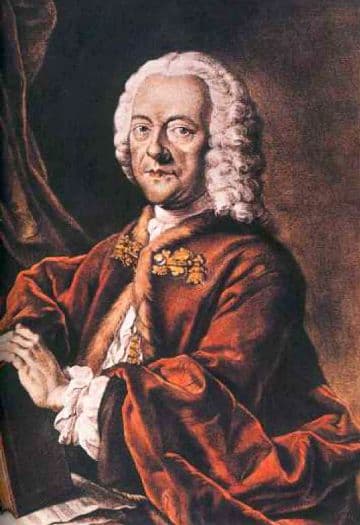
Georg Philipp Telemann
In 1714, when Johann Sebastian Bach asked Georg Philipp Telemann to be godfather to his newborn son (named Carl Philipp Emanuel in his honour), he was paying tribute not just to a colleague, but a close friend.
They met in the early 1710s, when Telemann was based in Eisenach and Bach was working about fifty miles away in Weimar.
Georg Philipp Telemann: Concerto for 2 Flutes in G Major, TWV 53:G1 (Barthold Kuijken, flute; Leela Breithaupt, flute; Stephanie Corwin, bassoon; Indianapolis Baroque Orchestra; Barthold Kuijken, cond.)
A few years later, in 1722, they competed (cordially!) for the prestigious post of Thomaskantor in Leipzig.
Telemann actually won the Leipzig job, but he ended up using it as leverage to secure another position in Hamburg, and the position ultimately passed to Bach. Many of Bach’s most famous works date from his time in Leipzig.
Excerpt from Bach’s St. Matthew Passion, written in Leipzig in 1727
Both influenced each other’s music. For instance, we know that Bach copied at least one of Telemann’s compositions to study.
Their legacies remained intertwined even after death. After Telemann died in 1767, his successor in Hamburg was none other than the baby named after him: Carl Philipp Emanuel Bach.
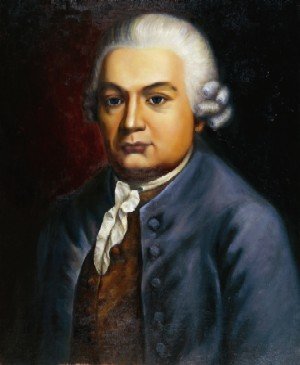
Carl Philipp Emanuel Bach
Carl Philipp Emanuel Bach: Keyboard Sonata in F Major, Wq. 48/1, H. 24, “Prussian Sonata No. 1” (Susan Alexander-Max, fortepiano)
2. Joseph Haydn & Wolfgang Amadeus Mozart
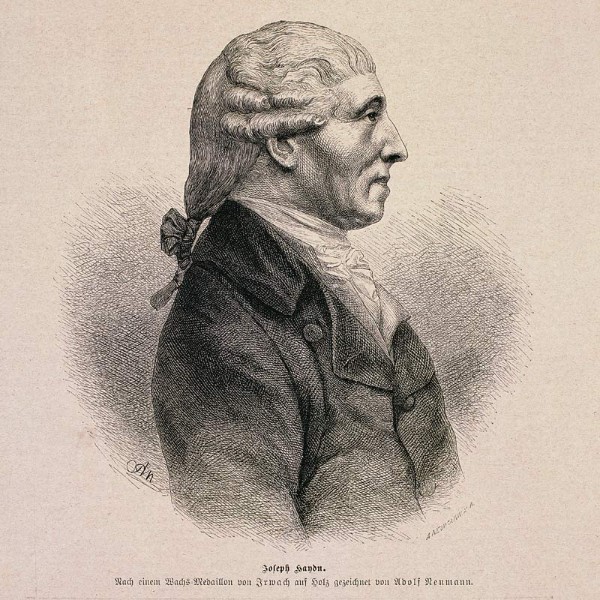
Portrait of Joseph Haydn
Haydn and Mozart came from different generations, but that didn’t keep them from enjoying one of the warmest friendships in music history.
They met in Vienna around 1783, when Mozart was an up-and-coming composer, and Haydn was the art’s elder statesman.
Franz Joseph Haydn: String Quartet No. 53 in D Major, Op. 64, No. 5, Hob.III:63, “The Lark” (Kodály Quartet, Ensemble)
The two men were known to play string quartets together for fun, with Haydn on violin and Mozart on viola.
Inspired by those get-togethers, as well as the work Haydn had done in establishing the string quartet as an important genre, in 1785, Mozart wrote a set of six string quartets that he dedicated to Haydn.
Mozart’s String Quartet No. 14
When Haydn heard them, he famously wrote to Mozart’s father, “I have never heard anything like this. Your son is the greatest composer known to me, either in person or by name.”
For his part, Mozart wrote, “It was from Haydn that I first learned the true way to compose quartets.”
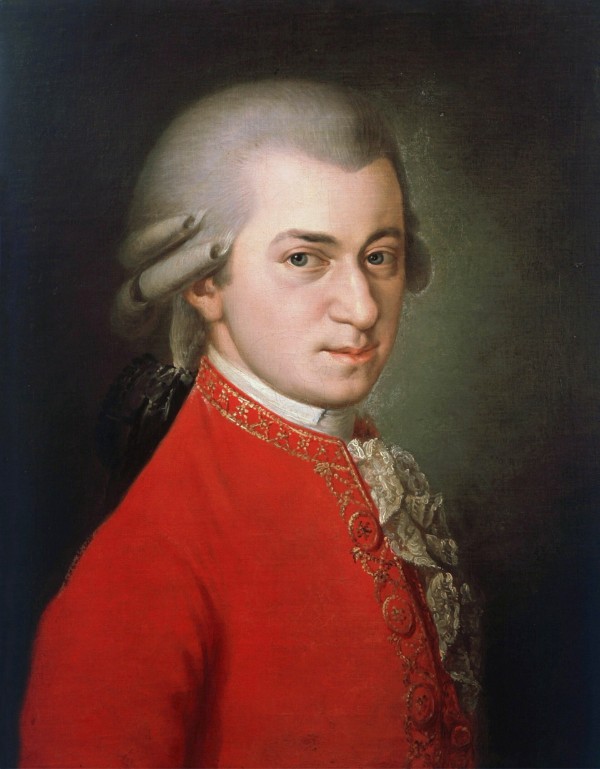
Wolfgang Amadeus Mozart
When Mozart died in 1791, Haydn was shocked and devastated by the loss.
Their friendship left a lasting mark on chamber music and remains one of the sweetest friendship stories in classical music history.
3. Ludwig van Beethoven & Ferdinand Ries
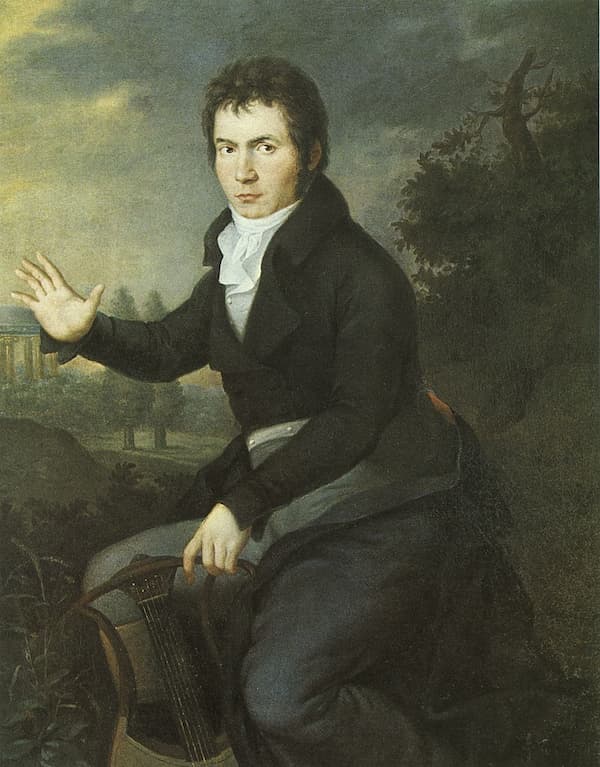
Joseph Willibrord Mähler: Ludwig van Beethoven, ca 1804–1805 (Vienna Museum)
Ludwig van Beethoven was born in the city of Bonn to a court musician and his wife. One of young Ludwig’s music teachers was a trumpeter colleague of his father’s by the name of Ries.
Fast forward to 1801, when Beethoven had established himself as an important musical voice in Vienna. That year, Ries’s teenage son, Ferdinand Ries, fourteen years Beethoven’s junior, moved to Vienna and soon began studying piano with him.
It wasn’t long before Ries became a Beethoven apprentice of sorts, working as secretary, assistant, and copyist.
Beethoven was so impressed by his growth that he encouraged Ries to make his Viennese debut playing Beethoven’s Third Piano Concerto.
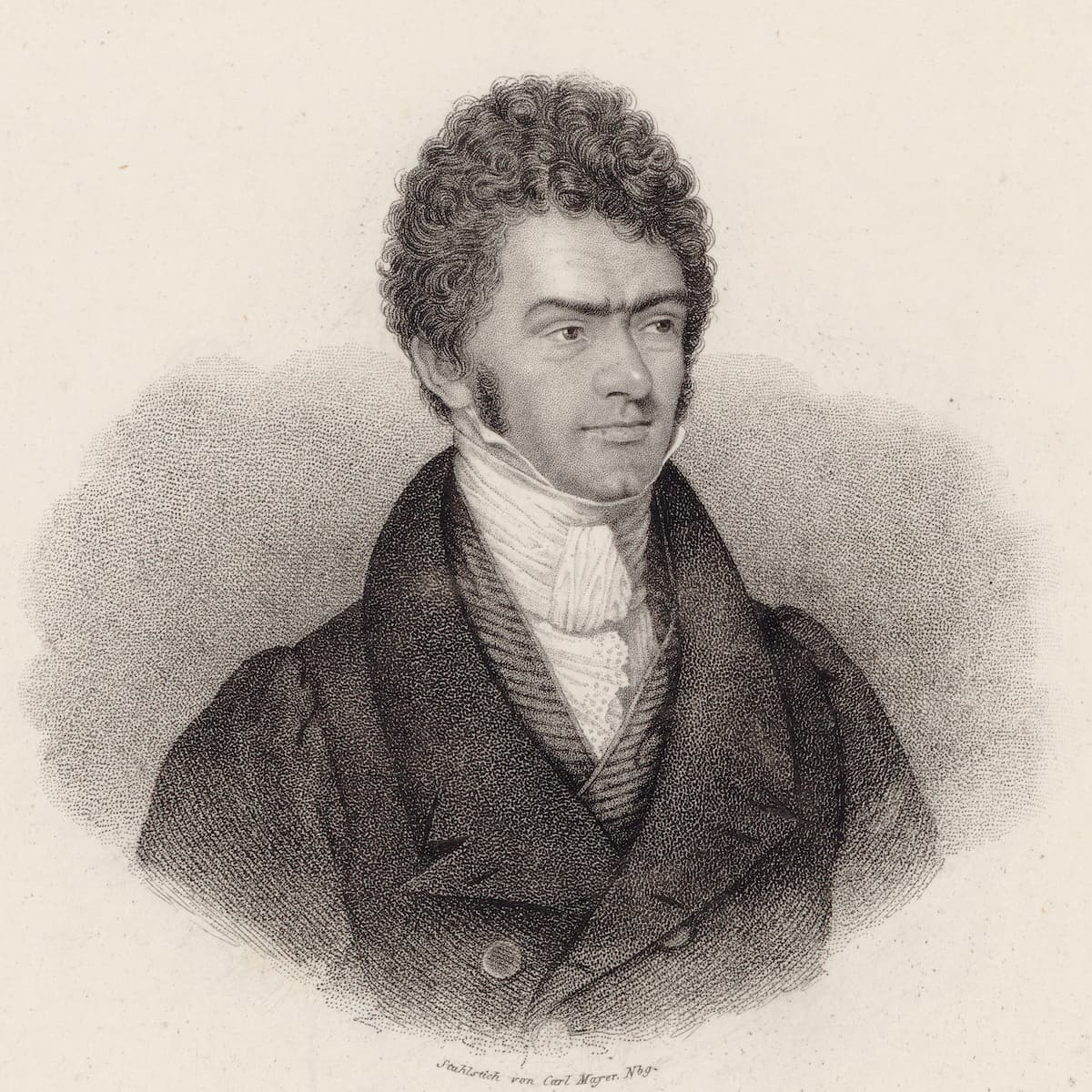
Ferdinand Ries
Ries would also be present at the first rehearsals of Beethoven’s Eroica Symphony. During the unconventional opening, he thought a horn player had mistakenly entered early…only for Beethoven to bark that Ries hadn’t understood the score. Ries never forgot the incident; it became one of the best-known stories in his memoirs.
Beethoven’s Symphony No. 3, “Eroica”, Movement 1
Ries left Vienna in 1805 to make his name as a piano virtuoso and composer, but the two friends kept in touch.
During the 1810s, he moved to London, where he was involved in the commission of Beethoven’s Ninth Symphony by the London Philharmonic Society. In 1825, he would conduct the German premiere of the symphony.
After Beethoven died in 1827, Ries published his reminiscences of Beethoven, keeping his friend and mentor’s memory alive.
Read more about Ferdinand Ries’s Beethoven transcriptions.
Ferdinand Ries: Piano Trio in C Minor, Op. 143 (Trio Egmont, Ensemble)
4. Richard Wagner & Franz Liszt
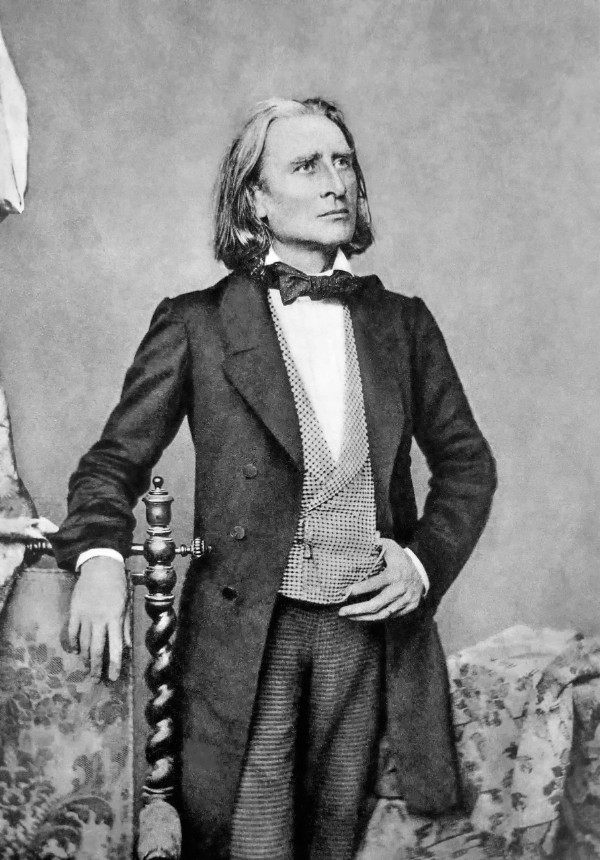
Franz Liszt
Franz Liszt and Richard Wagner were almost exact contemporaries, born in 1811 and 1813, respectively. Their friendship helped Wagner survive both political exile and perpetual financial disaster.
They first met in 1841, when Wagner was a struggling 28-year-old opera composer and Liszt a celebrated 30-year-old piano virtuoso.
Wagner was initially jealous of Liszt’s fame and felt snubbed by him, but Liszt worked to win him over.
By the late 1840s, Liszt had become an enthusiastic supporter of Wagner’s music.
That support became crucial after the revolutions of 1848–49, which sent Wagner into years of exile.
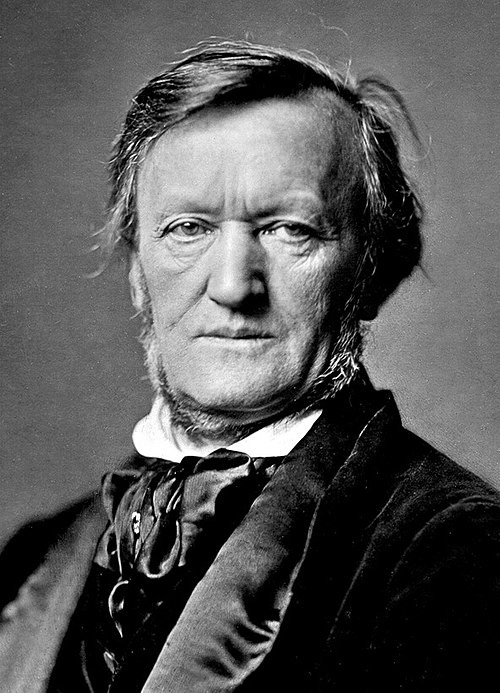
Richard Wagner
In 1849, Wagner wrote after seeing Liszt conduct his music, “I recognised my second self in his achievement. What I had felt in inventing this music, he felt in performing it.”
Liszt also made hugely important transcriptions of Wagner’s orchestral works for piano. In a time before recordings, the best way to disseminate those works to a wide audience was by transcribing them.
Franz Liszt: Wagner – Isoldes Liebestod aus Tristan und Isolde, S447/R280 (William Wolfram, piano)
Liszt also provided Wagner with extraordinary financial support; Wagner was shameless about asking for large gifts. (Liszt usually obliged.)
Their artistic alliance was sealed in 1870, when Liszt’s daughter Cosima married Wagner.
Liszt lived to see Wagner’s final opera, Parsifal, premiered at Bayreuth in 1882.
Franz Liszt: Wagner – Tannhauser: Pilgrim’s Chorus, S443/R276 (William Wolfram, piano)
When Wagner died the following year, Liszt was one of the principal mourners. A few years later, Liszt himself died in Bayreuth with Cosima Wagner at his deathbed.
We wrote about the friendship between Liszt and Wagner.
5. Johannes Brahms & Robert and Clara Schumann
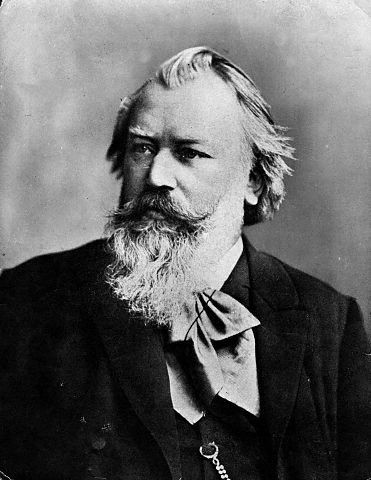
Johannes Brahms
In September 1853, an up-and-coming 20-year-old composer named Johannes Brahms traveled to Düsseldorf to call on Robert and Clara Schumann.
Robert, a well-known composer, music journalist and publisher, was 43, and Clara, one of the greatest pianists of the century, was 34.
The Schumanns were thrilled by Brahms’s genius. In fact, Robert declared that he was “the chosen one” who would carry German music into the second half of the nineteenth century.
Weeks later, he wrote an article declaring that Brahms “has sprung fully armed from the head of Jove.”
Brahms’s Piano Sonata No. 1
For a few months, the friends bonded by learning and playing each other’s music.
The following February, a crisis struck when Robert had a mental breakdown and attempted suicide by throwing himself into the Rhine.
After he was rescued, he agreed to be brought to an asylum. He would not survive his stay.
Brahms pitched in to help raise Robert and Clara’s children and composed music to comfort Clara, who was pregnant with her seventh baby. He even went so far as to write a series of bittersweet variations on a theme that Robert and Clara had once exchanged. Explore more of these variations.
Johannes Brahms: 16 Variations on a Theme by R. Schumann, Op. 9 (Gabriele Carcano, piano)
Brahms visited Robert in the asylum and sent reports of his condition back to Clara. (Clara wasn’t allowed to visit until his death was imminent, for fear it would trigger a relapse.)
During this time, Brahms fell in love with Clara, and arguably, he never quite fell out of love with her.
Even after Robert’s death in 1856, and as both Clara and Brahms pursued their respective careers at the highest levels, they remained close friends and creative soulmates, writing hundreds of letters back and forth.
The friendship was foundational to both musicians for the rest of their lives.
6. Gustav Mahler & Bruno Walter
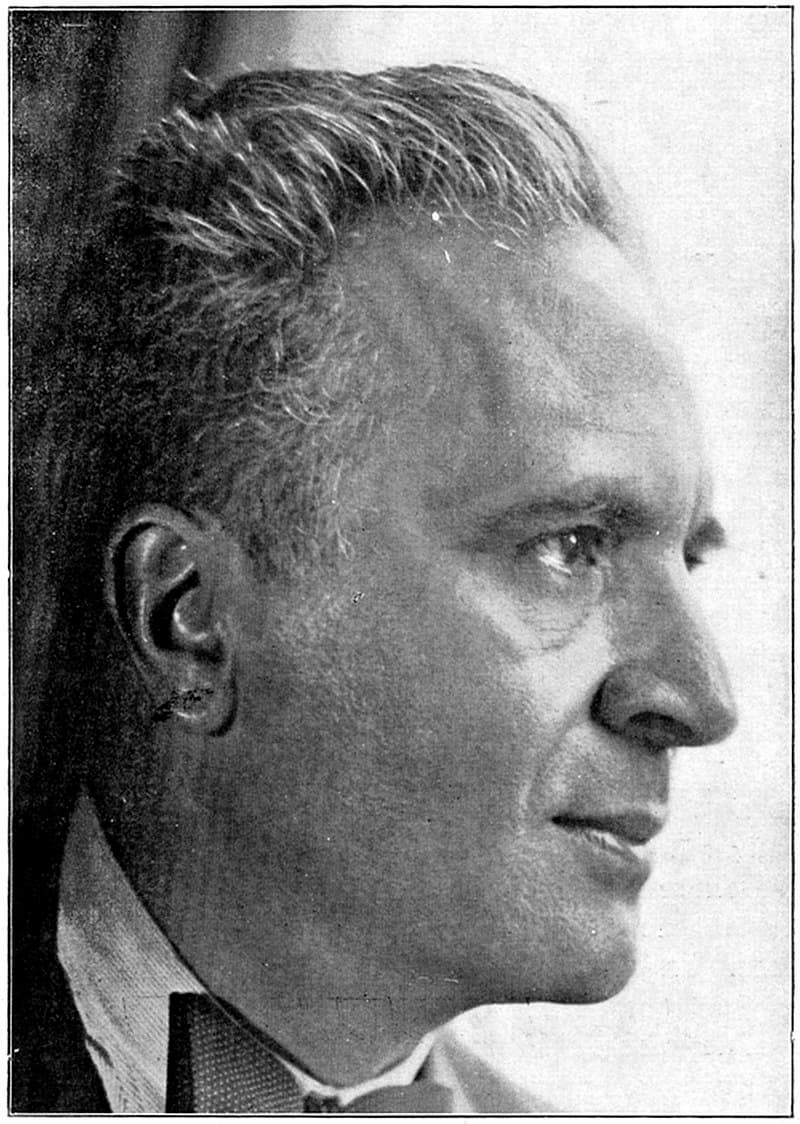
Bruno Walter, 1937
Like Beethoven and Ries, the friendship between Mahler and Walter started as a mentor/protégé relationship.
Gustav Mahler first met Bruno Walter – sixteen years his junior – in the 1890s, when Mahler was the director of the prestigious Vienna Court Opera.
Walter sharing his memories of Mahler
In 1897, Mahler recommended 21-year-old Walter for a conducting position at the opera house in Breslau.
A few years later, Mahler invited him to join him as an assistant conductor at the Court Opera.
There, Walter worked closely with Mahler, coaching singers and conducting rehearsals.
He also helped prepare premieres of Mahler’s works, like his Eighth Symphony (nicknamed Symphony of a Thousand, after the hundreds of musicians and singers required to perform it).
When Mahler died of a heart infection in May 1911, Bruno Walter was at his deathbed.
After Mahler’s death, and in partnership with Gustav’s wife Alma, Walter began championing his mentor’s works.
Six months after Mahler’s death, Walter led the posthumous premiere of his Das Lied von der Erde (The Song of the Earth), which is still in the repertoire today.
Gustav Mahler: Das Lied von der Erde (Song of the Earth) (Mildred Miller, mezzo-soprano; Ernst Haefliger, tenor; New York Philharmonic Orchestra; Bruno Walter, cond.)
The following year, he conducted the premiere of Mahler’s Symphony No. 9 with the Vienna Philharmonic.
He would go on to make benchmark recordings of the symphonies and even write a book called Gustav Mahler.
Without Walter’s championing, Mahler’s symphonies might not have risen to the central place in the repertoire that they hold today.
Read more about Walter’s career and connection to Mahler.
Gustav Mahler: Symphony No. 2 in C Minor, “Resurrection” (Maureen Forrester, contralto; Emilia Cundari, soprano; Westminster Choir; New York Philharmonic Orchestra; Bruno Walter, cond.)
Conclusion
These six friendships show that, contrary to popular imagination, classical music didn’t grow out of lonely isolation, but out of long-term artistic partnerships.
Bach and Telemann challenged each other; Haydn and Mozart redefined the quartet; Beethoven and Ries forged a productive mentor-protégé bond; Liszt helped support Wagner’s art and became his father-in-law; Brahms found a second family with the Schumanns; and Mahler and Walter created and preserved a symphonic legacy that shapes concert halls today.
These works remind us that behind every masterpiece lie the relationships that made it possible.
For more of the best in classical music, sign up for our E-Newsletter