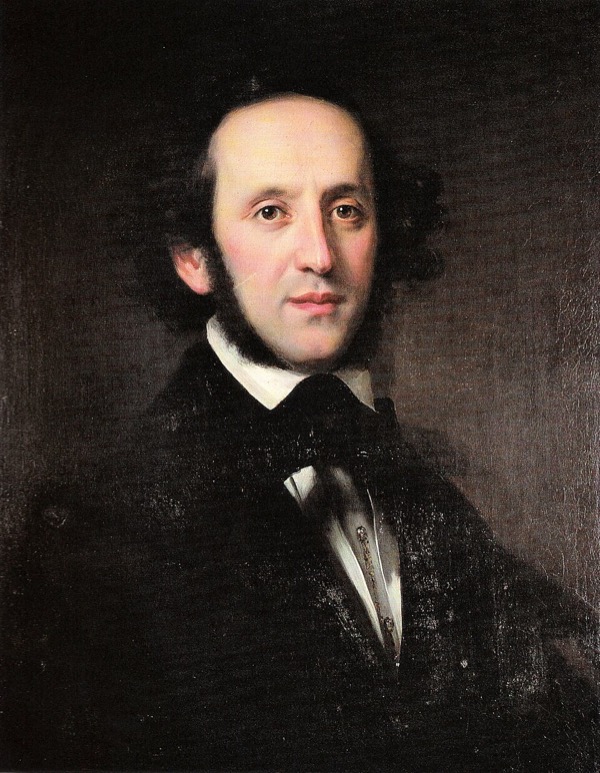
Clara Schumann is remembered today as one of the greatest pianists of the nineteenth century – but her influence didn’t end with her own performances.
Over the course of her career, she taught hundreds of students, shaping the next generation of pianists and, through them, the generations that followed.
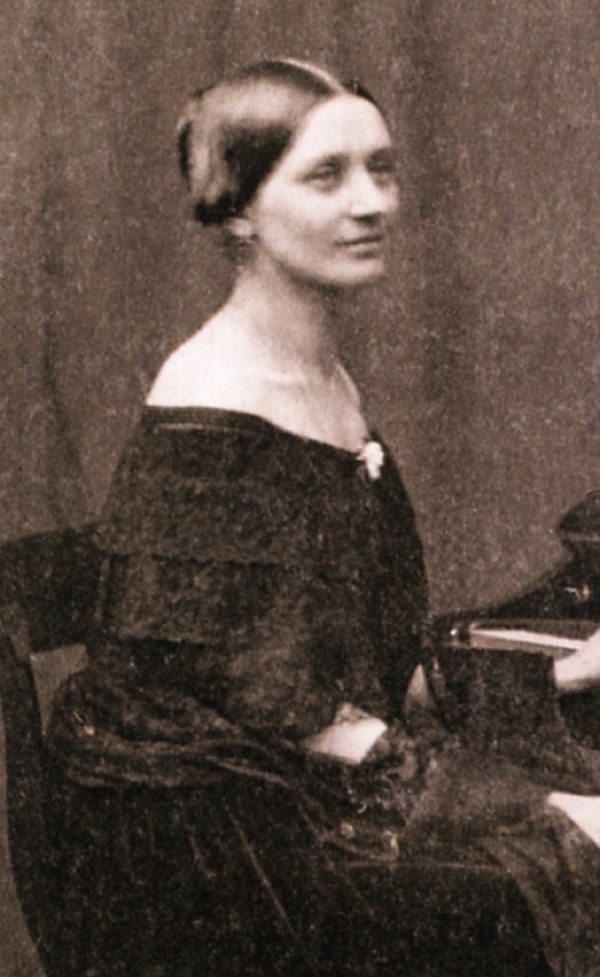
Clara Schumann
Her students came from across Europe, arrived with vastly different temperaments and ambitions, and left her studio carrying her exacting standards into concert halls and conservatories around the world.
Some became lifelong friends, while one barely lasted a year.
Here are four of their stories.
Emilie Steffens Heydenreich (1830-1910)
In 1848, when she was eighteen, pianist Emilie Steffens moved to Dresden and started taking piano lessons with Clara Schumann.
She quickly became a member of the Schumann family’s daily life, attending birthdays and holiday celebrations.
She also sang in the Dresden Choral Singing Society, which Robert and Clara Schumann co-directed.
Later in life, she wrote down her memories of life in the Schumann household, reporting that Robert would work until six o’clock in the evening, after which Clara would spend two hours practising.
She wrote:
“When [Robert] Schumann came in, I saw at once whether my presence was welcome or not. If he looked at me kindly out of his deep soulful eyes and smiled, I knew that I need not go away; but if he was quiet, serious, absorbed, then I knew as surely that he was preoccupied with some work, and would rather be alone and undisturbed, so, making a pretext, I slipped quietly away.”
One time Robert secretly asked her for help picking out a hat for Clara’s birthday, arranging the options on the piano. Steffens remembered that she approved of Robert’s final selection.
The Schumanns trusted Emilie Steffens so much that, in 1850, when the couple went on tour together, they left Emilie in charge of their children and household.
Clara wrote to her, “Give my little ones, for whom I yearn so much, 1000 kisses.”
Another time she wrote, “I am alarmed at how much I am asking you to do; unfortunately, it cannot be helped. I am very much looking forward to the children and also to you, my dear Emilie.”
She’d made her Dresden debut in February 1849 alongside Clara Schumann and celebrated soprano Wilhelmine Schröder-Devrient. Still, two years later, she opted to retire from the stage to marry clergyman Julius Carl Heinrich Heydenreich. The couple went on to have three children of their own.
As she focused more on her own family, she and the Schumanns drifted apart, but she always treasured her memories of her time with them.
Luise Adolpha Le Beau (1850–1927)
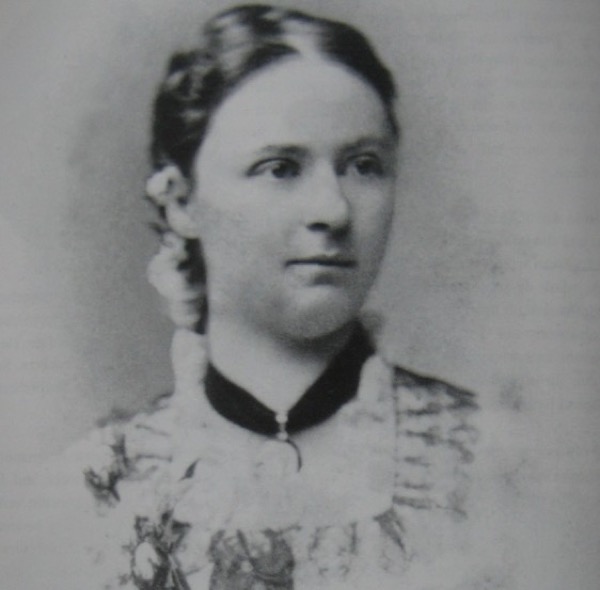
Luise Adolpha Le Beau
Pianist and composer Luise Adolpha Le Beau was born in Baden in 1850 to a musical family.
She began composing at the age of eight. Ten years later, she made her debut with the Baden Court Orchestra, playing Mendelssohn’s first piano concerto.
Although she was celebrated as a piano virtuoso, she longed to make her mark as a composer.
Le Beau’s Drei Stücke, Op. 26
In the summer of 1873, her parents – both supporters of their daughter’s musical career – suggested that she study with Clara Schumann. At the time, Le Beau was 23 and Clara Schumann 54.
The two women had twelve lessons together, but that was all, suggesting that there was some fallout.
They were from very different generations, and the role of women in music was changing rapidly around them. Perhaps that difference contributed to their split.
They also had very different musical priorities. Le Beau dreamed of becoming a great composer, while Schumann had largely quit composing after her husband’s death twenty years earlier.
On top of that, Le Beau’s aesthetic sympathies lay more with the Liszt and Wagner camp than with the conservative Schumann and Brahms school.
Whatever the reasons, by February 1874, less than a year after she’d started, Le Beau had left Schumann’s studio, opting to tour the Netherlands instead.
In the end, her time with Clara Schumann didn’t leave much of a mark. Today, Le Beau is one of the most famous women composers of the Romantic era.
Emma Brandes (1853-1940)
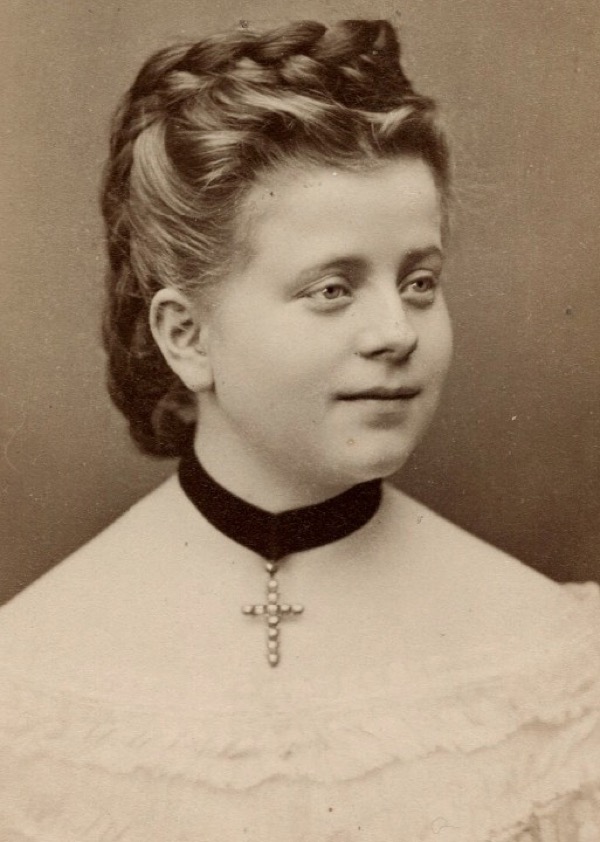
Emma Brandes
In 1869, Clara Schumann met 15-year-old piano prodigy Emma Vick (stage name: Emma Brandes). She’d been born in Neubukow, Germany, on the Baltic Sea, to a lower-class family.
Schumann was enchanted by her playing, and confided to her diary that she wouldn’t mind teaching her.
The following year, in July 1870, Brandes began officially studying with her.
Schumann’s diary entry about her is striking:
“I took great pleasure in her, and I liked her more with each passing day. It was a very exciting time for me; I lived through my earliest youth with her, and despite the joy I had in finally seeing a talent that really suited my taste emerge, and above all an interpreter of Robert’s compositions, I was always overcome by the melancholy thought that soon I would no longer be there – this one will replace me!”
Clara continued:
“With every piece that she played for me, she amazed and delighted me anew. When she sits down at the piano, she immediately becomes solemnly serious; she is completely devoted to it, and I have never seen this in any of the young girls who rose and then faded away one after the other.”
During the early 1870s, Brandes toured extensively, but she retired in 1874 at the age of twenty-one.
Soon after, she married a physiologist and amateur cellist named Theodor Wilhelm Engelmann. Between 1875 and 1885, the couple had four children.
She tried her best to balance motherhood and her art, with her husband reporting to Clara Schumann in a letter that she “tried not to forget the artist while being a housewife.”
In the end, instead of pursuing a public-facing career like her mentor, Brandes – now known as Frau Engelmann – focused on cultivating musical friendships with figures like Johannes Brahms and Edvard Grieg.
She was also famous for her musical salons and soirees, which routinely included audiences of two hundred, as well as charity concerts.
Arthur Rubinstein’s performance of Robert Schumann’s Carnaval
Pianist Arthur Rubinstein met her when he was a boy. He later wrote about her:
“This small, plump lady in her fifties always seemed as if she were about to be crushed by her old-fashioned corsets. Her full face had lively, sharp eyes, and with her insatiable industriousness, she never walked when she could run. But what a great pianist she was! She played very simply, but extraordinarily expressively; no trace of the tremendous power of a Carreño, no trace of the ‘sensibility’ of many pianists. We often played Brahms and Schumann for each other, and since she had personal connections with both, she was able to tell me a lot that hardly anyone else knew.”
Fanny Davies (1861-1934)
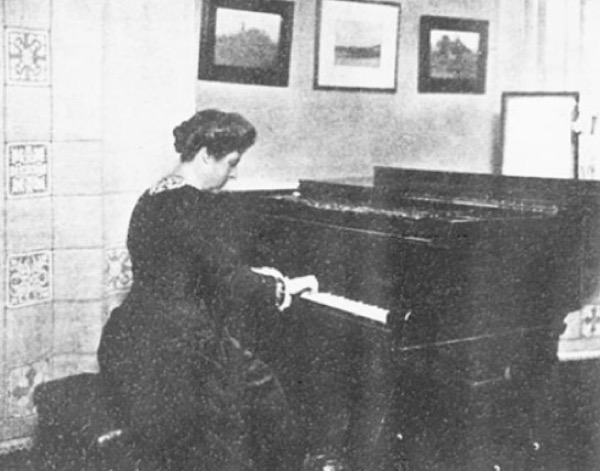
Fanny Davies
Pianist Fanny Davies – likely Clara Schumann’s most famous student – was born in 1861 in Guernsey, an island in the English Channel, but moved to Birmingham early.
She was a child prodigy, giving her first public performance at age 6, but her family kept her from touring as a child, and she studied at home in Birmingham.
In the autumn of 1882, she travelled to Leipzig to study piano and composition at the Leipzig Conservatory. The following school year, she transferred to Dr Hoch’s Konservatorium in Frankfurt to study under Clara Schumann.
She graduated from the conservatory in the summer of 1885, playing Robert Schumann’s Symphonic Etudes at her final exams.
Fanny Davies playing Robert Schumann’s Kinderszenen
After graduation, she went on to a long and influential career. She made her professional British debut in October of 1885, playing Beethoven’s Fourth Piano Concerto at the Crystal Palace in London.
Her base of operations was in England, but she toured Germany and maintained her friendships with the musicians she’d met on the Continent.
One of her most famous chamber music partners was violinist Joseph Joachim, who had been a dear friend of Robert and Clara Schumann, as well as of Johannes Brahms, for decades.
Like her teacher, she was renowned for her large repertoire. It was said to consist of 500 pieces and thirty concertos, spanning centuries.
Fanny Davies’s recording of Robert Schumann’s Piano Concerto
She eventually became passionate about teaching. Her students were so well-trained that Clara Schumann began reserving places in her own schedule for them.
Their long friendship came to an end in 1893, when Clara’s youngest daughter, the piano teacher Eugenie Schumann, came to London to teach Davies’s students while Davies was away on tour.
Miscommunications ensued, and the handing-off of the students between the two women turned messy. They quarrelled, and Clara took Eugenie’s side.
Clara Schumann died at the age of 76 in May 1896, leaving no chance for reconciliation.
Despite the sad ending to their long friendship, thanks to her extraordinary career, Davies carried Clara Schumann’s pianistic legacy into the twentieth century.
Conclusion
Four students, four entirely different stories. Emilie Steffens became family. Luise Adolpha Le Beau walked away and made her own career. Emma Brandes continued her rich musical life in the private sphere. And Fanny Davies carried the torch into the twentieth century.
What unites these four women is their work with Clara Schumann – a teacher who inspired devotion, demanded excellence, and left a mark that would continue well into the twentieth century.
For more of the best in classical music, sign up for our E-Newsletter