The long-standing series on SOMM Recordings of the live performances by English conductor Sir Thomas Beecham (1879–1961) has been a revelation, showing what a consummate musician can do with a great orchestra.
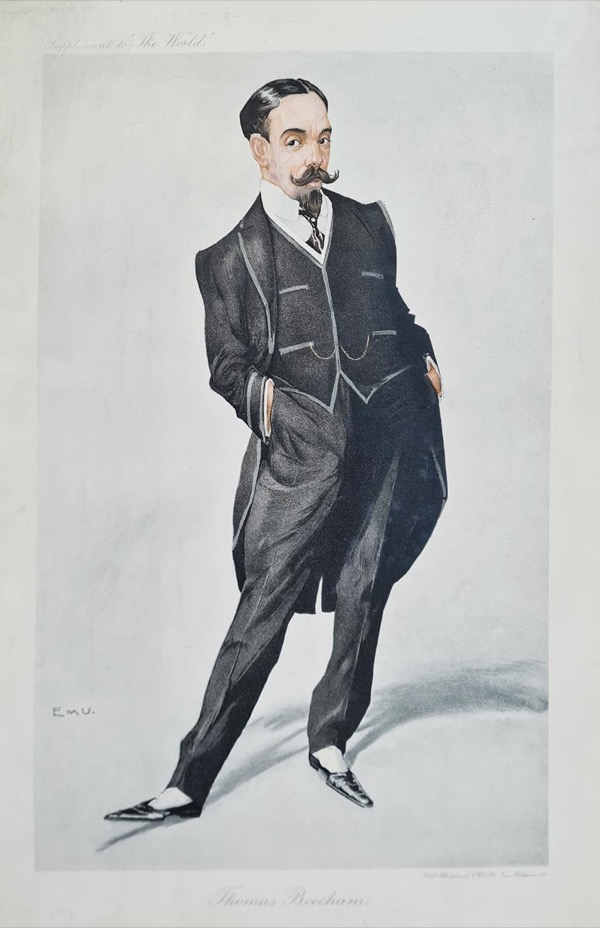
EMU: Thomas Beecham, 1910 (The World Supplement, 18 October 1910)
Until these SOMM recordings came out, we were mostly limited to Beecham’s studio recordings, which were nothing to be ashamed of. The live recordings might have circulated privately or were in the hands of the Beecham family. In fact, many of the early SOMM recordings were from the private family collection.
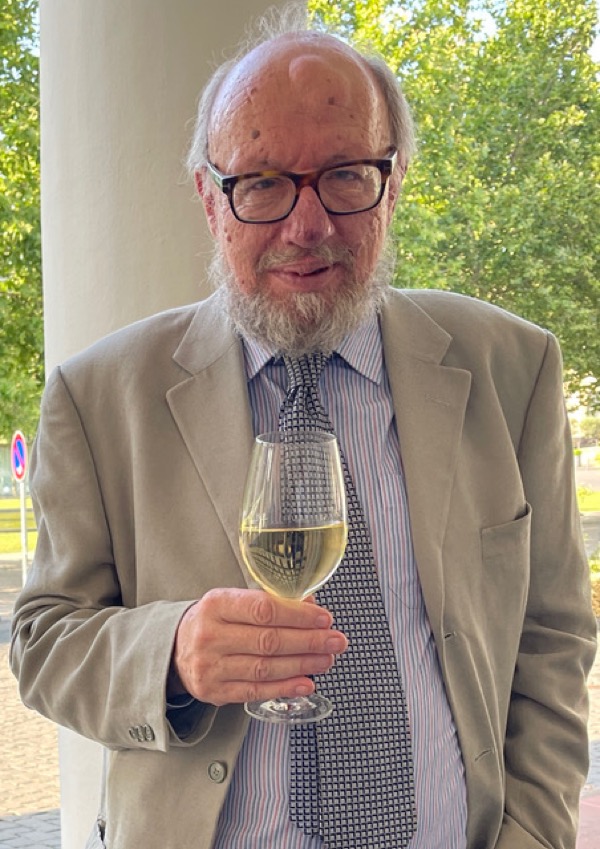
Nigel Simeone
We spoke with musicologist Nigel Simeone the other day about these SOMM recordings and Beecham’s role in English music. Beecham is considered Britain’s first international conductor. The majority of his career was spent in England. Still, he was also music director of the Seattle Symphony (1941–1944) and conducted at the Metropolitan Opera in New York from 1942 to 1944, with a repertoire that included Carmen, Faust, Manon, Mignon, Les Contes d’Hoffmann, and seven performances of Tristan und Isolde.
Beecham never had formal training as a conductor, being totally self-taught. He read Classics at Oxford and played piano, but his small hands and a wrist injury in 1904 put an end to that as a career. He studied composition with Frederic Austin in Liverpool, Charles Wood in London, and Moritz Moszkowski in Paris.
Bedřich Smetana: Prodaná nevěsta (The Bartered Bride) (excerpts): Act III: Dance of the Comedians (Royal Philharmonic Orchestra; Thomas Beecham, cond.)
He began conducting in 1899, with a pickup ensemble of players from the Liverpool Philharmonic Orchestra and the Hallé in Manchester as well as some local musicians. What differentiates Beecham from other conductors was his family wealth, which came from a patent over-the-counter cure-all (Beecham’s Pills). The pills were made for nearly 140 years (1859 –1998). The money from this popular pill funded Thomas Beecham’s musical expression: he made his public conducting debut in 1902 with the Imperial Grand Opera Company. In 1906, he conducted the New Symphony Orchestra, an ensemble of a mere 46 players.
In assessing the orchestral situation in London, he decided that he needed an orchestra big enough to compete with The Queen’s Hall Orchestra (founded in 1895) and the new London Symphony Orchestra (founded in 1904). At first, he just enlarged the NSO, but in 1909 he founded the Beecham Symphony Orchestra, recruiting younger players, many of whom would go on to achieve their own fame.
Hector Berlioz: La damnation de Faust, Op. 24, Part I: Hungarian March, “Rákóczy March” (Royal Philharmonic Orchestra; Thomas Beecham, cond.)
He was famous, though, for his programming that followed his own desires rather than those of the audience. His new orchestras consistently lost money, but he was able to promote the composers he liked, including Frederick Delius, Étienne Méhul, Nicolas Dalayrac, Ferdinando Paer, Vincent d’Indy, and Édouard Lalo. You’ll see the emphasis on French composers. Particularly in the early years of his career, he conducted relatively few German works.
By 1912, Beecham’s orchestra was widely regarded as one of the best in the world. In 1932, Beecham and the rising conductor Malcolm Sargent created a new orchestra, the London Philharmonic Orchestra (LPO), thus giving Beecham his stage. It had 106 members, some straight from music college, some from provincial orchestras, and 17 of the London Symphony Orchestra’s leading members. In the LPO, Beecham had an orchestra that was not only the best in the country but also served as the platform for his opera seasons at Covent Garden, his recording orchestra (with more than 300 records), and his orchestra for performances on London’s concert stages. The orchestra loved their conductor, admiring his musicianship, and their conductor loved his audiences.
Simeone said that Beecham’s next orchestra, the Royal Philharmonic (founded in 1946), was completely hand-picked and somewhat cast his old orchestra, the LPO, in the shade. His wind section, with Gerald Jackson (flute), Jack Brymer (clarinet), Gwydion Brooke (bassoon), and Terence MacDonagh (oboe), was considered unrivalled. Simeone said the RPO was known as an ‘orchestra of generals’, i.e., the leading performers on their instruments. Their quality and character were perfect for Beecham, who could encourage each player’s individuality to come out in their performances. He didn’t bring the RPO up to his level; they started at the top. Beecham was a great founder of orchestras, but less of a trainer: he left it up to the players to remain at the top.
Beecham fiercely protected his position as the leading British conductor, preventing other conductors from appearing at Covent Garden, for example.
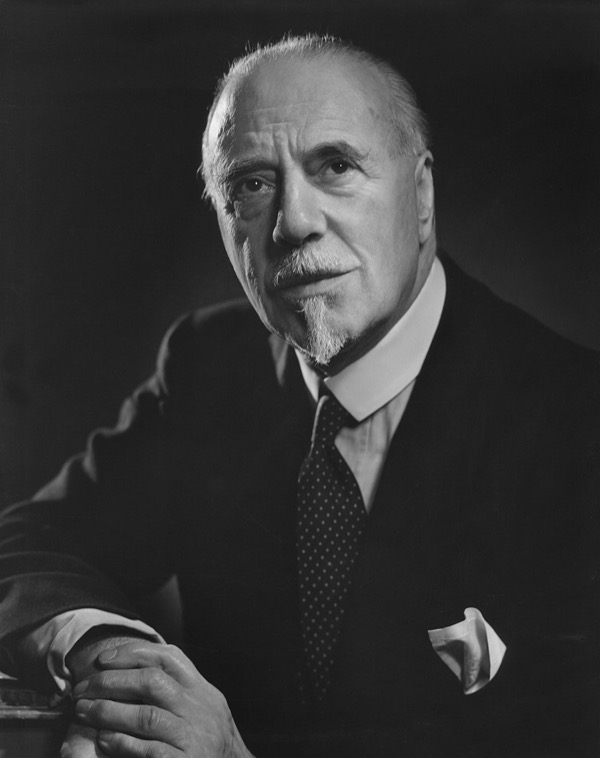
Karsh of Ottawa: Beecham, 1946
Beecham’s repertoire, as noted above, leaned heavily on 19th-century French music and Russian music, while often ignoring Brahms and other major figures (including English composers such as Elgar and Vaughan Williams). But there were notable exceptions: Richard Strauss and Sibelius were friends, and he was a dedicated advocate of both. In the opera house he was an outstanding Wagner conductor, and, above all, there was Mozart: Beecham believed everyone should spend at least fifteen minutes a day listening to his music.
Simeone spoke of Beecham’s single-minded focus, and in these SOMM live recordings, it comes to the fore. The audience at his live performances felt as though they were under a spell, as Beecham opened up familiar works and unveiled unknown works to them. His audiences learned that a Beecham concert was something to attend. There was a dynamism in his conducting and a life that did not always make it onto his studio records. In an interview with one attendee, thinking back 65 years to his youth, he recalls leaving the Royal Festival Hall in a kind of stunned daze after hearing Beecham’s Bacchanale (from Saint-Saëns’ Samson et Dalila), which was the closer for that concert.
Here’s the studio recording of Saint-Saëns’ Bacchanale.
Camille Saint-Saëns: Samson et Dalila, Op. 47, Act III: Bacchanale (Royal Philharmonic Orchestra; Thomas Beecham, cond.)
Compare it with the studio recording, and you’ll hear the difference (and wish you were in Beecham’s audience!). You can hear the audience’s reaction at the end as the house goes up, driven by Beecham’s performance.
Samson et Dalila, Op. 47, R. 288, Act III Scene 2: Bacchanale (Live at the Royal Festival Hall,…
That audience send-off turned out to be for Beecham’s final concert appearance. It was recorded at Royal Festival Hall on 24 April 1960, and in June 1960, Beecham suffered a cerebral thrombosis and never again took the stage as a conductor. He died on 8 March 1961.
Beecham was a deeply serious and engaging musician. His players admired him for being a consummate musician who came to music naturally. You had to be there at a Beecham concert, and with these live recordings, you are there.
Discover Beecham’s works on SOMM.
For more of the best in classical music, sign up for our E-Newsletter