Pianist, composer and technologist Zubin Kanga leads Cyborg Soloists, a music technology research project supported by a UKRI Future Leaders Fellowship and Royal Holloway, University of London. On October 17, 2026, he presented Ghost in the Machine at the Southbank Centre, an evening reflecting his ongoing exploration of the relationship between classical virtuosity and cutting-edge technologies, including artificial intelligence (AI). The programme combined grand piano, digital keyboard, ROLI Seaboard, synthesisers and electronics with digital avatars, video-game imagery, body sensors and experimental AI.
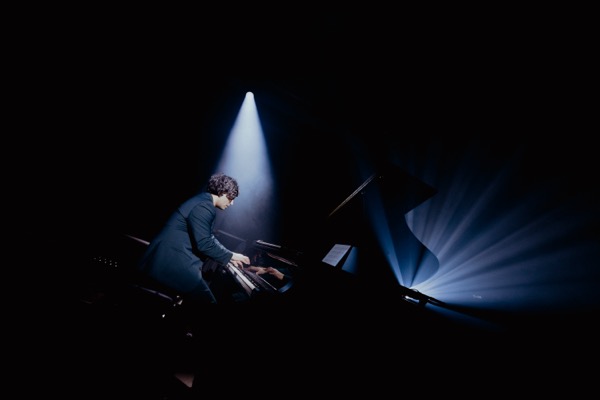
Zubin Kanga at the Southbank Centre, October 2026 © Robin Clewley
The evening centred on the premiere of Blombos Playground by American composer George Lewis, a new milestone in human-computer interaction. The work brings Kanga’s performance into dialogue with two AI improvisation systems, Voyager and Somax, through the SoVo system, developed in 2025 by Marco Fiorini and Gérard Assayag at IRCAM, alongside Lewis and Damon Holzborn at Columbia University. Kanga’s piano, celesta and harpsichord interact with the AI systems through a quadraphonic sound system distributed around the venue. Voyager is a rule-based improvisation system, while Somax uses machine learning. Together, they create a dialogue between human creativity and artificial intelligence. Kanga appears to enjoy the experience, and the audience responds warmly. As he explains, performing the work feels like playing with a virtual chamber group or jazz ensemble.
Ben Nobuto – The Art of Sinking | Zubin Kanga
A highlight of the evening is Ben Nobuto’s The Art of Sinking, perhaps its most theatrical work. Here, Kanga interacts with both a machine and a digital avatar of himself. Through inventive writing, he enters into a conversation with his virtual counterpart, sometimes responding to instructions and surveys, and at other times playing alongside the action unfolding on a screen behind him. Through this AI-driven monologue and duet, Nobuto explores the loneliness and anxiety of a pianist preparing to perform. Nobuto is also present in the audience and receives warm applause at the end of the work.
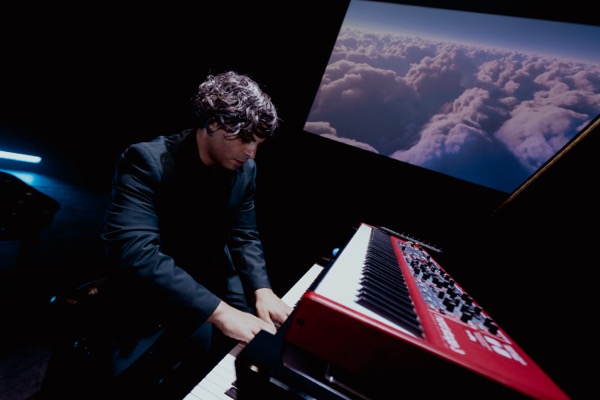
Zubin Kanga at the Southbank Centre, October 2026 © Robin Clewley
Other performances that evening include Nwando Ebizie’s I Will Fix Myself (Just Circles), which explores Chopin’s technique and Kanga’s relationship with the piano — combining interview material and AI-generated voices with piano, synthesiser, and intricate afrofuturist electronic textures. Alex Paxton’s Cuddley Wuddley offers a contrasting sound collage of sampled choirs, drums, birds and cooking utensils, set against Kanga’s virtuosity; it suggests a contemporary continuation of the European Modernists’ challenge to conventional hierarchies of sound — or when sounds and noises become music.
A crucial element throughout the evening is Kanga’s flawless instrumental virtuosity. Many of the works are technically demanding, recalling the way Liszt and Ravel used the piano’s expressive possibilities to evoke narratives and sensations. Kanga’s command of the instrument allows him to navigate these complex technological environments without compromising the musical performance. His engagement with AI and emerging technologies places the concert at the forefront of creative experimentation, demonstrating how artists and machines can work together to expand the boundaries of musical expression.
Kanga is conscious of AI’s many facets and is particularly interested in its potential as a creative tool, from autonomous AI performers and systems for exploring musical archives to virtual instruments and technologies that make performance more ergonomic and accessible. He also emphasises that anyone working with AI must consider the ethics of its use — and that there are many forms of AI he chooses not to engage with…
Having premiered more than a hundred works, many centred on new technologies, Kanga continues to explore the possibilities of artistic collaboration with machines. Ghost in the Machine demonstrates that, when approached critically and imaginatively, AI need not replace human creativity; instead, it can become a partner in an evolving dialogue between technology, virtuosity and musical invention.
For more of the best in classical music, sign up for our E-Newsletter