On 10 April 1964, pianist Glenn Gould took the stage at the Wilshire Ebell Theatre in Los Angeles. His programme included Beethoven’s Piano Sonata No. 30, selections from Bach’s The Art of Fugue, and Hindemith’s Piano Sonata No. 3.
There was no farewell announcement, but Glenn Gould never performed another public concert.
As we celebrate his birthday on 25 September, let’s consider a couple of reasons why Gould, at the height of his career, decided to retire from the concert stage at 31.
Glenn Gould plays Bach: Goldberg Variations
Beyond Applause and Competition
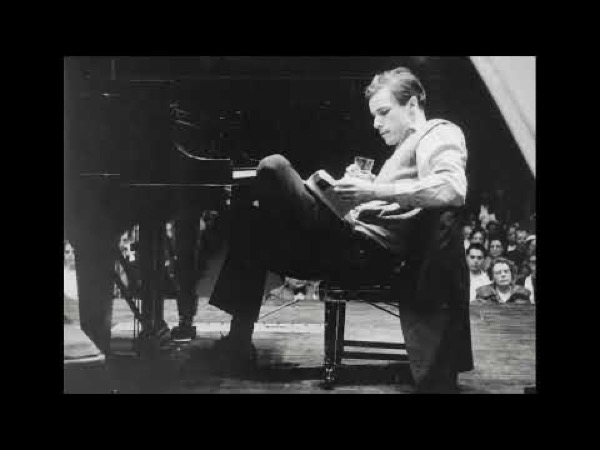
Glenn Gould in concert
Glenn Gould was an outstandingly successful performer, yet he performed fewer than 200 concerts during his career. In fact, he presented fewer than 40 recitals outside Canada.
He came to believe that the institution of the public concert was a “force of evil,” and argued that public performance devolved into a kind of competition.
He saw non-empathetic audiences mostly attending concerts because the performer might err or fail to meet critical expectations, and he believed such performances produced unexceptional interpretations because of the limitations of live music.
Glenn Gould plays Mozart: Piano Sonata No. 10, K. 330
Cult of Showmanship
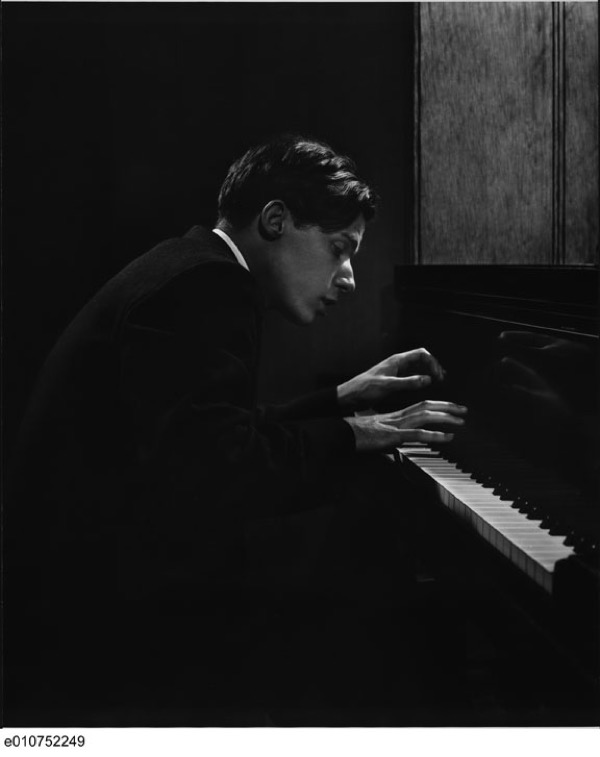
Glenn Gould (Canadian Encyclopedia)
Half in jest and half seriously, Gould even set forth his doctrine “GPAADAK,” an acronym for the Gould Plan for the Abolition of Applause and Demonstrations of All Kinds.
As we know, Gould had a pronounced aversion to what he called “hedonistic” approaches to piano repertoire, performance, and music in general.
“Hedonism,” in this context, meant a superficial theatricality. In fact, Gould felt that Mozart, during the late stages of his career, had been susceptible to precisely that kind of superficiality.
Glenn Gould plays Beethoven: Piano Concerto No. 5, “Emperor” (excerpt)
The Pianist Who Refused to Tour
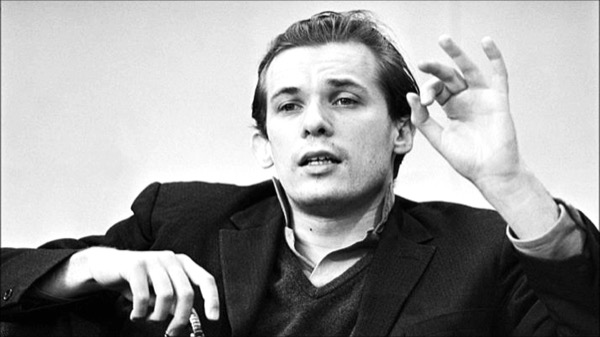
Glenn Gould
Gould blamed the emergence of a cult of showmanship and gratuitous virtuosity on the 19th-century concert platform, and later for drifting toward hedonism.
As such, he felt the institution of the public concert degenerated into a “blood sport,” which he would not accept and ultimately rejected. However, Gould’s withdrawal from the recital stage in 1964 was not a real surprise.
He was famous for cancelling concerts before then, and he publicly expressed his dislike of touring. Gould certainly had a fear of flying, and an accident involving his left shoulder and arm in 1959 also continued to trouble him.
Glenn Gould plays Chopin: Piano Sonata No. 3 in B minor, Op. 58
In Love with the Microphone
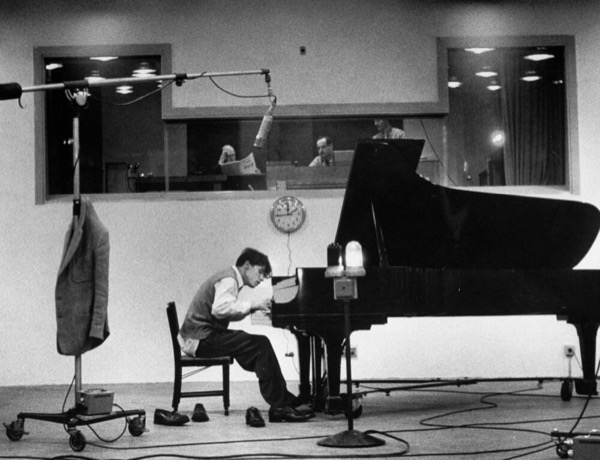
Glenn Gould (1958)
Archival research suggests that Gould was still considering possible engagements after 1964. Plans were made for concerts at later dates, but they were ultimately abandoned as he became interested in a life away from the stage.
That new life favoured the recording studio, where, in his words, he developed a “love affair with the microphone.” There, he could control every aspect of the final musical product, and he felt that he could realise a musical score more fully in this way.
Gould strongly believed there was little point in re-recording centuries-old pieces if the performer brought no new perspective. For the rest of his life, he eschewed live performance, focusing instead on recording, writing, and broadcasting.
Glenn Gould plays Bach: Keyboard Concerto in G minor
The Puritan and Futurist
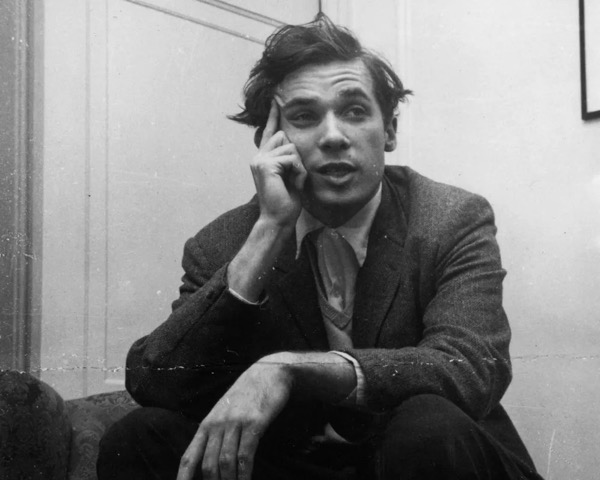
Glenn Gould
Glenn Gould summarised his perspective on art in 1962. “The justification of art is the internal combustion it ignites in the hearts of men and not its shallow, externalised, public manifestations. The purpose of art is not the release of a momentary ejection of adrenaline but is, rather, the gradual, lifelong construction of a state of wonder and serenity.” (Payzant, Glenn Gould: Music and Mind, 1997)
Although he called himself “the last puritan,” Gould was progressive in many ways. He certainly anticipated the profound changes technology would bring to music production and distribution.
As Mark Kingwell writes, “Gould was stranded on the beachhead of his own thinking between past and future. That he was not able, by himself, to fashion a bridge between them is neither surprising, nor, in the end, disappointing. We should see this failure, rather, as an aspect of his genius. He both was and was not a man of his time.”
For more of the best in classical music, sign up for our E-Newsletter