In June, the much-beloved 12 Cellists of the Berlin Philharmonic toured four cities in China. Their eclectic repertoire attracted a wide following, from classical music enthusiasts to fans of tango and film soundtracks. After hearing James Bond and Jasmine Flower played on the cello, audiences lingered on and queued up for post-concert signing sessions.
Before the Shanghai concert, the 12 cellists even joined 12 traditional erhu players to perform Horse Racing, a renowned Chinese folk tune arranged by the first principal cellist, Bruno Delepelaire. As the current artistic director, the accomplished French cellist kindly answered my questions about the group’s past, present, and future.
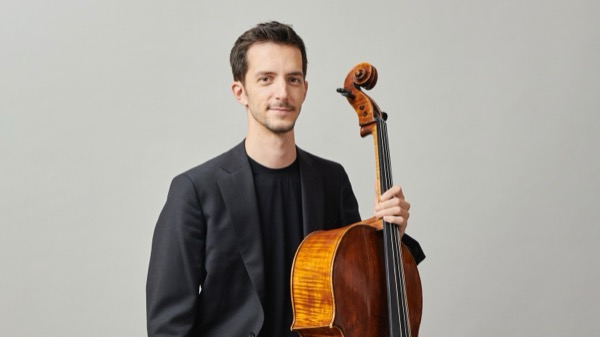
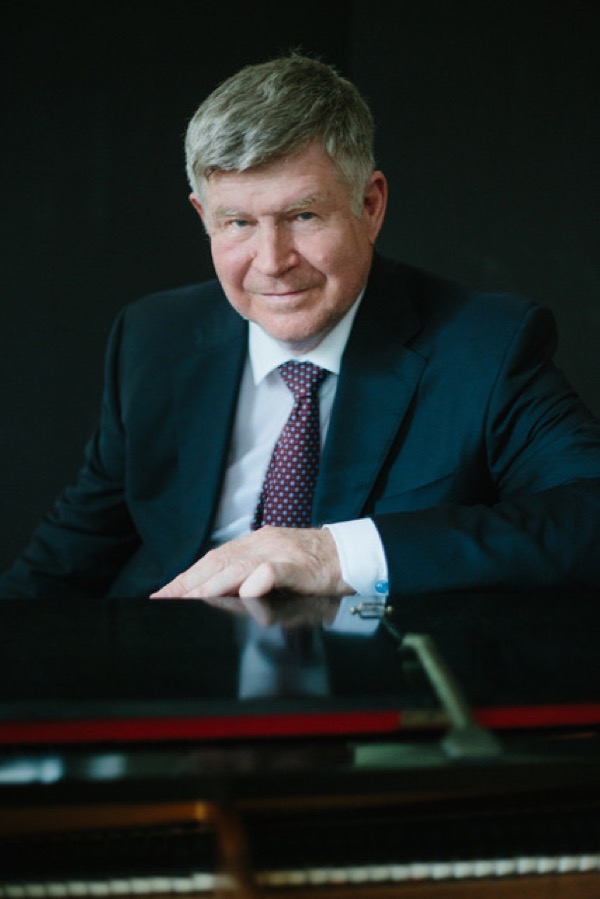
Bruno Delepelaire (Photo from the Berlin Philharmonic)
Who is the longest-serving member of the current group? Who is the newest member?
At the moment, the active cellist who has been in the group the longest is principal cellist Ludwig Quandt, who joined in 1991, and the newest is Moritz Huemer, who joined in 2025. One fun fact is that almost half of the group have at some point studied with Wolfgang Boettcher, one of the group’s founding members.
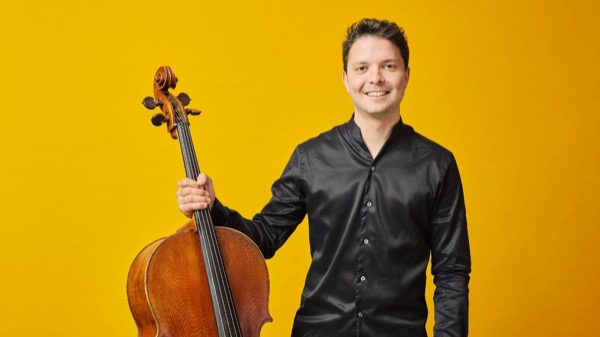
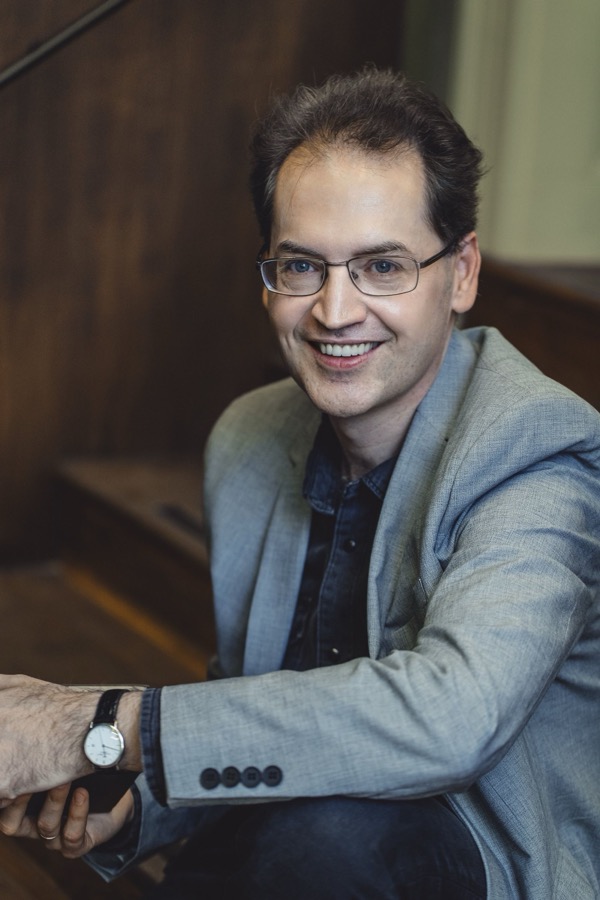
Moritz Huemer (Photo from the Berlin Philharmonic)
Among the former members, Rudolf Weinsheimer is the one who actually formed the group of 12 cellists and made it thrive and succeed during its early stages. It is thanks to him and the original members of the group that we have such a great reach today.
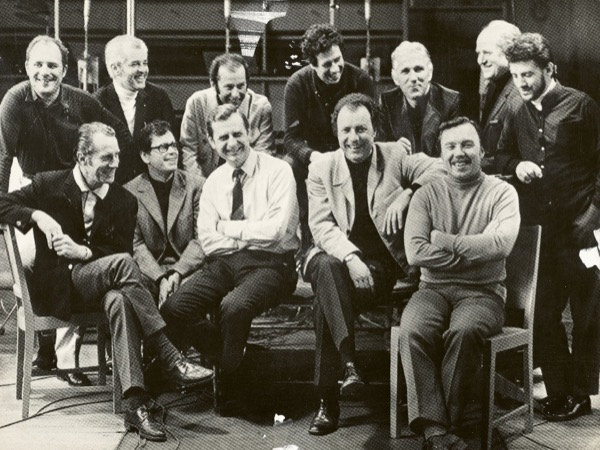
The original 12 Cellists in 1972 (Photo from Archiv der 12 Cellisten)
Who is playing the oldest cello? Does the cello pass on to newer members as older members retire?
Many of us are playing on very old Italian instruments, some over 300 years old. A few belong to the orchestra thanks to the generosity of friends and donors, and these instruments remain with the group when players retire. For example, Martin Löhr is playing an old Italian cello previously played by Richard Duven. It is great when these amazing instruments can stay in the group, first of all because their sound is very special, but also because it gives continuity to their history, being part of our cello group and our orchestra.
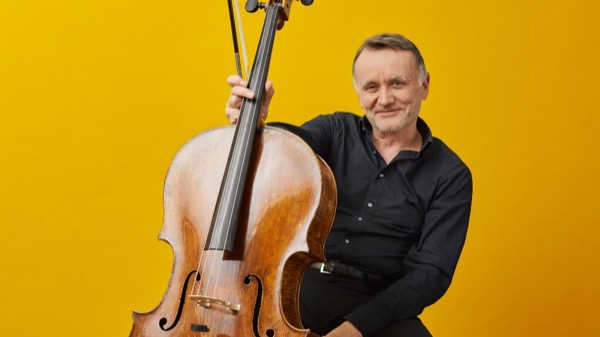
Martin Löhr (Photo from the Berlin Philharmonic)
Can you introduce to us the seating order of the 12 cellists? Do you divide upper and lower registers? Or do you play different parts (such as melody vs accompaniment) depending on the pieces?
Most of us have a fixed role in the group, and some of us switch between roles. Ludwig and I share the first and second parts, but the defining feature of most of our arrangements and pieces is that there is no fixed role for who plays what.
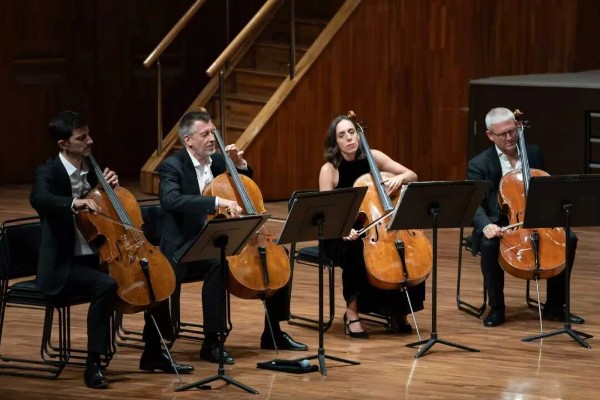
12 Cellists in Guangzhou (Photo from Xinghai Concert Hall)
Everybody will at some point play the bass line, everybody will get melodies and solos to play, and everybody will have to travel from the deepest tone of the cello to the high registers that rival those of the violin! It is a way to show all our individualities and be equals in the group. Cellists are often very “family-like”, and we keep this spirit in our ensemble.
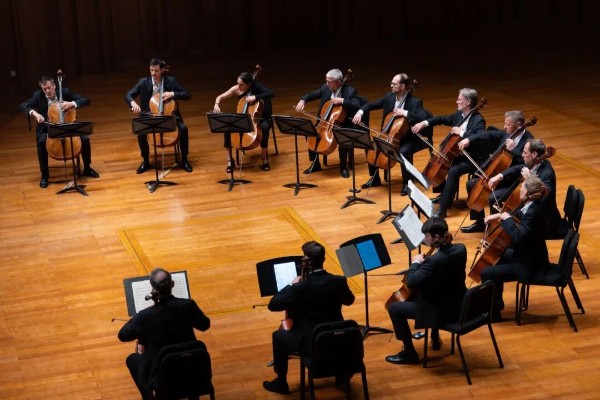
12 Cellists in Beijing (Photo from Xiaojing Wang)
In one set of the China tour program, you start with Heitor Villa-Lobos, who combined folk music and Bach. Is this choice a tribute to the original 12 Cellists? I noticed their first CD included Bachianas Brasileiras.
This piece by Villa-Lobos was originally written for 8 cellos. As the group was formed, the repertoire for 12 cellos was very limited; there was only one piece, Hymnus by Julius Klengel, so the members of the group had to find more pieces to play, and one obvious choice was the Bachianas Brasileiras, which works very well with 12 people as well.
12 Cellists play Julius Klengel’s Hymnus in 2022
This piece is a classic for any cello ensemble. We also like to play it because of the connection between South American flair and Bach and classical music, a connection we find again strongly in the music of Argentinian composer Astor Piazzolla, who is also part of our repertoire thanks to the many Tango arrangements we have.
12 Cellists play Bachianas Brasileiras No. 1 in 2015
In another version of your program, you start with Purcell’s Suite, Mendelssohn’s Elias excerpt, Dvorak’s Slavonic Dance, and Satie’s Gymnopédies. What is your thinking behind choosing these “classical” pieces?
We are all classically trained musicians in the ensemble, and as much as we enjoy playing different styles of music, classical music is in our DNA; we play it every day in the orchestra. It is also a very broad term, “classical music,” that encompasses 3 or 4 centuries of music. From the Baroque dances that we find in Purcell‘s music to Mendelssohn‘s singing melodies, Dvorak’s fantastic use of Slavic folk music, and Satie‘s French sound and harmonies, there is already quite a trip! We want to include this in our repertoire because it is a very important part of who we are as musicians.
12 Cellists play at the 2016 Music in the Summer Air Festival
You will play pieces arranged by your own cellists: James Bond by Stephan Koncz, Jasmine Flower and Horse Racing by Bruno Delepelaire. Can you talk about the processes for arranging them?
The first and maybe most important step in arranging is to find the right piece to arrange. Some of us in the group like to write arrangements; many of our tangos were arranged by David Riniker. Swing on Dvořák is a composition/arrangement by Stephan Koncz. Ludwig Quandt also wrote some arrangements, and I (Bruno) arranged Dvořák’s Slavonic Dance.
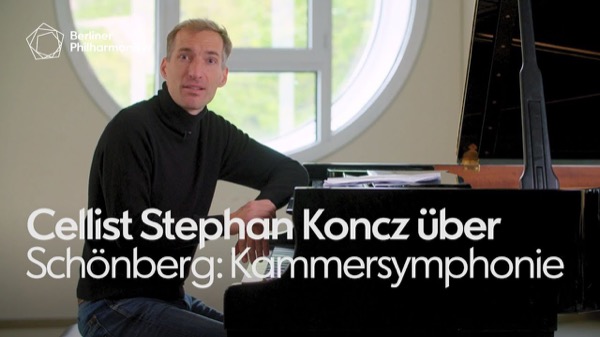
Stephan Koncz talks about Schönberg on Digital Concert Hall.
Each of us has their own style of arranging; some like to stay closer to the original work, some like to invent more, and that is what makes it good for the audience, because the sound and style of arrangement vary throughout the program instead of staying the same.
Ludwig Quandt talks about Don Quixote
Your albums “As time goes by” and “50×12: Half a Century of Music” have a lot of film music. Why do you think film music is so beloved by the audience?
Film music is one of the great sources of creation for composers of the past and present centuries. I think the audience loves it because they associate it with the experience of watching the movie, and the music can make that experience far stronger than the movie itself. When the music is very good, sometimes it doesn’t even need the movie and can stand on its own.
12 Cellists play La vie en rose
Ennio Morricone is a famous example of a composer whose music became known well outside the movies themselves. Watching the movies helps you understand the context in which the music was written, but even without doing so, people can still enjoy the great scores, which is why we love to include them in our programs.
12 Cellists play Morricone’s The Man with the Harmonica
Is there a piece that is the most difficult to play on the cello? I am guessing some sound effects are far from those of regular string music: maybe Debussy’s Préludes (originally for piano), Sebastian Currier’s Spark (lots of rough notes), or something else (the complexity in Piazzolla)?
Some pieces are technically challenging for individual parts; there are some virtuosic solos in the tangos and some other pieces. What is more challenging is when pieces require extreme rhythmical precision, like Spark from Sebastian Currier, or very precise intonation, like the unisons in the Villa Lobos. I think each piece has its own tricky side: for example, in Villa Lobos, you need very good intonation and rhythm, and at the same time, you need to keep the character energetic and dancing without sounding harsh or too “organised”; it is a very fine balance to find.
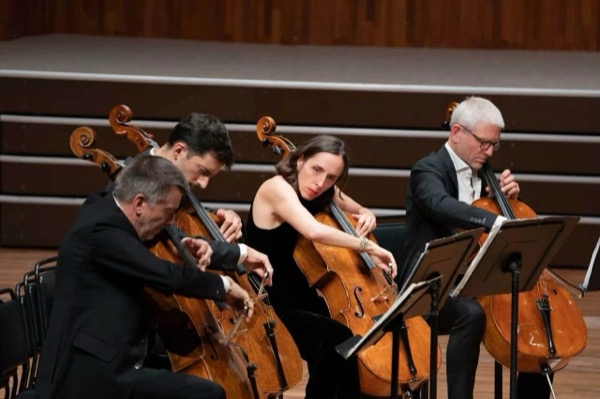
12 Cellists in Guangzhou (Photo from Xinghai Concert Hall)
Many of your cellists went through the Karajan Academy (Uladzimir Sinkevich, Moritz Huemer, etc). Can you share stories about how the academy has shaped you as a musician?
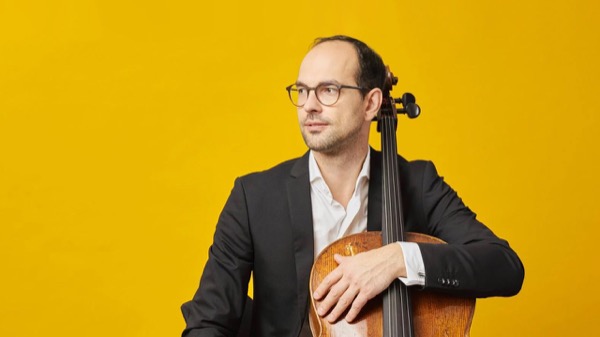
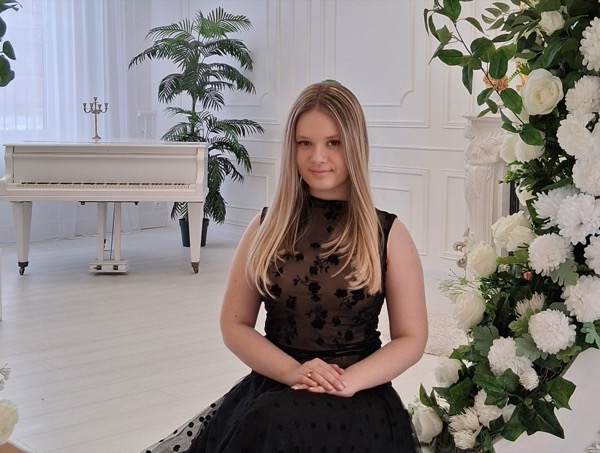
Uladzimir Sinkevich (Photo from the Berlin Philharmonic)
Many of us have indeed been through the Karajan Academy. I was there myself, with Ludwig Quandt as my teacher, and during this time I learned an enormous amount in a very short period. You get to learn, first and foremost, the aesthetic of the Berlin Philharmonic Orchestra and how to play as a member of this amazing cello section. Lessons with teachers also provide valuable knowledge, and it is often during that time that young musicians win orchestra auditions.
Karajan Academy Logo
I would say that, above all, getting to play inside the Berlin Philharmonic as a student is a fantastic opportunity. You are playing in a world-renowned hall with the most prominent conductors of our time and an incredibly high level of playing from all members of the orchestra. It is the best motivating and learning situation one could wish for. Practising a lot alone is also important, but this kind of experience is really especially enriching and unique.
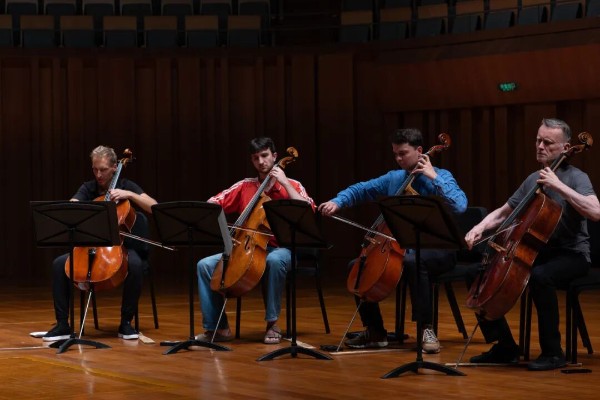
12 Cellists in Beijing (Photo from Xiaojing Wang)
Many of your cellists played a big role in Berlin Philharmonic’s Digital Concert Hall: helping to establish it (Olaf Maninger), conducting interviews (Knut Weber, Solène Kermarrec, Stephan Koncz, Bruno Delepelaire), and of course, recording live performances. Can you share with us a few examples of your contribution to the Digital Concert Hall?
I think Olaf Maninger would be the best person to give insights into the Digital Concert Hall, since he is the one who is at the origin of its existence. The fact that our concerts can be watched live around the world every week is something that would have seemed crazy a few decades ago, and now many other orchestras have been inspired to do similar projects.
Olaf Maninger on Berlin Philharmonic’s public screening in Taiwan
We all contribute through interviews and playing concerts, but there is also a lot of work done by the camera teams and the sound engineers, and a lot of work that goes on the computer side. I would encourage the audience to subscribe; there are also live concerts by the 12 cellists available on the platform!
Knut Weber on First US tour under Karajan in 1955
I read on your website that Nilokaus Römisch, one of the 12 cellists, also serves as the orchestra’s tour manager, and Martin Menking as the managing director of the 12 cellists. Do you have insights into the logistical challenges of organising a tour?
Since 2023, Stephan Koncz has served as managing director of the 12 cellists, and I am the artistic director. Before that, Martin Menking was the managing director, Nikolaus Römisch was in charge of travel, and Ludwig Quandt was the artistic director.
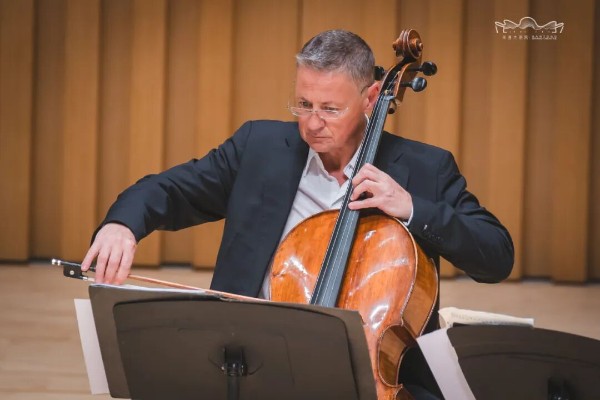
Martin Menking (Photo from Nantong Grand Theatre)
I have little experience myself with the challenges of organising a tour. Still, I think a big part of the logistical challenges are the booking of flights, because we travel with our instruments, which means we need 24 tickets, which is no small thing!
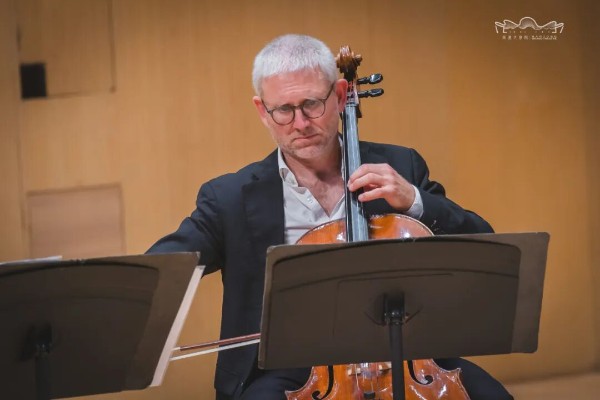
Nikolaus Römisch (Photo from Nantong Grand Theatre)
The other challenging aspect is coordinating concerts and locations so we can play as many concerts as possible without too many “empty” days in between and without having to travel too much between concerts. It is a bit of a jigsaw puzzle that Stephan Koncz has to put together, with the help of the concert organisers, and it is quite extraordinary that we manage to make it work year after year!
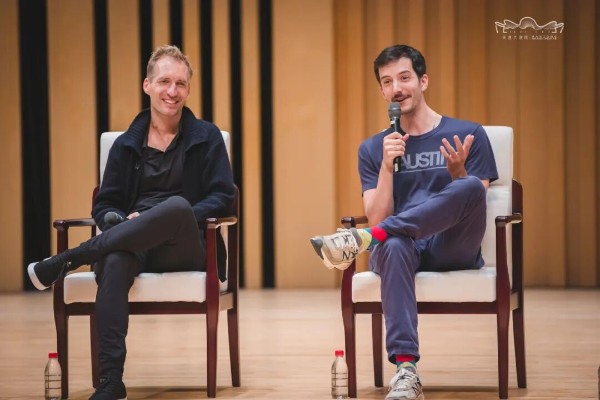
Stephan Koncz and Bruno Delepelaire (Photo from Nantong Grand Theatre)
Can you share some of your members’ special hobbies? You seem like a group of very interesting and diverse individuals!
Being a musician often goes hand in hand with having a curious mind, which might explain why so many of us go so deep into various hobbies. Stephan Koncz is a passionate arranger/composer, as is David Riniker. Ludwig Quandt has incredible knowledge about dragonflies; Martin Löhr loves Russian literature, magic and theoretical physics; Solène Kermarrec always knows the best places to eat and loves to run and work out.
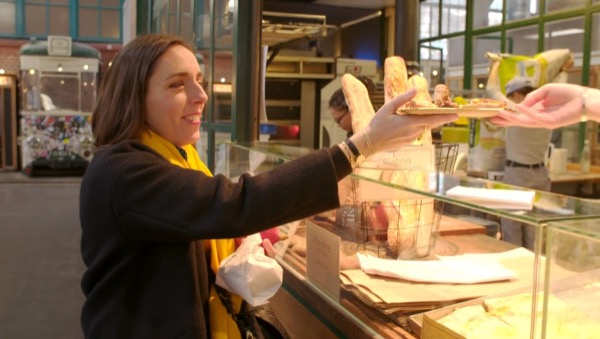
Solène Kermarrec: A Portrait on Digital Concert Hall
Nikolaus Römisch plays football; I love hiking and swimming; Moritz Huemer can solve any technological problem in a heartbeat; Uladzimir Sinkevich loves cars; and the list could go on and on! It is definitely not a boring group of people; curiosity is at the heart of our mentality as musicians and humans.
The 12 Cellists: anniversary concert
For more of the best in classical music, sign up for our E-Newsletter
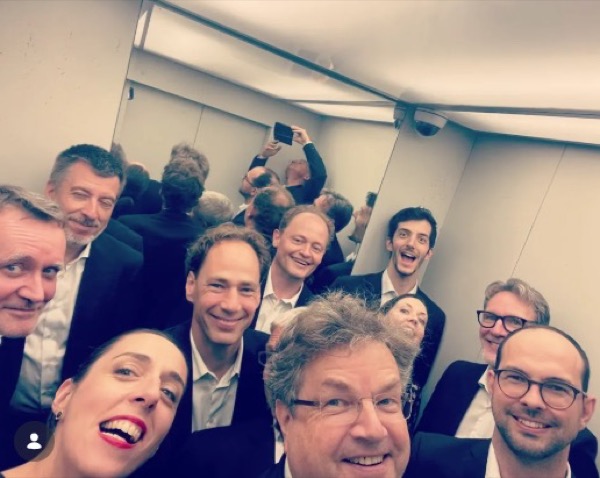
Uladzimir Sinkevich shares touring moments on his social media.