Alexander Glazunov, born on 10 August 1865, was Russia’s greatest symphonist in the generation immediately following Tchaikovsky, and he subsequently passed down his legacy to his most famous student, Dmitri Shostakovich.
A prodigious musical talent, Glazunov began his studies with Rimsky-Korsakov at age 15, and his teacher wrote, “His musical development progressed not by the day, but literally by the hour.”
After a short period of study, Glazunov completed his First Symphony at the age of 16. It is said that when Glazunov walked onto the stage to receive the audience’s cheers, the crowd was shocked to see a 17-year-old boy in a school uniform.
In all, Glazunov composed eight symphonies and left a ninth unfinished. A master of his craft, Glazunov blends Russian nationalist spirit with classical structure and brilliant orchestration. To celebrate his birthday, here is a beginner’s guide to his eight symphonies and the unfinished ninth.
Alexander Glazunov: Symphony No. 1 in E Major, Op. 5 (Slavyanskaya)
Symphony No. 1: Triumphant Debut
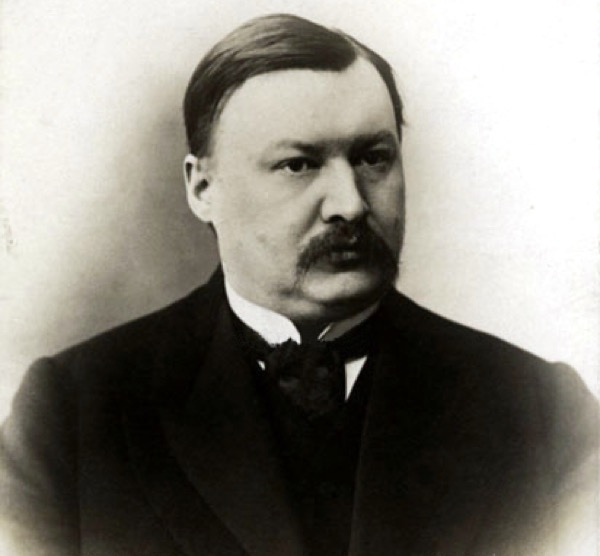
Alexander Glazunov
During a time when composers were indulging in all kinds of experiments, Glazunov continued the symphonic tradition of Tchaikovsky. He composed his first pieces at the age of 11, and Tchaikovsky immediately recognised a remarkable talent.
Nicknamed “Slavonic,” the Symphony No. 1 is a remarkable achievement for a teenager that impressed Balakirev, Rimsky-Korsakov, Liszt, and Belyayev. It is full of youthful energy and folk influences, including Russian and Polish elements, and radiates bright optimism.
Cast in a traditional four-movement structure with sonata-form outer movements, it also features a lyrical Adagio and a lively Scherzo. Critics were sceptical that such a work could have come from a mere boy, but Balakirev kept assuring the public that the symphony had indeed been written by the young composer.
For Rimsky-Korsakov, “this symphony was the first of a series of original compositions by the highly gifted artist and indefatigable worker, compositions which gradually spread also to Western Europe and came to be the finest adornments of contemporary musical literature.”
Alexander Glazunov: Symphony No. 2 in F-Sharp Minor, Op. 16 (Moscow Symphony Orchestra; Alexander Anissimov, cond.)
Symphony No. 2: A Lisztian Tribute
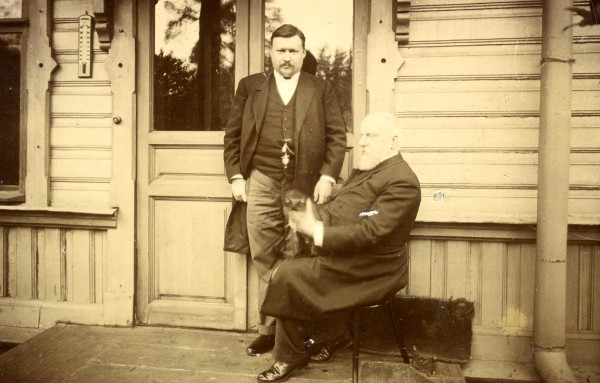
Alexander Glazunov with Mily Balakirev
Glazunov completed his Symphony No. 2 in 1886, when he was 21 years of age. It is dedicated, like Saint-Saëns’s contemporaneous Third Symphony, to the memory of Franz Liszt.
The main theme, announced in a commanding unison statement at the beginning of the first movement, appears in all four movements in various guises. This marks a transition towards greater maturity in larger symphonic forms and exhibits great dramatic sensibility, particularly in the outer movements.
We find plenty of ear-catching tunes, as well as Lisztian brass climaxes and tender Romantic lyricism, all mixed with dramatic intensity. Glazunov was transitioning beyond pure nationalism and towards a more personal, European-influenced voice.
As Igor Stravinsky writes, “Glazunov reigned supreme in the science of the symphony. Each new production of his was received as a musical event of the first order, so greatly were the perfections of his form, the purity of his counterpoint, and the ease and assurance of his writing appreciated.”
Alexander Glazunov: Symphony No. 3 in D Major, Op. 33 (Moscow Symphony Orchestra; Alexander Anissimov, cond.)
Symphony No. 3: Sunny Lyricism
The Symphony No. 3 in D Major dates from 1890 and is dedicated to Tchaikovsky. Often considered one of his most attractive early works, it is full of lyrical and sunny melodic writing. Yet, it took him some years to complete this work, having sketched ideas as early as 1883.
In this symphony, Glazunov was looking to break away from the nationalist style of the compositions of “The Mighty Handful,” then the most important musical influence in Russia. For Glazunov, symphonic composition went beyond localised influences and strove towards universal forms, moods, and themes.
In essence, the work looks back to Tchaikovsky’s internationalism and shows a growing confidence in thematic development and orchestration. The first performance took place in St Petersburg in December 1890, conducted, because of the composer’s illness, by Lyadov.
Tchaikovsky approved of Glazunov’s effort, and the work’s lyrical episodes are clearly influenced by him. Glazunov reports that he often played the symphony’s scherzo to Tchaikovsky on the piano. Apparently, the only weakness that Tchaikovsky found was “some longueurs and the lack of pauses.”
Alexander Glazunov: Symphony No. 4 in E-flat Major, Op. 48
Symphony No. 4: Cosmopolitan
Alexander Glazunov composed his Symphony No. 4 in 1893, and it represents a departure from his earlier three symphonies. For the composer, this symphony allowed him to give personal, free, and subjective impressions of himself.
It is dedicated to Anton Rubinstein, a fellow composer and pianist who was long considered persona non grata to Balakirev and his friends. Nikolai Rimsky-Korsakov conducted the premiere on 22 January 1894, and he found the orchestration cumbersome in places, particularly in the third movement.
The work is unusual because it features only three movements and lacks direct Russian folk influences in its thematic material. It almost seems to take its bearings from Tchaikovsky’s abstract ballet music. Interestingly, the Scherzo movement unfolds like a tone poem, supposedly depicting the painting “Diana’s Chase” by Symbolist painter Arnold Böcklin.
In essence, this symphony reconciles both the Nationalist and Cosmopolitan styles, and the work was very popular in Europe. Glazunov was looking for a way to artistically present a reconciled and open-minded musical Russia, something he achieved through impeccable craftsmanship and his powers of invention.
Alexander Glazunov: Symphony No. 5 in B-flat Major, Op. 55 (The Heroic)
Symphony No. 5: Heroic Masterpiece
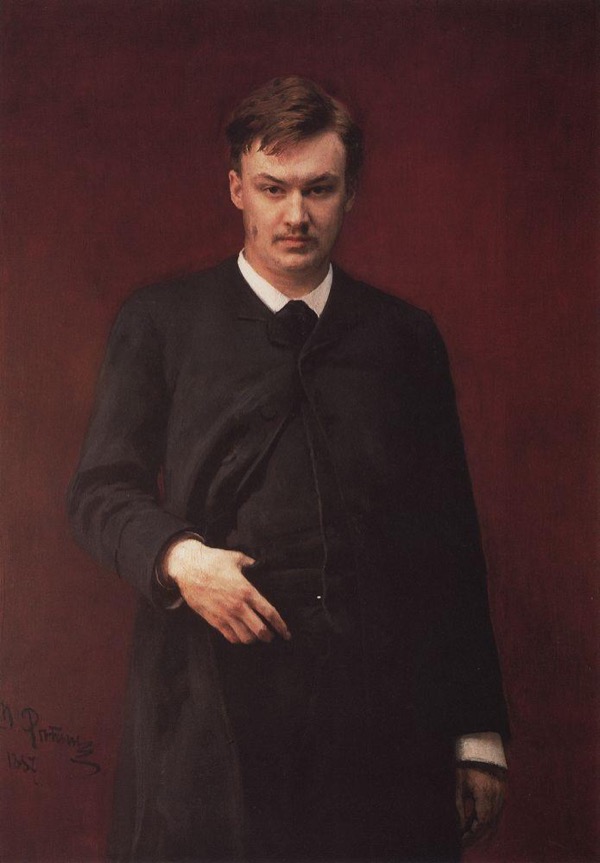
Alexander Glazunov by Ilya Repin
Glazunov’s Fifth Symphony is nicknamed the “Heroic Symphony,” and it is dedicated to his friend and fellow composer Sergei Taneyev. It might well be Glazunov’s most popular work, especially in America.
Glazunov frequently described this symphony as an architectural poem, with thematic transformation across the entire symphony guiding an unbroken continuity. The dance-like first subject grows from the opening maestoso, and the triumphant animato at the end of the final movement combines material used earlier in the work.
The delicate “Scherzo” was always an audience favourite, with the third movement exposing lush melodies that are constantly interrupted by brass chorales. With this monumental structure, Glazunov presents a wealth of details, shifting rhythms, and dazzling orchestration that all contribute to making this one of Glazunov’s finest symphonies.
Sadly, this symphony is rarely performed, as Shostakovich called it “old-fashioned.” At the end of the 19th century, music had to break boundaries relating to conventional harmony and tonality for it to be held in high regard. Today, we recognise it as his symphonic masterpiece.
Alexander Glazunov: Symphony No. 6 in C Minor, Op. 58 (USSR Ministry of Culture Symphony Orchestra; Gennady Rozhdestvensky, cond.)
Symphony No. 6: Organic Whole
At the Hall of the Nobility in St. Petersburg, two world premieres took place on 15 March 1897. On offer were Glazunov’s Sixth Symphony and Rachmaninoff’s First, with both works conducted by Glazunov himself.
At this time Glazunov was enjoying overwhelming success on account of his Fifth Symphony and the ballet Raymonda, which were among the most popular works by a contemporary composer. On the other hand, Rachmaninoff’s symphony was a complete failure and the composer developed a profound neurosis.
Rimsky-Korsakov called Glazunov’s Sixth Symphony the highest point in his development. It is not as optimistic as the Third nor as confident as the Fifth, but it might be the most typically Russian of his symphonies. We find plenty of Tchaikovsky’s colourful woodwind writing in the central movements, and the powerful yearning quality characteristic of Russian symphonies at the turn of the century.
The Finale might well be one of Glazunov’s most successful closing movements, with the chorale theme introducing contrasting themes. He turns them into an organic whole, and the overall tone is powerful and very positive.
Alexander Glazunov: Symphony No. 7 in F Major, Op. 77 (Pastoral)
Symphony No. 7: Pastoral Grace
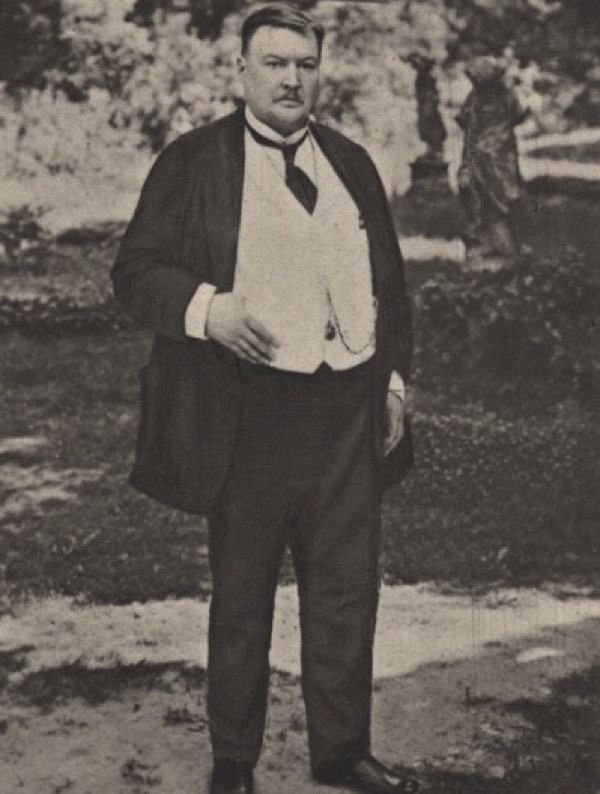
Alexander Glazunov at Bertramka, 1928
Alexander Glazunov composed his Symphony No. 7 between 1902 and 1903, when he was at the height of his reputation as both composer and conductor. At that time, his mature style had fully crystallised, with lyricism and structural clarity taking precedence over dramatic or nationalist statements.
It is dedicated to the City of St. Petersburg in celebration of its bicentennial in 1903, but in its association with the rustic sound of Beethoven’s own Pastoral, it musically harkens back to Germanic music and classical thought.
As Glazunov writes, “More by instinct than by premeditated intention I wanted to combine variation form, which latterly I have come to love passionately, with sonata and rondo forms and to build my music more on contrapuntal than harmonic bases.”
The work throughout favours a serene and classical balance over high drama. It certainly represents the composer’s ideal of the symphony as an uplifting and noble art form, and while it lacks the tension and release of the Sixth Symphony, it provides melodic richness and an atmosphere of confident maturity.
Alexander Glazunov: Symphony No. 8 in E-flat Major, Op. 83
Alexander Glazunov: Symphony No. 8 in E-Flat Major, Op. 83 (Russian State Symphony Orchestra; Valery Polyansky, cond.)
Symphony No. 8: Majestic Summit
Glazunov’s Symphony No. 8, premiered on 21 December 1906, represents the summation of his career as a symphonist. It combines complete mastery of ideas with a darker, more unsettled mood, one that has been a feature of some of his finest works.
It was composed at a time of great political turmoil, as Russia’s defeat in the Russo-Japanese War was followed by a wave of protests, political assassinations, and strikes. The events of the day may well reflect the sombre tone of the work, but as always in Glazunov’s symphonies, there is no extramusical programme.
It was Glazunov’s final completed symphony, and the opening movement engages in a wistful and yearning melancholy. The second movement presents an ominous three-note motif throughout, and its despairing outbursts are unique for Glazunov. A lighter-hearted scherzo leads the symphony to a majestic finale.
Symphony No. 9: Unfinished Mystery
Glazunov started work on his Symphony No. 9 in D minor in 1910, but it was still unfinished by the time of his death in 1936. Glazunov had only sketched the first movement and had given the score to Rimsky-Korsakov’s son-in-law Maximilian Steinberg in 1928. It was then orchestrated in 1947 by Gavriil Yudin.
The movement grows from the first four notes played by the viola in the slow introduction, reaching a dynamic climax. This process is followed in the “Allegro,” with the clarinet introducing a meandering second theme. The movement returns to the slow introduction and gradually fades away.
The nine symphonies by Alexander Glazunov trace his evolution from folk-infused optimism through his confident mastery of form and orchestration to a more introspective personal voice. Together they represent a musical bridge between Tchaikovsky’s emotional directness and the future Russian symphonic tradition.
For more of the best in classical music, sign up for our E-Newsletter
Alexander Glazunov (arr. Gavriil Yudin): Symphony No. 9 in D Minor: Adagio – Allegro moderato – Adagio (Royal Scottish National Orchestra; José Serebrier, cond.)