Tōru Takemitsu, born on 8 October 1930, freely admits that his first real composition teacher was the radio. Nursing an extended illness, he listened to as much Western music as possible, broadcast on Armed Forces Radio.
His first mentor was Debussy, and he soon came to know Messiaen’s music as well. In his own music, this resulted in a seemingly paradoxical quality of expression, with an ethereal sense of space and detachment. However, Takemitsu also explores an energetic space between objects.
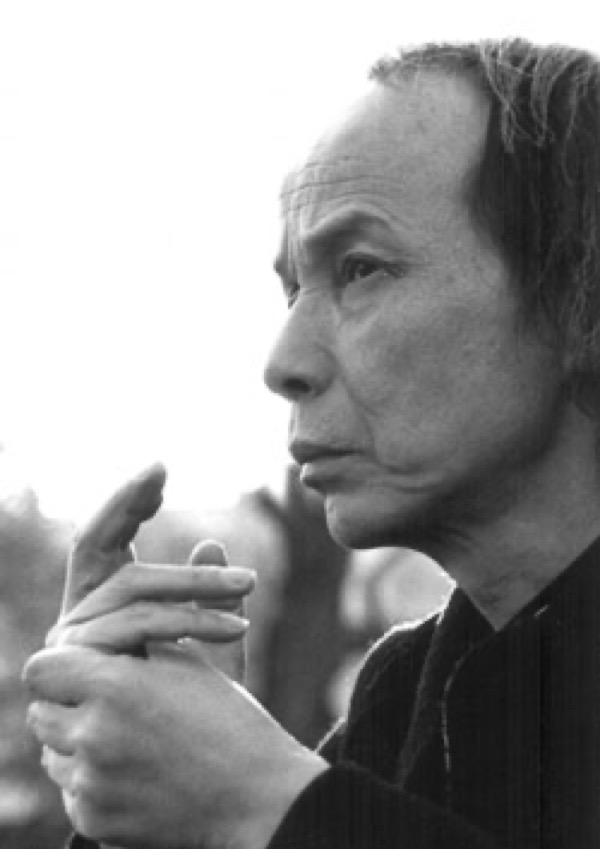
Tōru Takemitsu
A Language for Cinema
Takemitsu became known for combining elements of Japanese and Western music in innovative and original ways, and he wrote music for more than one hundred films. “In Takemitsu’s film scores he exhibits a variety of musical styles, such as jazz, late Romantic chromaticism, 20th– century avant-garde idioms, traditional Japanese music and the sounds of nature.” (Lie, Toru Takemitsu’s Film Music, 2011)
To celebrate his birthday, let us listen to a selection of Takemitsu film music and discover how imaginatively he adapted his musical language to the world of cinema.
Tōru Takemitsu: Harakiri Theme (1962)
A Visa to Freedom
In a widely attributed statement, Tōru Takemitsu once said that “writing music for film is like getting a visa to freedom.” Writing music for film is thus not simply a commercial job, but a life-giving extension of his artistic practice. He passionately watched up to 300 movies a year, drawn to the raw humanity captured on screen.
As he explained, “It’s because movies have erotic elements as well as violence. I don’t like things that are too pure and refined. I’m more interested in what’s real. And films are so full of life.”
Takemitsu worked with some of the most important Japanese filmmakers of his time, including Masahiro Shinoda, Hiroshi Teshigahara, Kon Ichikawa, Shōhei Imamura and Akira Kurosawa. His collaboration with another great Japanese filmmaker, Masaki Kobayashi, is particularly noteworthy, so let’s start with the film Harakiri (1962).
Music of Resistance
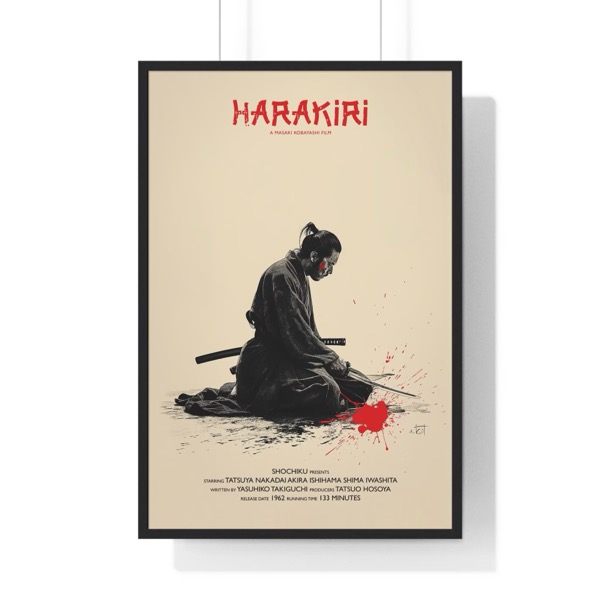
The story takes place during the Edo period, between 1619 and 1630, and follows a “rōnin,” a samurai with no lord or master. He requests to commit hara-kiri within the manor of a local feudal lord, using the opportunity to explain the events that drove him to ask for death before an audience of samurai.
When asked about the theme of his film, Masaki Kobayashi said: “All of my pictures … are concerned with resisting an entrenched power. That’s what Harakiri is about, of course. I suppose I’ve always challenged authority.”
The Biwa Speaks
Harakiri
Considered one of the greatest films of all time, in both image and sound, it was the first film in which the score featured extended music played on traditional Japanese instruments. However, the traditional sound material does not serve only historical accuracy. Rather, Takemitsu’s use of music goes far beyond that simple explanation.
Takemitsu was a relatively young composer in 1962, and for Harakiri, he used two biwas. This short-necked Japanese lute is used alongside Western instruments and modernist orchestral techniques. It begins with an atonal, electronically created sound that frames a sense of danger, contrasted with aggressive strumming on the biwa that plays a fragment of one of the most popular Japanese folk songs, “Cherry Blossom.”
The biwa becomes associated with the protagonist and becomes part of his characterisation. The instrument does not decorate the samurai world, but it challenges the invisible rules of the samurai establishment. The soundtrack does not create a conventional period-film background, as it combines with modernist techniques. In Harakiri, Takemitsu isn’t finding sounds for a samurai movie; he’s discovering parts of his own musical heritage.
Tōru Takemitsu: Woman in the Dunes (1964)
Film as Landscape
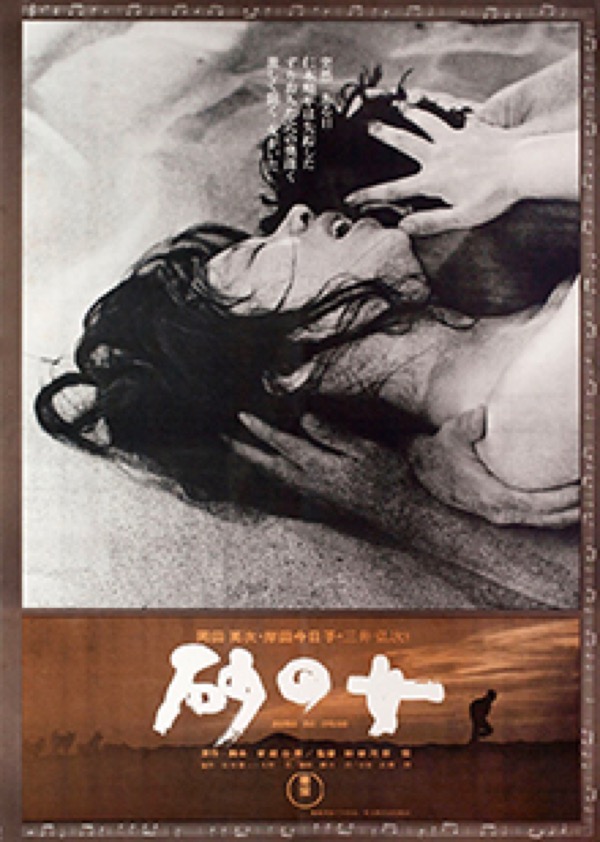
For Takemitsu’s most distinctive example of experimental film writing, we turn to Woman in the Dunes, directed by Hiroshi Teshigahara in 1964. Widely considered Teshigahara’s masterpiece and one of the best movies in Japanese cinema, the film attempts to create a work rooted in political and aesthetic themes, in direct opposition to the commercial, dominant studio productions of the 1960s.
One of the most cryptic and enigmatic movies ever made, Glenn Gould explicitly tracked the cinematic framing, stating he would “see this film forty or fifty times and study literally every shot in the film.” (Bazzana, On Gould’s Favourite Films and Directors, 2020)
A Soundscape of Sand
Woman in the Dunes poster
The film tells the story of entomologist Niki Jumpei, who misses the last bus home when exploring for insects in a series of dunes. Local villagers persuade him to spend the night in a house at the bottom of the sandpit. An unnamed young widow lives there alone, forced by the villagers to dig the sand that they sell to nearby cities for construction. Enslaved to dig sand alongside the widow, Niki plots his escape even as he adapts to his imprisonment.
Takemitsu’s music is minimalist, as only about 15 to 20 minutes of actual music is heard throughout the film. He utilises distorted, pitched, and alienated string ensembles alongside Japanese percussion and electronic elements to create harsh, shrill, and haunting soundscapes.
The music is jarring and experimental, taking on a character of its own, and it does not underline action but makes a mockery of it. Teshigahara considered the desert sand the film’s third main character, and the music unfolds in abrupt shifts of sustained string drones, restless noise, and relentless sliding that evoke blowing sand.
Tōru Takemitsu: Kwaidan (1965)
The Unseen in Sound
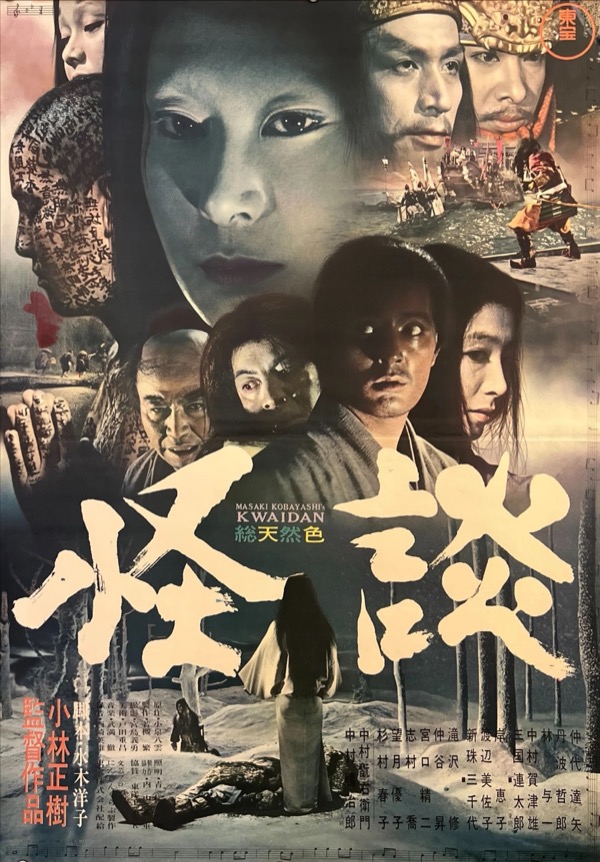
In another collaboration with Kobayashi, the 1965 horror anthology film Kwaidan, Takemitsu turns four supernatural tales into something otherworldly. It is a perfect example of how he used sound to build the film’s atmosphere.
Literally translated as “Ghost Stories,” the film consists of four separate stories adapted from Japanese folktales. Mostly set in feudal Japan, the segments feature vengeful spirits enforcing moral retribution, while portraying the supernatural realm as largely indifferent to human suffering.
It took Takemitsu and Kobayashi six months to produce a film score considered revolutionary in its use of sound and effects. Influenced by John Cage, Takemitsu used a prepared piano equipped with screws, bolts, and wool, along with electronic alterations.
Space Between Sounds
Kwaidan
In Japanese, “ma” is an everyday word meaning both space and time. It is an aesthetic concept that simultaneously expresses the past, space and time. However, it becomes meaningful only when filled with motion.
Empty intervals of space and time are perceived as invitations, and in Japanese art, “ma” becomes a way to invite the audience to participate in the work of art. Charged silence becomes part of the composition, as do sounds decoupled from the visuals, including creaking bamboo and ripping wood used as metaphors.
Tōru Takemitsu: Dodes’ka-den (1970)
The Irony of Sound
Dodes’ka-den (1970) was Akira Kurosawa’s first colour film, and it follows a group of poor and marginalised people living in a suburban shantytown atop a rubbish dump. The film has no central story and no protagonist, as it weaves together the stories of a group of characters living in a slum as a series of anecdotes.
Instead of the stark, direct sounds of Harakiri and Kwaidan, Takemitsu surprisingly composed melodic, even whimsical music. Kurosawa, apparently, had different ideas about what music he wanted for the film.
While screening the film, Kurosawa played the L’Arlésienne Suite in the background. A funny anecdote relates that Takemitsu said, “That’s nice, you should probably hire the guy. His name is Bizet, lives in France, but I think he’s dead.”
Once he returned to work on the film, he wrote a pop-influenced score with a full orchestra, acoustic guitar, ocarina, harmonica, and rhythm percussion. The music is entirely ironic, as it highlights the drama’s inconsistencies. Once again, Takemitsu uses silence, noise and other sonic elements, including a colourful and dissonant neo-tonality.
Music of Tragic Grandeur

Dodes’ka-den
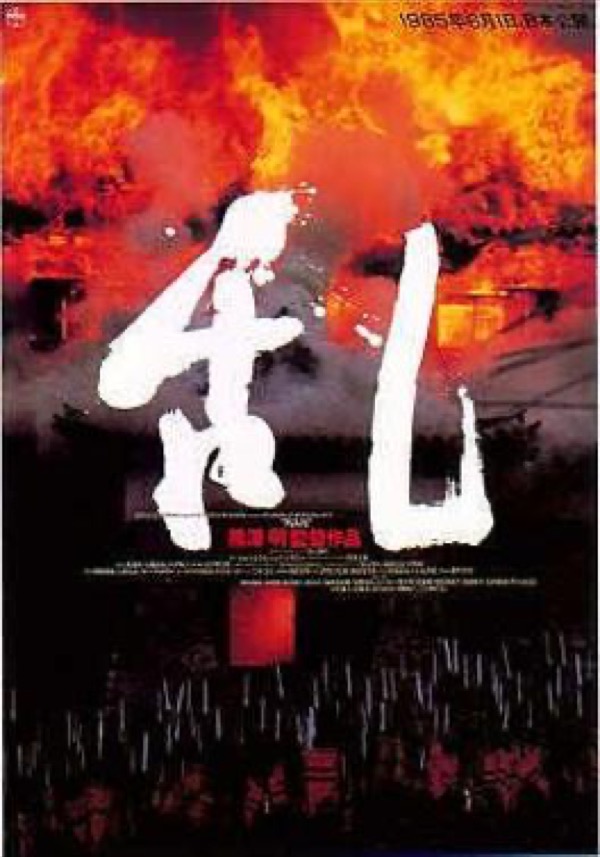
Using large orchestral forces, devastating silences, and a sound world of almost tragic grandeur, Takemitsu’s score for Ran (1985) is essential listening. This epic historical action drama was co-written and edited by Akira Kurosawa, with the plot derived from William Shakespeare’s King Lear, a character who decides to abdicate as ruler in favour of his three sons.
Ran was Kurosawa’s third encounter with Shakespeare, and his last epic. It is frequently cited as one of his finest achievements and widely regarded as one of the greatest films ever made.
This second of two collaborations between Kurosawa and Takemitsu was tense. The interaction was rocky, as Kurosawa constantly sent notes to the temperamental Takemitsu, infuriating the composer. At one point, Takemitsu resigned, but with the producer’s intervention, he returned to the project.
From Silence to Symphony
Ran
Originally, Kurosawa envisioned a score in a shrill, chant-like style without instrumentation, but over the years his conception of the score changed dramatically. As production began, he insisted on a powerful Mahleresque orchestral score. Takemitsu responded with what many describe as his most romantic effort, achieving a perfect blend of Oriental and Occidental sensibilities.
Kurosawa originally wanted the London Symphony Orchestra to perform the score, but the Sapporo Symphony Orchestra eventually played up to 40 takes. The soundtrack runs just over an hour, and it was re-released in 2016.
Tōru Takemitsu’s approach to film scoring was predictably versatile and individualistic. From his use of traditional Japanese instruments to experimental and pre-recorded sounds, and from silence to enormous late-Romantic orchestral dramas, Takemitsu shaped early experimental Japanese cinema while working with three of its most important directors: Kobayashi, Teshigahara, and Kurosawa.
As he explained in an interview with Max Tessier, “everything depends on the film itself… I try to concentrate as much as possible on the subject, so that I can express what the director feels himself. I try to extend his feelings with my music.”
For more of the best in classical music, sign up for our E-Newsletter