Johannes Brahms has one of the most mythologised biographies in classical music.
He’s remembered as a scarred teenager in brothels – a friendless conservative shackled to old forms – a bearded misanthrope who couldn’t stand women.
Some of that image comes from Brahms himself, who cultivated a gruff public persona. Some comes from biographers who filled the gaps in a notoriously private life with dramatic conjecture.
The truth, as usual, is stranger and more interesting than the legend.
Here are five of the most persistent myths about Johannes Brahms, and what the historical record actually says.
1. Myth: We have proof that Brahms was forced to play piano in brothels as a boy, and that doing so scarred him for life.
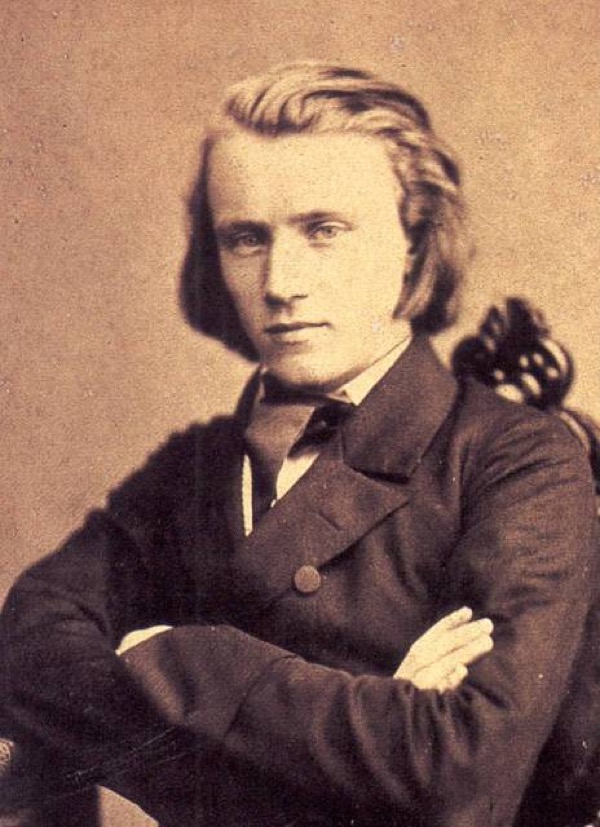
Johannes Brahms, 1853
The most famous – or infamous – myth of Brahms’s biography is a shocking one: that as a boy in Hamburg, he was forced to play piano in dance halls populated by prostitutes.
There, the legend goes, he had experiences that scarred him for life, making him unable to enjoy healthy relationships with women later in life.
It’s understandable how this myth gained traction. Brahms was in fact born in the Gängeviertel, a rough Hamburg district packed with sailors’ dance halls that doubled as brothels.
Several friends even recalled him saying he had worked in such establishments. One especially vivid account (from musicologist Max Friedländer, who spoke to biographer Robert Haven Schauffler in 1933) has Brahms venting bitterly about girls climbing into his lap between dances.
But the trauma narrative wasn’t the original one. The earliest print account of this story, dating from 1864, frames the same experience as proof of Brahms’ moral fibre – not damage.
The “scarred him for life” version comes secondhand or thirdhand, through biographers and friends recalling what Brahms supposedly said, sometimes decades later. Brahms never left behind a description of the experience in his own words.
Modern historians have pushed back further still. Age-restriction laws in Hamburg technically barred minors from such venues. Historian Styra Avins has argued the family was more financially stable than once assumed, though other scholars have challenged that point.
The honest answer? We don’t know exactly what happened, and we probably never will.
We wrote more about this part of Brahms’s life here: https://interlude.hk/was-brahms-forced-to-play-in-brothels/.
Brahms’s Piano Concerto No. 1
2. Myth: Brahms pulled himself out of gritty poverty.
Another persistent Brahms myth: he was born in a slum and clawed his way out of grinding poverty. The image is evocative, but it doesn’t hold up particularly well.
Yes, Brahms was born in a house in Hamburg’s Gängeviertel. But the family left that house just six months after his birth.
Brahms’s father Johann Jakob was a freelance bass player, and his income fluctuated. Thanks to those fluctuations, during most of Brahms’s childhood, the family drifted between lower-class and lower-middle-class – not the grinding poverty that could be found in Hamburg’s worst neighbourhoods.
Johannes and his brother Fritz also attended a school meant for the middle class, alongside the sons of physicians, lawyers, and businesspeople. There they studied advanced subjects like Latin, French, English, science, and math.
Even their neighbourhood, often described as a slum, was actually home to middle-class professionals and even musicians, including Brahms’s own first piano teacher, Otto Cossel. None of that fits a story of true destitution.
The confusion likely stems from earlier biographers leaning on Brahms’s own dramatised recollections of his youth: recollections that many historians treat with more scepticism today.
3. Myth: Brahms was a strict conservative who loathed Wagner and other progressive musical figures.
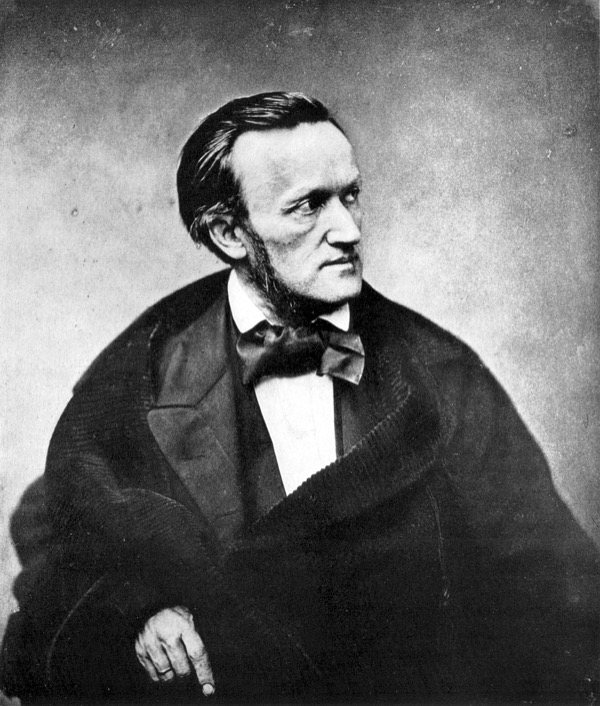
Richard Wagner, Paris, 1861
The standard Brahms-vs-Wagner narrative casts Brahms as a fussy classicist, guarding the sacred tradition of symphonic music against Wagner’s dangerously innovative new music. Here, the myth suggests, were two men who despised each other and everything the other stood for.
The reality was messier and less personal. As is so often the case in disputes between musicians, the rivalry was largely manufactured by their respective fans – not really by the composers themselves.
For instance, influential Vienna-based music critic Eduard Hanslick called Brahms the anti-Wagner, and Clara Schumann pointedly championed his works across Europe while making her disgust with Wagner well known in private.
Meanwhile, Wagner’s camp – a group of zealous musical revolutionaries who enjoyed writing various pamphlets and screeds – viewed Brahms as a traditionalist standing in the way of progress and the “Music of the Future.”
However, decoupled from the heat of that public dialogue, the descriptor “conservative” undersells Brahms a bit. Yes, Brahms worked inside traditional forms, but he used them to do harmonically restless, structurally intricate things. Arnold Schoenberg‘s essay “Brahms the Progressive” even argued that Brahms’ motivic development methods anticipated ideas Schoenberg himself was pursuing.
To be clear, Brahms wasn’t an enthusiastic Wagner acolyte. He famously told musician George Henschel that looking at the score of Tristan und Isolde in the morning made him cross for the rest of the day.
But Brahms understood that Wagner himself was a seminal figure. He wrote to Clara Schumann, “I’m not enamoured of the work or of Wagner. But I’ll listen to it as carefully as possible and as often as I can stand.”
Despite his personal ambivalence to Wagner’s music, he clearly had a grudging respect for it and its impact – as exemplified in their most heated personal exchange.
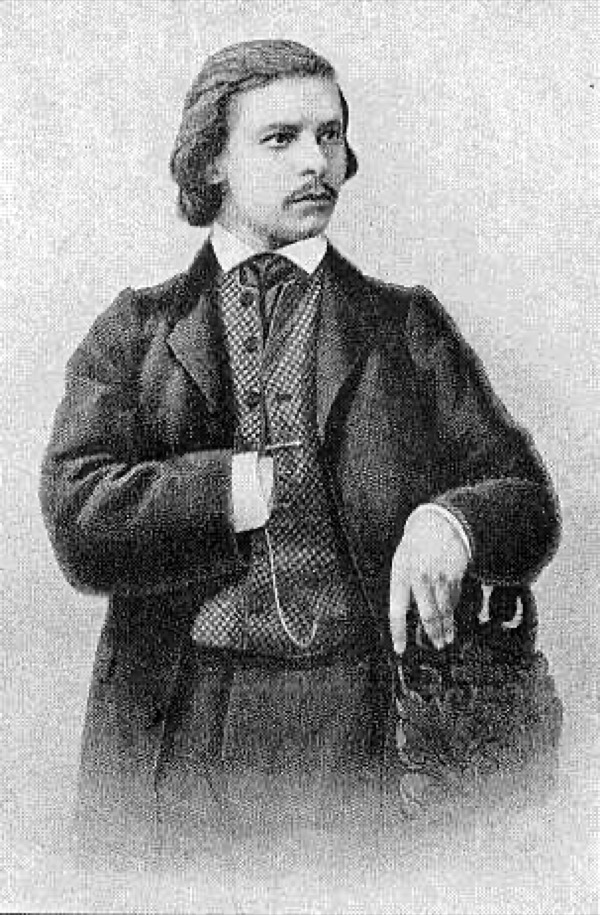
Karl Tausig
Once, Brahms’s friend, pianist Karl Tausig, knowing Brahms’s love for collecting important musical manuscripts, gifted Brahms the score to the “Venusberg” music from Tannhäuser. Wagner later demanded that Brahms return it. Brahms gave in, but in reply, pointedly asked for the score to Die Meistersinger. The compromise? Wagner sent him an inscribed first edition of Das Rheingold – which Brahms kept in his collection.
Their respective followers ignored the truce.
Brahms’s Ein deutsches Requiem
4. Myth: Brahms was gruff, humourless, and hated women.
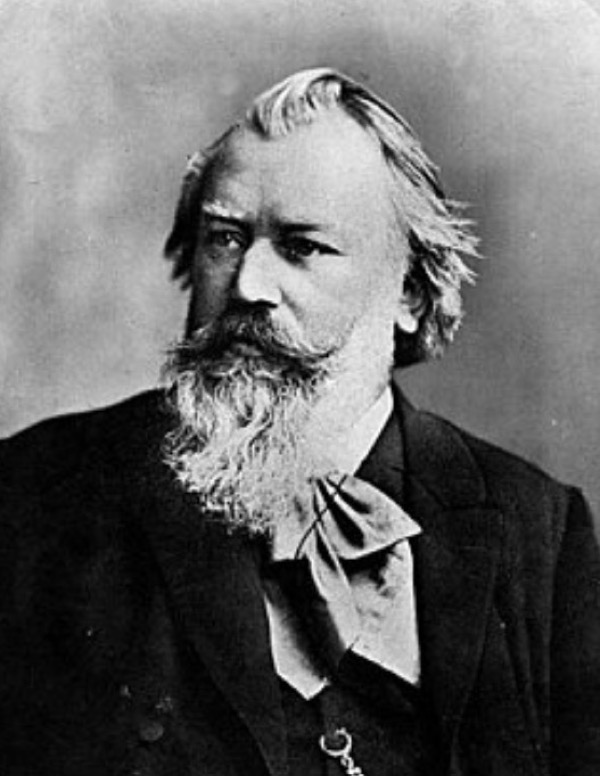
Johannes Brahms
The image of Brahms as a gruff, humourless misanthrope who hated women runs deep. This impression was reinforced by his beard, blunt manners, and occasionally cruel sense of humour, along with the story of his failed romance with Clara Schumann and the brothel-trauma legend.
But friends also described a sharp, self-deprecating wit alongside the bluntness. Yes, he could be staggeringly rude – but he also expressed genuine warmth toward people he cared about and trusted. He was quietly generous too, living modestly and using his financial resources to help struggling musicians and friends’ families without ever seeking credit.
The “hated women” claim also needs to be examined in the context of the time he lived in and the German Empire’s rigid ideology about women’s roles, an attitude later crystallised in the phrase “Kinder, Küche, Kirche” (children, kitchen, church).
The agnostic bachelor Brahms clearly had trouble relating to many of the women around him who had been socialised to thrive in such an environment – but he also was capable of maintaining warm, long-term friendships with talented women who transcended the dictum.
Not to mention, his artistic soulmate, and perhaps the person he was closest to emotionally, was very famously a woman: Clara Schumann.
Of course none of this excuses his meanness and frequent misogyny. But “gruff, German, and complicated” is a truer descriptor than “cold hateful misanthrope.”
5. Myth: Brahms’s relationship with Clara Schumann was always one of yearning, one-sided puppy love.
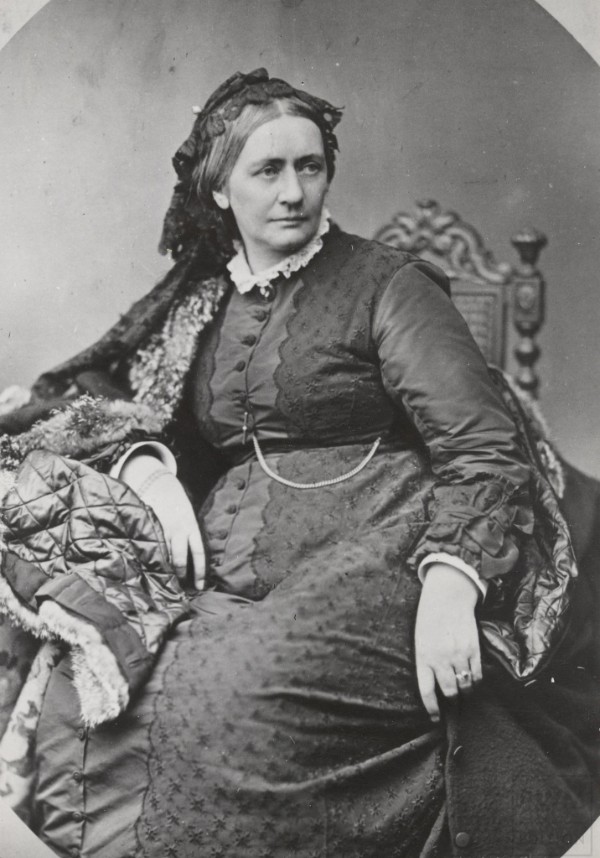
Clara Schumann
The popular version of the story of Johannes Brahms and Clara Schumann goes something like this: young Brahms fell hopelessly in love with his mentor’s wife and then pined for her his whole life. In other words, it was one-sided devotion from an inexperienced boy barely out of his teens for a tragic, emotionally unavailable older woman.
But, like with everything else in Brahms’s life, this simple story doesn’t touch the complicated truth.
Their friendship began in late 1853, when the 20-year-old Brahms met Robert (aged 43) and Clara (aged 34), and both Schumanns fell in love with Brahms’s work.
After Robert’s mental collapse and institutionalisation in early 1854, Brahms moved to Düsseldorf to help Clara manage the household and children.
During the crisis, the two grew extremely close. What’s unclear is whether Clara reciprocated Brahms’ romantic feelings – or even if she totally understood them herself.
What’s not in dispute is that the Johannes/Clara relationship didn’t end with Robert’s death in 1856, as it so easily could have. Instead, it continued through decades of correspondence, tours, holiday dinners, tough feedback, and various quarrels and inevitable reunions – all the way up until Clara died in 1896.
That’s not exactly the arc of a simple unrequited crush. It’s something rarer: a genuine, decades-long partnership between musical equals, in which romantic love ultimately became irrelevant.
Brahms’s Intermezzo in A major
Conclusion
None of this makes Brahms easier to pin down. If anything, the real Brahms is harder to sum up in a single sentence than the myth ever was: a man shaped by uncertain trauma and modest means, a formal traditionalist writing some of the most forward-looking harmony of his century, a difficult friend capable of real tenderness, linked for decades to a woman whose relationship with him defies easy labels.
The messy version of Brahms is closer to the truth than the mythology is – and vastly more interesting.
For more of the best in classical music, sign up for our E-Newsletter