The International Fryderyk Chopin Piano Competition, founded in 1927 and held every five years in Warsaw, is widely considered the most prestigious and important piano competition in the world. Every stage is uniquely devoted exclusively to the works of Frédéric Chopin, and past winners have profoundly shaped 20th– and 21st-century pianism.
“International Chopin Piano Competition 1965” (Martha Argerich)
Origins and Founding Vision
The competition was the vision of Polish pianist and pedagogue Jerzy Żurawlew. In 1925, troubled that Chopin’s music was being dismissed as overly romantic and enervating, Żurawlew conceived the idea of an international piano competition to promote it.
Funding nearly killed the project before it began, but it was rescued by the businessman Henryk Rewkiewicz, a music lover and board member of the Warsaw Music Society. With support from Polish President Ignacy Mościcki, the first competition got under way in 1927, and the exceptional Soviet pianist Lev Oborin, who subsequently became the permanent artistic partner of David Oistrakh, took first prize.
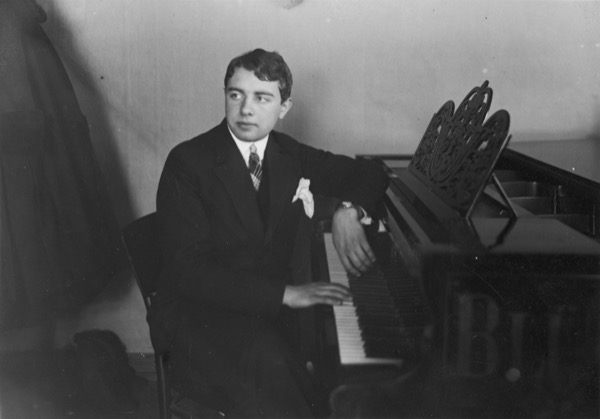
Lev Oborin
Lev Oborin plays Chopin: Piano Sonata No. 3 (excerpt)
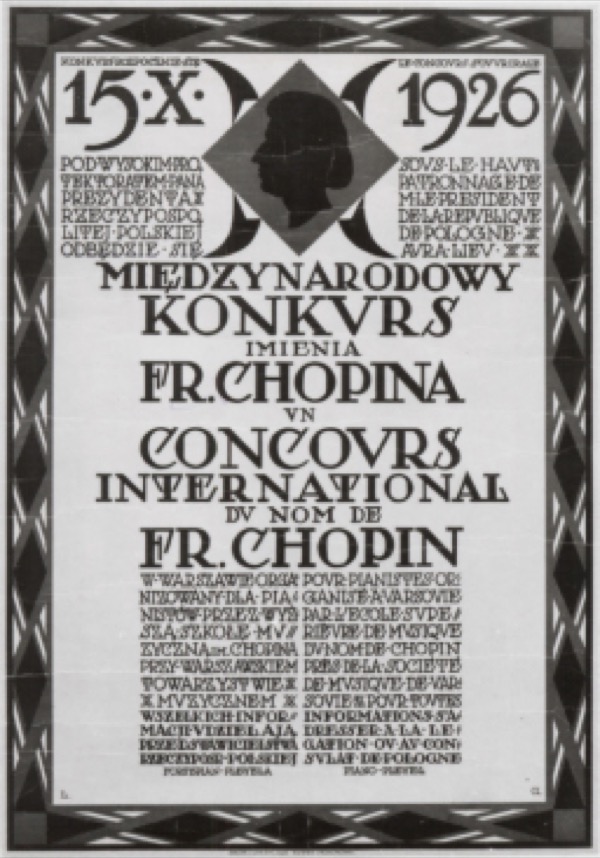
Poster of the 1st Chopin Competition
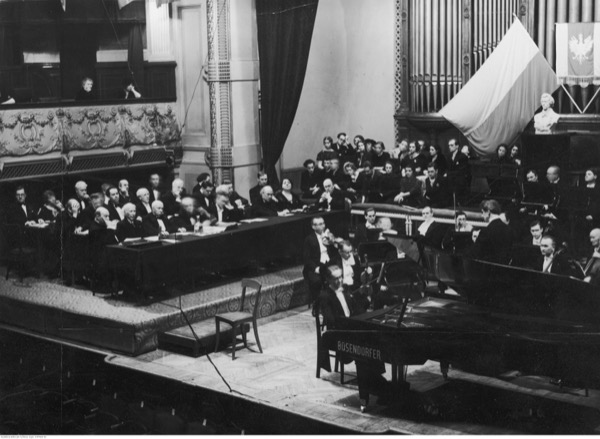
Chopin Competition, 1937
Post-War Revival
Subsequent editions took place in 1932 and 1937, and they resumed after World War II in 1949, with the two great pianists Halina Czerny-Stefańska and Bella Davidovich sharing first prize. Due to the reconstruction of the National Philharmonic, there was a six-year break until 1955, and the podium featured the three great pianists Adam Harasiewicz, Vladimir Ashkenazy, and Fou Ts’ong.
In 1957, it became a founding member of the World Federation of International Music Competitions. At that time, the competition was held near Chopin’s birthday in February, but because jurors and competitors often fell ill during this period, it was moved to October, the month in which Chopin died.
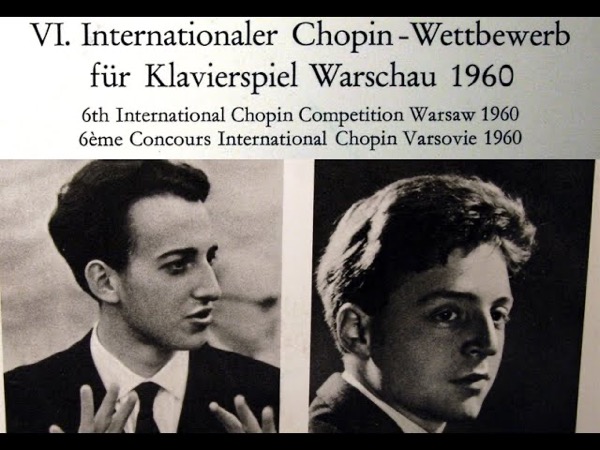
Chopin Competition, 1960
“International Chopin Piano Competition 1975” (Krystian Zimerman)
Drama and Controversy
Like any great competition, it has had its share of drama. The 1980 edition was marked by the elimination of Ivo Pogorelich, whom juror Martha Argerich proclaimed a genius. When she quit the jury in an unprecedented act of protest, the controversy got properly started. First prize was withheld in 1990 and 1995, and it was not awarded again until Yundi Li won in 2000. The most recent winners include Seong-Jin Cho (2015), Bruce Liu (2021), and Eric Lu (2025).
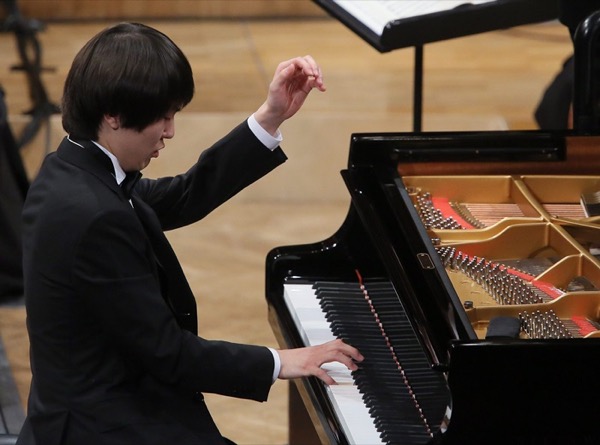
Seong-Jin Cho
“International Chopin Piano Competition 2000” (Yundi Li)
How the Competition Works
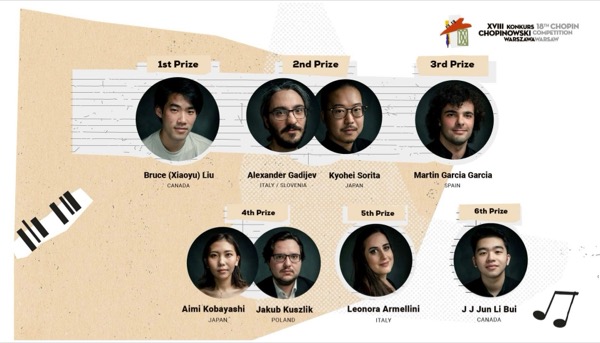
Chopin Competition, 2021
Behind the glittering success of its legendary winners, including Pollini, Argerich, and Zimerman, lies one of the most rigorous and demanding competitions in classical music. The competition unfolds in two main phases, with pianists submitting recordings of their performances, from which the Qualifying Committee selects approximately 160 pianists to take part in the Preliminaries.
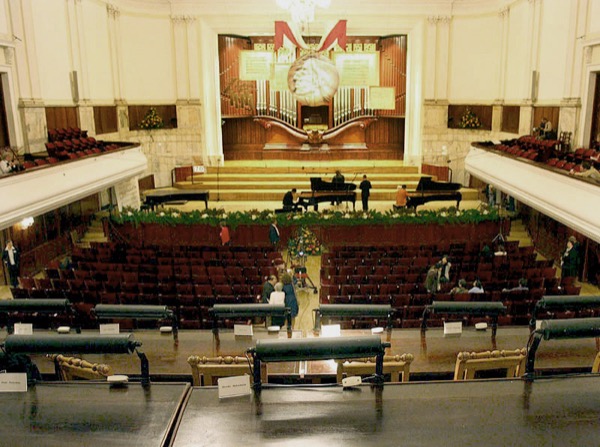
Chopin International Piano Competition, 2005
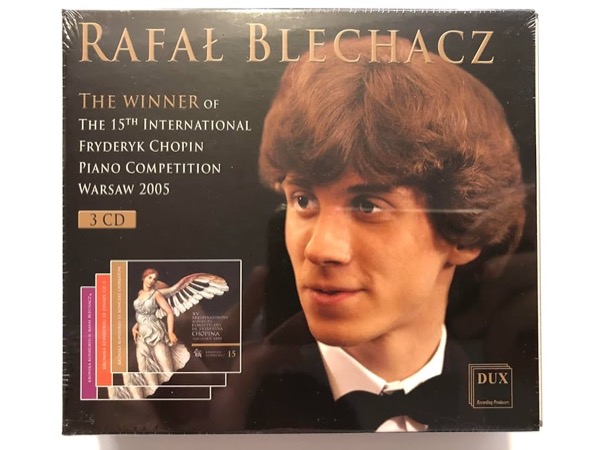
Chopin Competition, 2005
The Preliminaries are held roughly six months before the competition, and pianists perform a 30-minute recital. These Preliminaries are open to the public, and the Jury selects 80 of the best pianists who will take part in the main Competition.
The Competition itself is held in three stages and a final. Stage I involves the performance of selected etudes, a nocturne, and a ballad or a barcarolle or fantasia, and the field of 80 pianists is halved to around 40. In the second stage of the Competition, pianists perform a 40 to 50-minute recital, and the programme must include selected preludes and polonaises.
In Stage III, roughly 20 pianists present an hour-long recital comprising a selected sonata, a cycle of Mazurkas, and other Chopin compositions of their choice. The final test for the finalists is a performance of the Polonaise-Fantasie, Op. 61, and a selected piano concerto by Chopin, accompanied by the Warsaw Philharmonic Orchestra.
“International Chopin Piano Competition 2021” (Bruce Liu)
The six highest-ranked finalists receive main prizes and the title of laureate. The winner of the 1st prize will receive €60,000 and a gold medal, the 2nd prize winner €40,000 and a silver medal, and the 3rd prize winner €35,000 and a bronze medal. The winners of the 4th, 5th and 6th prizes will receive €30,000, €25,000 and €20,000 respectively. The remaining finalists will be awarded equal prizes of €8,000.
Traditional special awards at the competition include the Polish Radio prize for the best mazurka performance (since 1927), the Fryderyk Chopin Society in Warsaw prize for the best polonaise (since 1960), and the National Philharmonic prize for the best performance of a piano concerto (since 1980).
A Lasting Legacy
While the names of the 1st prize winners belong to the pantheon of world pianism, the competition has also paved the way for international careers for many other prize winners, including Mitsuko Uchida, Ingrid Fliter, Gabriela Montero, Ingolf Wunder, and Daniil Trifonov. Recipients of special prizes have included Ivo Pogorelich, Nelson Goerner, Angela Hewitt, Christian Zacharias, and Emanuel Ax.
The Chopin Competition is the most important musical event in Poland and one of the most important musical and cultural events in the world. It gives young artists a powerful launch toward international careers, and, perhaps more importantly, it reminds us all that classical music still matters.
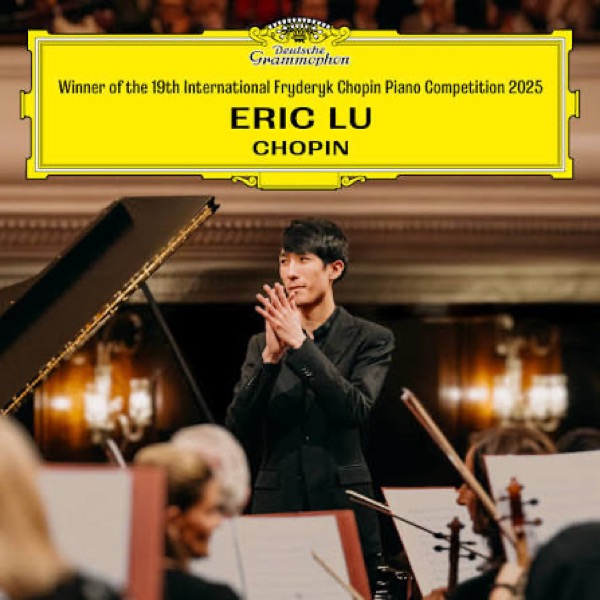
Eric Lu
For more of the best in classical music, sign up for our E-Newsletter