
Some works of classical music seem almost designed to calm the human nervous system.
Across centuries of repertoire, listeners have returned to certain pieces again and again during anxious, reflective, or grief-filled moments – music that slows the heart rate, quiets racing thoughts, and restores a sense of emotional balance.
Today, we’re looking at classical music that will help calm you when you’re anxious or overwhelmed by the demands and worries of life.
Arcangelo Corelli – Christmas Concerto
Italian composer and violinist Arcangelo Corelli wrote his Concerto Grosso in G-minor in 1690; it was published posthumously in 1714.
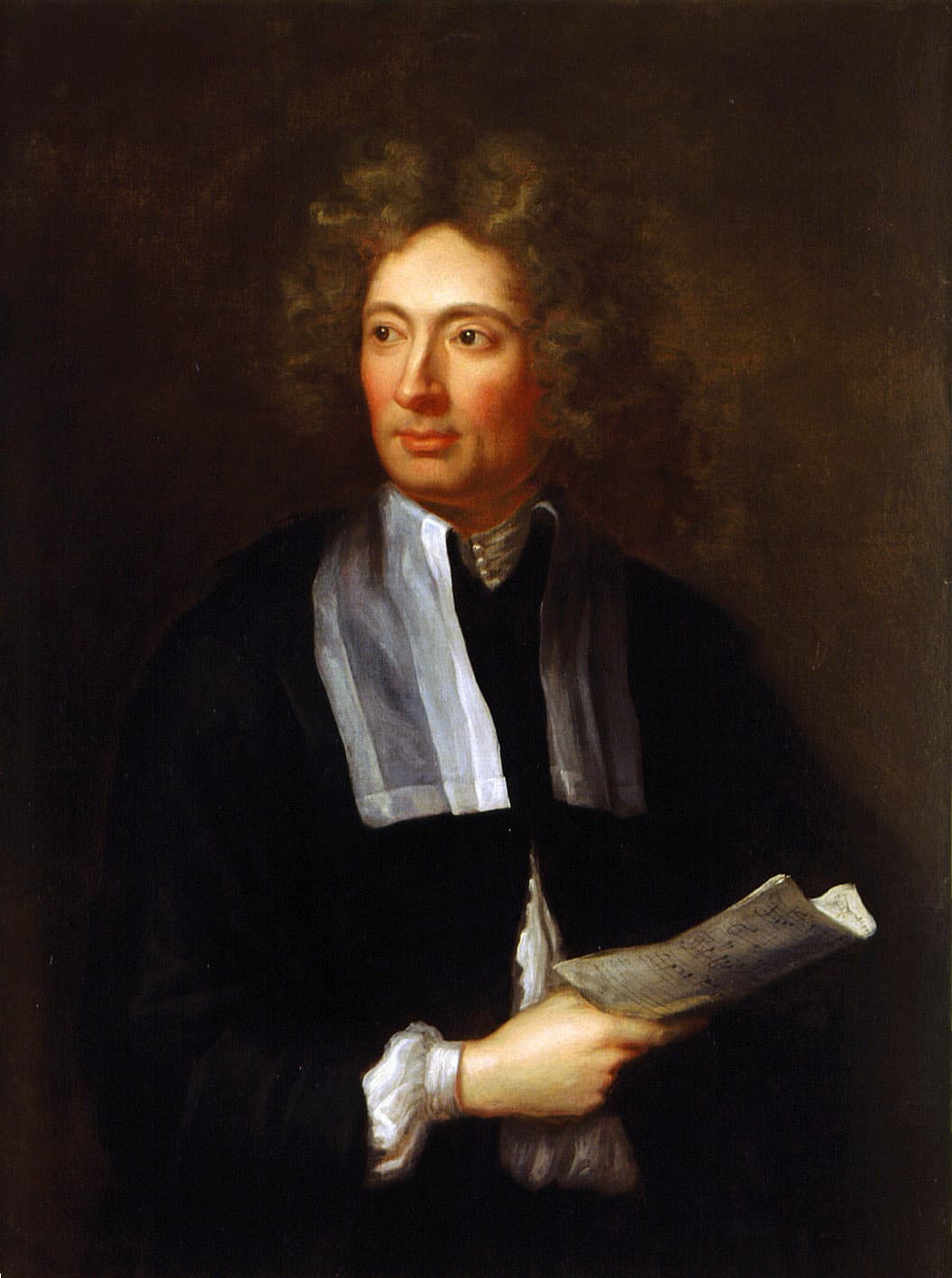
Portrait of Arcangelo Corelli by Hugh Howard, 1697
It earned the nickname “Christmas Concerto” because of Corelli’s inscription on the score: “Fatto per la notte di Natale” – “made for the night of Christmas.”
The concerto ends with a gentle Pastorale marked largo – a lilting lullaby in 12/8 time, presumably evoking the Christ child at rest.
The movement’s steady rocking rhythm, combined with the warm tone of the strings, evokes the quiet glow of candlelight on a winter night.
But even aside from any Christmasy connotations, this music radiates calm and intimacy, and should be at the top of any playlist of comforting classical music.
Why it comforts: Steady pulse, soft dynamics, and a cosy atmosphere.
Johann Sebastian Bach – Air from Orchestral Suite No. 3
Known today as the “Air on the G String”, this movement from Bach’s Orchestral Suite No. 3 is serenity distilled into sound.
The “Air” is the second movement of five, sitting quietly between the opening overture and a pair of celebratory dances. Its placement is deliberate, creating a moment of contrast and stillness at the very heart of the work.
The gently walking bass line provides a steady, comforting foundation.
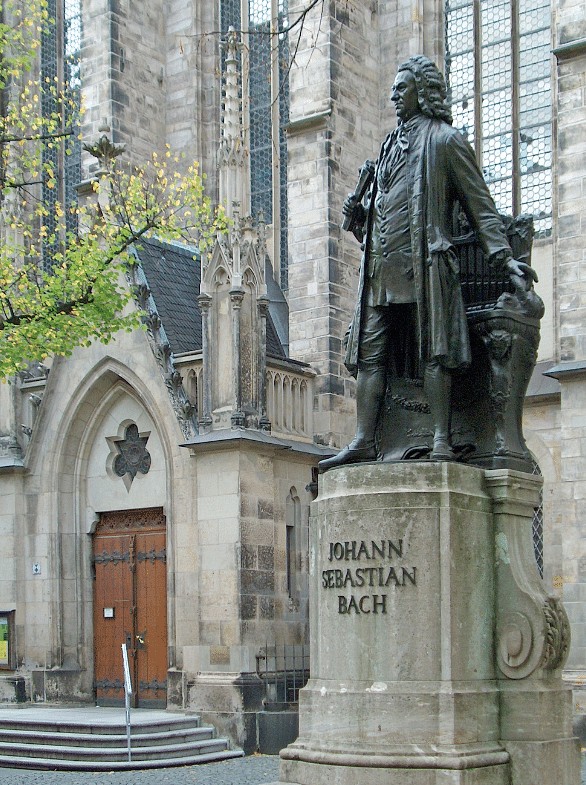
Bach’s statue in Leipzig
Above it, a long-breathed violin melody unfolds in smooth arches that feel as natural as breathing.
Why it comforts: Predictable harmonic motion, unhurried tempo, and its sense of heartwarming peace.
Erik Satie – Gymnopédies
Although they were written for solo piano in 1888, the Trois Gymnopédies – written by a boundary-pushing 22-year-old bohemian composer living in a small Parisian apartment – feel startlingly modern.
Taken literally, their title means “Three Nude Dances.” That title may refer to the Gymnopaedia, an ancient Spartan festival in which warriors performed ceremonial dances nude.
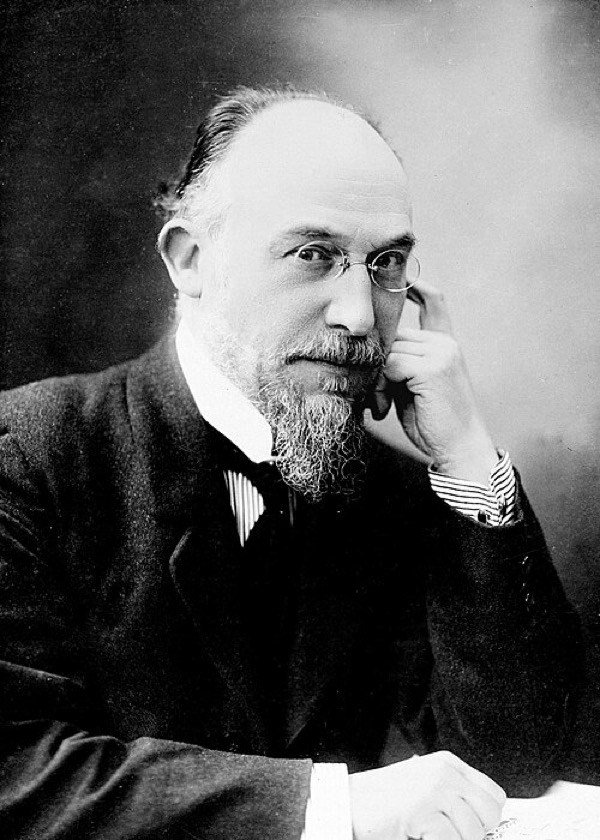
Erik Satie
Each piece unfolds at the same unhurried tempo, with a gentle waltz-like pulse in ¾ time. They also feature a harmonic language that is deliberately ambiguous. And instead of pursuing a grand Romantic era climax, the music just drifts and dissolves.
Why it comforts: Repetition, simplicity, a hypnotic quality that quiets anxious thoughts, and a naturalness and kind of emotional nudity and vulnerability.
Jean Sibelius – Symphony No. 2, Movement 1
Premiered in 1902, as a Finnish nationalist movement was gaining steam against the Russians, Jean Sibelius‘s energetic Second Symphony became a symbol of Finnish independence and resilience.
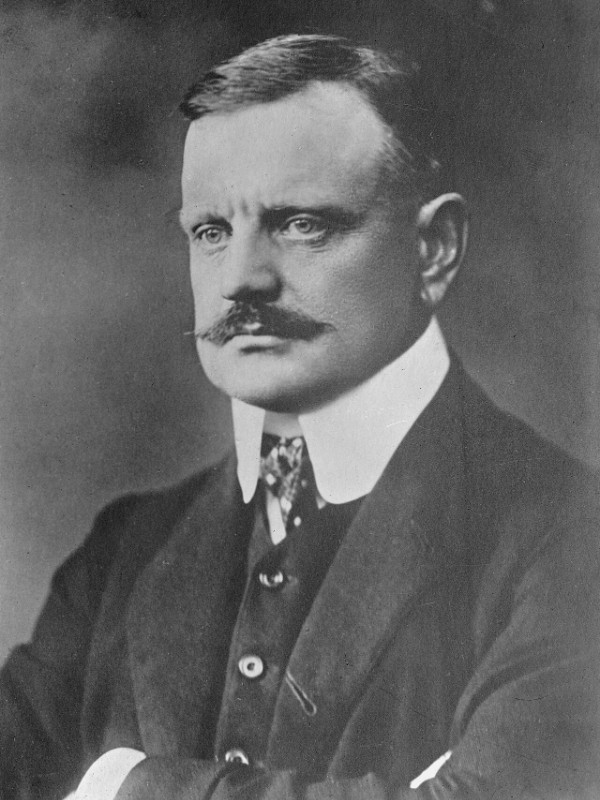
Jean Sibelius, 1913
Yet the first movement doesn’t begin with defiance; instead, string chords pulse with a gentle, rocking figure. Woodwinds glow. Themes emerge organically from the orchestral texture, like light spreading across a horizon.
Out of those seeds, the music blossoms with a kind of thrilled, nervous conviction. Its brilliant, brassy climaxes impart an atmosphere of strength, solidarity, and even inspiration.
Why it comforts: Its warm orchestral colours and its spirit of communal hope. This isn’t relaxed comfort; it’s more of a journey to feeling confident and believing that things will be okay.
Ludwig van Beethoven – Piano Concerto No. 5, Movement 2
Beethoven’s fifth and final piano concerto was composed in 1809, during the Napoleonic siege of Vienna. He wrote to his publisher in June that there was “nothing but drums, cannons, men, misery of all sorts.”
While cannons boomed outside the city, Beethoven, who was struggling with his hearing, looked inward and produced one of the grandest piano concertos ever written. In fact, that grandeur likely led to its nickname, the Emperor.
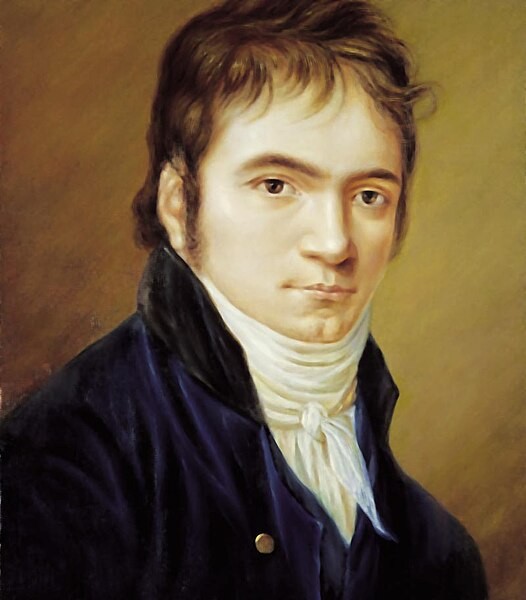
Christian Horneman: Ludwig van Beethoven, 1803 (Beethovenhaus Bonn)
The work isn’t all pomp and circumstance, though. The slow movement, the Adagio un poco mosso, is achingly tender – and made all the more striking by the violent circumstances of its composition.
Muted strings create a glowing backdrop while the piano sings out long, suspended lines. The movement’s theme sounds like a hymn.
Why it comforts: Noble stillness, radiant calm, and the triumph of creating a luminous interior world during times of profound upheaval.
Pietro Mascagni – Intermezzo from Cavalleria rusticana
This 1890 intermezzo from a tragic opera named Cavalleria rusticana has become one of the most beloved operatic excerpts in orchestral concert music.
It arrives at the opera’s midpoint and is played while the townspeople attend Easter mass. The work ends up functioning as a moment of suspension: a poignant pause between acts of coerced seduction and fatal violence.
The soaring string melody is unforgettably romantic, swelling upward with a sense of emotional release rather than despair.
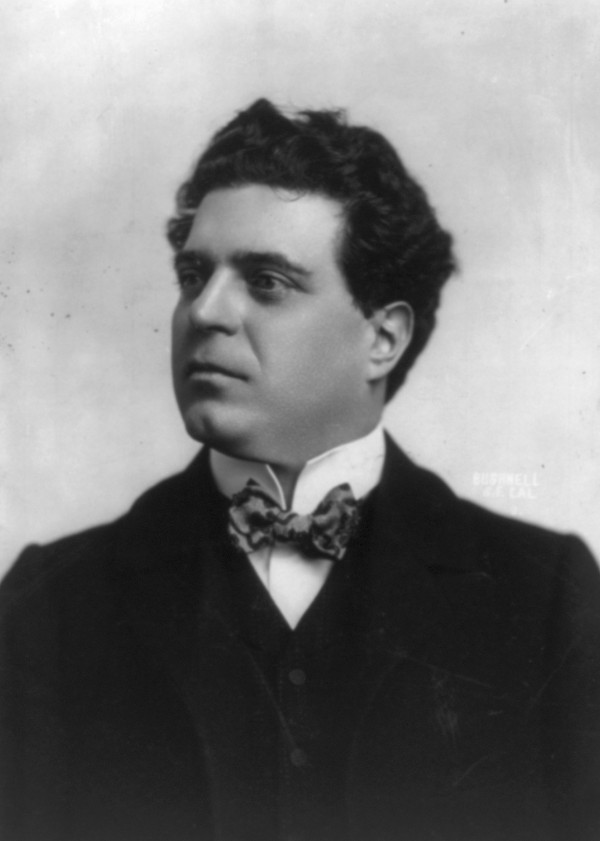
Pietro Mascagni
Why it comforts: Lyrical warmth, emotional directness, made more powerful by its placement within a dramatic plot.
Jules Massenet – Meditation from Thaïs
Massenet’s 1894 opera Thaïs traces the story of a courtesan named Thaïs who undergoes a spiritual conversion at the urging of a monk.
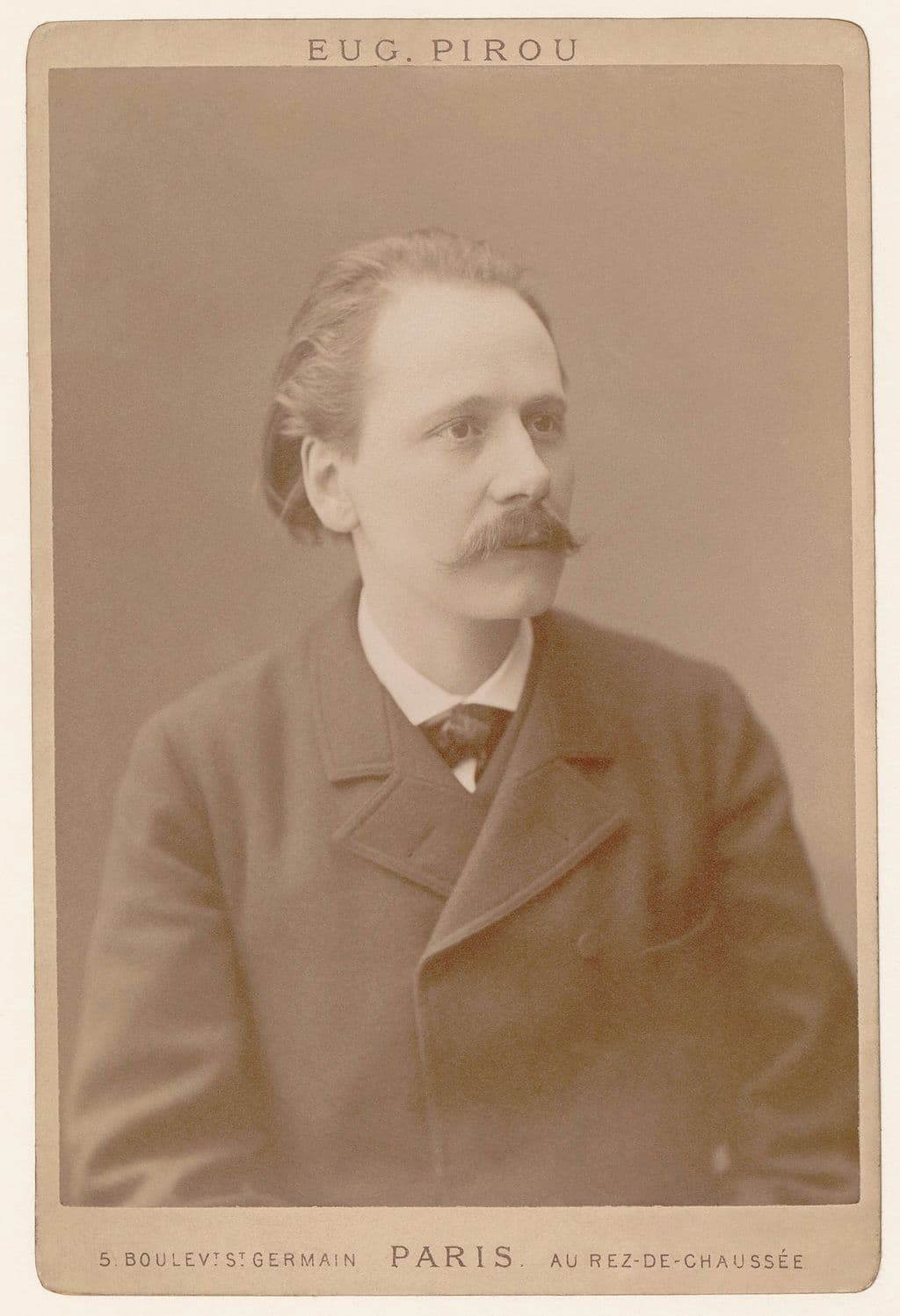
Jules Massenet, 1895
The Meditation, written for solo violin and orchestra, is played as Thaïs considers renouncing her life of luxury for one of spirituality and eternal joy, representing a moment of otherworldly transcendence and transformation.
The whole piece only lasts for about five minutes – but in that time, it manages to be warm, sensual, dreamy, and devotional all at once.
Why it comforts: Its portrait of reflection, dawning emotional clarity, and spiritual transcendence and confidence.
Ralph Vaughan Williams – The Lark Ascending
British composer Ralph Vaughan Williams began sketching The Lark Ascending in 1914, inspired by George Meredith’s 1881 poem of the same name.
Both poem and tone poem portray a skylark flying over the English countryside.
The outbreak of World War interrupted the development of the work. It was only premiered in its final orchestral version in 1921, making it a work with one foot firmly in pre-war society and the other in post-war society.
The solo violin part rises and circles with intoxicating freedom, suggesting birdsong and pastoral English folksong.
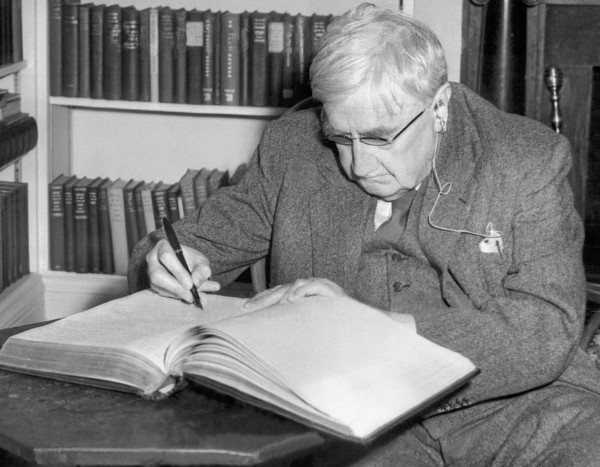
Ralph Vaughan Williams, 1954
The Lark Ascending has repeatedly topped public opinion polls as Britain’s favourite piece of classical music. Once you’ve heard its soaring lines and songlike trills, it’s easy to see why.
Why it comforts: Its pastoral openness and unhurried beauty – as well as being a reminder, like Beethoven’s Emperor concerto, that comforting works can emerge from stressful circumstances.
Gabriel Fauré – In Paradisum, Requiem
Fauré began his Requiem in 1887. He worked on it and off for a few years before the final orchestral version was premiered in 1900.
In it, he deliberately avoided the rhetoric of fire and brimstone, veering away from the apocalyptic atmosphere so often employed in famous dramatic requiems, such as those by Verdi and Mozart. Instead, it offers consolation to the living.
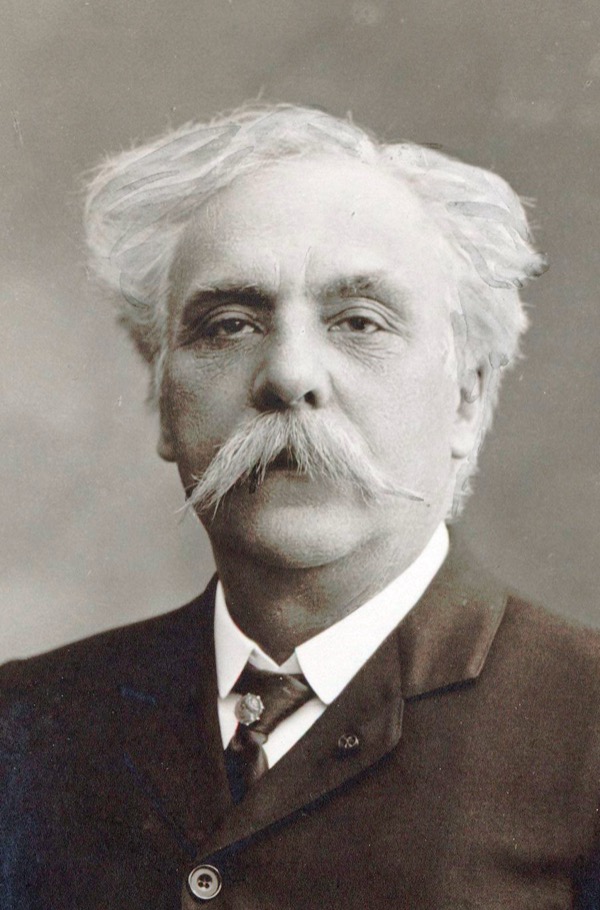
Gabriel Fauré, photographed by Pierre Petit, 1905
Fauré himself wrote:
“It has been said that my Requiem does not express the fear of death, and someone has called it a lullaby of death. But it is thus that I see death: as a happy deliverance, an aspiration towards happiness above, rather than as a painful experience.”
Why it comforts: Its acceptance of the unavoidable, no matter how tragic or final, and its gorgeous spiritual serenity.
Arvo Pärt – Spiegel im Spiegel
Composed in 1978 and titled Spiegel im Spiegel (Mirror in the Mirror), this minimalist masterpiece uses simple scales, repeating rising piano triads, and a hushed dynamic.
The result? The creation of one of the most breathtaking auras of repose in the entire classical music repertoire. A listener’s perception of time is completely altered.
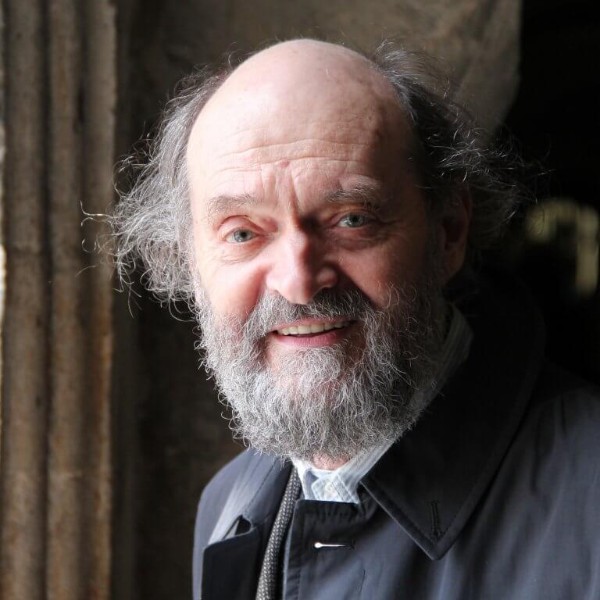
Arvo Pärt
Pärt explained what makes the simple piece so paradoxically difficult:
“Everything redundant must be left aside. Just like the composer has to reduce his ego when writing the music, the musician too must put his ego aside when performing the piece.”
The simplicity of the playing that results from that kind of instruction makes the work serve its emotional purpose in a deeply effective and satisfying way.
Why it comforts: Its radical simplicity, emotional transparency, and purity.
Conclusion
Across three centuries and ten very different composers, these works share something essential: a sense of stillness, warmth, and emotional clarity.
Whether written in Baroque Rome, Romantic Paris, or modern Estonia, each piece creates a miniature, portable sanctuary to escape to. These works serve as evidence that beauty and calm can remain close at hand, even in moments of profound stress or anxiety.
For more of the best in classical music, sign up for our E-Newsletter





So happy to listen to sacred pieces
Beautiful.
No Debussy?
Many beautiful pieces here but personally I’d prefer sometimes something with more go eg not the air on a g string but the badinerie from the second suite