
Beyond the Operatic Legend
Carl Maria von Weber’s (1786-1826) life and career are inexorably connected to his opera Der Freischütz (The Marksman). When it was first produced in Berlin in June 1821, the musical world was stunned, as he had created a work that seemed to embody the restless spirit of the young Romantic Movement.
The resounding success of Der Freischütz changed the composer, and it also placed this particular opera at the centre of his output. This has come at the expense of Weber’s other remarkable achievements in his richly varied output.
Carl Maria von Weber died on 5 June 1826, and since his biography and Der Freischütz have been examined in considerable detail, let us focus on the composer and the wealth of music beyond the operatic stage that deserves to be heard with more frequency.
Arthur Stockel Plays Carl Maria von Weber: Clarinet Concerto No. 2 in E-flat Major, Op. 74
A Composer Takes Shape
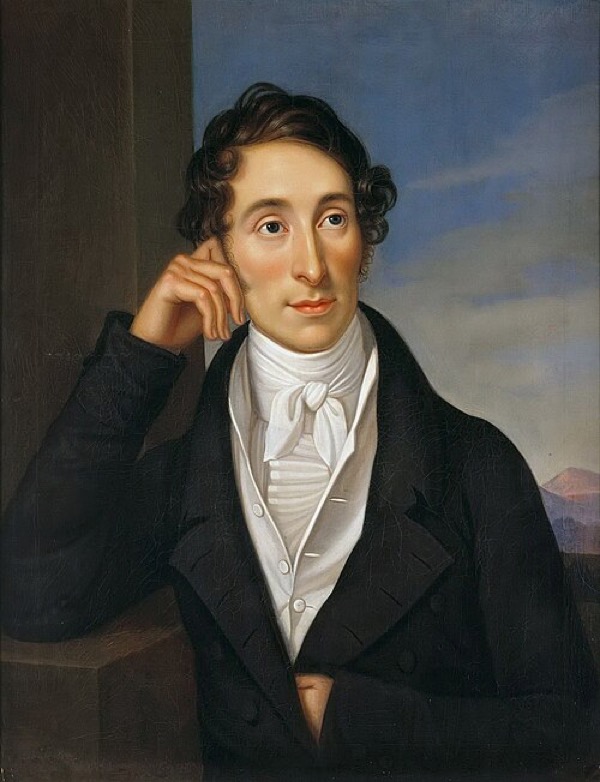
Caroline Bardua: Portrait of Carl Maria von Weber
In contrast to Haydn, Mozart, and Beethoven, Weber, the composer, is not really well understood. Well into the 20th century, critical editions of his works, his diaries, correspondence, and writings still did not exist. In addition, most of the music composed before 1802 had also been lost.
Weber was a declared admirer of Mozart and, in fact, related to him, while Haydn seemed to have played a lesser role. During his time in Vienna in 1803-4 he made significant contact with the music of Beethoven and with the opéras comiques of Cherubini, Méhul, Dalayrac, and others.
Also during his time in Vienna, the famed Abbé Vogler taught him harmony, part-writing, and sparked an enduring interest in folk and exotic music. As Michael Tusa writes, “From that time on Weber’s development as a composer was essentially one of constant growth and maturation with no obvious breaks or periods in terms of style or compositional approach.” (Tusa, GMO, 2001)
Unlike Beethoven, Weber seemed to have destroyed most of his preliminary drafts, so it is difficult to gain a clear picture of his decision-making processes. He did borrow ideas from his earlier compositions, and occasionally we find his own comments about composition and aesthetics.
Lisa Yui plays Carl Maria von Weber: Piano Sonata No. 1 in C Major
Brilliance at the Keyboard
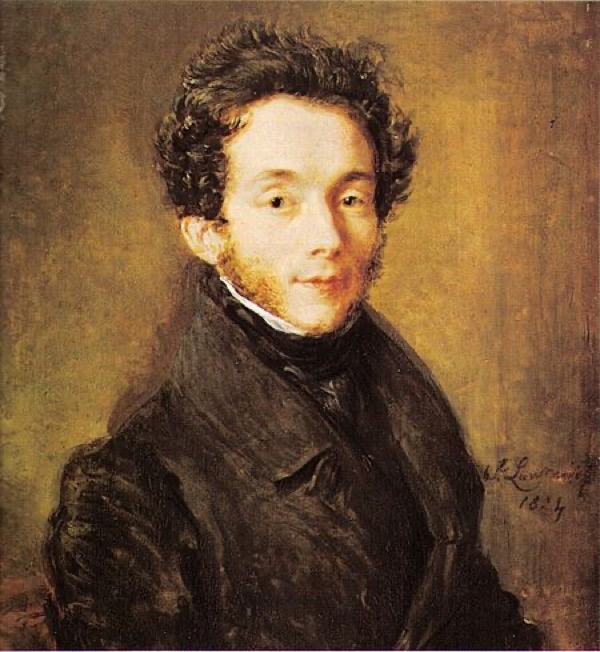
Carl Maria von Weber, 1814 (painting by Thomas Lawrence)
Carl Maria von Weber composed instrumental music throughout his life, ranging from the Six Fughettas of 1798 to his 4th Piano Sonata in 1822. We find most major genres of the early 19th century represented, excepting the string quartet and the piano trio.
Weber was an exceptional pianist, and the piano concertos, several variation sets, and the Rondo brillante are directly related to his public performances. In addition, he successfully composed in the newer genres of concert dances for solo piano and concertante works for soloist and orchestra.
Carl Maria von Weber: Flute Trio in G minor, Op. 63
Salon and Concert Hall
Although full of technical challenges, the piano sonatas were designed for private performance, and his contracts with virtuosos led to a number of works, including the concerto written for Baermann and the clarinet. His symphonies and overtures figured prominently into his conducting activities, and most of the surviving chamber music was also composed for public performance.
Weber wrote comparatively little for the fast-growing amateur market, as we find only three sets of four-hand music and six sonatas for violin and piano. We also find a Divertimento for guitar and piano, a set of variations on a gypsy theme, and the “Invitation to the Dance” for solo piano.
The famous “Konzertstück” for piano and orchestra, and the Grand pot-pourri for cello and orchestra, are unusual alternatives to the traditional three-movement concerto, and they might well have been tied to a specific poetic conception.
Carl Maria von Weber: Konzertstück in F minor, Op. 79 | Alexei Volodin | Dima Slobodeniouk | SWR Symphonieorchester
Poetry and Song
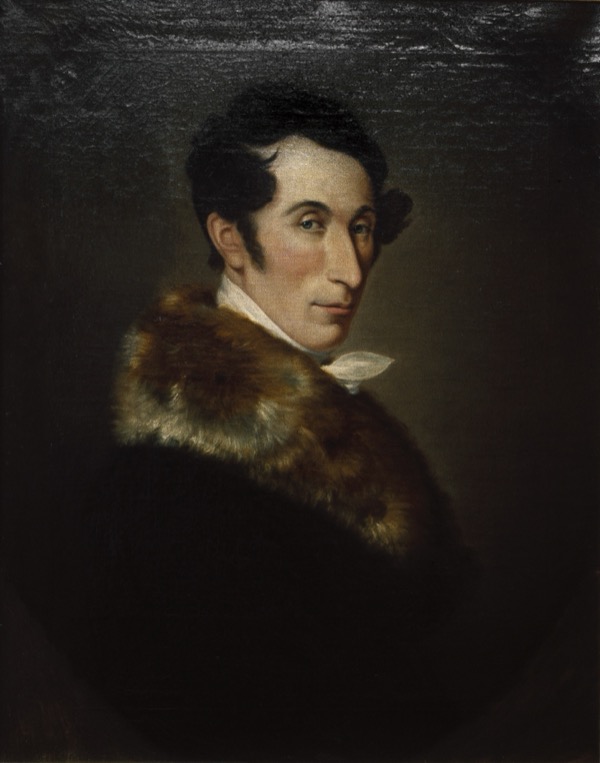
Ferdinand Schimon: Carl Maria von Weber
Carl Maria von Weber composed roughly 85 Lieder and Gesänge, primarily setting texts of poets with whom he had personal connections. Among his settings of folk poetry, it is not surprising to find excerpts from the Wunderhorn collection.
His German songs do not attempt the depth and intensity of expression we associate with Schubert and later Romantics, but they aim to entertain through wit, sentiment, or poems about the opposite sex.
Carl Maria von Weber: 5 Deutsche Lieder, Op. 25
Words and Music
We also find songs on the nature of the human condition, and patriotic texts that project the feelings of a well-defined protagonist. “His views on the nature of the lied conventionally emphasize the primacy of the poem and the resultant need for correct declamation and close relationship between verbal and musical syntax.”
Yet he once confided that “the character and inner life of the words occasionally overruled the demands of strict prosody.” (Tusa, GMO, 2001) While Weber is frequently considered a conservative exponent of the genre, Weber’s songs actually demonstrate a remarkably wide variety of formal approaches.
Carl Maria von Weber: Ein König einst gefangen sass, Romanze, J. 195 (Signe Asmussen, mezzo-soprano; Jan Sommer, guitar)
Dreaming of Italy
Carl Maria von Weber consistently hoped to travel to Italy, and as a result, composed a couple of settings in Italian. Most noteworthy are a number of concert arias written for specific singers, and an Italian cantata composed for a royal wedding in Dresden.
He also composed a large number of ensemble pieces, both with and without piano accompaniment. Duets, trios, and songs with choral refrains occasionally appear in the published song and folksong collections. His most famous choral pieces are six songs for a cappella male chorus, pieces that first accorded Weber widespread acclaim.
Carl Maria von Weber: “Frühlingsahnung”
Music for Church and Stage
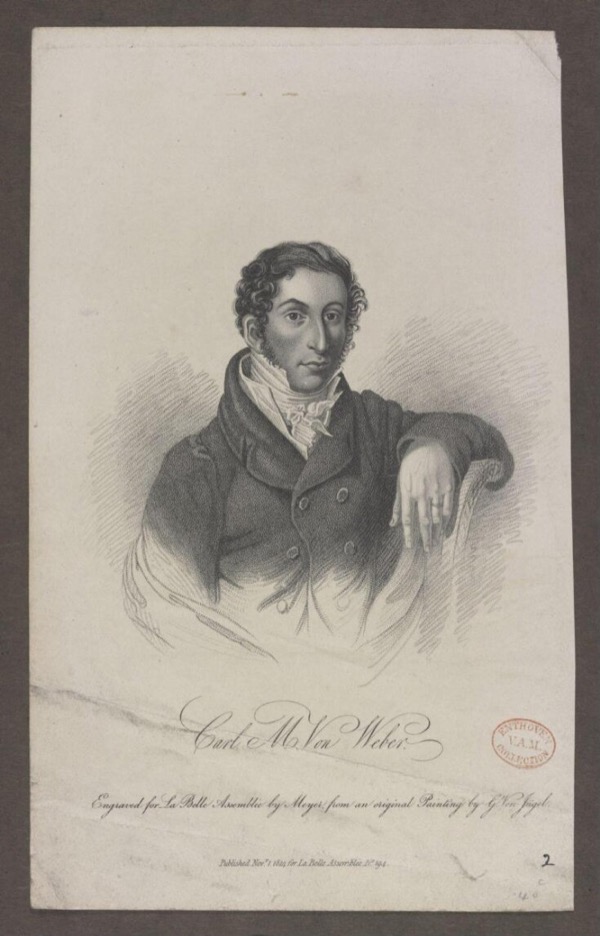
Carl Maria von Weber
Weber composed a substantial number of cantatas and cantata-like pieces, many with religious overtones and celebratory character. Although a devout Catholic who frequently conducted liturgical music, his output of sacred music is small. We only find three complete settings of the Roman Mass.
Between 1809 and 1822, Weber composed music for the spoken theatre and specific productions of long-forgotten plays. Most important is his musical contribution to P. A. Wolff’s Preciosa, commissioned and composed in 1820. The play calls for an unusually large amount of music to characterise the opposed Spanish and gypsy elements in the drama and to take advantage of the singing and dancing talents of the lead actor.
“The play (with Weber’s music) rivalled the popularity of Der Freischütz in the Dresden repertory and was widely disseminated, but with the disappearance of Wolff’s play from the stage Weber’s music has also largely vanished from public consciousness.” (Tusa, GMO, 2001)
Carl Maria von Weber: Preciosa, Op. 78, J. 279: Einsam bin ich nicht alleine (Peter Schreier, tenor; Konrad Ragossnig, guitar)
Between Enlightenment and Romanticism
Carl Maria von Weber lived in tumultuous times, marked by war, social change, and intellectual upheaval. Like many musicians of his day, he relied extensively on patronage and simultaneously saw the emerging middle-class public as an important stimulus for his art. However, he never composed in a purely commercial manner but attempted to educate this new audience to a higher standard of appreciation.
Scholars have recently questioned Weber’s supposed role as the leading exponent of early Romanticism in music, as the triumphant conclusions of his large-scale vocal and instrumental works have little in common with Romantic alienation, irony, and ambivalence.
Michael Tusa finds, “His works betray a consciousness rooted in Enlightenment optimism and shaped by the Biedermeier desire to restore order to a world shaken by a generation of revolution and war.” (Tusa, GMO, 2001)
Carl Maria von Weber: Missa sancta No. 2, Op. 76, J. 251, “Jubelmesse” (Henriette Schellenberg, soprano; Laverne G’Froerer, mezzo-soprano; Keith Boldt, tenor; George Roberts, baritone; Vancouver Chamber Choir; CBC Vancouver Orchestra; Jon Washburn, cond.)
A Legacy Rediscovered
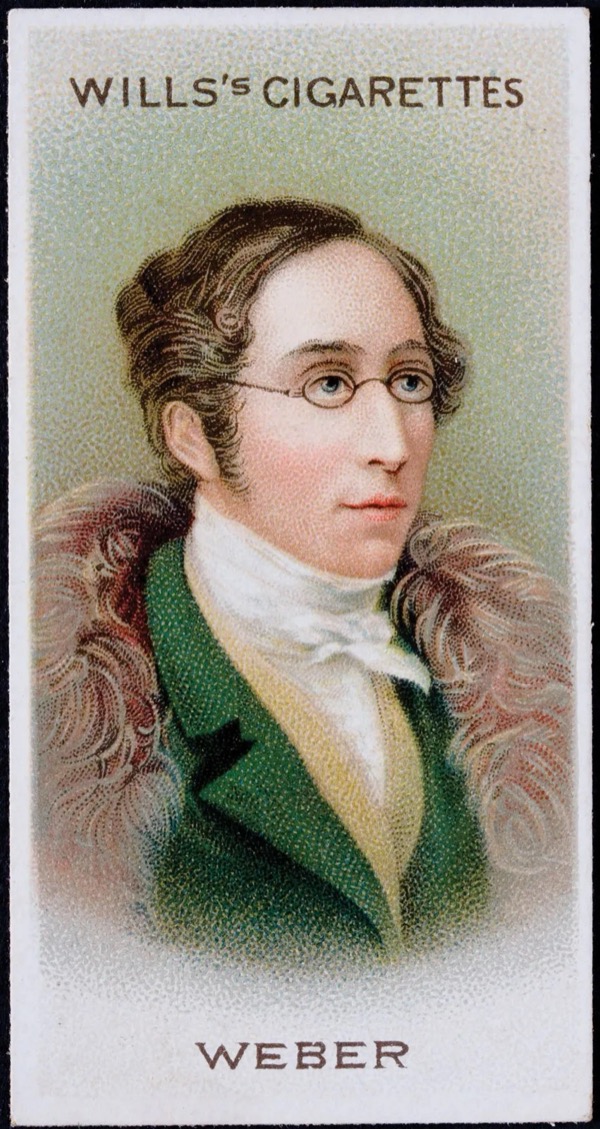
Carl Maria von Weber (cigarette trading card)
While Weber’s life and personality, not to mention his international career, resist narrow nationalist interpretations, he nevertheless became a potent symbol of German musical culture.
His influence on later composers was widespread, as he left his mark on Meyerbeer, Wagner, Mendelssohn, Chopin, and Liszt. And according to one study, he helped Berlioz to find his own way to originality.
As Weber’s reputation gradually faded, much of his music disappeared from the repertory. He was overshadowed by Wagner in opera and by Beethoven as the paradigm of instrumental music, while Schubert overshadowed him in the lied.
Still, Weber never entirely disappeared, and his most passionate advocates in the 20th century turned out to be Debussy and Stravinsky, both recognising qualities in Weber’s music that fashion and historiography had dismissed.
For more of the best in classical music, sign up for our E-Newsletter





He also composed Romanza Siciliana in g minor J.47 is a beautiful gem for flute and Orchestra. Also op.10 , 6 Sonatas get played on either Violin or Flute.
Weber’s contribution to the development of German Romantic opera, particularly through Der Freischutz, deserves more scholarly attention in the context of early 19th-century nationalism.