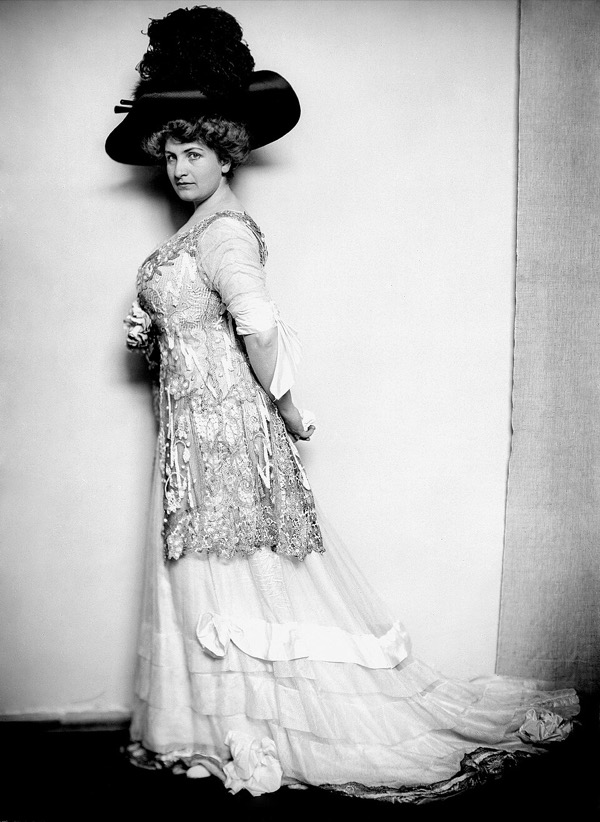
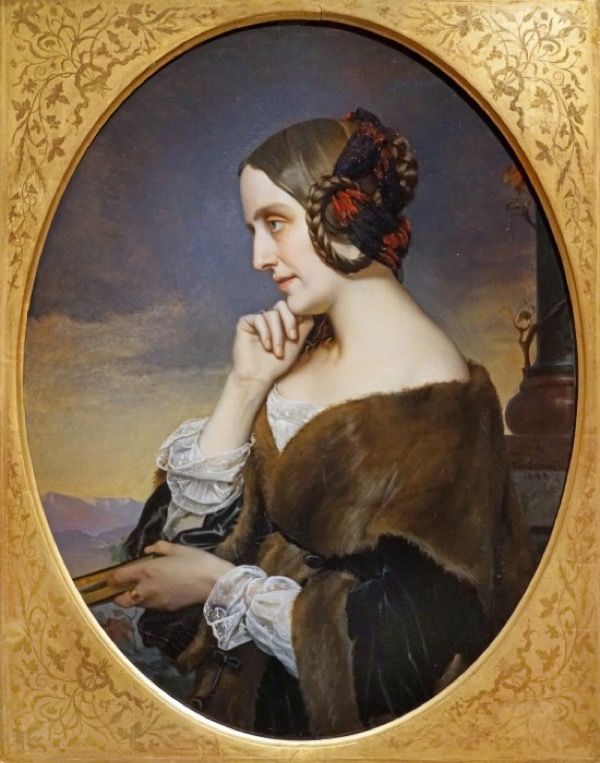
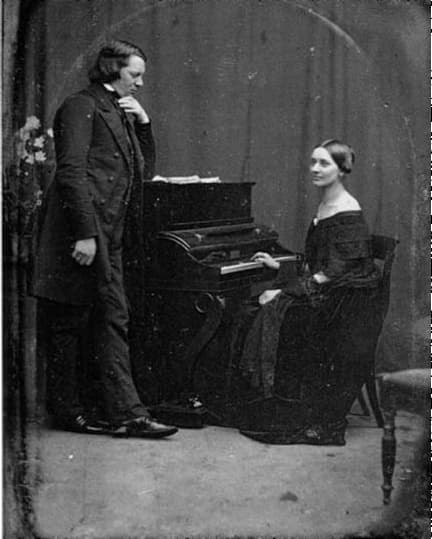
In the history of classical music, few relationships began as intensely – or as tumultuously – as the whirlwind courtship between Gustav Mahler and Alma Schindler.
Their meeting in November 1901 at a Vienna salon brought together two formidable artistic personalities at very different stages of life: Mahler, the city’s most powerful conductor, and Alma, a brilliant, ambitious young composer navigating love, ambition, and social expectation.
What followed over the next eight weeks was a rapid escalation from verbal sparring match to an offer of marriage – and it was all recorded in extraordinary detail in Alma Schindler’s diaries and Mahler’s letters.
Today, we’re looking at the volatile beginning of one of music history’s most famous marriages.
Gustav Mahler Meets Alma Schindler at a Vienna Salon
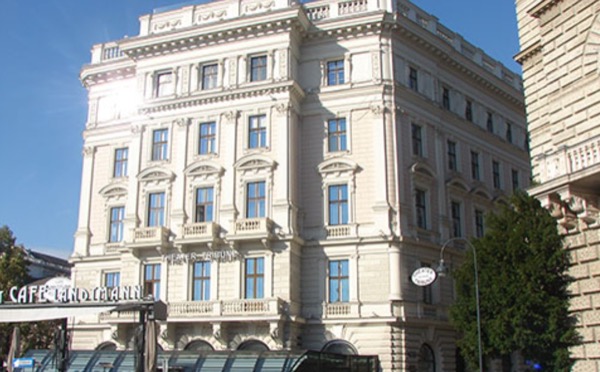
Berta Zuckerkandl’s Vienna salon
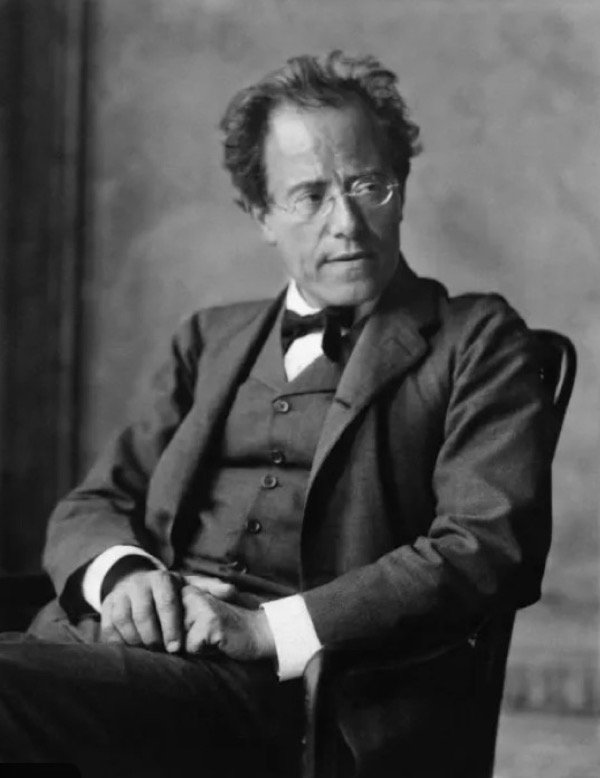
On 7 November 1901, conductor and composer Gustav Mahler visited the salon of journalist and art critic Berta Zuckerkandl.
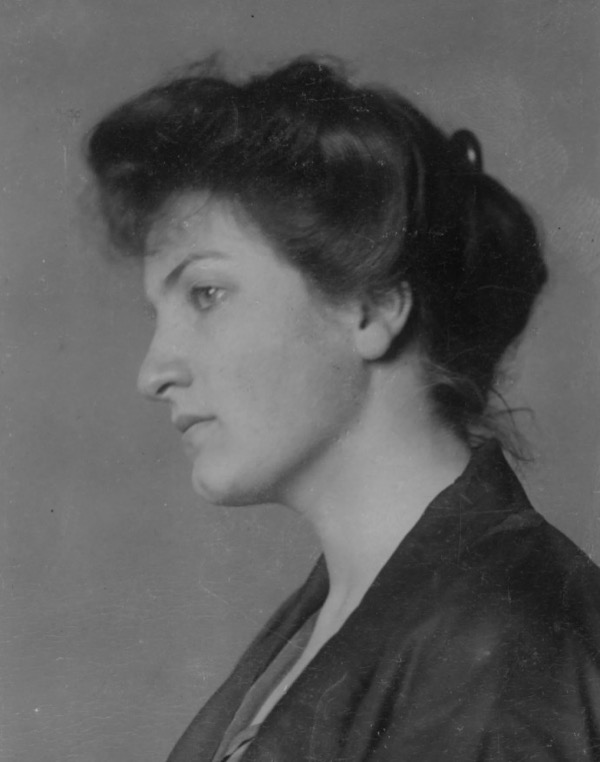
At dinner, Mahler sat across from a striking trio: the ex-director of the Burgtheater, Max Burckhard, artist Gustav Klimt, and, in between, a beautiful young woman by the name of Alma Schindler.
Gustav Mahler
He was immediately intrigued not only by her beauty but by her “caustic and abrupt” chatter.
She fell into an amusing conversation with the older men on either side of her. Her first kiss had been with Klimt (an experience she referred to in her diary as “heaven”); during another encounter, she had kissed Burckhard (an experience that earned the descriptor “hell”).
The trio was laughing so frequently that Mahler asked, “May others join in the fun?”
Before an answer could be given, another guest arrived, interrupting Alma’s reply.
Gustav Mahler and Alma Schindler’s First Fight
Alma Schindler
After dinner, Mahler stood near Alma, and the two got to talking about physical beauty.
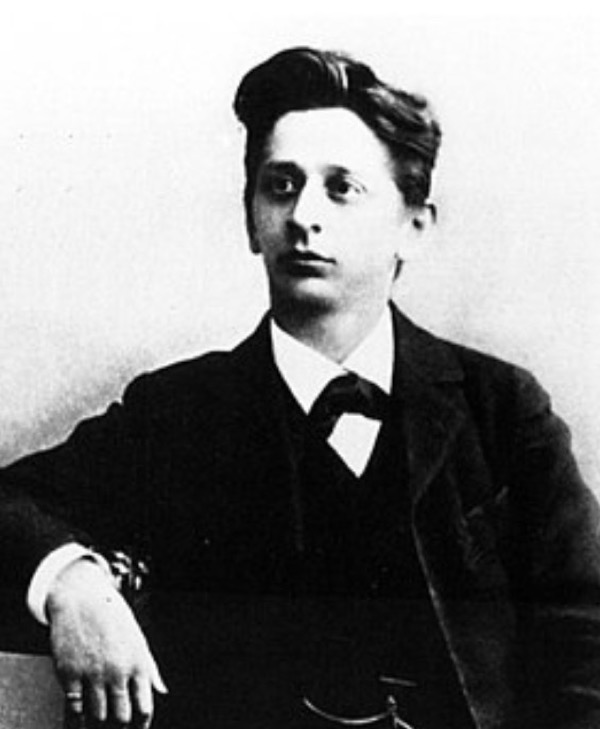
Alma declared that intelligence could contribute to beauty: that even Alexander Zemlinsky, a composer who Viennese society widely agreed was unattractive, was actually handsome because of the intelligence in his eyes.
(Unbeknownst to Mahler, Alma was at the time romantically involved with Zemlinsky, and dreaming in her diary in surprisingly graphic terms about having his baby.)
Alexander Zemlinsky
Mahler disagreed. Soon they were arguing over Zemlinsky’s ballet, Das gläserne Herz (The Glass Heart), which Zemlinsky had submitted to Mahler in the hopes he might conduct it.
Alexander Zemlinsky: Das Glaserne Herz (Slovak Radio Symphony Orchestra; Ludovit Rajter, cond.)
Berta Zuckerkandl later recorded their first argument, recalling it line by line.
Alma: You have no right to keep a score that’s been submitted to you lying around for a whole year, especially when it comes from a real musician like Zemlinsky. You should have given him an answer, even if it was only “no.”
Gustav: But the ballet is quite worthless. No one will be able to make sense of it. How can you, who are interested in music and who are, I believe, studying it, possibly defend such trash?
Alma: In the first place, it’s not trash, and you’ve probably not even taken the trouble to have a good look at it. And secondly, even if it is bad music, that’s no excuse for not being polite.
Mahler’s First Impression of Alma Schindler
Interestingly, at this point, the strong-willed Mahler gave up, saying, “Let’s make peace! I don’t promise to put on the ballet, of course, but I like the way you support your music teacher so courageously and express your opinion so frankly. I do promise, therefore, to send for Zemlinsky not later than tomorrow.”
She asked him if he would like to hear about the symbolism in Zemlinsky’s ballet. He answered – sarcastically – that he was looking forward to hearing her explanation.
To underline her point, she asked him to make sense of the nonsensical plot of Josef Bayer’s ballet Die Braut von Korea (The Korean Bride), which Mahler was then conducting at the Opera.
Instead of taking offence, he was charmed and began asking her about her music studies.
Before they left, Mahler invited Alma, Berta, and Berta’s sister Sophie to the following morning’s dress rehearsal of Offenbach‘s operetta Les Contes d’Hoffmann. She accepted – as long as she was first able to get her composing work done for the day.
Mahler told Berta that it was the first time he’d ever enjoyed dining out of the house.
Anna Netrebko & Elīna Garanča – Offenbach: Les Contes d’Hoffmann: Barcarolle
Alma’s First Reflections on Gustav Mahler
When Alma returned home, she wrote in her diary that she was disappointed at what she viewed as a lack of control over her emotions while talking to Mahler, whose conducting talent she admired deeply.
“I must confess I liked him enormously,” she wrote in her diary. “To be sure, he’s very keyed up. He was like a bull in a china shop. He’s pure oxygen: you get burnt if you go too close…”
Mahler Attempts to Court Alma
The following day, she showed up at the Opera with Berta and Sophie. Mahler met them, taking Alma’s coat and forgetting to carry Berta and Sophie’s.
The three women gathered in his office. Alma was drawn by the sheet music on his piano, unaware that he was staring at her.
He asked Alma how she’d slept; she answered, “Very well indeed. Why shouldn’t I have?” He replied, “I didn’t sleep a wink all night.”
The following day, before Alma had woken up, an anonymous love poem was delivered to the Schindler home. It made mention of counterpoint, choruses, and canons.
Alma felt certain it had come from Mahler. Her mother, however, doubted a 41-year-old composer would be sending love poetry to his crushes.
Opera Performances and Family Worries
Vienna Ringstrasse
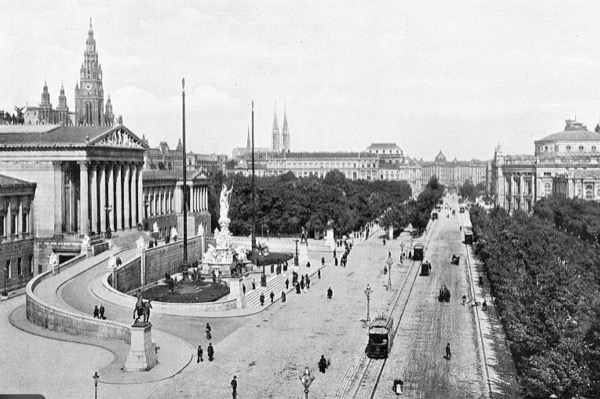
A few days later, on the 11th, she attended the premiere performance of that season’s Les Contes d’Hoffmann. She returned the following week to see Gluck’s Orfeo ed Euridice.
Orphée et Eurydice – ‘J’ai perdu mon Eurydice’ (Juan Diego Flórez, The Royal Opera)
During the intermission of the Gluck, he intercepted Alma and her mother in the lobby and invited them to his office for a cup of tea.
They agreed to meet again after he returned to Vienna following the Munich premiere of his Fourth Symphony.
Afterwards, Alma, her mother, her stepfather, and Burckhard went out for dinner. Her stepfather was furious that Alma had been allowed to enter Mahler’s office, given the rumours that surrounded his well-known affairs with his operatic leading ladies.
Burckhard asked what she’d do if Mahler ever proposed. When Alma admitted that she’d accept, he went off on a jealous anti-Semitic tirade. “Think of your children,” he said. “It would be a sin.”
“You would be the one to suffer, not him,” he told her, “and you deserve better than that.”
This condescending anti-Semitic attitude that surrounded Alma would manifest in her own relationship with Mahler in the years to come.
On 22 November, while still waiting for Mahler’s return from Munich, she wrote a letter to Alexander Zemlinsky, whom she felt she must eventually break up with.
She wrote in her diary:
“Oh, what I’m losing! Such a marvellous teacher! I’ve certainly miscalculated this time. Whatever happens, I must bear the consequences! It’s entirely my fault, yet it was so beautiful!”
Gustav Mahler’s Return from Munich and the Question of Marriage
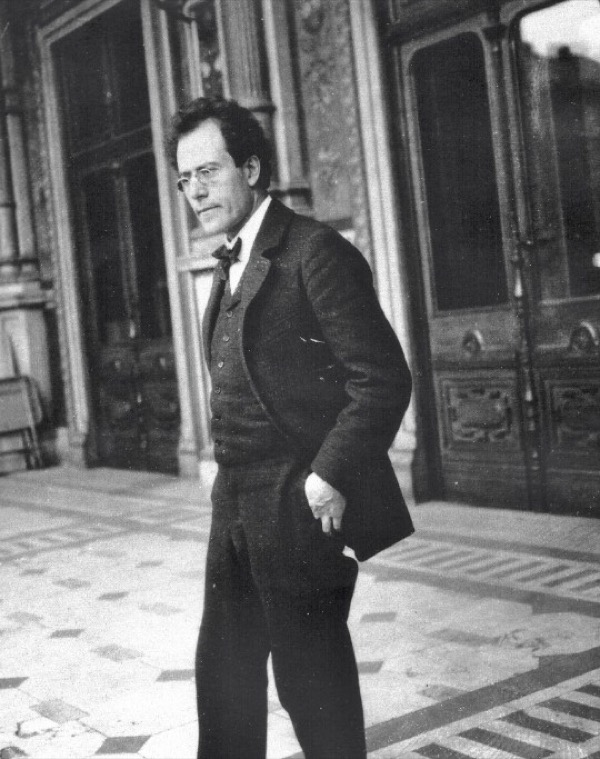
Gustav Mahler
Mahler: 4. Sinfonie ∙ hr-Sinfonieorchester ∙ Mojca Erdmann ∙ Andrés Orozco-Estrada
Mahler returned from the premiere of his Fourth Symphony on 26 November.
Two days later, he called on Alma, who was in the middle of a music theory lesson with her teacher, Robert Gound. A wide-eyed maid threw open the door to breathlessly inform them that “Gustav Mahler is downstairs!”
Mahler came into her room and started going through her books. He was repelled by the complete works of Nietzsche that he found, telling her to throw them into the fire. She retorted: “If they are really so detestable, you should find it easy to convince me of it.”
They took a walk together. A fresh snowfall had just fallen on Vienna, and their footsteps crunched side by side. He may have been twenty years her senior, but during this one-on-one meeting, Gustav came across as exceptionally – and, to Alma, endearingly – childlike. His shoelaces kept coming untied, and he kept hoisting his foot up onto surfaces to retie them. He also couldn’t remember his own phone number to let his sister know he wouldn’t be home for dinner, so he had to call the Opera to find it out.
While they were returning to the house, he made an overwhelming observation:
“It’s not easy to marry a man like me! I must be entirely free. I can’t allow myself to be hampered by any material responsibilities. I could lose my job at the Opera from one day to the next.”
She replied that she had grown up among artists and understood.
When they returned to the house, they went into her room, where they had their first kiss. He then began talking about their marriage as if it was inevitable. It should happen as soon as possible, he told her.
Alma Schindler Chooses Between Mahler and Zemlinsky
Despite all this, her relationship with Zemlinsky still had not been completely broken off.
But after Mahler returned within the week, she made a decision.
She wrote in her diary:
“[Mahler] told me that he loves me – we kissed – he played his things for me – my senses remain numb… his caresses are sweet and nice. If only I knew – him [Mahler] or him [Zemlinsky] – I must gradually wean Alex away from me. I’m overwhelmed with remorse; if only all that hadn’t happened – I would have become engaged today. But I couldn’t return his caresses – someone stood between us.”
She struggled in her diary. The pros for Zemlinsky were, as she saw them:
“I keep saying softly to myself my ‘beloved’ and each time I add ‘Alex’!…”
“Can I really love Mahler as much as he deserves, and it lies within my power to love someone. Will I ever understand his art – and he mine? With Alex – this mutual understanding.”
She wasn’t even sure she loved Mahler:
“Do I really love [Mahler]? I’ve no idea – sometimes I think quite simply ‘no.’…”
“So many things about [Mahler] annoy me: his smell – the way he sings – something in the way he speaks!…”
She also, given the speed of their courtship, struggled with whether she was developing feelings for a real man or a kind of idealised artist.
“And I don’t know what’s going on inside me – whether I love him or whether I don’t love him – whether it’s the director – the superb conductor – or the man…if, when I stop thinking about the one, something remains for the other…”
Perhaps most damning of all, she knew she didn’t care for his music.
“And his music, which I find so utterly foreign to me? To put it plainly, I don’t believe in him as a composer! And I am supposed to bind my life to the man… The fact is, he was nearer to me from afar than he is at close quarters. I’m terribly afraid…”
“What am I to do?”
Alma Schindler Decides in Favour of Mahler
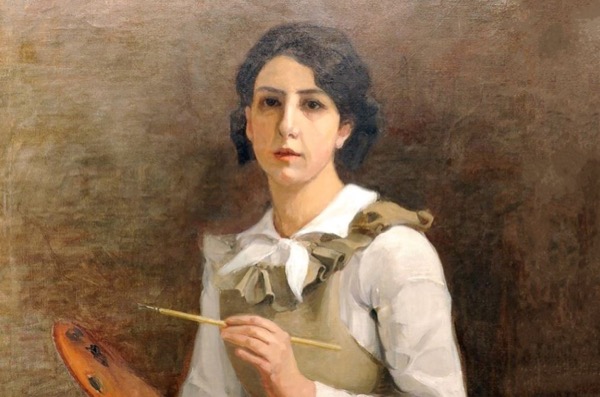
Alma Schindler, self-portrait
Her mind was finally made up on 3 December. Mahler flirted with her by sending her tickets to his performance of Les Contes d’Hoffmann, then turned on the podium to look at her at the end of every act. She was deeply flattered.
She wrote in her diary:
“I’m beginning to think that I really do love him. Alex is like a dead weight. I really do want [Mahler] now. I think about him all the time – His dear, dear eyes…”
The following day, she and Mahler met again. According to Alma’s diary, they “kissed each other countless times. I have a warm feeling when he holds me in his arms. If only he goes on loving me like that.”
They also confessed to each other about their past lovers. In Alma’s words:
“He told me everything today, all his sins, and I some of mine. He guessed [Zemlinsky’s] name and was appalled – he couldn’t understand it.”
She wrote in the same entry:
“He’s the purest person I’ve ever met – because the (thank God) few experiences Mahler has had were ordinary run-of-the-mill affairs.”
This was a particularly bold claim on his part, given the many flirtations and relationships he’d embarked on over the years, and their two-decade age difference. But it was enough to calm Alma’s apprehensions about his reputation as a ladies’ man.
Alma Schindler’s Breakup with Zemlinsky
In late December, Alma wrote to Zemlinsky to definitively break things off with him:
“You know how much I loved you. You filled my life entirely… You who know me much better than I know myself. I shall never forget the blissful hours I have had thanks to you – don’t you forget them either. If you’re the man I think you are, you’ll come on Monday, give me your hand and the first kiss of friendship. Be nice, Alex, we can mean so much to each other, if you’re willing, and remain faithful friends forever.”
Zemlinsky’s Die Seejungfrau (The Mermaid), written after the breakup with Alma
Four days later, the heartbroken Alex came to visit Alma. She wrote in her diary:
“I went to him, drew his head onto my breast and kissed his hair – I felt so strange… He was a bit sarcastic, as usual, but otherwise kind, touchingly kind…”
“A beautiful, beautiful feeling was buried today. Gustav, you’ll have to do a lot to make up for it.”
Gustav Mahler’s Infamous Letter on Marriage and Composing
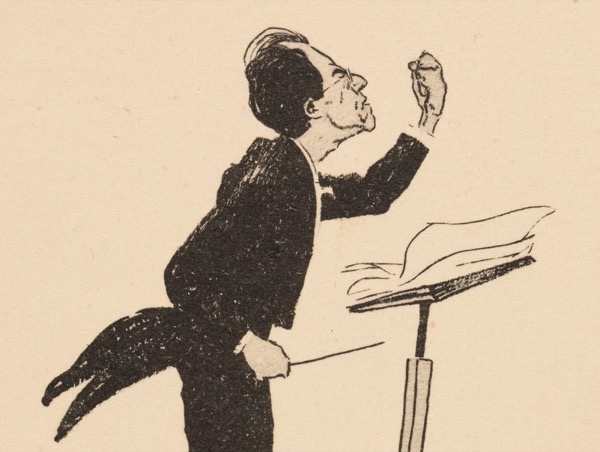
Caricature of Gustav Mahler
As she and Mahler began to feel out what their suddenly inevitable marriage was going to look like in practice, fault lines began to develop between them.
On 19 December, Mahler wrote an infamous letter to Alma from Dresden, where he was rehearsing his fourth symphony.
Their courtship had been such a whirlwind that he hadn’t gotten a chance to even look at her compositions. Still, he took it for granted that his were much more important.
He wrote to her about her pursuit of music:
“How do you picture the married life of a husband and wife who are both composers? Have you any idea how ridiculous and, in time, how degrading for both of us such a peculiarly competitive relationship would inevitably become? … This point must be settled between us before we can even contemplate a union for life… You must give yourself to me unconditionally, shape your future life, in every detail, entirely in accordance with my needs and desire nothing in return save my love!”
The letter was set to arrive on a Friday. He demanded that she provide an answer to him by Saturday morning. He would send a servant to pick up her answer.
Alma had poured her heart and soul into music-making; in fact, she had once dreamed of becoming the first woman to write a great opera.
Not surprisingly, she spent that Friday night going to a performance of Wagner‘s Siegfried and weeping.
But the following morning, she woke up and made her decision. She wrote in her diary:
“Yes, he’s right – I must live entirely for him, in order that he may be happy.”
Mahler Places Conditions on the Relationship
When the promised servant arrived, he carried another, softer letter from Mahler that isn’t often described:
“Everything must be clear between us before we embrace one another – for this afternoon I’ll no longer have the composure or self-control to tell you and ask you about all that must be decided… The passion that has now quite literally enslaved us must for the moment be kept under control (and this can be done only if we’re not together – that’s precisely why I’ve been writing while there is still time)…”
This second letter strongly suggests that in his mind, Mahler had tied Alma’s answer about her composing to their beginning their physical relationship. That clarification explains the motivation behind Mahler’s urgency.
The Engagement of Gustav Mahler and Alma Schindler
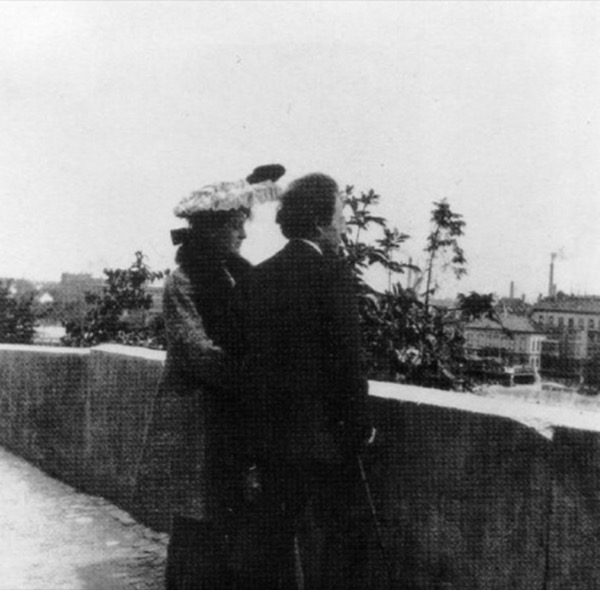
Alma Schindler and Gustav Mahler
On 23 December, Gustav Mahler and Alma Schindler became officially engaged.
In her diary that day, Alma hints at how their physical relationship was developing:
“We’re already so united that we can hardly get any closer… When we sit pressed up against one another like that, it’s though he were my body – not the slightest bit strange – so unimaginably precious to me…”
On 27 December, news of the engagement of the city’s best-known conductor reached the papers, where it caused a sensation.
All of the ingredients for a juicy story were there: a genius conductor with a reputation for womanising, a beautiful and musical young woman from an artistic family, and the twenty-year age difference between them.
After the news broke, Alma sat in Mahler’s box while he conducted a performance of Die lustigen Weiber (The Merry Wives of Windsor), by composer Otto Nicolai. There were so many opera glasses pointed at her that she moved back a row to be less visible.
Otto Nicolai: Die lustigen Weiber von Windsor: Overture (Royal Scottish National Orchestra; Lance Friedel, cond.)
Three days later, on 30 December, Alma and Gustav came close to sleeping with each other. “I can guess his torment by my own,” she wrote in her diary. “No one knows how unspeakably intense is my desire. And yet – I can’t imagine giving myself to him before the time is ripe. The feeling of wrongdoing and shame would debase the whole gloriously sacred mystery…”
The Beginning of the Mahler Marriage
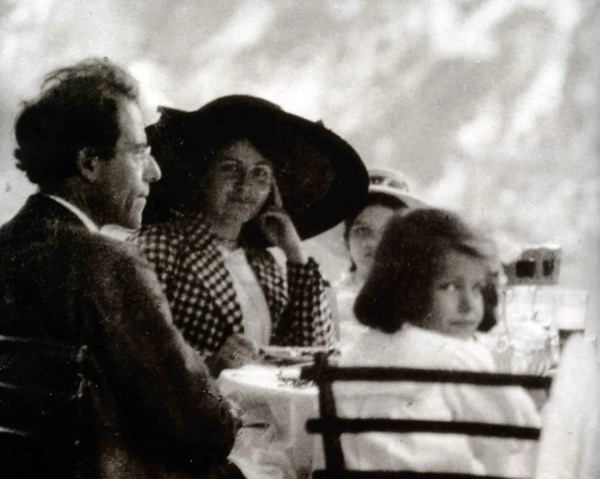
Alma and Gustav Mahler with their children
But despite their attempts to remain chaste, the relationship was consummated a few days into the new year, and Alma became pregnant quickly. She wrote in her memoirs that the pregnancy was a “dreadful torment” to them. They did their best to conceal it, despite Alma’s morning sickness.
They married in the sacristy of the Vienna Karlskirche on 9 March 1902 at 1:30 in the afternoon. Immediately afterwards, they set off on a honeymoon to Russia: a work trip for Gustav.
It was an early signal that, as quickly as it had come to be, their marriage and Mahler’s career would be intertwined for the rest of Gustav’s life – and far beyond.
For more of the best in classical music, sign up for our E-Newsletter