Wedding music is not created equal. Some pieces are designed for the pomp and circumstance of public ceremony, meant to impress congregations, courts, or even entire nations. Meanwhile, other pieces are quieter and more personal, written to honour a relationship as much as to fulfil a commission.
Across the centuries, composers have marked marriages in strikingly different ways.
Johann Sebastian Bach turned to pastoral allegory and private celebration. Fanny Mendelssohn Hensel wrote music for her own wedding when circumstances demanded it. Robert Schumann poured years of longing into a song cycle meant for a single beloved voice. Later composers, from Saint-Saëns to Elgar to Britten, balanced wit, tenderness, and ceremony in works written explicitly as wedding gifts.
Today, we’re looking at six pieces that were written as celebratory wedding gifts and tributes for brides and grooms.
Johann Sebastian Bach – Weichet nur, betrübte Schatten, BWV 202 (c. 1718)
Often referred to as Bach’s “Wedding Cantata,” BWV 202 is a secular cantata that celebrates love, fertility, and the arrival of spring.
While we don’t know the identity of the bride and groom that Bach was writing for, the cantata may have been composed for a specific aristocratic wedding.
It has occasionally been linked to Bach’s own wedding to his second wife, soprano Anna Magdalena Bach, which took place in December 1721.
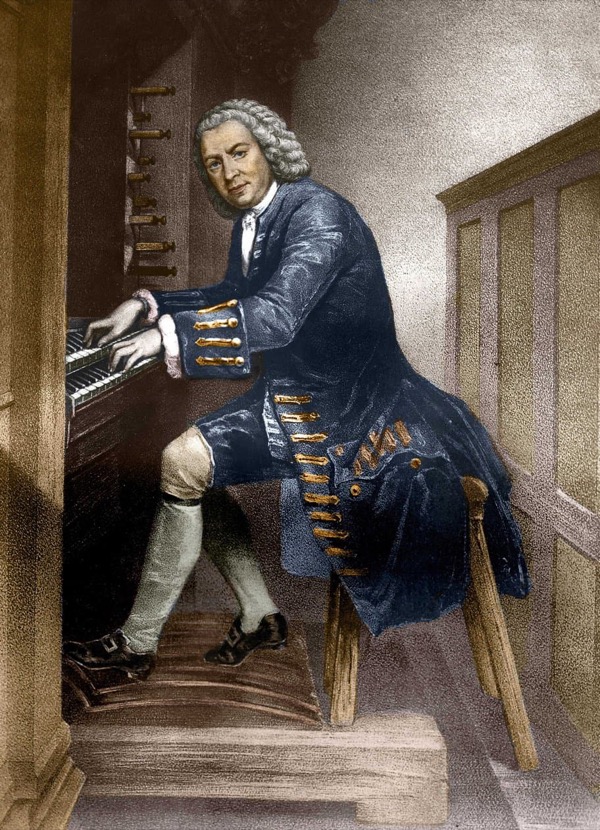
Johann Sebastian Bach playing the organ (c. 1881)
Bach scored the piece for soprano, strings, oboe, and continuo, creating an elegant sound world that is intimate rather than grandiose.
The text was possibly written by a Weimar court poet. It evokes all kinds of classic pastoral imagery, including spring winds and blooming flowers.
Unlike Bach’s church cantatas, this work was intended for private performance, likely in a domestic or courtly setting. Its survival is notable because many of Bach’s celebratory secular works have been lost.
Consequently, this cantata offers rare insight into Bach’s secular writing for celebrations, as well as the role that music played in early 18th-century Germany.
Fanny Mendelssohn Hensel – Präludium in F-major (1829)
Fanny Mendelssohn, the equally gifted composer sister of Felix Mendelssohn, composed her Präludium in F-major in 1829, the year she married the painter Wilhelm Hensel.
She had expected her brother to write the music for the ceremony, but at the last minute, he’d fallen ill while touring in England. So Fanny set to writing her own wedding music.
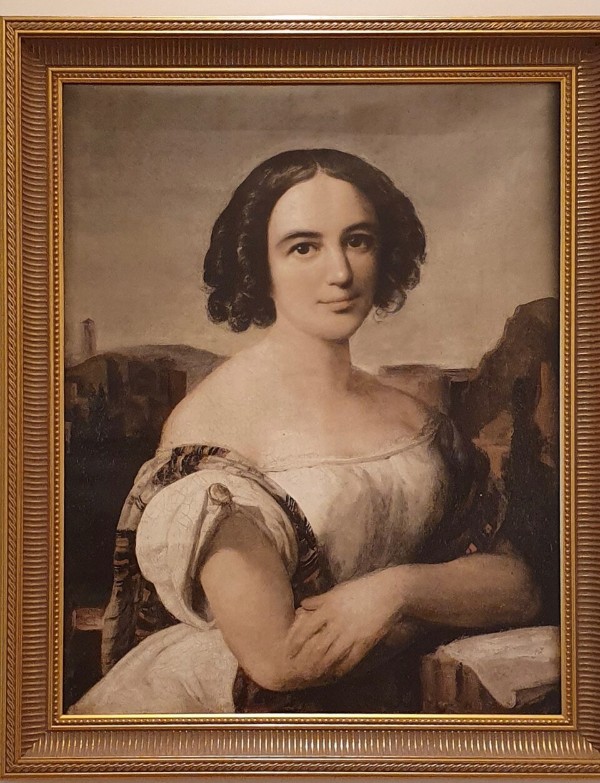
Fanny Mendelssohn-Hensel
This is one of the pieces she wrote for herself, her husband, and her family to enjoy during the big day. It was among the first works she’d ever written for organ.
The first performance of the prelude kicked off Fanny and Wilhelm’s deeply happy marriage. Wilhelm Hensel was openly supportive of Fanny’s passion for music, and, unlike many of her female peers, she did not give up composing after her wedding.
Musically, the Präludium is poised and charming, but above all, it is a work of heartfelt joy. It captures the spirit of love and encouragement between Wilhelm and Fanny perfectly.
Robert Schumann – Myrthen (1840)
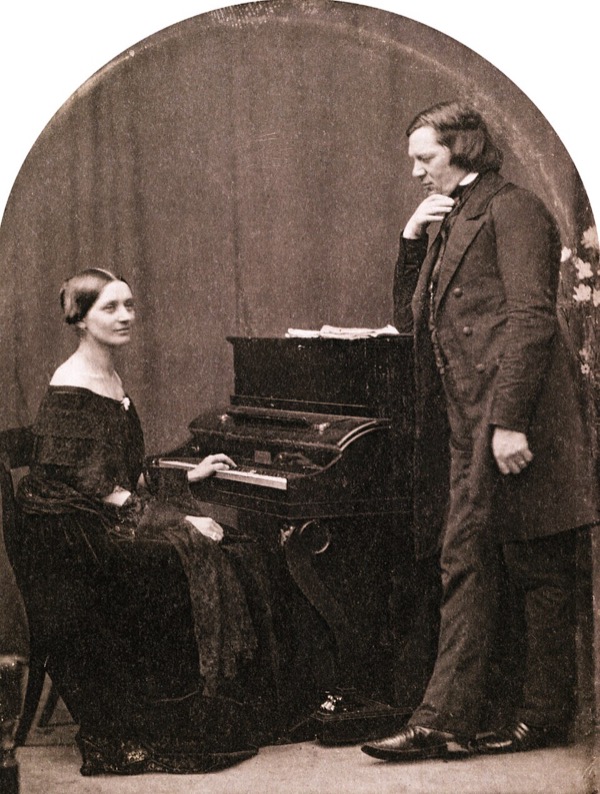
Robert and Clara Schumann, daguerreotype
Robert Schumann: Myrthen, Op. 25 (Thomas E. Bauer, baritone; Andrea Lauren Brown, soprano; Uta Hielscher, piano)
Myrthen is one of the most famous musical wedding gifts in history.
Robert Schumann composed the song cycle in 1840, the year he finally married fellow composer and pianist Clara Wieck after years of legal and familial opposition. He presented the score to her on their wedding day.
The cycle sets poems by Goethe, Rückert, Heine, Byron, and others. They are unified by their themes of love, devotion, longing, and spiritual union.
The title Myrthen refers to the myrtle, a traditional symbol of marriage.
“Widmung” from Myrthen
All of the songs are intensely personal. For instance, “Widmung” (“Dedication”) functions as an explicit love declaration, while other songs reflect Schumann’s sense of emotional release and joy after years of frustrated love.
Myrthen serves as both a wedding gift and a musical diary. It was also a quiet but pointed rebuttal to Clara’s father’s doubts about Schumann’s ability to succeed professionally.
Camille Saint-Saëns – Caprice-Valse, Op. 76, “Wedding Cake” (1885)
Camille Saint-Saëns wrote “Wedding Cake” as a wedding present for virtuoso pianist Caroline Montigny-Rémaury, who studied with Franz Liszt and inspired a number of the greatest French composers of the era.
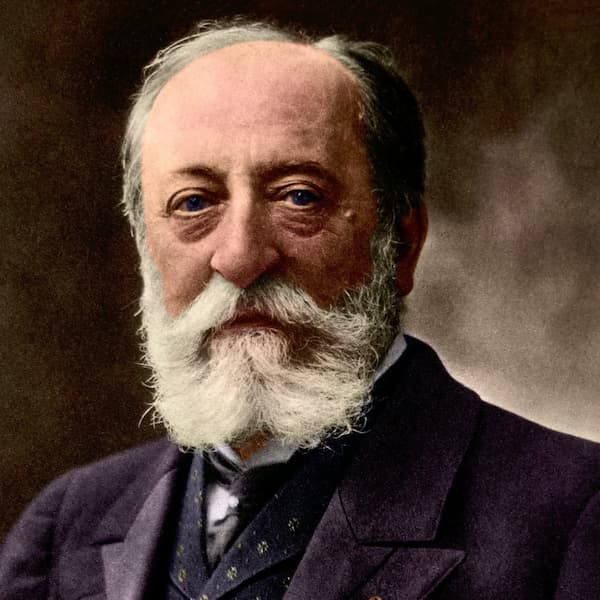
Saint-Saëns
This work is scored for piano and orchestra. It is not traditional sacred or ceremonial wedding music: on the contrary, it is strikingly playful and virtuosic.
It opens with a mock-solemn introduction before launching into a glittering waltz filled with charm and pianistic sparkle.
Unlike many wedding gifts of the period, Saint-Saëns reportedly intended the piece to amuse as much as impress, reflecting his wit and his appreciation of the bride’s talent.
Edward Elgar – Salut d’Amour (1888)
Elgar composed his charming violin and piano piece “Salut d’Amour” as a gift for Caroline Alice Roberts. When it was published, he dedicated it “à Carice”, an amalgamation of her first two names.
Elgar’s fiancée was an accomplished poet who fell in love with him after taking piano lessons from him. She married him in 1888 against the wishes of her family.
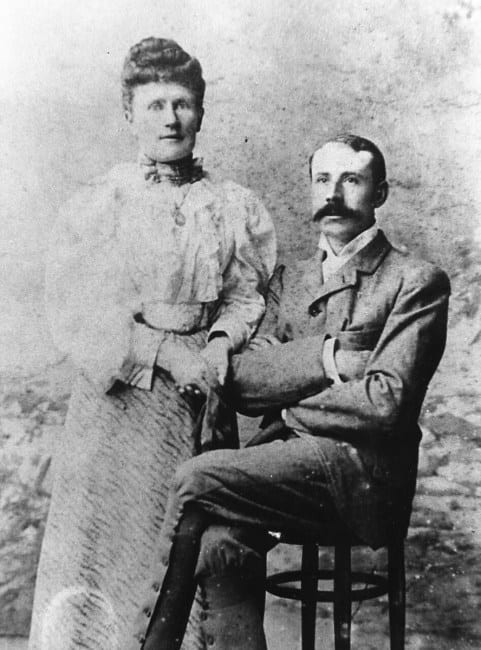
Alice Roberts and Edward Elgar
This romantic little miniature reflects the dynamics of the couple’s early relationship: she was older and more accomplished, and the piece carries a tone of tenderness, gratitude, emotional vulnerability – and even awe – toward her.
“Salut d’Amour” ended up becoming one of Elgar’s most popular works. His deeply personal love transformed into a beloved musical symbol of romance.
When the couple’s only daughter was born in 1890, they named her Carice: a callback to this piece.
Benjamin Britten – A Wedding Anthem (1949)
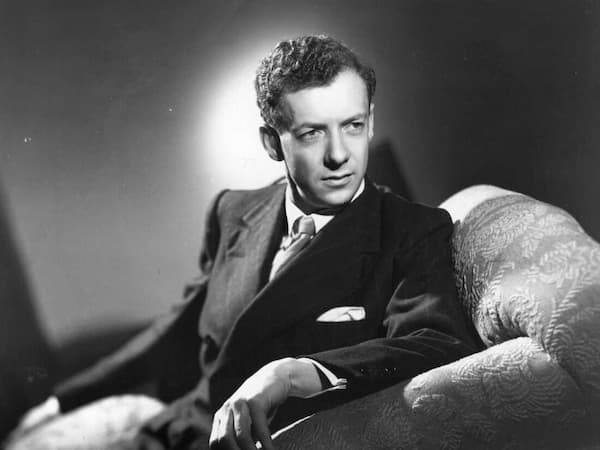
Portrait of Benjamin Britten from 1948 © Denis De Marney/Getty Images
Benjamin Britten: A Wedding Anthem, Op. 46 (Corydon Singers; Westminster Cathedral Choir; Matthew Best, cond.)
Benjamin Britten composed A Wedding Anthem in 1949 as a wedding gift for George Lascelles, the 7th Earl of Harewood, and his new wife, Marion Stein, a distinguished concert pianist. Britten’s life partner, Peter Pears, sang the tenor part at the premiere.
Scored for soloists, chorus, organ, and optional orchestra, the anthem sets a text by poet Ronald Duncan, who had recently prepared the libretto for Britten’s opera The Rape of Lucretia.
While drawing on dignified Anglican ceremonial tradition, the work radiates a deeply satisfying – and deeply human – joy and warmth.
Unlike royal wedding anthems of past centuries, A Wedding Anthem is neither propagandistic nor grandiose. It serves a ceremonial purpose in exquisite fashion, while also clearly being inspired by the composer’s genuine friendship with the dedicatees, who were also his professional colleagues.
Conclusion
Taken together, these works demonstrate how wedding music has never been solely about pageantry.
Sometimes it has been a public declaration, designed to solemnise a union before a community, but at other times, it has been an intensely private act: a composer writing not for posterity, but for one beloved person.
Whether pastoral, virtuosic, confessional, or ceremonial, these pieces capture something essential about marriage itself: a deeply human moment of hope, vulnerability, and commitment. Even years after the ceremonies they were written for have passed, we’re still listening to them today.
For more of the best in classical music, sign up for our E-Newsletter