When attending a chamber music concert, most people expect to see violins, cellos, or maybe a grand piano or two.
Basses, however, are seen less often. Usually, they’re relegated to orchestra pits or thankless doubled cello lines.
Fortunately, some composers over the centuries have created striking chamber music parts especially for basses.
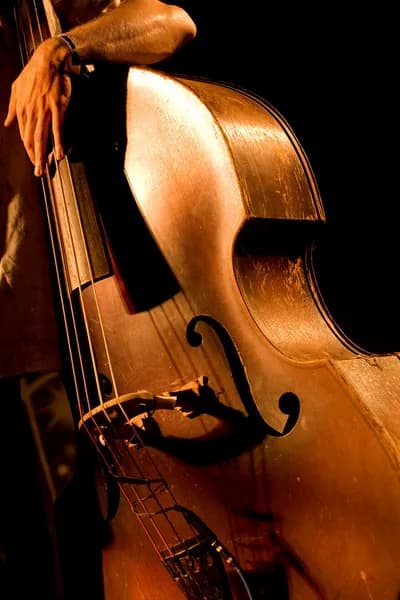
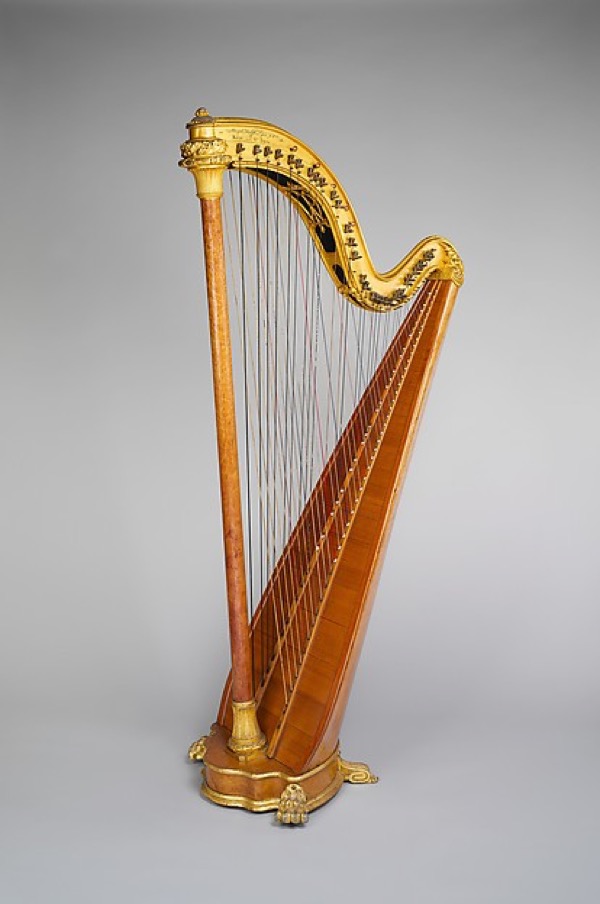
A double bass
It makes sense why they would. Basses can serve a number of important roles: a chamber work’s rock-solid foundation, a witty dialogue partner, or even a much-needed sonic offset to shriller instruments.
The end result is a small but fascinating repertoire that proves that the largest string instrument can be every bit as expressive, colourful, and indispensable as its higher-pitched cousins.
Today, we’re looking at sixteen of the best chamber music works for bass in classical music history.
Michael Haydn – Divertimento in C-major, MH 27 (ca. 1760)
Michael Haydn (Joseph Haydn’s younger brother) was a prolific composer based in Salzburg who was co-workers with Wolfgang Mozart’s father. His church music later inspired Wolfgang.
Back in the eighteenth century, Michael was actually more famous than Joseph!
This light, courtly divertimento is an early example of a composer giving the bass player an independent part.
It demonstrates how composers were experimenting with creating new and exciting textures in their chamber music writing.
Johannes Matthias Sperger – Duetto for Viola and Double Bass (ca. 1770)
Johannes Matthias Sperger was one of the eighteenth century’s great double bass virtuosi.
His duet pairs the bass with the viola, the other misfit of the string section.
Sperger creates witty dialogue, showing off the bass’s potential as a lyrical independent voice at a time when it was usually confined to doubling cello lines.
Wolfgang Amadeus Mozart – Gran Partita (1781)
The Classical Era’s trend of expanding the texture of chamber music hit its zenith with this fifty-minute-long serenade, written for twelve winds and a single double bass.
The piece’s scale was revolutionary, and its brilliant use of colour has made it especially beloved by musicians.
In the 1984 film Amadeus, the fictional version of composer Antonio Salieri sees the sheet music and remarks:
“This was no composition by a performing monkey. This was music I’d never heard. Filled with such longing, such unfulfillable longing. It seemed to me that I was hearing the voice of God.”
Ludwig van Beethoven – Septet (1800)
A huge popular success in Beethoven’s lifetime (much to his later annoyance), the Septet was written for clarinet, horn, bassoon, violin, viola, cello, and double bass.
The Beethoven Septet draws on the craftsmanship of the Classical Era and the emotional intensity of the Romantic Era, creating a musical bridge between the two.
Johann Nepomuk Hummel – Piano Quintet in E-flat-minor (1802)
The music of Johann Nepomuk Hummel, a pupil of Mozart and Haydn and a friend of Beethoven, is rarely played today.
However, that doesn’t mean he wasn’t influential. (Indeed, at the time this quintet was written, Hummel was considered to be one of the greatest composers alive.)
Hummel’s quintet follows an unusual instrumentation that would later be made famous by Schubert’s Trout Quintet: piano, violin, viola, cello, and double bass.
The bass helps to provide weight and gravitas to the texture of the work.
Ferdinand Ries – Piano Quintet in B-minor (1815)
Pianist Ferdinand Ries, Beethoven’s student and biographer, brought a Romantic flair to the chamber music he composed.
Listen to the dramatic opening and how the bass helps to ground and support the virtuoso piano part.
Franz Schubert – “Trout” Quintet in A-major (1819)
This may be the most beloved chamber work to feature the double bass!
This quintet was commissioned by a wealthy amateur cellist who requested a set of variations on Schubert’s song “Die Forelle” (“The Trout”); hence the unusual title.
The instrumentation allows the bass, as the lowest-pitched string instrument, to focus on playing the lowest notes. That in turn enables the cello and piano to explore their upper registers, creating a unique texture not often heard.
Gioachino Rossini – Duet for Bass and Cello (1824)
Although he is best known for his operas, Rossini also loved writing chamber music.
This duet, commissioned by an amateur cellist to play with bass virtuoso Domenico Dragonetti, pits cello and bass against each other in a playful fashion.
It sounds like a miniature opera for two instruments, highlighting Rossini’s knack for turning even low strings into operatic bel canto voices.
Franz Berwald – Septet (1828)
During his lifetime, Swedish Romantic composer Franz Berwald wasn’t able to support himself through music alone; he actually worked as a glassblower to make a living.
However, he didn’t let that stop him from writing lovely chamber music, some of which occasionally shows up on concert programs today.
This septet has parts for violin, viola, cello, double bass, clarinet, horn, and bassoon: the same instrumentation as Beethoven’s septet.
However, unlike Beethoven’s, this septet sounds like it belongs firmly in the Romantic Era.
Louise Farrenc – Piano Quintet No. 1 (1840)
Farrenc, a trailblazing French composer and professor at the Paris Conservatoire, wrote chamber works that rivaled (and in some cases surpassed) her male contemporaries’.
Her quintet uses Schubert’s Trout instrumentation, letting the bass ground the work, allowing the piano to focus on its middle and upper registers.
Farrenc’s chamber music is now enjoying a long-overdue revival. Listening, it’s easy to see why.
Georges Onslow – String Quintet No. 31, Op. 75 (c. 1849)
Nicknamed the “French Beethoven,” Onslow was famous for his 36 (!) string quartets and 34 (!) string quintets.
Onslow originally wrote his quintets for two violins, viola, and two cellos. But after he heard Domenico Dragonetti perform one of the cello parts on bass, he began including notes in his scores, suggesting that players substitute a bass whenever desired.
Giovanni Bottesini – Gran Quintetto in C-minor (1858)
Known as the “Paganini of the Double Bass”, Italian composer, conductor, and bass player Giovanni Bottesini astonished audiences with his virtuosity.
His “Gran Quintetto” gives the bass a starring role alongside two violins, viola, and cello. The part provides an infectious bounciness.
Antonín Dvořák – String Quintet No. 2 in G-major (1875)
When writing his second string quintet, Dvořák expanded the traditional string quartet by adding a double bass, creating a sense of warmth, depth, and rustic energy.
It’s easy to imagine these Czech-inspired melodies being performed by rural folk musicians: an impression that would have been tougher to impart without the gruff rhythmic oomph provided by the bass.
Ralph Vaughan Williams – Piano Quintet in C-minor (1903–05)
Vaughan Williams withdrew this early work after its premiere, fearing it was too Brahmsian. Astonishingly, it wasn’t revived until the 1990s.
That’s a pity, because it’s incredibly accessible and beautiful music. It combines Schubert’s Trout instrumentation with a dark, yearning, brooding quality.
Sergei Prokofiev – Quintet in G-minor (1924)
Prokofiev’s quintet was written for an unusual ensemble: oboe, clarinet, violin, viola, and double bass.
Adapted from his ballet Trapèze, it brims with acrobatic rhythms, biting dissonances, and general circus-inspired weirdness.
The double bass helps to balance (or maybe even neutralise) the piercing nasal timbre of the violin and oboe.
Other times, it serves as a kind of percussion instrument: an especially important role in dance music.
Frank Proto – Trio for Violin, Viola, and Bass (1974)
American bassist-composer Frank Proto has enriched the instrument’s repertoire with a number of jazz-inflected works.
This trio puts the double bass on equal footing with the violin and viola. It’s a shining example of how the role of the bass grew over the course of two centuries.
Conclusion
Looking at this list as a whole, one thing is clear: the double bass has proven that it can be more than a mere supporting player. In fact, given the right score, it can become a star in its own right.
Chamber music written for the bass may be relatively rare, but given the obvious success of the instrument in these sixteen works, it’s tough not to wonder: why?
Maybe it’s time to see the bass at chamber music performances more often.
What’s your favourite chamber music work featuring the bass?
For more of the best in classical music, sign up for our E-Newsletter