
The great composers are not particularly famous for their faithfulness. Many had extramarital affairs.
The stories of those relationships provide intriguing glimpses into their complicated personal lives.
Today, we’re looking at the relationships between four composers and their mistresses: how they met, how their wives reacted to being sidelined, and how their mistresses shaped their creative output and legacies.
Gioachino Rossini and Olympe Pélissier
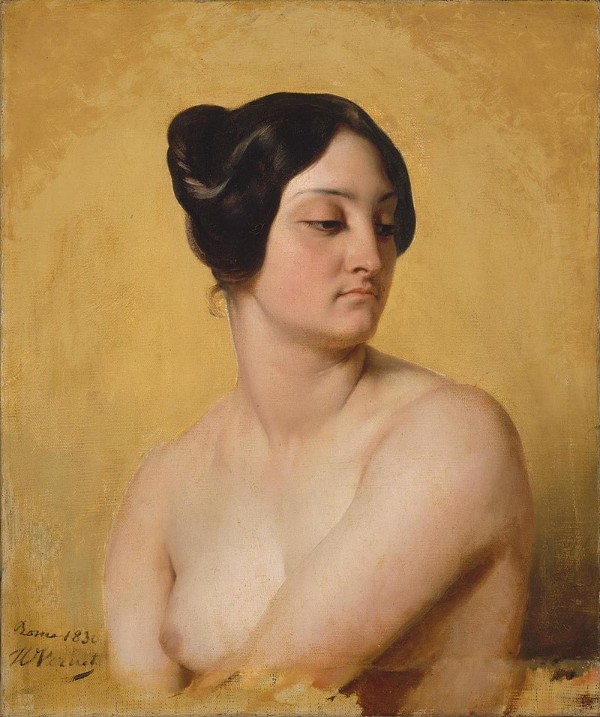
Olympe Pélissier
In 1822, Gioachino Rossini married star soprano Isabella Colbran, one of the most famous singers in Europe, and the muse behind a string of his most famous operas.
However, just two years later, Colbran was forced to retire due to a deteriorating voice. Soon after, Rossini began seeing other women.
Sometime in the early 1830s, he met model, hostess, and courtesan Olympe Pélissier in Paris. As a teenager, she had been sold to a duke by her mother. Now, as an adult, she was taking her financial and romantic life into her own hands.
Before meeting Rossini, Pélissier had been the lover of novelists Eugène Sue and Honoré de Balzac, painters Horace Vernet and Alfred d’Orsay, and even composer Vincenzo Bellini.
But she felt a special spark with Rossini. Although he was still married to Colbran, the couple moved in together, and she began managing his household and overseeing a salon.
In 1845, Colbran died, allowing Pélissier and Rossini to finally be married the following year. She remained faithful to him through the many excruciating health crises that he endured during his retirement.
Rossini dedicated his cantata “Giovanna d’Arco” to Pélissier.
Giovanna d’arco, Rossini
Rossini died in 1868, and Pélissier inherited his fortune. She outlived him by a decade.
Learn more about Gioachino Rossini and Olympe Pélissier.
Hector Berlioz and Marie Recio
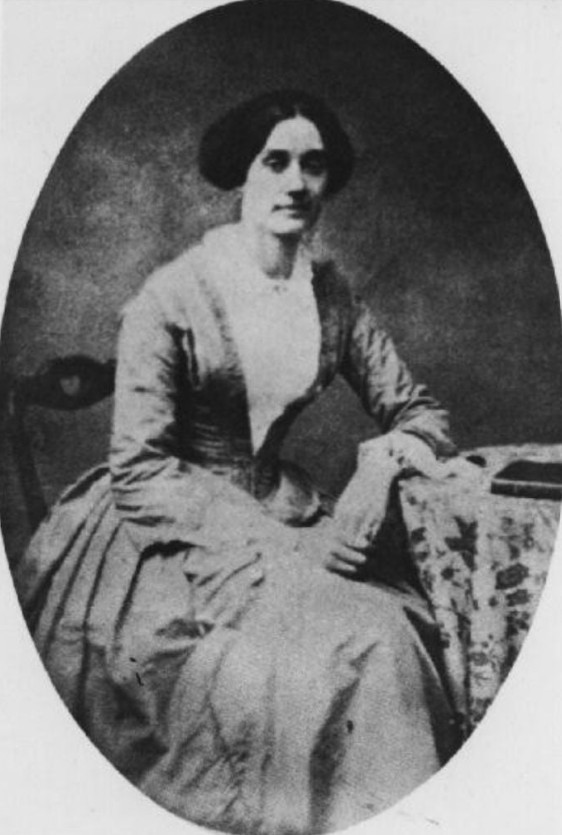
Marie Recio
In his famously programmatic Symphonie fantastique, composer Hector Berlioz immortalised his lust for actress Harriet Smithson, whom he married in 1833.
Unfortunately, their marriage was not a happy one. Her career began deteriorating just as Berlioz’s was taking off.
Then, in 1840, Berlioz fell in love with Marie Recio, a 26-year-old who was trying to make a living as a singer in Paris, despite crippling stage fright.
Smithson grew increasingly upset about Berlioz’s developing relationship with Recio. She finally moved out in 1843, with Berlioz footing the bill for her to keep a separate household. After the couple toured across Europe together, Recio moved into Berlioz’s home in 1844.
Smithson’s health continued to worsen, and she became disabled by paralysis. She died in 1853. The following year, Berlioz and Recio married.
Recio never became a major star, but the assistance and support she gave to Berlioz were vital in shaping his later career. She died in 1862, seven years before her husband.
It is believed that Recio was one of Berlioz’s inspirations for his song cycle Les Nuits d’été. Recio loved to sing “Absence” from this cycle:
4. Absence – Les nuits d’été (Berlioz) – Anne Sofie von Otter
Richard Wagner and Cosima Liszt von Bülow
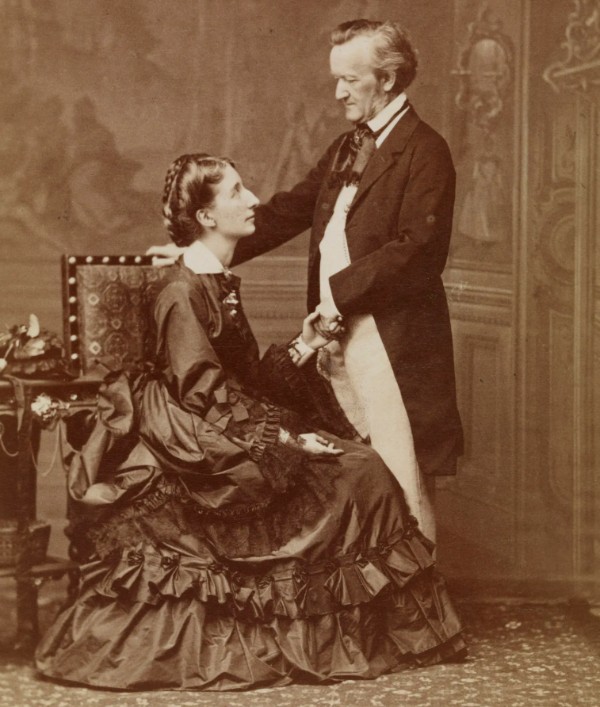
Richard Wagner and Cosima Liszt von Bülow
Richard Wagner and Cosima Liszt (Franz’s daughter) met for the first time in Paris in 1853, when he was 40 and she was 15. She found the composer striking. However, he didn’t take much notice of her.
Four years later, Cosima married the conductor Hans von Bülow. A couple of catastrophic personal losses soon followed: her brother Daniel died in 1859, and her sister Blandine died following childbirth in 1862.
Cosima didn’t feel emotionally supported in her marriage, and when she met Wagner again in 1863, she was looking for comfort wherever she could find it. She and Richard fell in love.
Unfortunately, Cosima was still married to von Bülow, and Wagner was married to an actress named Minna Planer. By the early 1860s, however, Richard and Minna had become estranged.
Hans von Bülow conducted the premiere of Wagner’s opera Tristan und Isolde in June 1864. The following month, Cosima conceived Wagner’s baby, naming her Isolde. She then had another baby with Richard in February 1867, and yet another in June 1868.
Their relationship became a major scandal. Hans von Bülow initially refused to divorce her, but after the third baby, he relented. Their divorce became official in July 1870.
Meanwhile, Wagner’s obstacle to marrying Cosima had also disappeared. His wife, Minna, died in 1866, leaving him free to remarry.
Richard Wagner married his mistress, Cosima von Bülow, a month after her divorce was finalised, in August 1870.
From that point on, she became a partner in Wagner’s career, overseeing his affairs and serving as a vital sounding board. They spent thirteen happy years together. After his death in 1883, she helmed the Bayreuth Festival for decades, advocating for her husband’s considerable legacy.
Liszt’s transcription of Wagner’s Isolde’s Liebestod from Tristan und Isolde
Johann Strauss I and Emilie Trampusch
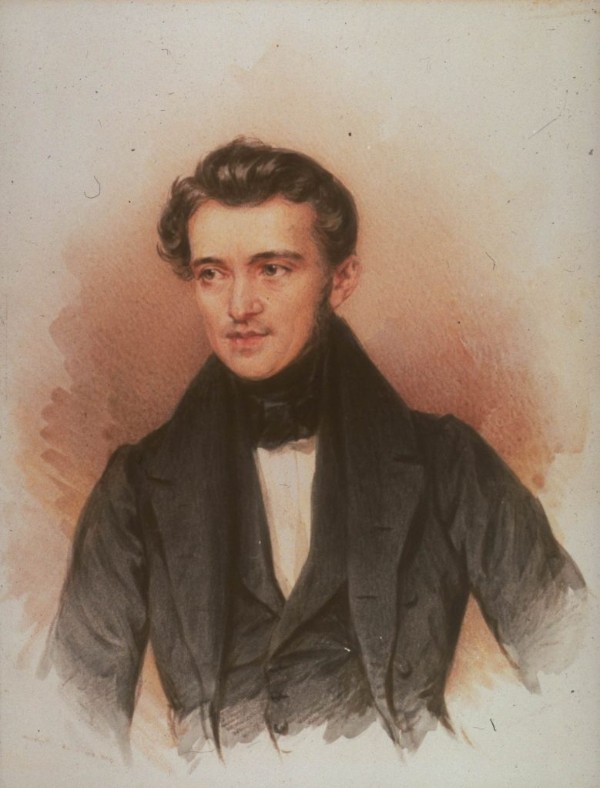
Johann Strauss I
Violinist and orchestra leader Johann Strauss I was a magnetic celebrity in early nineteenth-century Vienna, and he knew it.
In 1825, the 21-year-old Strauss married Maria Anna Streim, the daughter of a local tavern keeper.
At the wedding, she was pregnant with his baby, a son they named Johann II.
Over the next decade, she’d go on to have five more children with him.
His career took off quickly, and soon he became one of the most in-demand performers in Vienna. He also began to travel internationally. Those travels gave him the opportunity to cheat on his wife…and he took them.
Johann Strauss I’s Radetzky March
In 1834, he began a long-term affair with a 20-year-old working-class milliner named Emilie Trampusch.
Maria Anna was prepared to accept occasional, discreet indiscretions. But Strauss pushed his luck. He set Emilie up in a household of her own just a short carriage drive away, began having children with her, and even named his firstborn with her Johann. Maria Anna became furious.
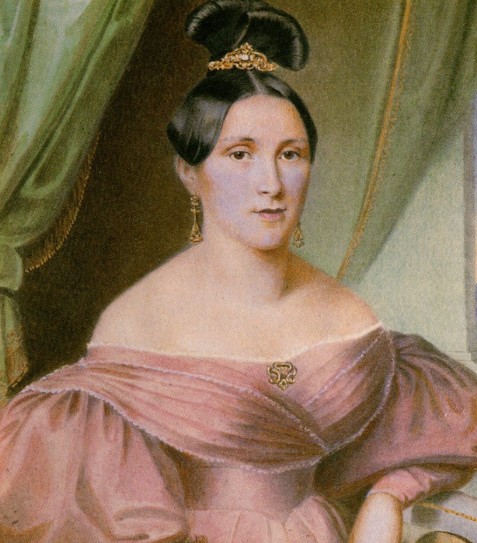
Maria Anna Streim
Conservative Vienna was shocked at his conduct. In 1844, after Strauss began publicly acknowledging the paternity of his children with his mistress, Maria Anna petitioned for a divorce. It was granted.
However, the scandal didn’t break up his relationship with Emilie. All in all, he would have eight children with her.
In 1849, Johann I came down with a case of scarlet fever from one of those children. He didn’t survive, dying at the age of 45.
When his father died, his firstborn son, Johann Strauss II, was just beginning his own career as a violinist and orchestra leader. Encouraged by his mother, Maria Anna, he merged his orchestra with his father’s.
Meanwhile, Maria Anna did what she could to defame the Strauss-Trampusch children so that they wouldn’t grow up to become her own son’s competitors. (They didn’t.)
We don’t know much about Emilie Trampusch’s children, but there is no evidence that any of them pursued music professionally.
For more of the best in classical music, sign up for our E-Newsletter





Sinceramente, me parece una falta de respeto que llamen a Marie Recio como “la amante de Berlioz”, ella fue su segunda esposa, y además, Berlioz nunca la amó como ella merecía y como algunos piensan.