In her new album, pianist Ivana Gavrić starts with a story of Ravel meeting Grieg in 1894. Grieg stopped Ravel as he was playing his Norwegian Dances and corrected him, declaring that the work had to be played as a peasant dance. Ravel starts again, and Grieg leapt around the room in an authentic peasant dance, creating a memorable scene of an elfin pianist and a tiny troll dancer.
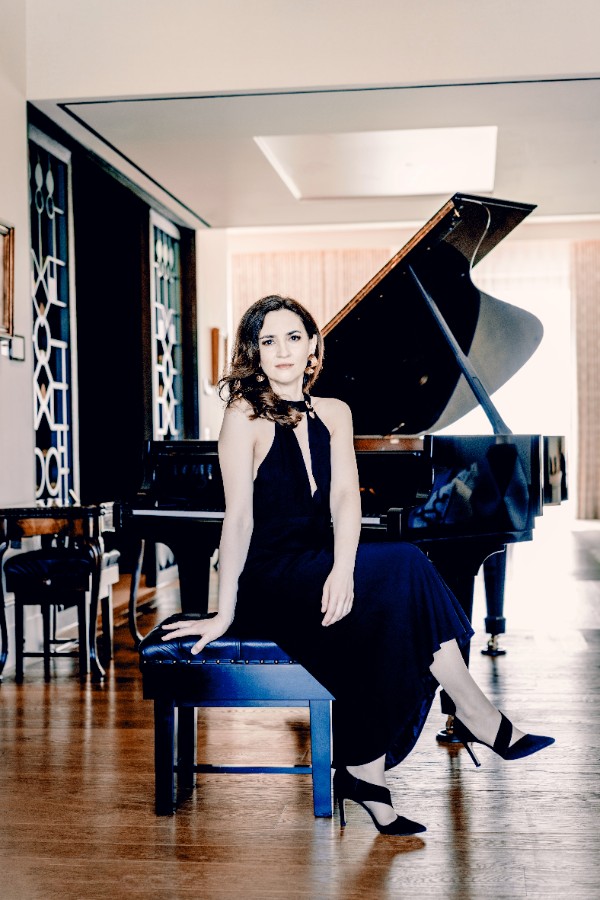
Ivana Gavrić (photo by Andrej Grilc)
Gavrić looks at the role of historical dance forms in the music of Norway and France and how composers such as Grieg and Ravel took ancient dance forms and used them in their works. Composers such as the Croatian Dora Pejačević (1885–1923) come in, as does British composer Cheryl Frances-Hoad (b. 1980). Sarabandes by Grieg meet Menuets by Ravel and Allemandes by Frances-Hoad. Cecile Chaminade (1857–1944) gives us a taste of Grieg in her Norwegiènne from her 6 Pièces humoristiques, Op. 87.
Dance is universal, and on her recording, Gavrić focuses on how ancient dances influenced modern composers and how they cross-influenced each other. Ancient becomes modern again, such as in Grieg’s Gavotte from the Holberg Suite.
Her Holberg Suite is a perfect performance, with the lines tripping off the keys as lightly as one might desire. So much of this suite is so familiar, yet, under Gavrić’s fingers, it’s as though we’re truly hearing it for the first time.
Only two of Chaminade’s 6 Pièces humoristiques, Op. 87, works are recorded here, but they are here for specific reasons. No. 4, Autrefois, is purely of the 18th century, with reference to Couperin and French clavecin ornament with a mix of Scarlatti’s Spanish keyboard sonatas, while No. 6, Norwegiènne, is Grieg but mixed with, perhaps, a bit of Ravel from his Le tombeau de Couperin.
Cécile Chaminade: 6 Pièces humoristiques, Op. 87: No. 6 Norwegiènne
Chaminade’s feminine Norwegian dance (Norwegiènne) is contrasted in the next track by Grieg’s Norwegian Dance, Op. 36/2.
Scarred by her paramedic activities in WWI, Dora Pejačević wrote music that was part of the expressionist and modernist ideas in music of her time, but tinged with an element of melancholy. Erinnerung (Remembrance) predates her WWI experiences and brings us to a ‘nocturnal dreamscape’ where the melody resounds in a lyrical work that’s crystalline in its effect.
Cheryl Frances-Hoad’s Dance Suite of 2024 begins, as does Grieg’s Holberg Suite and Ravel’s Le tombeau de Couperin, with a Prelude, but her neo-Baroque stylings are very different. Inspired by Handel’s keyboard suites of 1720, the Dance Suite’s fantasia-like prelude invokes instruments such as the theorbo lurking in the background. Each movement of the work is coloured by a reference back to the past, be it ornamented repeats in the style of Rameau or an Italian-flavoured courante.
The album closes with a waltz by Ravel, but in the style of Borodin, crossing borders and styles in a way that only Ravel could carry off. Ravel wrote it at the inspiration of an idea from the pianist Alfredo Casella, who gave its premiere in Paris in December 1913. Elements from Borodin’s Petite Suite and from the Scherzo of his String Quartet No. 2 are always in the background, but the foreground is pure Ravel.
The recording as a whole takes a premise about dance and applies it over more than a century of piano music. Beautifully played and presented, the music put together by Gavrić gives us a unique view of music that not only makes you think but also dance. Connections you might not have made on your own come through clearly in the musical juxtapositions.
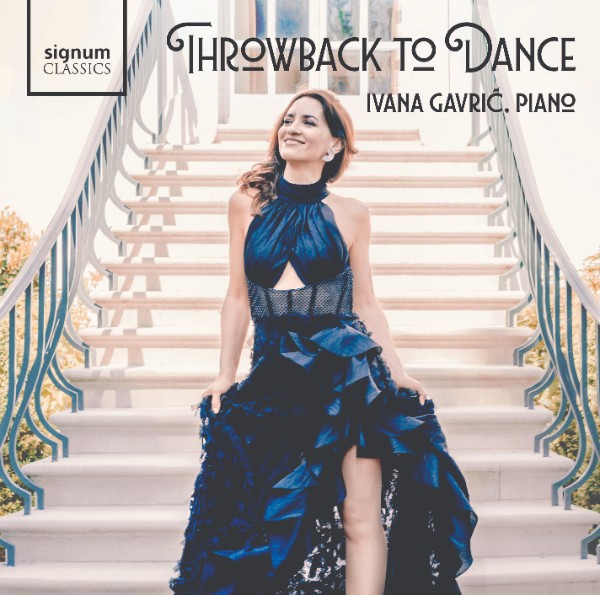
Ivana Gavrić, piano
Signum Classics SIGCD 947
Release date: 21 November 2025
For more of the best in classical music, sign up for our E-Newsletter