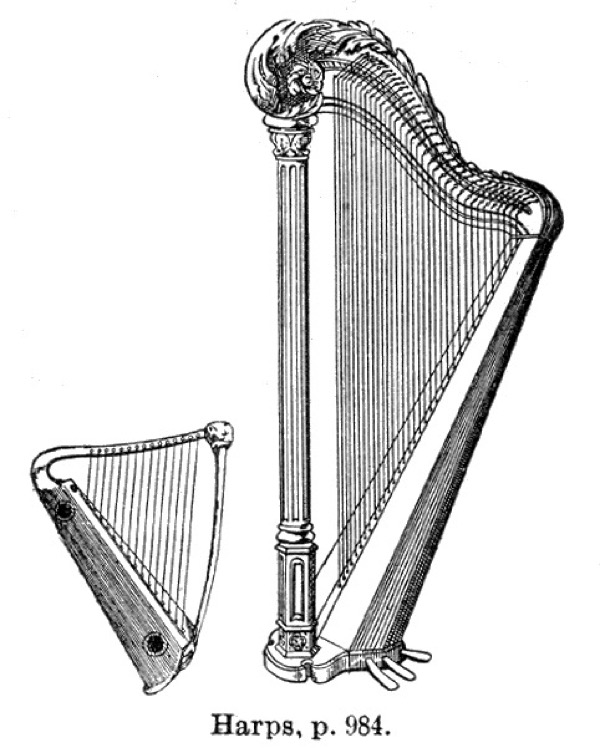
The harp is one of the oldest known string instruments, dating back to ancient Egypt and Mesopotamia. Although we find many different types and models, the basic shape features a triangular frame with strings running between the neck and the soundboard.
The standard orchestral harp features 47 strings, and it uses seven pedals at the base to alter string pitches and change keys. The instrument is played by plucking the strings with the fingers, usually while seated.
The harp has strong political and symbolic value, especially in Ireland, where it has long served as a national emblem. In Christian tradition, heaven is depicted as populated by angels playing harps. As its corporate logo, the Irish brewer Guinness has used the harp since 1759.
Harps can produce a broad range of intoxicating sounds, from warm plucked notes to shimmering glissandos and arpeggios. The repertoire for the harp is vast, and here is a top 10 list of some of the most beautiful harp music ever written.
Harp
Félix Godefroid: Étude de concert
Félix Godefroid (1818-1897) might not be a household name, but several generations of players and listeners have enjoyed his harp compositions and didactic works. In fact, when he made his debut in Paris in 1847, he was quickly dubbed the “Paganini of the harp.”
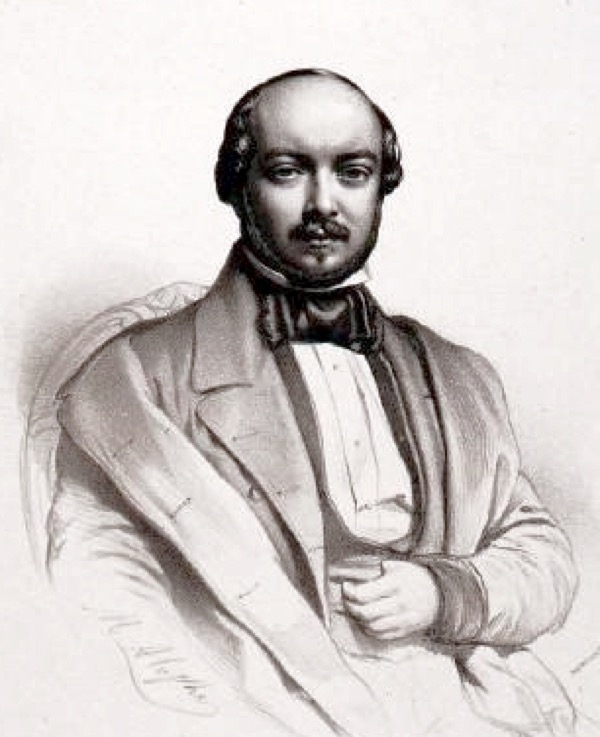
Félix Godefroid, by Marie-Alexandre Alophe
Godefroid hailed from Namur in Belgium and studied at the Paris Conservatoire and later with Elias Parish-Alvars. He was a travelling harp virtuoso, visiting the Middle East, Spain, England, and Holland. He even wrote an opera titled La harpe d’or, which included a harp fantasy that he himself played from the wings.
His studies for the harp focus on left-hand technique, and many of his 300 pieces have maintained a firm place in 19th-century harp literature.
Maurice Ravel: Introduction et Allegro
The Parisian instrument makers Pleyel and Érard were bitter rivals, and they continually modified and improved their harps’ designs. To showcase their respective technical and musical innovations, both companies commissioned the leading French composers to write music for their new and improved instruments.
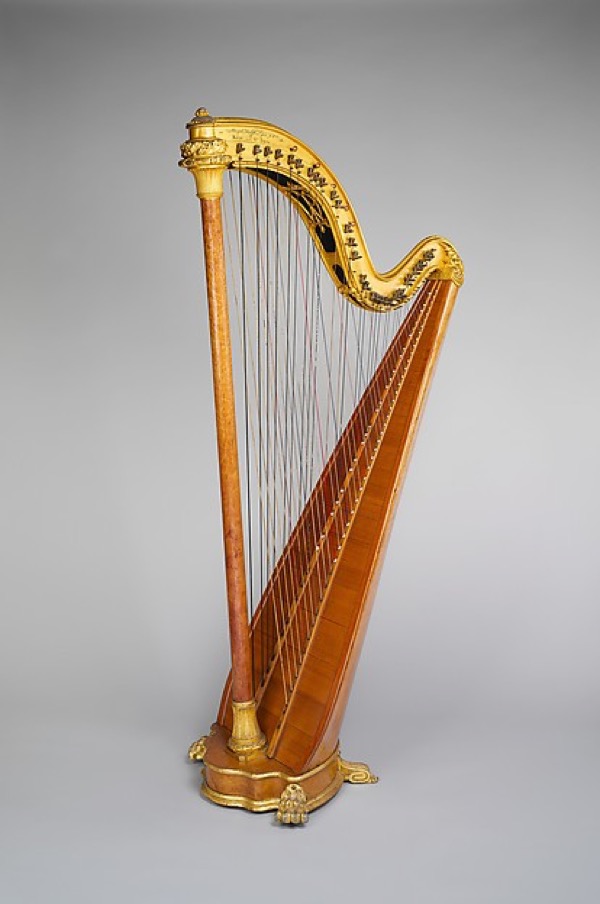
Chromatic harp
In 1904, Pleyel asked Claude Debussy to write his Danse sacrée et danse profane (Sacred and profane dances) for harp and orchestra. In turn, Érard commissioned Maurice Ravel (1875-1937) to compose a piece that would showcase the expressive range of the new double-action pedal harp.
Ravel responded with his Introduction and Allegro for harp, flute, clarinet and string quartet. This unique composition contrasts the smooth sound of the woodwinds, the percussive sound of the harp, and the warmth of the strings. The work is often described as a miniature harp concerto, with the instrument introducing important themes, providing shimmering accompaniments, and playing a major solo cadenza.
Claude Debussy: Danse sacrée et danse profane
Debussy’s Danse sacrée et danse profane was commissioned by the firm of Pleyel in 1904. The instrument maker wanted it for use in competitions associated with a newly inaugurated class in the chromatic harp at the Brussels Conservatory.
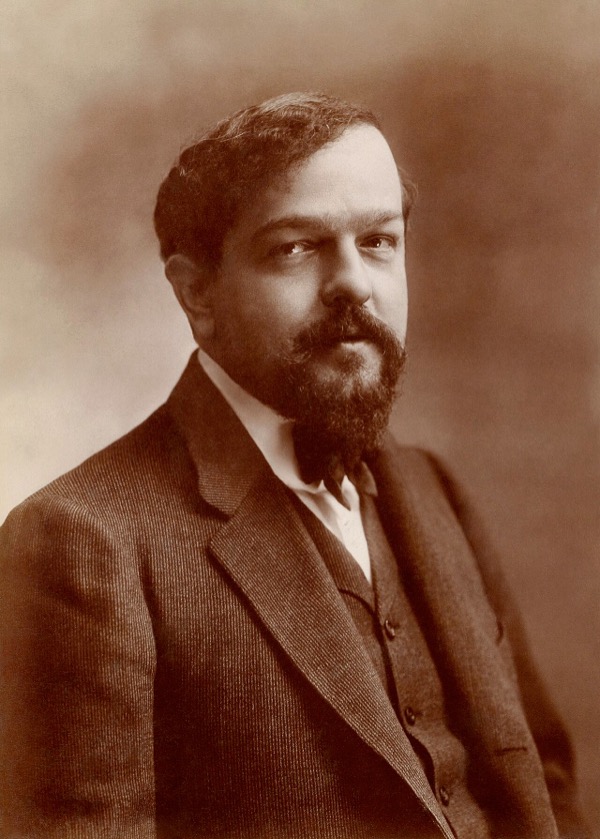
Claude Debussy, by Atelier Nadar
Pleyel’s chromatic harp featured two rows of strings that cross each other without touching. One side has 7 strings per octave, while the other has 5. Think of it in terms of the piano, with 7 white and 5 black keys per octave.
This particular harp was designed to eliminate the need for pedals by providing 78 separate strings for every note on the chromatic scale. Debussy’s composition contains two movements: a slower sacred dance with slow-moving modal sonorities, contrasted with a lilting waltz.
Wolfgang Amadeus Mozart: Concerto for Flute and Harp, KV 299
The harp was Marie Antoinette’s favourite instrument, and it was also the most popular instrument of the day. As such, the harp had started to replace the harpsichord in the salons of the upper bourgeoisie. It was the instrument of fashion.
Marie Antoinette played the harp every day, and she had several beautifully decorated instruments at her disposal. She composed her own tunes and melodies and encouraged composers to write music for it.
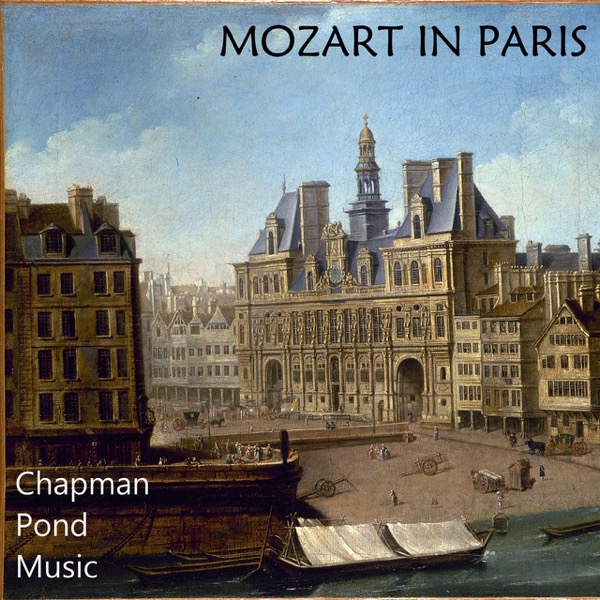
Mozart in Paris
Wolfgang Amadeus Mozart arrived in Paris in 1778, and since Marie Antoinette was indisposed, he took on several private students. In April 1778, he was engaged to give composition lessons to Marie-Louise-Philippine Bonnières, the youngest daughter of the Duke of Guînes. His young charge was a capable harpist, and the duke an excellent flautist. As such, the duke commissioned Mozart to compose a concerto for him to perform with his daughter.
Camille Saint-Saëns: Fantaisie, Op. 95
Although Camille Saint-Saëns (1835-1921) never held a teaching position at the Paris Conservatoire, he served on various juries and selection committees. He made sure that his student Gabriel Fauré was appointed director, and that Alphonse Hasselmans was appointed professor of harp in 1884.
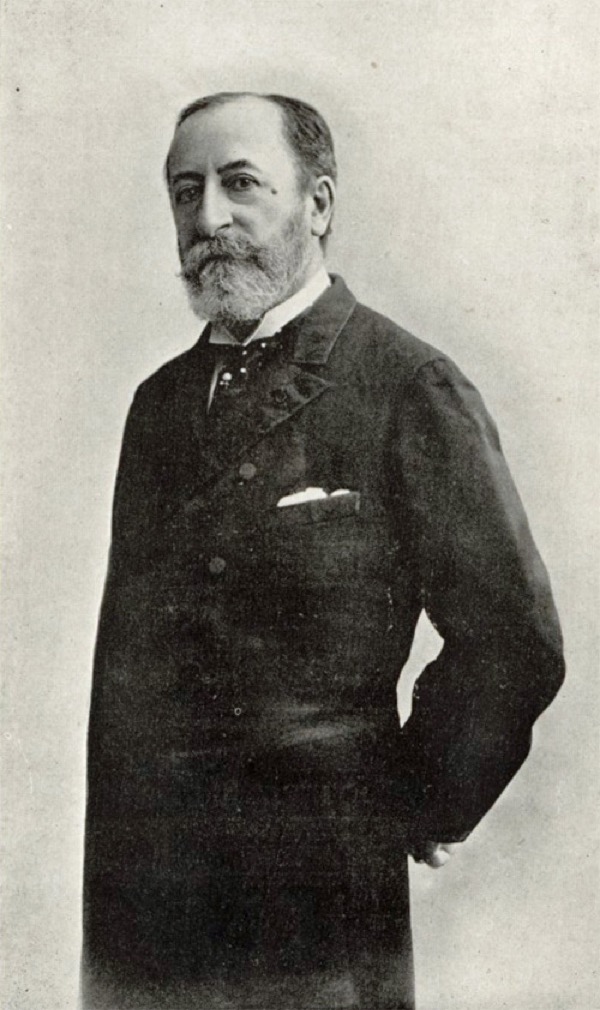
Saint-Saëns, circa 1880
In all, Saint-Saëns composed three works for the harp, with the Fantaisie for Solo Harp, Op. 95, dating from 1893. It is one of the best-known pieces for the instrument, and its two movements are still used as a Paris Conservatoire examination piece.
The Fantaisie explores the whole potential of the harp in terms of expression and colour. Because it combined lyrical writing and technical brilliance, it has remained a cornerstone of the repertoire.
Alphonse Hasselmans: La Source, Op. 44
Josef Hasselmans became the first director of the Strasbourg Conservatoire in 1854, and Richard Wagner called him a “very good-natured, amiable fellow.” He is also remembered for two major schools of double-action harp playing.
His son Alphonse Hasselmans (1845-1912) first studied with his father in Strasbourg, and eight successful solo concerts in Paris in 1877 brought him appointments as solo harpist with the Paris orchestras of the Conservatoire, Opéra, and Opéra-Comique.
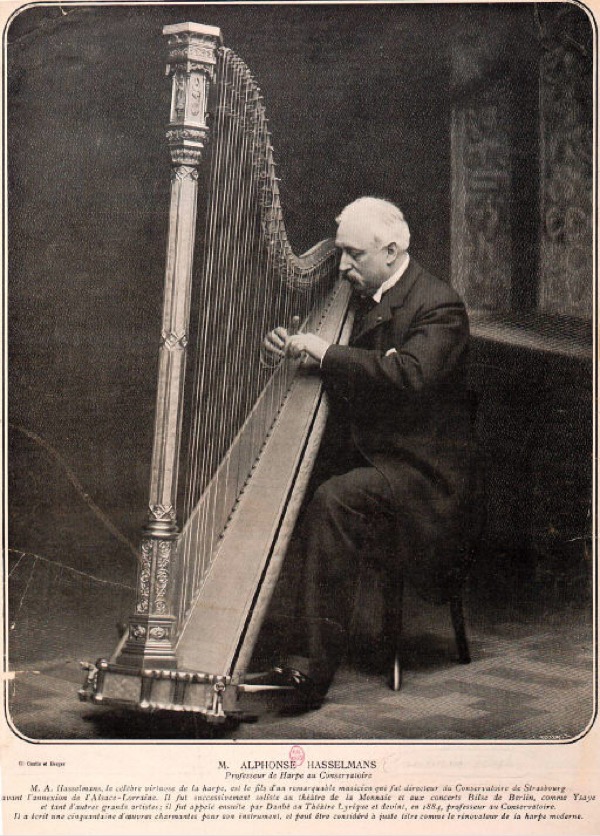
Alphonse Hasselmans
Hasselmans wrote 54 pieces for the harp, and many of his compositions were inspired by his performance and dedicated to him. His solo harp etude La Source dates from 1898 and is dedicated to his student Hélène Gayat. Often nicknamed “The Brook,” the rippling textures and cantabile line make it one of the most beloved works in the harp repertoire.
Paul Hindemith: Harp Sonata
Paul Hindemith (1895–1963) was one of the most versatile musicians of his time, and he could play all instruments of the orchestra, except for the harp. However, his Sonata for Harp is a pioneering example of contemporary harp music.
It is part of a series of 26 sonatas for various wind and string instruments, as well as for piano and organ. Hindemith finished this work in 1939, just weeks after the outbreak of World War II, and just before he departed for the United States.
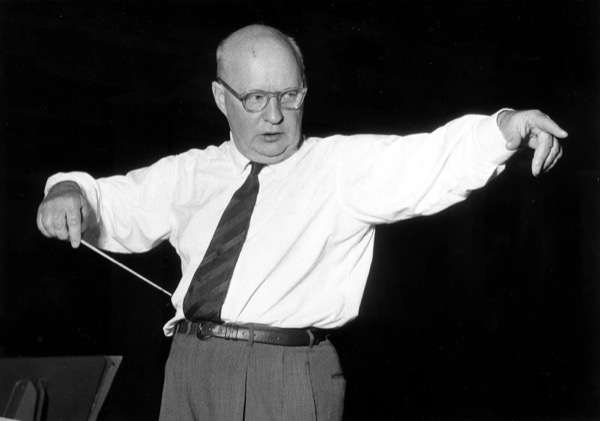
Paul Hindemith
It is a three-movement work, and the final movement in a slow tempo is inscribed with an ode of mourning by Ludwig Christoph Heinrich Hölty. The poem relates a dying harpist’s last wish that, after his death, the harp be placed behind the church altar as a memorial, to sound of its own accord much like the Aeolian harps of antiquity.
Elias Parish-Alvars: Concertino for Two Harps in D minor, Op. 91
Eli Parish (1808-1849) hailed from a small port in Devonshire, yet he became one of the most illustrious musical figures of the 19th century. Franz Liszt excitedly wrote, “From beneath his forehead speak his dreamy eyes, expressive of the glowing imagination which lives in his composition.”
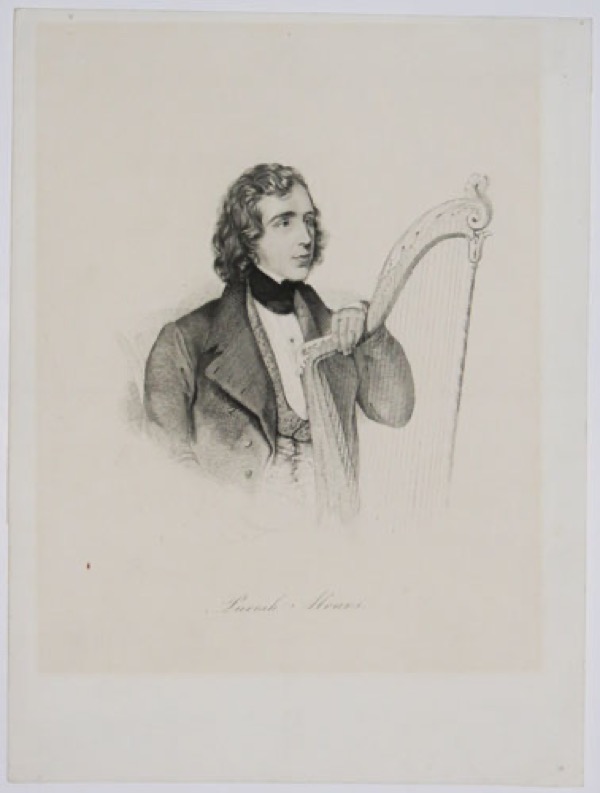
Parish Alvars
Not to be outdone, Berlioz stated, “This man is a magician. In his hands the harp becomes a siren, with lovely neck inclined and wild hair flowing, stirred by his passionate embrace to utter the music of another world.”
Elias Parish-Alvars, a name he freely invented, bought his first double-action harp from Pierre Erard in May 1842, and this more robustly constructed and mechanically superior instrument opened up new musical horizons. He developed innovative techniques integrating pedal and manual skills in unprecedented ways. After all, two harps are always better than one.
Marcel Tournier: Images, 4th Suite, Op. 39
Marcel Tournier (1879-1951) was a student of Alphonse Hasselmans at the Paris Conservatory. He would eventually succeed his teacher as professor of harp in 1912, holding that position until 1948.
Tournier composed several solos for harp, and several chamber works that feature the harp prominently. His solo harp suite Images No. 4 is known for its pictorial character, featuring movements with evocative titles such as “La volière magique,” “Cloches sous la neige,” and “La danse du moujik.”
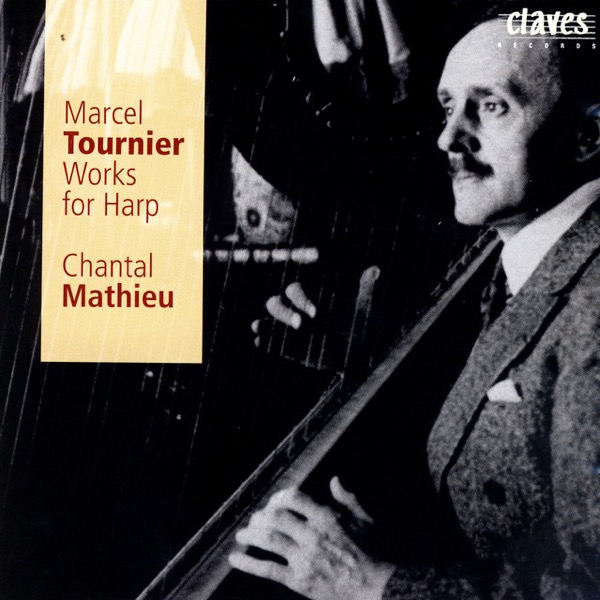
Marcel Tournier
This work is one of his best-known contributions, as it paints contrasting musical scenes with a blend of virtuosity and colour.
Nicolas-Charles Bochsa: Six Preludes
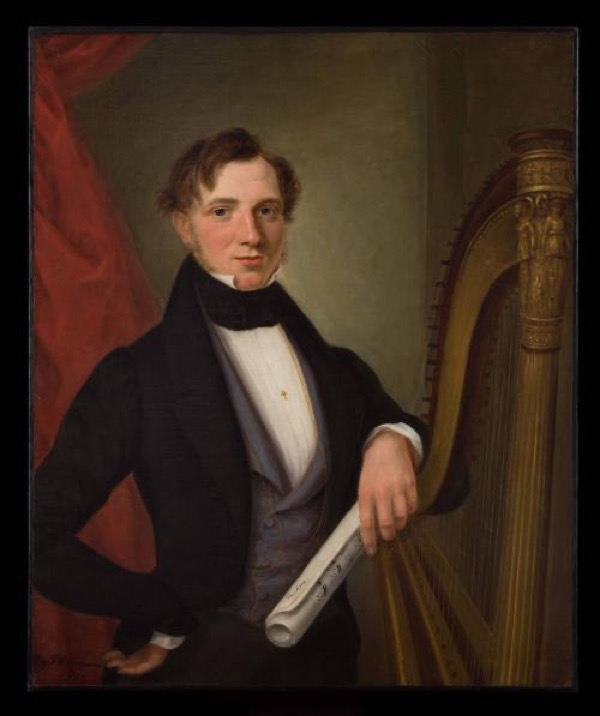
Robert Nicolas-Charles Bochsa, the harpist
Nicolas-Charles Bochsa (1789-1856) was one of the most prolific composers for the harp.
His reputation as a harpist rested on his compositions for this instrument, as he expanded its technical and expressive range.
Bochsa was appointed harpist to the emperor in 1813, and he was even commissioned to compose a requiem for Louis XVI. He was a busy and shifty man who was appointed professor of harp and general secretary of the RAM in London.
He left behind plenty of bankruptcies and broken hearts in his wake and eventually died in Sydney, Australia, in 1856. And while his compositions for harp are not profound, he constantly discovered new effects and exploited the full possibilities of Erard’s new double-action harp. He also wrote a harp method that was long regarded as a classic.
The harp repertoire is truly vast, and it certainly deserves more attention. Would you please let me know what other works deserve to be featured?
For more of the best in classical music, sign up for our E-Newsletter