Many classical music lovers know the broad strokes of the life and career of Clara Wieck Schumann: she was a renowned prodigy, her father, Friedrich, tried to keep her from marrying her true love, Robert Schumann, and she went on to become one of the most celebrated piano virtuosos of the age.
However, Clara wasn’t the only prodigy pianist to emerge from the Wieck household.
Today we’re looking at the life and career of Clara’s forgotten half-sister, Marie Wieck.
Marie Wieck’s Family Background
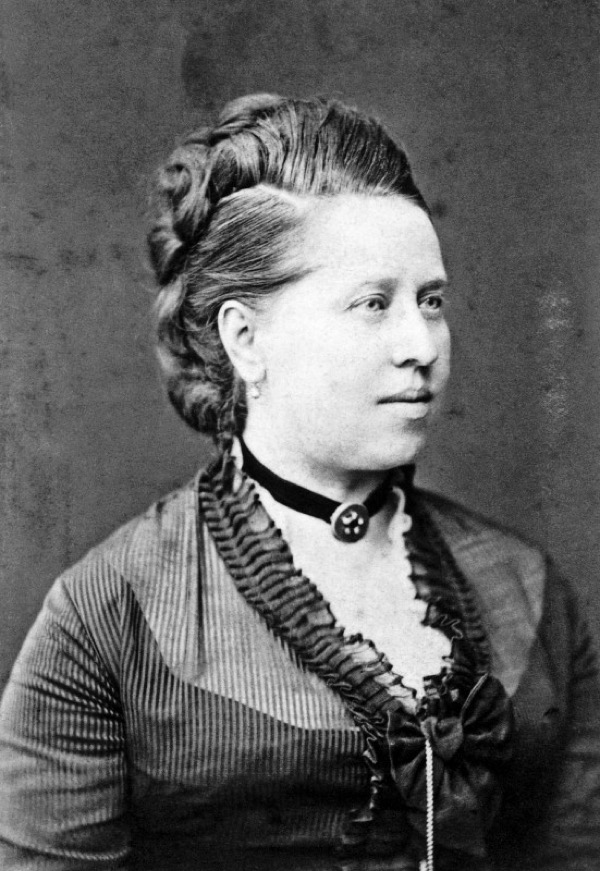
Marie Wieck
Marie Wieck was born on January 17, 1832, to piano teacher Friedrich Wieck and his second wife, Clementine Fechner.
Wieck’s marital history was complicated. In 1816, he married his student Mariane Tromlitz, and they had five children together between 1817 and 1824.
The second child from that marriage was Clara Wieck, who would go on to become one of the great pianists of the nineteenth century.
Unfortunately, the marriage broke down in 1824 due to Friedrich’s controlling and abusive behaviour, and Mariane consequently embarked on an affair with Friedrich’s best friend.
Clara stayed with her mother until her fifth birthday in 1824, but on that day, as was customary in German law of the time, custody reverted to the father. Friedrich and Mariane’s divorce was finalised in 1825.
Three years later, in 1828, Friedrich married his second wife, Clementine Fechner. He was forty-three, and she was twenty-four. They would have three children together: one son and two daughters.
Their middle child, Marie, was born in Leipzig in January 1832.
Marie’s Early Life and Education
As a young girl, Marie studied piano and voice with Friedrich; however, he wasn’t able to spend as much time with Marie as he had with Clara.
Thanks to Clara’s success, Friedrich’s reputation had skyrocketed in the period between his tuition of Clara and his tuition of Marie.
This meant he had less time to spend with Marie than he had with Clara. In fact, early on, he even farmed out Marie’s tuition to another teacher from Lüneburg.
Infamously, Friedrich co-wrote a diary with Clara, where both wrote entries about her musical life. He would often write from her point of view, absorbing Clara’s identity in a way that most modern people consider dysfunctional at best and psychologically abusive at worst.
Friedrich began the same practice with Marie. Discomfiting as it is, that joint diary grants us access into the family’s state of mind and the progress of Marie’s studies.
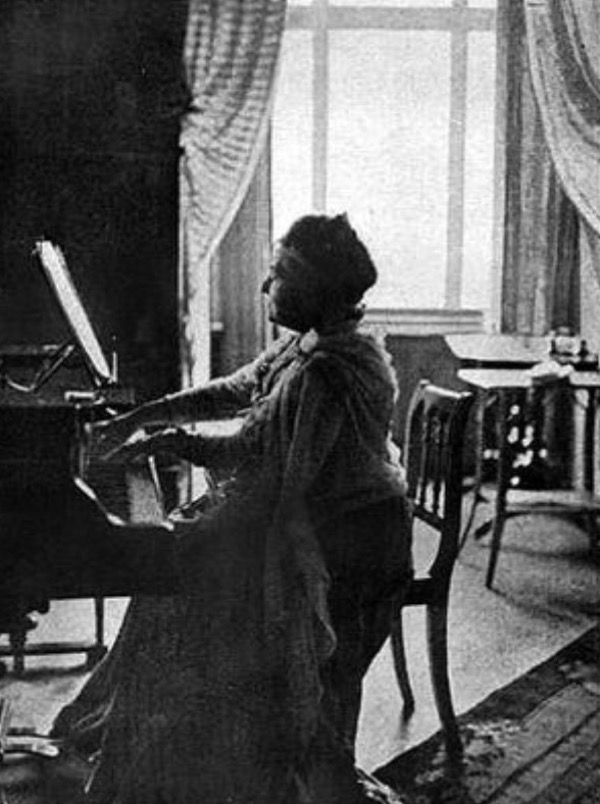
Marie Wieck
One entry – from Marie’s point of view, but written by Friedrich – read:
“I started learning how to use the keys and to play a few exercises. Mr Anger from Lüneburg gives me lessons. Since October 1838, my father has been taking care of me seriously, with a few interruptions. After my fingers had been trained sufficiently through exercises and scales, the same as with Clara, I started to acquire the high notes at Easter only. Before that, I had played those small exercises without sheet music.”
Friedrich pursued pedagogical strategies he’d also employed with Clara, including hiring private tutors and neglecting her general education in favour of musical and language training. (He believed that being multilingual was a necessary skill for a savvy, globe-trotting virtuoso to possess.)
Clara’s Rebellion and the Effect on the Family
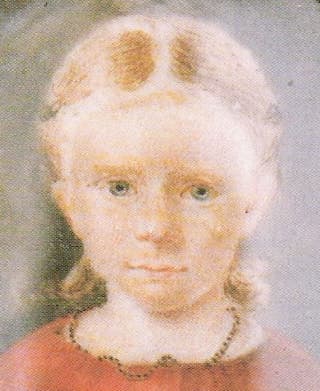
Clara Wieck, 1828
The Wieck family was split apart in the late 1830s, when Clara announced that she was in love with composer (and former Wieck student) Robert Schumann.
The fight reached the courts, but in the end, Clara and Robert were married in 1840.
This intense battle had ripple effects far beyond Friedrich, Clara, and Robert. Friedrich had devoted years of his life to training Clara and believed he had a right to the money she earned as a pianist. He even went so far as to sue to claw back her earnings (he didn’t get them).
This estrangement led Friedrich to put additional pressure on Marie, who was just eight years old in 1840.
The pressure was on: since Clara had done the unimaginable and left the family, Marie would have to replace her.
Marie Wieck’s Musical Struggles
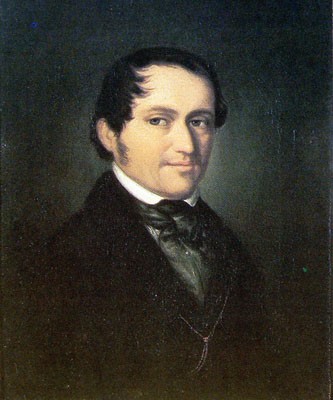
Friedrich Wieck
However, Marie lagged behind her half-sister’s progress.
Three factors worked against her: a discrepancy in natural talent, the stress of the all-consuming legal battle, and the comparative lack of attention and training from her preoccupied father.
Marie was talented, but Clara was transcendently so, and Marie struggled to keep up with Clara’s example.
Friedrich reported in 1842 that Marie was still having trouble with her octaves and even reading music. Frustrated, he wrote in the “dual” diary from Marie’s point of view:
”I am as dim-witted, stupid and lazy as Clara. Perhaps I have got talent, too, still slumbering deeply within me, but at least I do have the right feeling, a sense of the beat, and a musical ear. The fact that my father cannot deal with me that much because of his expanded piano and music business might perhaps lead to a slightly delayed development… My education is thorough and similar to Clara’s. I do not go to school yet, but I regularly go to see our aunt, Mrs Kunze, Master, to learn French, together with my little sister Cäcilie.”
Marie Wieck and Clara Schumann Work Together
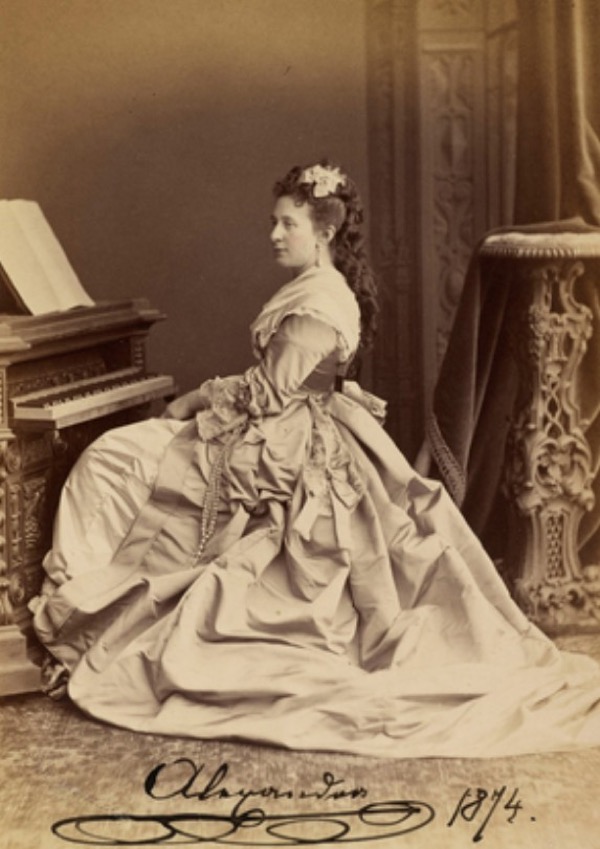
Marie Wieck
Wieck’s brutal words and assessment of her capabilities must have left a mark. She later admitted that she was “not…a precocious child prodigy.”
Still, the two Wieck daughters worked together. Interestingly, their first public collaboration occurred in 1843, the year of Clara and Friedrich’s slow reconciliation, which happened after Clara started having children of her own.
In November 1843, Marie made her debut in Dresden at a concert with Clara. They played the first two movements of Moscheles’s Sonata, Op. 47, a piece for piano four-hands.
Ignaz Moscheles – Grande Sonate op. 47 (1819 ca.), I. Allegro Spiritoso
Clara loved Marie, but also held her to the same unbelievably lofty artistic standards as her father – without cutting any slack for the tremendous psychological pressure her eleven-year-old sister was under.
In 1843, Clara wrote in her shared marriage diary with Robert:
“Marie played most charmingly, but I was always irritated by the reluctance that could somehow be felt with each tone in her playing.”
Fortunately, her father was satisfied by Marie’s Dresden performance. She wrote later, “I can still see my father in front of me, seated in the corner of the centre stage, watching his daughters with an anxious expression on his face…”
He was so pleased by her performance that he bought her “two dresses, two visits to the theatre and a dinner at Renner’s.”
After the Dresden success, she and Friedrich went on tour together through Germany.
Marie Wieck’s Later Life
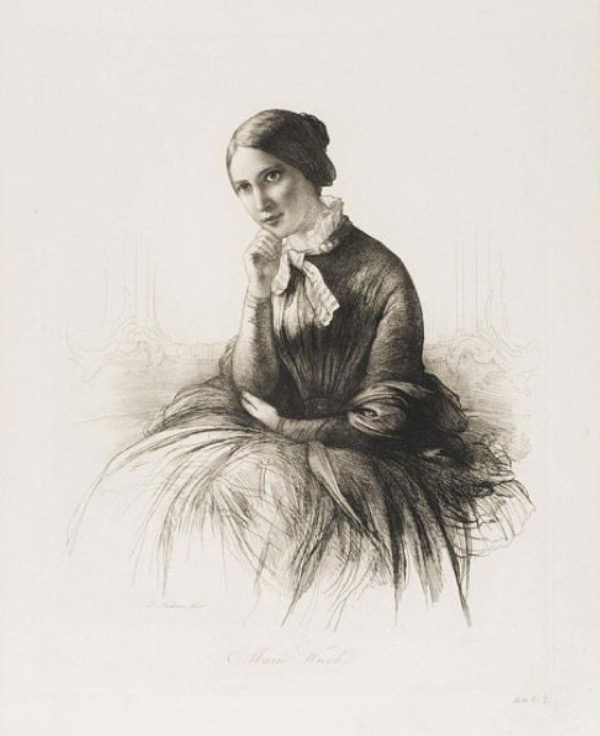
Marie Wieck
In 1847, in an indication that family rifts were healing, she began teaching piano to Clara and Robert’s eldest daughter, also named Marie. As she grew up, she found herself increasingly interested in carrying on the family business by teaching.
She also branched out by studying singing and even started teaching it herself. She sang with Clara accompanying her, and appeared with famous contralto Amalie Joachim.
Between giving lessons, she went on a number of tours, including trips to Switzerland, Austria, Italy, Scandinavia, and Russia. She spent a few years in London, where she introduced German repertoire to audiences there.
Later, she devoted herself to preserving and passing down her father’s teaching methods. A couple of years after Friedrich died in 1873, she published a book of his piano exercises. In 1877, she published a book of his exercises for singers.
Although she performed for decades, she never attained the level of accomplishment or influence that Clara did. In the end, she was never able to escape Friedrich’s shadow – or Clara’s.
Marie Wieck performed for the final time in January 1916, appearing in a performance of Robert Schumann’s piano concerto. She was eighty-four years old, and she continued working until her death that October.
For more of the best in classical music, sign up for our E-Newsletter