In pop and folk music, songwriters collaborating is standard practice. However, in classical music, credit for a single work usually goes to a single composer.
And although it’s true that a lot of classical music has been written by just one person, there are some striking exceptions.
Today, we’re looking at six times when classical music composers collaborated to create orchestral music.
Michael Haydn and Wolfgang Amadeus Mozart: Die Schuldigkeit des ersten Gebots (1767)
In 1767, Mozart was eleven years old. He was living in Salzburg, where his father Leopold worked as a second violinist and then deputy Kapellmeister in the court of the ruling Prince-Archbishop.
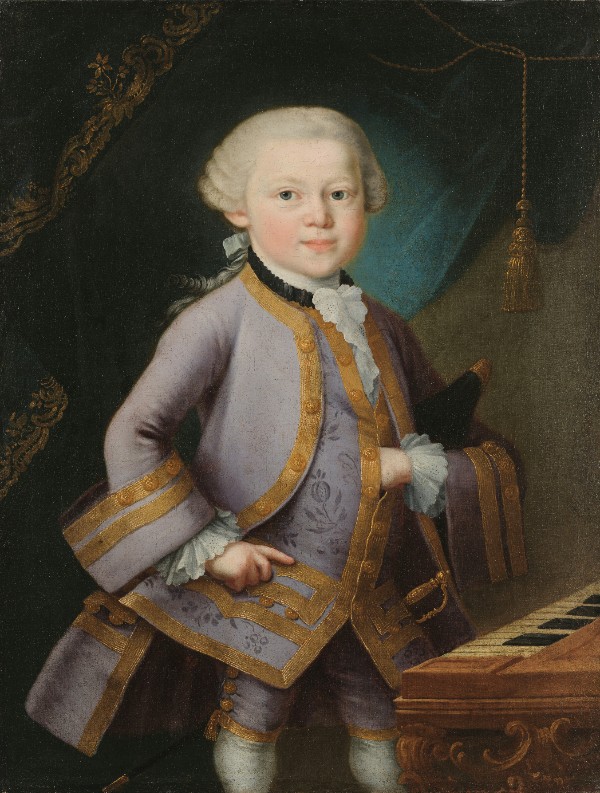
Wolfgang Amadeus Mozart
One of Leopold’s violinist colleagues was Michael Haydn, brother of composer Joseph Haydn. Therefore, Michael would have witnessed the rapid development of Wolfgang’s genius firsthand.
During Wolfgang’s childhood, three-act sacred singspiels (a kind of German-language musical play) were often composed by three different composers.
In 1767, Mozart wrote the first act to such a work, Die Schuldigkeit des ersten Gebots (“The Obligation of the First and Foremost Commandment”).
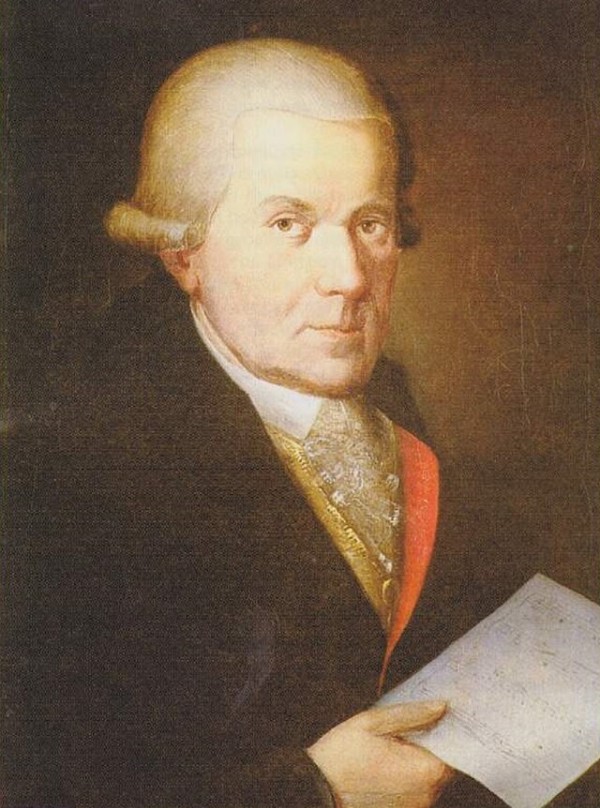
Michael Haydn
Michael Haydn wrote the second act, and court organist Anton Cajetan Adlgasser wrote the final act.
Frustratingly for scholars, only Mozart’s act survives today. But this collaboration is still a fascinating bit of Mozart trivia.
Franz Liszt and Albert Franz Doppler: Hungarian Rhapsody No. 2 (1851, ca. 1875)
Franz Liszt’s Hungarian Rhapsody No. 2, which dates from 1851, is one of the most famous piano showpieces ever written.
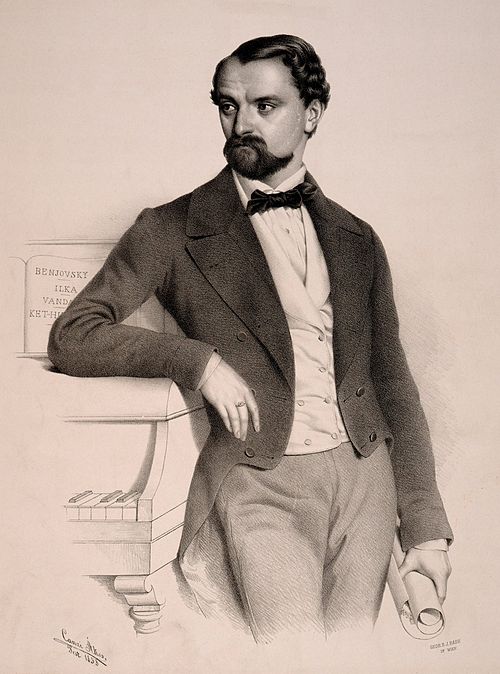
Albert Franz Doppler
The version for orchestra from the 1870s is also beloved. It was initially arranged by flautist, conductor, and Liszt disciple Albert Franz Doppler, but Liszt was deeply involved in the orchestration process, editing the final product.
Johann Strauss II and Josef Strauss: Pizzicato Polka (1870)
The story of the Strauss dynasty is one of the wildest in classical music history.
Johann Strauss I became famous in the 1820s for his dance orchestra and dance music. He had three surviving sons with his wife, but he betrayed his first family to start a second one with another woman. Eventually, the sons from his first marriage began working together, creating an entire Strauss dynasty.
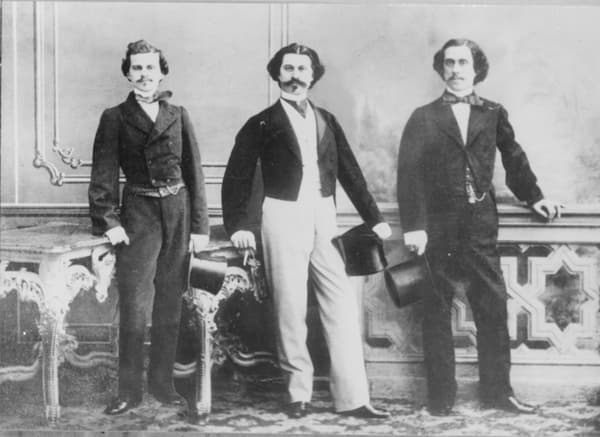
The Strauss brothers
The brothers’ most enduring joint creation is the Pizzicato Polka, composed by brothers Johann Strauss II and Josef Strauss in 1870.
Franz Liszt, Pyotr Ilyich Tchaikovsky, and Sophie Menter: Ungarische Zigeunerweisen (1885)
Watch the performance by The Imperial Vienna Orchestra of Norwich under the baton of Dario Salvi.
This work for piano and orchestra has a complicated – and somewhat obscure – origin story.
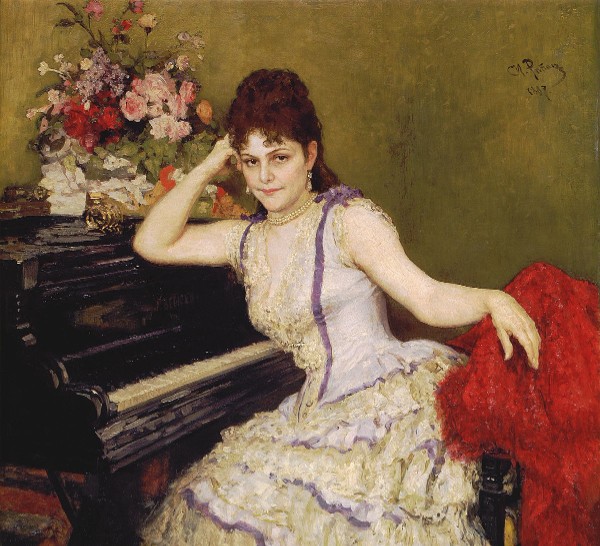
Sophie Menter
It is currently believed that the piano part to “Hungarische Zigeunerweisen” (“Hungarian Gypsy Melodies”) was written in the 1880s by Liszt pupil Sophie Menter, a beautiful and strong-willed piano virtuosa whom Liszt called his “piano daughter.”
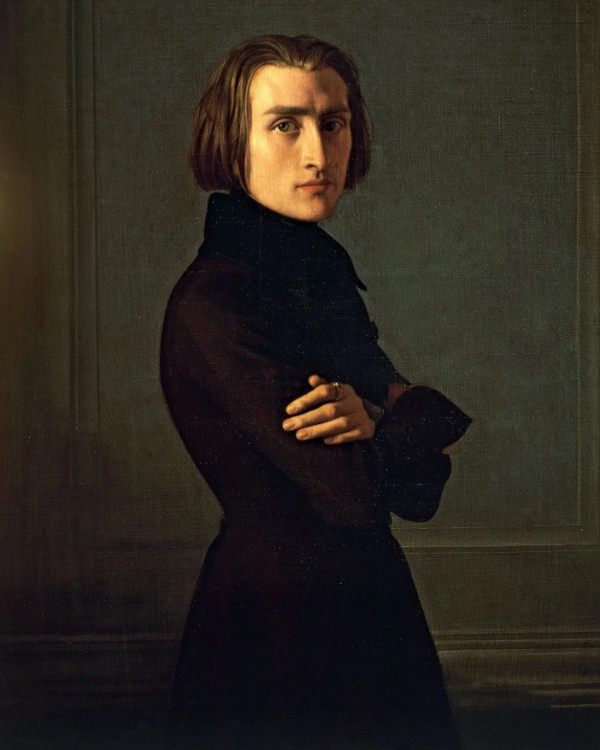
Franz Liszt
However, based on a short journal entry written by Liszt briefly mentioning the work, it is possible that he was also somewhat involved in its initial composition.
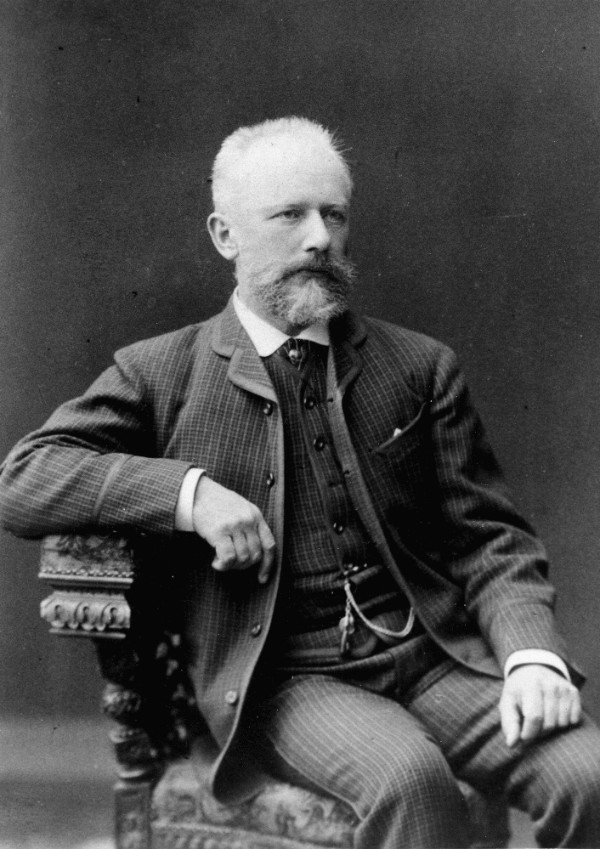
Pyotr Ilyich Tchaikovsky
Almost a decade later, while visiting Menter, Tchaikovsky orchestrated the work at her request. He also conducted its premiere in Odessa in 1893.
The result is a lush and flamboyant work for piano and orchestra that marries Liszt and Menter’s piano virtuosity with Tchaikovsky’s flair for orchestral colour.
Ten French Composers: L’éventail de Jeanne (1927)
In 1927, ten of France’s leading composers collaborated on the children’s ballet L’Éventail de Jeanne (“Jeanne’s Fan”).
The ten composers involved and the dances they each composed, were:
- Maurice Ravel (Fanfare)
- Pierre-Octave Ferroud (Marche)
- Jacques Ibert (Valse)
- Alexis Roland-Manuel (Canarie)
- Marcel Delannoy (Bourrée)
- Albert Roussel (Sarabande)
- Darius Milhaud (Polka)
- Francis Poulenc (Pastourelle)
- Georges Auric (Rondeau), and
- Florent Schmitt (Finale: Kermesse-Valse)
These dances were commissioned by a Parisian patron and ballet teacher named Jeanne Dubost, who wanted a modern work for her students to dance to.
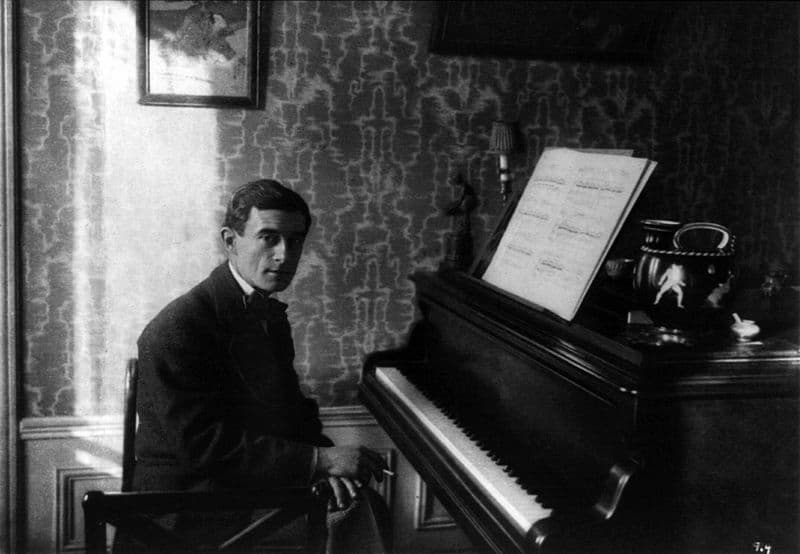
Maurice Ravel at the piano, 1912
Its first performance happened in Dubost’s salon in 1927, with Maurice Ravel playing an orchestral reduction on piano, and Dubost’s students performing.
Benjamin Britten and Lennox Berkeley: Mont Juic (1937)
Benjamin Britten and Lennox Berkeley were British composers, but they met in Spain in 1936 while attending the prestigious International Society for Contemporary Music Festival.
While in Barcelona, they went sight-seeing. They visited a red-light district (the 22-year-old Britten was scandalized; the more worldly 32-year-old Berkeley less so) and watched some folk dances together.
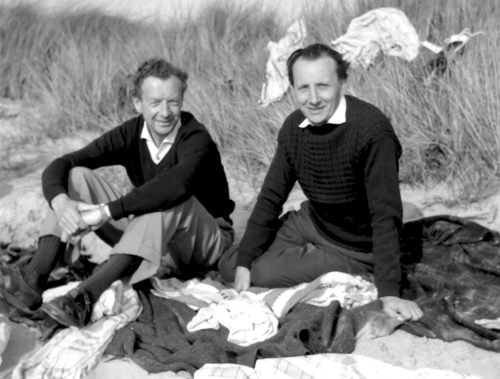
Lennox Berkeley with Benjamin Britten © lennoxberkeley.org.uk
Berkeley wrote:
“Ben and I went to an afternoon of folk dancing in a park called Mont Juic. We were very taken with some of the tunes, and Ben produced some old envelopes from his pocket and wrote them down.”
Charmingly, they did so in a cafe. The result of their work was the four-movement “Suite Mont Juic.”
For as long as Britten lived, they never told who had written what, but after Britten’s death, Berkeley revealed he’d written the first two movements, and Britten had written the final two. However, they’d collaborated on the arrangement and orchestration, meaning they were both deeply involved with the entire work.
Berkeley ended up falling in love with Britten, but that’s a story for another day.
Final Thoughts
Composer collaborations are vital reminders that classical music doesn’t have to be a solitary pursuit. We hope the stories behind these collaborations have encouraged you to make music with your friends!
Do you know of any other composer collaborations? Share them in the comments below!
For more of the best in classical music, sign up for our E-Newsletter