
It’s the nightmare every classical musician dreads: a heart-stopping memory lapse. Even the most celebrated classical musicians have experienced them.
Even during the high-stakes pressure of the Tchaikovsky Competition or on the hallowed stage of La Scala, memory slips are an inescapable part of life as a classical musician.
Today, we’re looking behind the stories of seven infamous memory slips from recent classical music history…and how the musicians who experienced them dealt with them. (Read more from “Heartstopping Memory Lapses From Classical Music History, Part 1”.)
Tchaikovsky Competition participant, 1986
During the 1986 Tchaikovsky Competition, one pianist had a truly heartbreaking memory lapse mid-performance.
We’re not going to share the name of the person because that’s not the point of sharing; rather, it’s to remind everyone that every musician is human, even at the highest levels of accomplishment!
Competition Failure
Isaac Stern, 1988
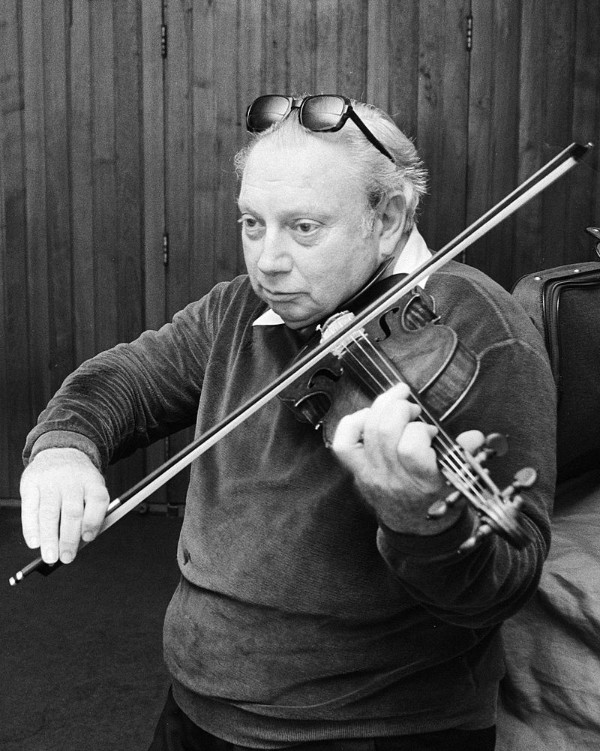
Isaac Stern
In 1988, violinist Isaac Stern gave the American premiere of Peter Maxwell Davies’s violin concerto with the New York Philharmonic.
Mozart’s third concerto – one of the least technically challenging violin concertos in the standard repertoire – was also added to the program.
Understandably, while prepping for the concert, Stern focused on the complicated and demanding Davies work, and even used the sheet music during it (a somewhat uncommon practice for violin soloists).
However, when he came back to play the Mozart, he eschewed the sheet music; he’d had Mozart’s third memorised for decades.
Except it turns out he didn’t!
Isaac Stern playing Mozart’s Violin Concerto No. 3
Stern blanked out during the first movement and had to go check the conductor’s score to remember how it went…despite the fact he’d been playing the Mozart concerto for decades.
The New York Times reported:
“…He lost his way in the midst of the opening movement and had to signal the orchestra to stop. With professional aplomb, he apologised to the audience: ‘I had a memory slip. It isn’t fair to you or Mozart. I’d like to begin again and do it properly.’ And he proceeded to treat Mozart more than fairly, even though a brief patch of sour intonation in the first movement did mar the repeat performance. The audience seemed glad to treat the whole matter as a pleasant diversion, a few minutes of bonus Mozart.”
Van Cliburn, 1994
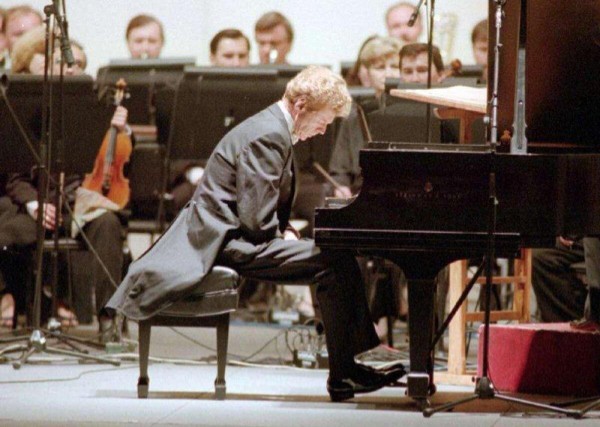
Van Cliburn
In 1958, pianist Van Cliburn made a splash at the first Tchaikovsky Competition.
This was a competition designed by the Soviets to promote Soviet talent…but Van Cliburn, an American, ended up walking away with the prize after playing the works of Russian composers Tchaikovsky and Rachmaninoff. He came home to a ticker-tape parade.
Van Cliburn performing the Tchaikovsky piano concerto in 1962
In 1978, he decided to withdraw from the public eye. Then, in 1994, he decided to make a comeback.
The first stop on his comeback tour was at the Hollywood Bowl in Los Angeles, where he was scheduled to play the Tchaikovsky concerto: the work he’d made his name with.
But despite his familiarity with it, he suffered a memory lapse in the third movement. Shaken, he left the stage.
He was scheduled to play Rachmaninoff’s third concerto after the intermission, but the minutes ticked past, and he didn’t reappear. Eventually, an announcement was made that he was indisposed.
Then, finally, he took to the stage himself to announce that he was experiencing dizziness and high blood pressure. Instead of Rachmaninoff’s third concerto, he offered a handful of encore pieces.
He later confessed that although his excuse was real – he had indeed suffered from an attack of dizziness and high blood pressure – it was also partial: he’d simply been too terrified to continue with the Rachmaninoff.
Boris Giltburg, 2013
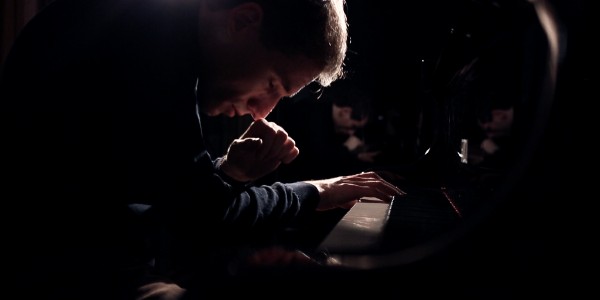
Boris Giltburg
Pianist Boris Giltburg was born in the Soviet Union in 1984. As a child, he and his family moved to Israel.
In January 2023, he gave an interview to Vantage Music ahead of a performance in Hong Kong.
He was asked, “Have you had any embarrassing moments on stage that you can share?”
He replied that he doesn’t have as many now that the iPad is available and that the device helps combat the fear of memory lapses. He tucks it into the piano where it isn’t noticed.
The interviewer then asked him if he had ever had memory lapses before the iPad.
He replied that he had once, during a Mozart concerto at the 2013 Queen Elisabeth competition, which he ultimately won.
Giltburg explained in the interview what happened:
It was the reprise of the first movement, and there was one of these passages that he had slightly changed because of the range of his keyboard, and I played just the exposition passage transposed without thinking and I got to the G above the F that was the highest note that he had, and suddenly I thought I can’t be here because Mozart didn’t have this G, and that was that! I had no idea where I was. And then I made myself listen to it next morning because I didn’t want it to become a trauma, so I made myself face it. Immediately! Which is when I realised that this is what had happened. The entire thing lasted two seconds, but two seconds at the competition stage is an eternity! And then essentially, I jumped a few bars ahead, and the orchestra joined me. I wouldn’t wish this on anyone! It’s not like I stopped!
He also poked at journalists who wanted to talk about it:
Journalists were having a field day! People were asking me about this memory lapse five years after the competition. I thought this was quite lazy journalism. Like: “Something happened to you in the Queen Elisabeth Competition; would you like to tell us about it?” My answer was: “No, actually, I wouldn’t like to talk to you about it – I have told the story about 20 times already.”
Point taken!
Nowadays, Giltburg’s YouTube channel has a recording of the second and third movements…but not the first, where the memory lapse occurred.
The second movement of Mozart’s Piano Concerto No. 15, which was performed just after the memory lapse, helped Giltburg win the competition
Jonas Kaufmann, 2015
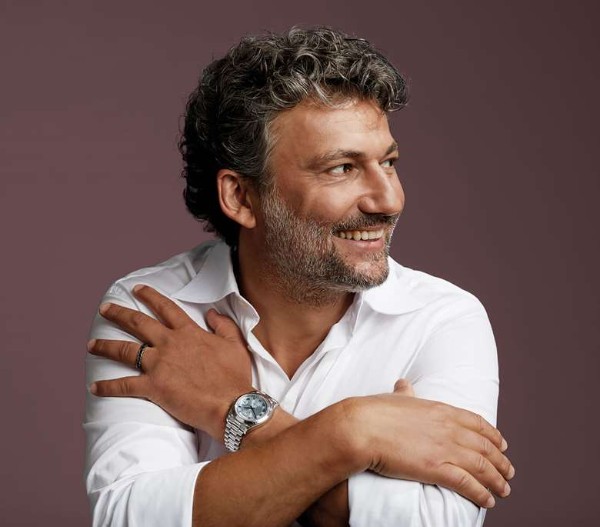
Jonas Kaufmann
German-Austrian tenor Jonas Kaufmann has been called “the most important, versatile tenor of his generation” by the New York Times.
In June 2015, he appeared at the famed La Scala opera house in Milan, Italy.
Between his fourth and fifth encores, he took off his bow-tie and unbuttoned his collar, then launched into a performance of what is possibly the most famous tenor aria in opera history: Puccini’s “Nessun dorma” from Turandot.
About a minute in, he apparently forgot the libretto and stumbled, then jumped back in, to laughter from the audience.
Instead of ruining the performance, the slip somehow made it even more special than it had originally been!
The whole thing was caught on video here:
“Nessun dorma,” (Turandot), Jonas Kaufmann, Milan [2015]
Yundi Li, 2015
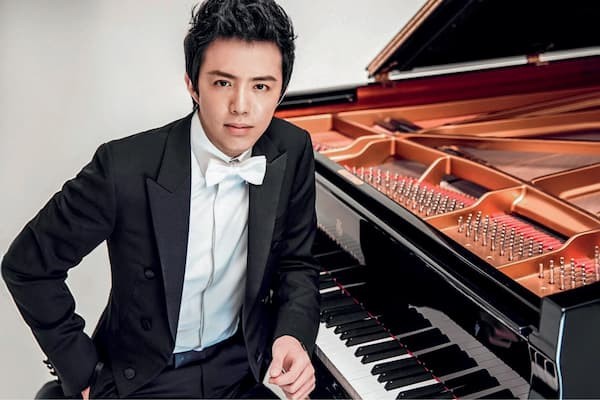
Yundi Li
Pianist Yundi Li, also known as Yundi, has concertized all around the world.
He kicked off his career by winning the Chopin Competition in 2000 at the age of eighteen, playing Chopin’s first piano concerto during the final round.
Fifteen years later, in October 2015, he found himself in Seoul, booked to play that very same concerto.
However, he didn’t seem quite right. The night before his first performance, he requested a rehearsal room after midnight.
Then, at the actual concert, he made a number of stumbles during the first movement, eventually losing his place entirely.
The orchestra tried to follow him but was unable to. Eventually, everyone was forced to stop and start over. Fortunately, the second run-through was incident-free.
A concertgoer made an unauthorised recording of the mistake and posted it online.
Yundi Li Chopin concerto Crash and STOP recording
After the performance, Yundi Li took one bow, then disappeared.
Some fans, rightly or wrongly, interpreted this as anger at the orchestra or the conductor for not doing more to help him get out of the jam.
He addressed the backlash on his Weibo page:
We apologise for our mistakes in the Seoul concert and would like to issue a sincere apology to our fans and friends and thank the conductor and the orchestra for their support and forgiveness. As a pianist, I know that no matter what, my performance on stage must be perfect; any kind of explanation is insufficient. Thank you for your comments.
Daniel Barenboim, 2015
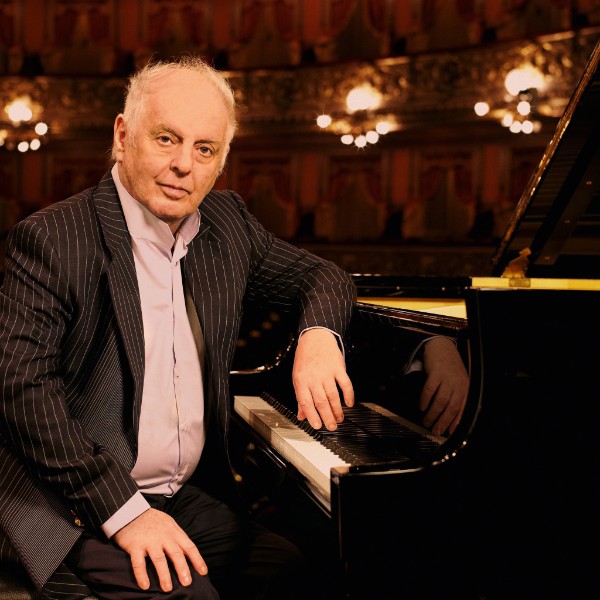
Daniel Barenboim
In May 2015, pianist and conductor Daniel Barenboim gave a Schubert recital at the Royal Festival Hall on his newly designed piano the Barenboim Grand.
Critic Jessica Duchen wrote about this performance for The Arts Desk:
Perhaps Barenboim would be more at home in the grander scale ‘big’ A major, D959, the second of the three great sonatas that closed Schubert’s output in the genre shortly before his death, aged all of 31. But here, too, the music’s expansive generosity was sacrificed to brusque rigour in the opening movement. The second is one of Schubert’s most visionary and terrifying compositions, descending in its central episode into a kind of inner towering inferno; but though the whole movement had the sombre and relentless tread of a triple-metre march (Brahms Requiem, anyone?), the inferno scarcely caught fire; and towards the end of the movement, Barenboim suffered a serious memory lapse. This, of course, can and does happen to any pianist, but it seemed particularly unfortunate in this context.
An excerpt of Barenboim playing Schubert’s Piano Sonata in D-major
In 2011, his playing inspired an entire commentary in The Guardian entitled “Is pianistic perfection all that it’s cracked up to be?”
Daniel Barenboim rarely plays all of the right notes. He certainly didn’t get everything right a couple of nights ago at the Royal Festival Hall as the soloist playing Liszt‘s two piano concertos with his orchestra, the Staatskapelle Berlin, conducted by Pierre Boulez. But as Andrew Clements says in his review, thanks partly to the mistake-swallowing powers of the sustaining pedal but mostly to the brilliance of Barenboim’s musical imagination, that didn’t matter. And it won’t on Tuesday night, either, when Barenboim plays two of Schubert’s late, great sonatas at London’s Wigmore Hall (do what you must to get a ticket; and while you’re at it, see if you can find one for me!) and in which he almost certainly won’t play all of the right notes, either.
Conclusion
Classical music may demand impossible levels of perfection from its practitioners, but its most human moments often occur when performers make mistakes and slip up.
So the next time you or someone you know freezes mid-phrase onstage, remember: even the greats like Barenboim, Giltburg, and Cliburn have been there!
What defines greatness isn’t forgetting: it’s having the grace, resilience, and humour to recover when you do.
For more of the best in classical music, sign up for our E-Newsletter





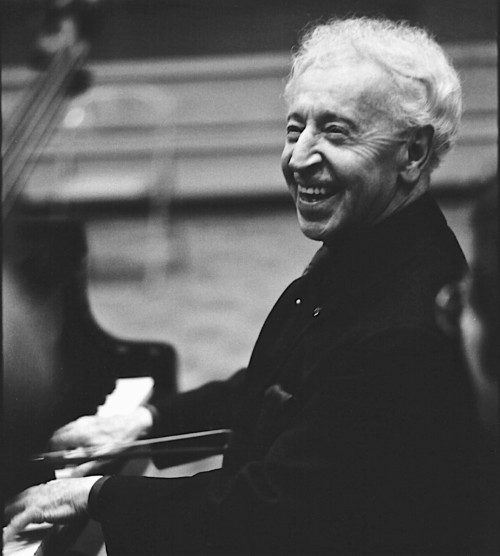
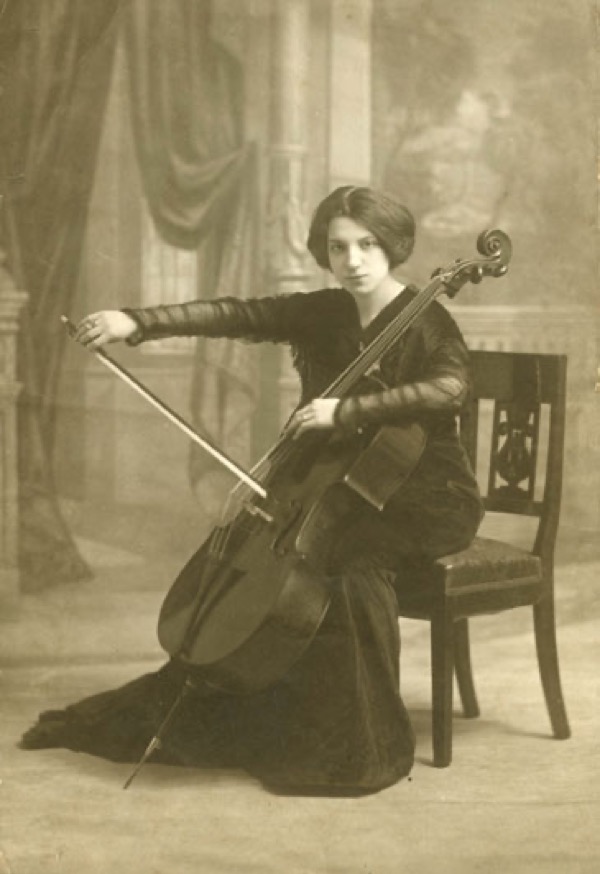
Perhaps it is the fear of a memory lapse that prompted Sviatoslav Richter to play always with the score in front of him on the piano.