

“Piano Day” is a vibrant celebration of the piano and its boundless possibilities, founded in 2015 by German pianist, composer, and producer Nils Frahm. Held on the 88th day of the year, this date symbolically reflects the 88 keys of a standard piano.

Joep Beving (ARTE Concert)
As part of the 2026 ARTE Piano Day series, the Amsterdam composer and pianist Joep Beving invited listeners into the subtle world of his then newly released album “Liminal.”
Joep Beving: Piano Day 2026
Available until 28/03/2028
Finding an Essential Voice
Joep Beving began piano studies at an early age, and he eventually studied music at the Utrecht Conservatory. However, he discontinued his studies and got a degree in public policy and public administration.
Yet his love for the piano never perished, and his playing style changed over the years as he searched for a particular aesthetic essence. At the age of 38, Beving was forced to stay home from work and decided to devote himself to his piano.

Joep Beving
Searching for the tranquillity of mind and some form of essence, music started to present itself in a way that he had never experienced before. He later called his new approach “simple music for complex emotions,” with minimal pieces found in the ever-present stream of consciousness.
By 2018, he took this idea one step further and suggested, “If you see music as a living organism, then it is not unthinkable that it has its own innate inclination to continue to exist and enhance itself.”
Liminal
”Liminal,” issued in March 2026 by Deutsche Grammophon, is an album inspired by the French scholar Guillaume Logé and his book Wild Renaissance. Subtitled “New Paradigms in Art, Ecology and Philosophy,” the book posits a renaissance articulated around a renewed vision of humankind and nature.
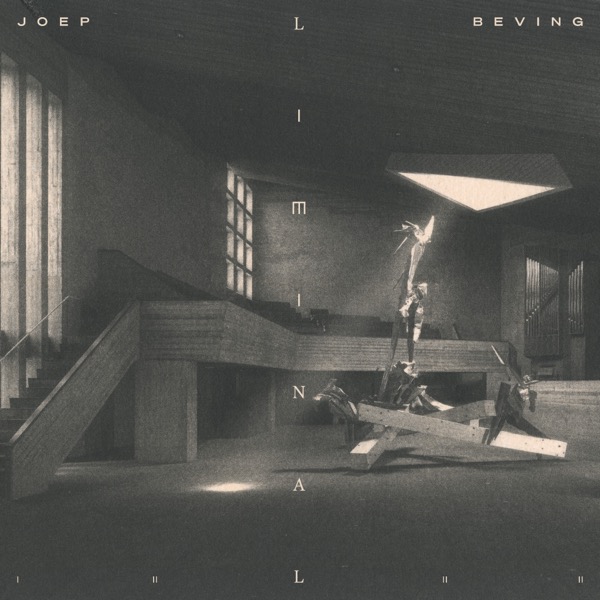
Liminal (Deutsche Grammophon)
Essentially, it is a response to current environmental, societal, and ethical issues that place the survival of humankind in question. It builds on the scientific revolutions of the last decades and positions itself in relation to technoscientific and transhumanist promises.
In Wild Renaissance, humankind no longer aspires to impose its will on a passive and purposeless nature, but instead begins to listen to a new partner. That new partner is the world around us. As humanity discovers the potential of these forces, it enters a relationship with them and combines their energy with its own.
An Ecology of Listening
The word “liminal” comes from Latin and basically means “threshold.” In anthropology and cultural theory, it describes a transitional stage between phases, and Beving uses that idea as a structural principle. The music, full of ambiguity and instability, frequently feels as if it is continually arriving.
The music is explicitly framed as a dialogue between control and intuition, with Beving presenting ecology as a listening condition. Time feels ecological rather than narrative, unfolding without a central human goal.
In the ARTE Piano Day 2026 film, “Wild Renaissance” is deliberately placed as a midpoint pivot, with surrounding tracks building a perceptual frame. In the world before “Wild Renaissance,” the world is still being constructed by ideas of harmony, place, and order.
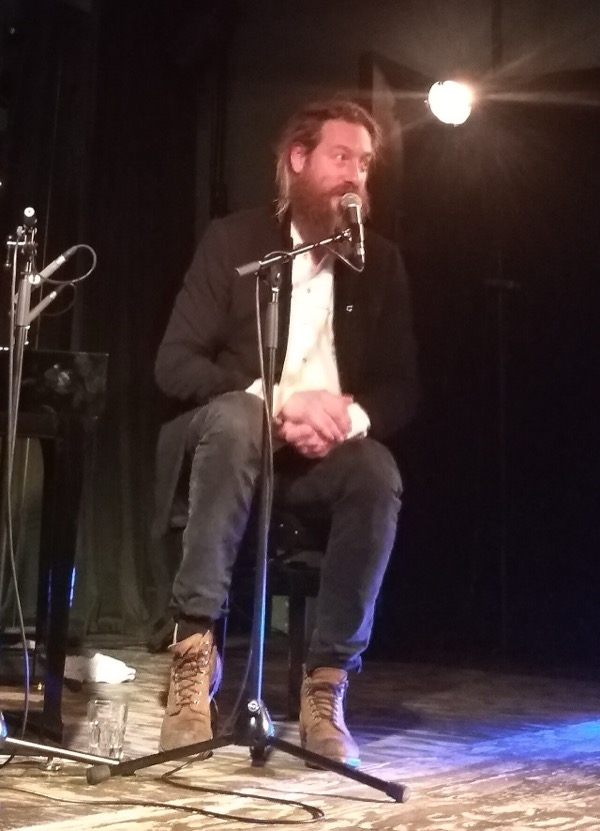
Joep Beving
“Wild Renaissance” then breaks this ontology, and humans are no longer the centre. In subsequent tracks, the world is no longer constructed but experienced as a shifting ecology of states.
Clearly, Beving’s Piano Day performance is not a traditional piano recital. It is an invitation to inhabit a threshold where listening continuously unfolds. Music is no longer a means of imposing order. Rather, it already exists within the cosmos, and Beving’s task is simply to create the conditions in which it may reveal itself.
For more of the best in classical music, sign up for our E-Newsletter







I like Joep Beving, but I don’t consider him an “academic artist.” What a pathetic swing academic music has taken in the 21st century—from arrogant, hyper-intellectual complexity to a commercial minimalism that’s a simplification of older styles, almost like what Clayderman did with Romanticism in the ’80s. That’s how bad things must be in academic circles that major labels or people like you had to resort to this gaslighting to us.