Compared to their pop-star brethren, classical musicians’ love lives are usually deemed irrelevant to what happens onstage. But of course, that doesn’t mean classical musicians don’t have love lives.
Generations of male pianists have had private lives shaped or concealed by their attraction to other men. Some, like Vladimir Horowitz, denied the rumours outright even as those around them understood the truth. Others, like Van Cliburn, never felt the need to deny – or confirm – what was happening in their private life.
Today we’re looking at the stories of seven pianists, and how being gay affected their lives and careers.
Vladimir Horowitz (1903–1989)
Horowitz playing Chopin’s Polonaise in F-sharp minor, Op. 44
In 1933, up-and-coming pianist Vladimir Horowitz joined classical music royalty by marrying Wanda Toscanini, daughter of conductor Arturo Toscanini.
Secretly, though, he was attracted to men. In 1937, he fell in love with a young student named Nico Kaufmann. Given Horowitz’s marriage and the era’s hostility toward same-sex love, their relationship was doomed from the start.
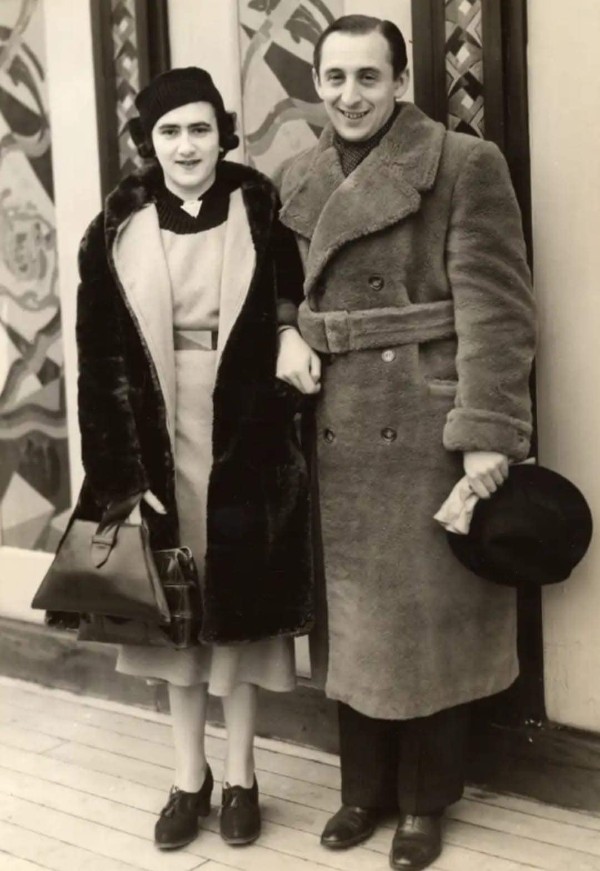
Wanda Toscanini and Vladimir Horowitz
Throughout his life, he struggled with recurring stints of depression that some have connected to the strain of concealing and denying his sexuality. He even underwent electroshock therapy.
Horowitz denied he was gay, and despite the rockiness of their marriage, he and Wanda never divorced.
But the testimony of friends, colleagues, and his own mental health struggles all point to a queer identity he never felt safe enough to embrace.
Sviatoslav Richter (1915–1997)
Richter playing Beethoven’s Piano Sonata No. 32
In 1943, Soviet pianist Sviatoslav Richter, known for his uncompromising musicianship, met Nina Dorliak, a queer soprano seven years his senior. The two became friends and colleagues, performing together frequently.
They merged households in 1946, leading the world to believe they’d been quietly married. Dorliak served as a buffer against the rest of the world and helped to arrange his career.
In 1998, the year after Richter died, filmmaker Bruno Monsaingeon released his documentary Richter: The Enigma. For the project, he interviewed Dorliak and even gained access to Richter’s diaries. The resulting film, along with subsequent biographical work, has shaped the now-widespread understanding of Richter’s attraction to men – and reveals how his “marriage” with Dorliak had been loving, platonic, and never legally binding.
Leonard Bernstein (1918–1990)
Bernstein playing Gershwin’s Rhapsody in Blue
As a young man, Bernstein had two striking romantic interests: conductor Dmitri Mitropoulos and composer Aaron Copland.
He knew enough about himself to think of himself as homosexual. But in 1951, he fell in love with and married actress Felicia Montealegre.
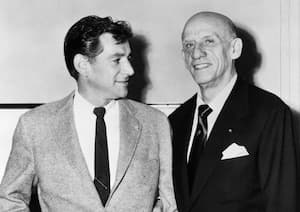
Leonard Bernstein and Dimitri Mitropoulos
She entered the relationship with her eyes open. She wrote to him in one letter:
“You are a homosexual and may never change – you don’t admit to the possibility of a double life, but if your peace of mind, your health, your whole nervous system depends on a certain sexual pattern what can you do?”
She continued, “I am willing to accept you as you are.”
Doing so was never easy, and although the couple had three children, their marriage was always strained. But they loved each other deeply, and Bernstein was devastated by her death from cancer in 1978.
John Browning (1933–2003)
Browning plays Prokofiev’s Piano Concerto No. 3
John Browning was born in 1933 in Denver, Colorado. He entered the Juilliard School in 1950 and won the prestigious Leventritt Competition in 1955, opening the way for an international career.
Like many men of his generation, John Browning kept his personal life largely under wraps; however, he was out to musicians and patrons.
In 1962, Samuel Barber – a gay man himself – wrote his piano concerto for John Browning. The work went on to win a Pulitzer Prize, and Browning later won a Grammy for his recording. (He nabbed a second Grammy for a disc of Barber’s works for solo piano.)
Relatively little is public about Browning’s private life. Still, in 2013, Robert Croan, a former classical music critic for the Pittsburgh Post-Gazette, confirmed on the record to the Washington Blade that Browning was gay and out in his social circles.
Van Cliburn (1934–2013)
Cliburn plays Rachmaninoff’s Piano Concerto No. 3
Van Cliburn became a piano superstar in 1958 after winning the inaugural Tchaikovsky Competition in Moscow at the height of the Cold War. Many female listeners viewed him as a heartthrob.
Throughout his tumultuous career, he kept his orientation private. In 1966, at 32, he met a man named Thomas Zaremba; in 1977, the two became partners and lived together for the next 17 years. After their breakup, Zaremba sued him for palimony in 1996, claiming, among other things, that Cliburn had exposed him to AIDS. (The court threw out the case.)
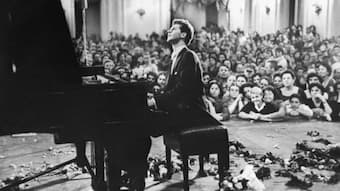
Van Cliburn, 1958
He later moved in with another love interest, Thomas L. Smith, who he was still living with when he died in 2013. Smith spoke at Cliburn’s funeral, saying, “Van’s death is a crater-sized void that is felt around the world, but for me, it is the loss of my soul mate, the deepest friendship…”
Cliburn never formally came out, but as it turned out, he didn’t need to for the world to understand.
Youri Egorov (1954–1988)
Egorov plays Schumann’s Carnaval
Electrifying pianist Youri Egorov defected from the Soviet Union in 1976, in large part because he wanted to live life as an openly gay man.
He settled in Amsterdam and began dating Dutch architect Jan Brouwer. Although Egorov had relationships with other men, Brouwer remained his partner until his death.
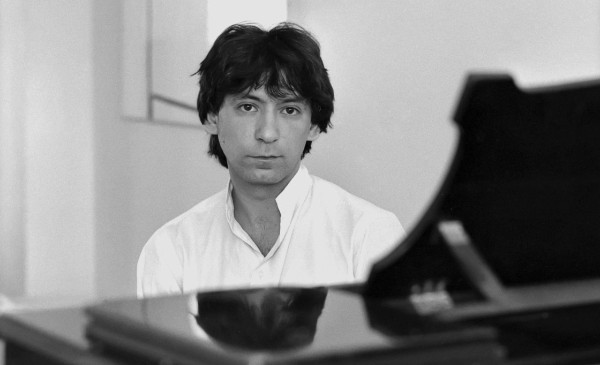
Youri Egorov
Egorov had always believed he’d die young, partly because he’d burned the candle at both ends while pursuing his musical career. In March 1986, the first reference to AIDS – “damned virus” – appeared in his diary.
Egorov died of AIDS-related complications in April 1988 at the age of 33. Brouwer died a few months later.
Sir Stephen Hough (1961–)
Hough playing Rachmaninoff’s Rhapsody on a Theme of Paganini
Today, English pianist Stephen Hough doesn’t need the discretion that shaped his predecessors’ lives and careers.
Hough was born and raised in North West England. He knew he was gay early in his life, writing that he understood his orientation “before I knew what it was.”
When he was 19, he converted to Catholicism and even pondered becoming a priest. He remained celibate for fifteen years after, through the worst of the AIDS crisis.
However, by the mid-1990s, he began re-evaluating his relationships with his faith and sexuality. He would later write extensively about his personal journey in his 2023 book Enough: Scenes from Childhood.
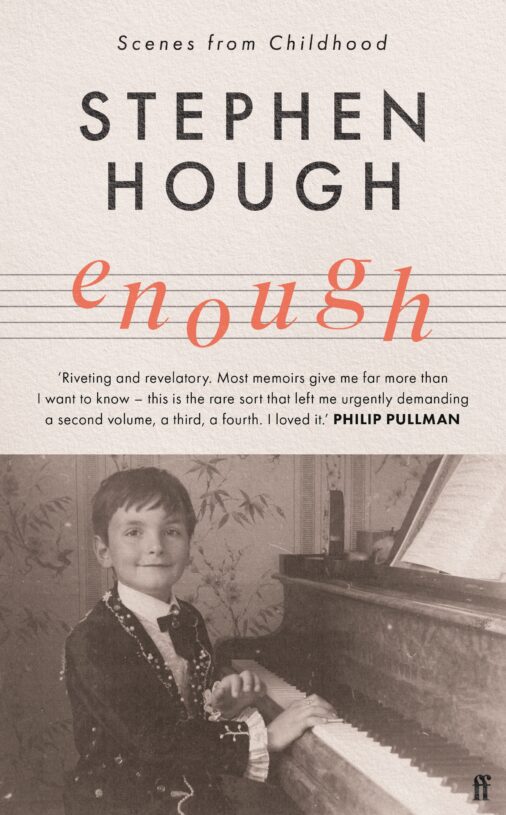
Enough: Scenes from Childhood by Stephen Hough
A little over twenty years ago, he met his partner Dennis. Early in their relationship, as a token of his love, Hough composed a six-piece classical piano suite based on the letters of Dennis’s name, Suite Osmanthus.
An interview with Stephen Hough
Being a gay musical prodigy during the Aids crisis in New York
Conclusion
The experience of being a gay globetrotting pianist has changed dramatically over the past century. Horowitz and Richter both kept their love lives under tight wraps. But around mid-century, pianists found a middle ground: they never publicly came out, but they were open with the friends and colleagues around them. Cut to the present day, and pianists now feel free to be open about who they love – and, in the case of Stephen Hough, to even write books discussing the subject.
Whether or not their full selves were ever – or could ever be – known by the public, all seven of these men are deeply beloved icons of their art.
For more of the best in classical music, sign up for our E-Newsletter