“For years, Dostoevsky’s quote has inspired me every day: beauty will save the world.” Camille Thomas, the vivacious Franco-Belgian star cellist, affirmed this belief in our interview. Admittedly, I often feel ashamed as a journalist for asking far too many questions. But Camille’s copious responses convince me that such ardent love for the arts needs neither apology nor reservation.
This October, she will grace six cities on her Asian tour. Accompanied by the pianist Julien Brocal, she brings sonic delights from their new album Rendez-vous, her Chopin Project, and more. Their first stop is Hong Kong’s Premiere Performances series, where Camille made her debut in 2023 to a thrilled audience and will be warmly welcomed on her return.
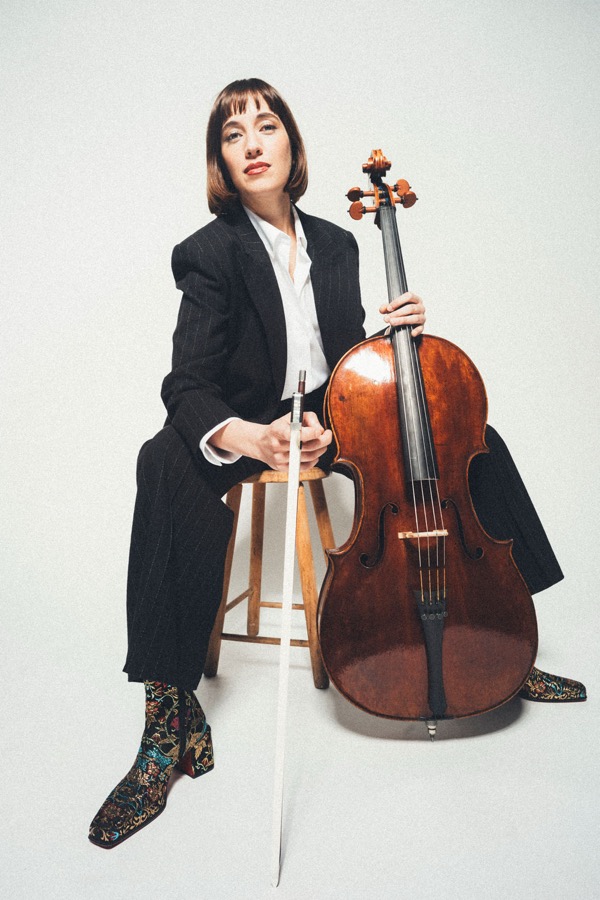
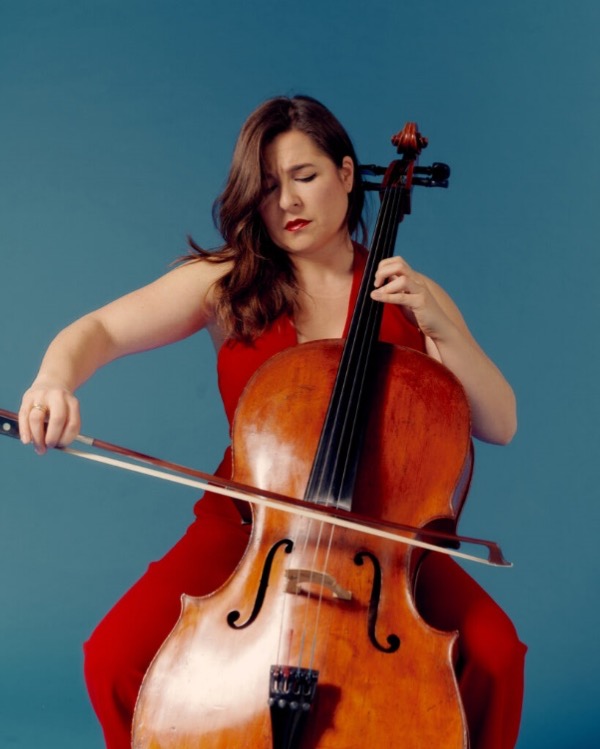
Camille Thomas (Photo by Julien Mignot)
Can you talk about the creative adaptations from Rendez-vous, which you will also perform in Hong Kong?
Rendez-vous was born from a simple desire Julien Brocal and I shared: to create something together that neither of us could have created alone. We wanted to build bridges between the music we love and something yet to be born, between the past and the present, and between written pieces and improvisation. For example, five Reflections grew out of existing works, but “reflecting” the original work in a mirror “reflection” and discovering another image behind it.
Reflection No. 2 is, for instance, conceived almost as a triptych, or a musical chimaera: a meeting between Saint-Saëns’s The Swan and Satie’s Gymnopédie No. 1. We kept the beautiful melodic line of the cello from The Swan, but placed it over the haunting, almost hypnotic rhythmic pattern of Satie’s chords. At the same time, we re-harmonised those chords through the sound world of Saint-Saëns. So the whole idea of Rendez-vous is about that recreated freedom: every piece becomes a meeting, a rendez-vous between two musicians, two periods, two worlds, and hopefully between the performers and the listeners.
Camille Thomas and Julien Brocal play Reflection No. 1
Your Hong Kong recital includes Fauré. Do you have a particular fondness for French composers?
French music is very close to my heart. Perhaps because I grew up with it, but also because I love its relationship to colour and suggestion. Fauré is a perfect example. So much emotion lies behind the notes, but it is never forced. Les Berceaux, Élégie, Après un rêve…they all have this extraordinary vocal quality.
For a cellist, this is irresistible. My ultimate goal on the cello is to sing. That is probably why I am so naturally drawn to songs, and why I so often try to bring them into the world of the cello. Of course, we no longer have the spoken words, but through colours, nuances and inflexions, I try to recreate the same emotional power as in the human voice.
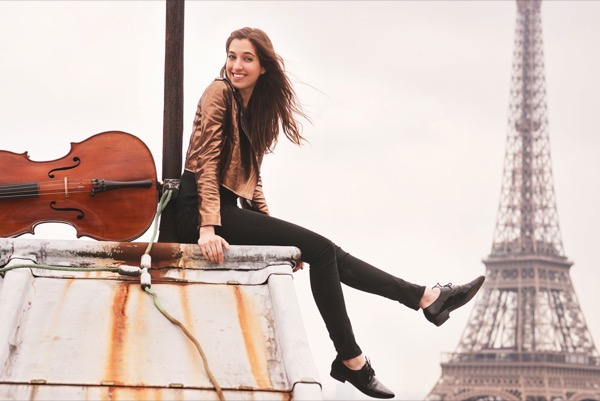
Camille Thomas on Parisian rooftop
Can you talk about Bach and Brahms in the first half of your Hong Kong recital?
We begin the recital with Bach. His music is a foundation for much of what followed. So we have been inspired to create a Reflection around the Bach-Gounod Ave Maria. The Bach connection to Brahms is very direct, especially in the final movement of his First Cello Sonata, which feels like a Bach fugue. What I love is that Brahms never imitates Bach. He takes this contrapuntal language and makes it his own, with all the warmth, density, passion and romanticism that belong unmistakably to Brahms.
Brahms’s First Cello Sonata draws me in first with its darkness and intimacy. The cello begins in the deep register, almost speaking from somewhere inside the earth. I also love the relationship between the cello and the piano. Like Beethoven, this is not music for a solo instrument with accompaniment. The two are represented democratically, as a real dialogue between equals. Sometimes one instrument leads, sometimes the other, sometimes they answer each other, and sometimes they are completely intertwined.
For me, that equality is one of the most beautiful things about playing this repertoire. Julien and I have played together for a long time. Trust allows us to take risks with time, colour, and phrasing. Brahms needs that freedom. The structure is incredibly strong, but inside it the music has to remain alive, as though the conversation were being invented in the moment.
You will bring Chopin to Shanghai and other cities. What was it like to read Franchomme’s manuscripts and play on his cello?
Chopin’s music has accompanied me since before I was even born. My mother is a pianist, and she played Chopin while she was pregnant, so in a way, this music has always been part of my life. I always dreamed of playing Chopin myself. But for a long time, it seemed almost impossible, partly due to this immense world of music written for the piano: the Études, the Nocturnes, the Preludes, the Mazurkas…
Then one day, while researching at the Bibliothèque Nationale de France, I discovered the transcriptions made by Auguste Franchomme, Chopin’s close friend and one of the great cellists of his time. Franchomme had arranged several works originally written for solo piano for cello ensemble, including the Funeral March and the famous “Raindrop” Prelude for four cellos.
For me, it was like suddenly discovering a whole new world. My heart lit up. I remember feeling incredibly happy, because I realised that if Chopin had embraced the idea of his dear friend transforming his piano music for cellos, then somehow I finally had permission to do it too. It gave me the freedom and the courage to explore Chopin’s music through my own instrument.
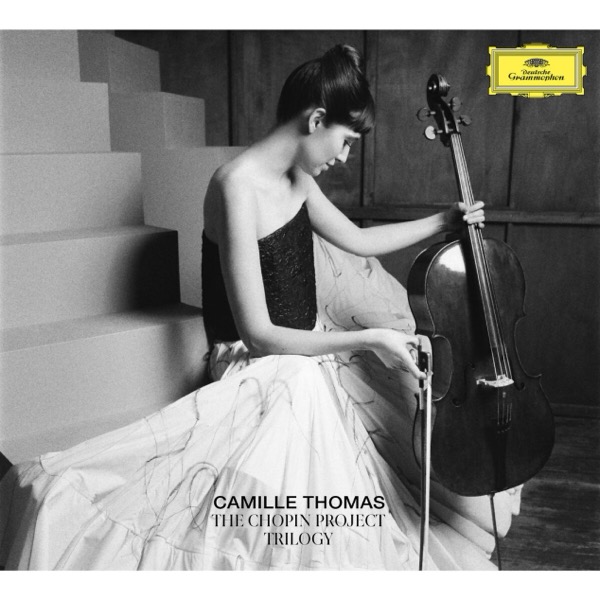
Playing on a cello that had actually belonged to Franchomme made that connection almost overwhelming. I felt not only the presence of all the great musicians who had made this instrument resonate before me, but also, in a kind of ripple effect, the presence of all the people it had moved, touched or transformed over nearly three centuries.
To hold an instrument made in 1730 in your hands feels almost beyond reality. There is something incredibly powerful about the emotion it carries, about transmission, about this uninterrupted chain between the people who played it and the people who listened to it. It also makes you believe that art can make something human immortal. The person disappears, the moment passes, but somehow the emotion keeps travelling through time.
Camille Thomas shares the story of her cello in Hong Kong in 2023
How have pianists responded to your Chopin Project from a cellist’s point of view?
I made this album with three pianists whom I admire deeply and who are also dear friends: Julien Brocal, Julien Libeer and Lucas Debargue. I remember especially the Larghetto from Chopin’s Second Piano Concerto, which Julien Brocal and I arranged together. Lucas Debargue was listening to us from the recording booth, giving us advice and reacting so warmly to what we were doing. Seeing how naturally these pianists welcomed the project reassured me. It gave me confidence that this approach to Chopin makes sense to those who know his piano writing from the inside.
For me, what distinguishes the very greatest pianists is an almost magical ability to overcome the instrument’s percussive nature and make it sing. They somehow create the illusion of a sustained, breathing line on an instrument that, technically, cannot truly sustain a note. Chopin himself constantly asked his pupils to sing, sing, sing.
With the cello, because of the bow, we can actually sustain the sound and shape the colour, intensity, and direction continuously. What interests me is never to imitate the piano. Rather, I ask what the cello can reveal that is already contained within. The cello could reveal Chopin’s dimension that is perhaps even closer to the human voice, while remaining faithful to its emotional truth.
Camille Thomas and Julien Brocal play Chopin’s Cello Sonata III. Largo
Can you share your experiences working on music by Philip Glass?
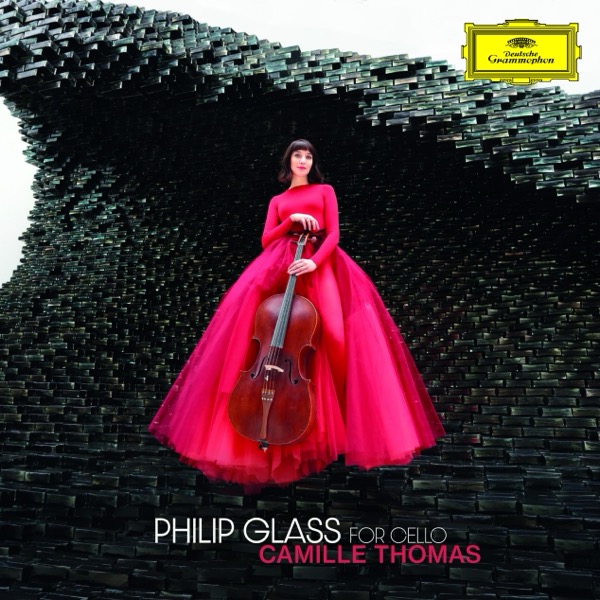
What fascinates me about Philip Glass is that repetition in his music is never really repetition. His music is like waves: they rise, fall, return, overlap, and continue to change imperceptibly: the harmony, the colour, the breathing, our perception of time. That image of waves became so important that I wanted the cover of my newest album to feature Jean-Michel Othoniel’s monumental La Vague. This physically embodies the whole spirit of the album: movement, repetition, transformation, something that keeps returning but is never the same.
The film scores reveal a completely different side of him. In The Truman Show, the tenderness is incredible. Truman Sleeps is intimate and fragile. In The Hours, particularly in The Poet Acts, the music grows in waves, layer after layer, and suddenly something simple becomes extraordinarily intense. Philip’s music never feels forced. It builds gradually until you realise that you have been completely carried away by it.
Then Naqoyqatsi is another universe entirely. It comes from Godfrey Reggio’s experimental film, which reflects on a contentious world transformed by technology. There is essentially no conventional narrative dialogue, so the images and the music become the principal actors. The score is epic, quite different from the Philip Glass people may think they know. There is metallic violence, but also ethereal moments of prayer, lamentation, and vulnerability.
Philip’s orchestral writing is masterful. For me, it is a symphonic concertante, with the cello running through the entire architecture as a profoundly human voice. This is one reason I feel such a particular connection with Philip. He studied in Paris with the legendary Nadia Boulanger, who taught him harmony and counterpoint and encouraged new compositional voices. Philip did exactly that—absorbing an extraordinary heritage, pioneering a language of minimalism, and seismically shaping music of the last sixty years, from contemporary classical music to film scores and what we now often call neoclassical music.
Camille Thomas records Philip Glass for Cello
Are you continuing to bring your music together with broader social issues?
Yes, absolutely. I have never thought of music as entertainment alone. A sentence by Dostoevsky has accompanied me for years and continues to inspire me every day: “Beauty will save the world.” I deeply believe in that. Beauty can create empathy, give hope, reconnect us with our humanity, and reach places that words simply cannot. This is why the humanitarian dimension of my work has always mattered so much.
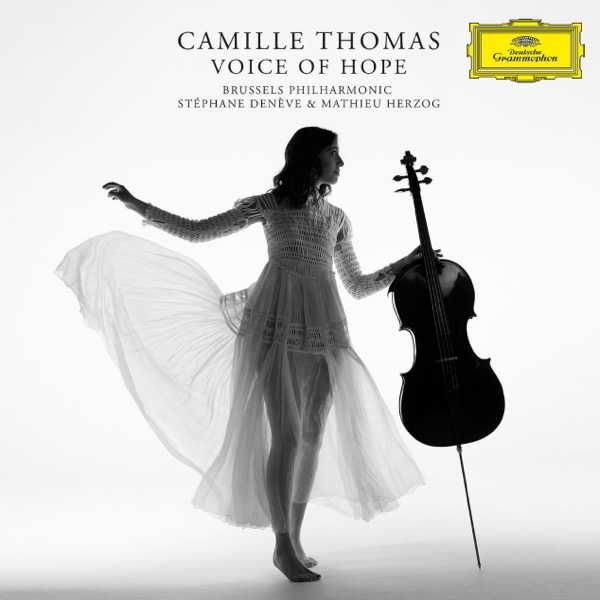
One of my albums became the first classical music album to partner with UNICEF. For me, hope begins with childhood and education. If we want to imagine a better future, we have to give children the possibility to learn, grow, dream and become free human beings. Projects such as Voice of Hope and Never Give Up came from the same conviction. Music can carry something much larger than beauty for beauty’s sake. It can become a space of consolation, resilience, solidarity, and hope.
Music is not political, but it is profoundly humanistic. I don’t believe its role is to tell people what to think. Its power is elsewhere: it reminds us of what we share as human beings. It allows us to feel another person’s pain, joy, fragility or hope, sometimes without a single word.
We live in a world that can feel incredibly violent, divided and fragile, and I do not want my artistic life to exist separately from that reality. For me, tenderness is not weakness, and hope is not naïve. Love can be a form of courage. Ultimately, one of the most beautiful things music can do is remind us that beyond our differences, we are all capable of being moved. Perhaps that is already a powerful way of changing the world.
Camille Thomas plays Fazil Say’s Cello Concerto “Never Give Up”
In a previous interview with Interlude.hk, you said you were inspired by literature and visual arts. Can you share more?
I am a cellist, of course, and the cello is at the centre of my life. But I have never really believed that there is such a thing as “classical music” on one side and other kinds of music on the other. I understood this even more profoundly when I recorded Aznavouriana, an album in which I reimagined French popular songs through a symphonic, concertante language. I loved taking melodies from our collective memory and giving them another touching twist.
Visual art, sculpture, architecture, cinema, literature, fashion (as a Parisian, of course!) and nature all influence the way I imagine music. For instance, Virginia Woolf’s Mrs Dalloway, at the heart of the world that inspired The Hours, fascinates me for the way she enters the most intimate movements of human consciousness. It’s similar to Balzac, as he explores the interior of the human being—all these contradictions, desires, and fears that are sometimes almost impossible to articulate. When I have to express an emotion through the cello, I find these readings extraordinarily inspiring.
During COVID, bringing different art forms together became especially meaningful. I played in empty museums when art was inaccessible to so many, and it felt like my way of saying, “Art is still here.” I especially remember playing in the Louvre, surrounded by ancient Greek and Roman sculptures. In the silence, I almost felt they were looking at me. Being surrounded by works that had survived centuries and civilisations reminded me that while human lives are fleeting, something of us can live on through what we create.
Camille Thomas plays Purcell’s “When I Am Laid in Earth” at Musée du Louvre
This relationship between music and the visual world was also at the heart of Rendez-vous, filmed at Tippet Rise in Montana, where sculpture, architecture, music and landscape exist in dialogue. Cinema fascinates me for the same reason—it brings together image, sound, silence, rhythm and emotion. And my musical world extends far beyond classical music. Radiohead, for example, speaks to me deeply, and with Julien Brocal we even connected Satie with “No Surprises” in Rendez-vous.
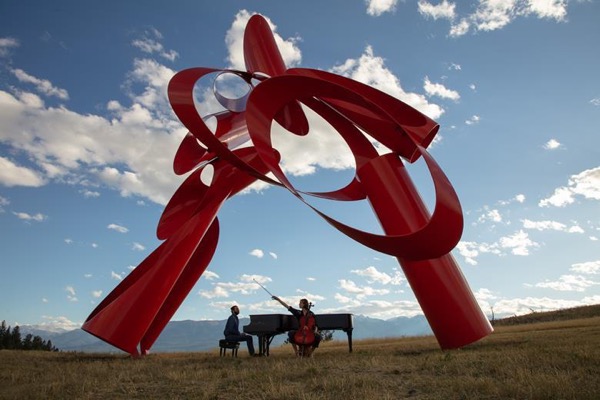
Camille Thomas and Julien Brocal
(Photo by Kevin Kinzley, courtesy of Tippet Rise Art Centre)
As for particular visual artists, Jean-Michel Othoniel is one I find important. I love how his work combines beauty, fragility, and spirituality. His La Vague became the cover image for my Philip Glass album, and I’m moved by how his work creates bridges between cultures, travelling naturally from Paris to Asia, much as music can. Ai Weiwei’s Iron Tree also struck me. From a distance, it looks almost alive; only when you approach do you realise it is made of iron. Without explanation, it evokes an ecological awareness that can be stronger than words. That is what art can do: an image can make you feel something physically before you have time to intellectualise it, reaching us instinctively before the mind begins to analyse.
So I would never want to define myself only through the label of “classical cellist”. I love the classical repertoire passionately, but being an artist, for me, means staying endlessly curious and letting all these worlds communicate with one another. Whether it is Bach, Balzac, Virginia Woolf, Philip Glass, Othoniel, Ai Weiwei, Radiohead, cinema or an ancient sculpture at the Louvre, I am always searching for something that helps us understand, feel and perhaps transcend our human experience.
Follow Camille’s calendar at https://www.camillethomas.com/concerts.php
Hong Kong concert: https://www.pphk.org/event/camille-thomas-rendez-vous/
For more of the best in classical music, sign up for our E-Newsletter