Vladimir Horowitz, born on 1 October 1903, is generally considered one of the greatest pianists of all time. Known for his virtuoso technique, infinite degrees of colour, and high-voltage charisma, Horowitz mesmerised audiences with interpretations that produced sonorities that may have been unparalleled.
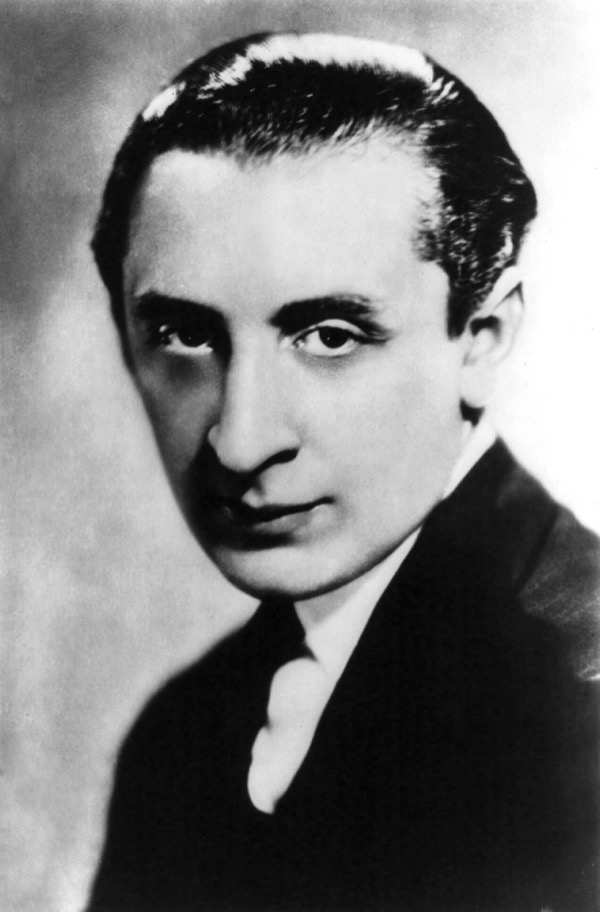
Vladimir Horowitz
He was described as a “tornado from the steppes,” and widely regarded as the greatest living interpreter of Liszt, Schumann, Scriabin, and Rachmaninoff. Toward the end of his life, he re-engaged with Mozart, adopting a unique, flexible approach that divided critics.
As we celebrate his birthday, let us look at Horowitz’s relationship with Domenico Scarlatti. This engagement spanned several decades, from his early performances and recordings to his late-life return to the repertoire.
Vladimir Horowitz plays Scarlatti: 4 Sonatas
First Encounters
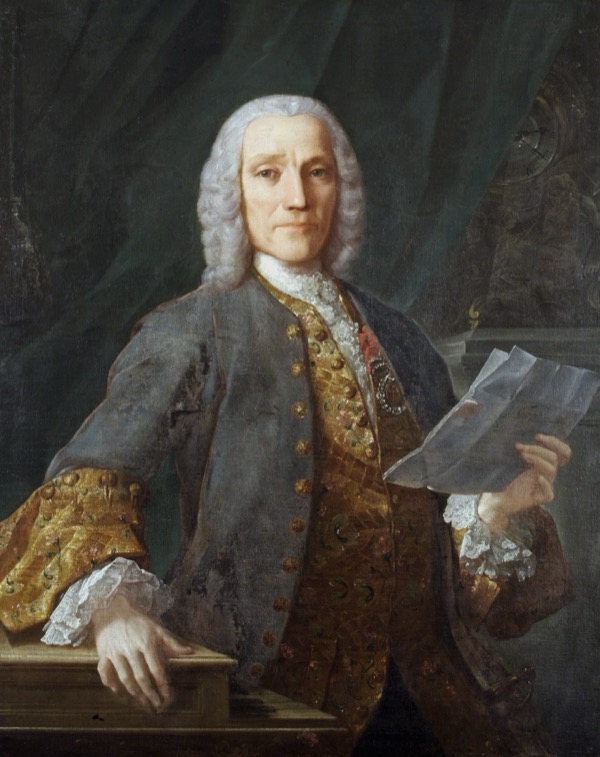
Domenico Scarlatti
Horowitz’s earliest documented encounter with Domenico Scarlatti’s music dates to 1928. At that time, he recorded the Carl Tausig arrangement of Scarlatti’s Capriccio in E Major, K. 20. He added the original Scarlatti sonatas to his repertoire in the 1930s.
Scarlatti sonatas are documented for a 1934 performance in Brussels, and the Scarlatti repertoire expanded further during the 1940s. The famed April 1947 Carnegie Hall recital included six Scarlatti sonatas.
Horowitz withdrew from public performance for several years, but he made Scarlatti an important part of his renewed career. His familiar Horowitz Plays Scarlatti release was part of a larger project dating from 1962 to 1964.
Domenico Scarlatti: Keyboard Sonata in D Major, K.33/L.424/P.130 (Vladimir Horowitz, piano)
Domenico Scarlatti: Keyboard Sonata in A Minor, K.54/L.241/P.147 (Vladimir Horowitz, piano)
Domenico Scarlatti: Keyboard Sonata in F Major, K.525/L.188/P.529 (Vladimir Horowitz, piano)
Scarlatti in Later Years
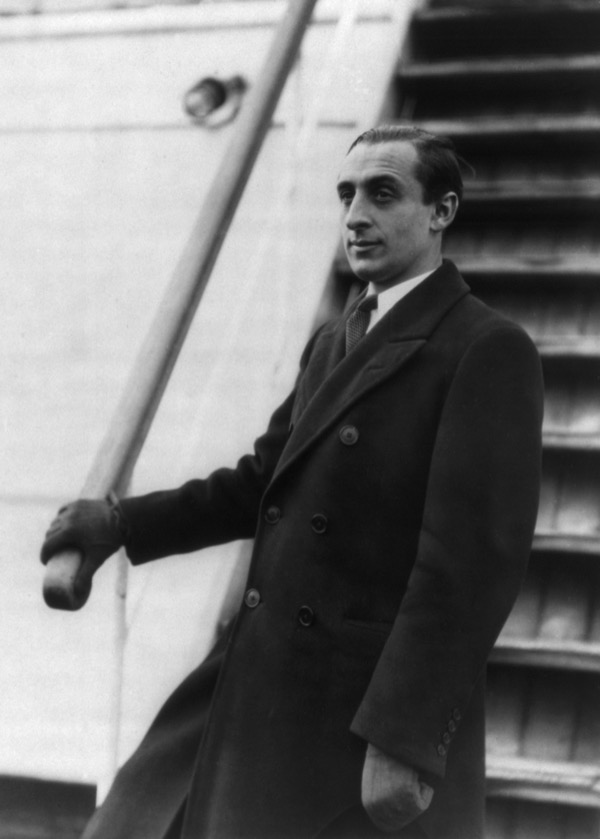
Vladimir Horowitz
The Columbia sessions produced a substantial body of Scarlatti recordings, and these pieces featured prominently in his live recitals. In the 1970s, Scarlatti remained a recurring encore, and after a renewed absence from the recital stage, Horowitz revived Scarlatti between 1981 and 1982; he also featured it in recitals through 1983, in 1985, and in several 1986 performances.
From this simple chronology, we learn that Scarlatti was not a late discovery, but repertoire Horowitz had had since the 1920s. In a quote attributed to Horowitz, he suggested that Scarlatti’s music was down to earth, and while many composers speak to God, Scarlatti speaks to the people. (Kurt Nemes’ Classical Music Almanack)
In connection with his upcoming six-sonata Scarlatti programme in 1982, a Washington Post interview asked about his interest in Scarlatti, and Horowitz said, “Sometimes I think this music is more modern than anything else I play. Every time I perform, I want people to hear something for the first time.” (The Washington Post, Horowitz Tuning Up for Washington, 1982)
Domenico Scarlatti: Keyboard Sonata in E-Flat Major, K.474/L.203/P.502 (Vladimir Horowitz, piano)
Domenico Scarlatti: Keyboard Sonata in E Minor, K.198/L.22/P.132 (Vladimir Horowitz, piano)
Domenico Scarlatti: Keyboard Sonata in D Major, K.491/L.164/P.484 (Vladimir Horowitz, piano)
A Modern Ear for Scarlatti
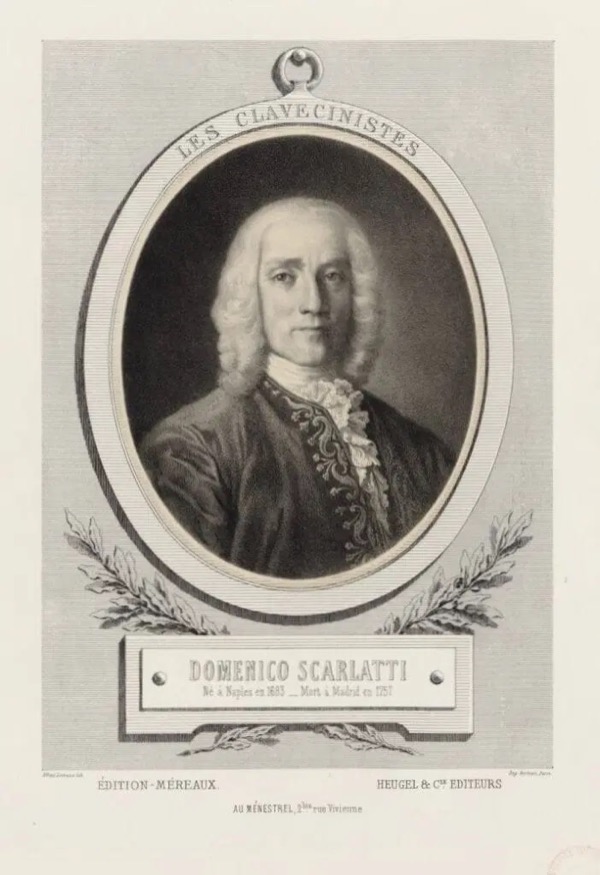
Domenico Scarlatti by Alfred Lemoine
From this quotation, we learn that for Horowitz, Scarlatti was no antiquarian Baroque composer. Horowitz’s biographer, Harold C. Schonberg, claimed that the pianist played through essentially all of the roughly 550 sonatas, and that the music could sound surprisingly modern.
This modern sound can partly be attributed to playing harpsichord music on the piano. That, in itself, is rather non-historical by nature, and a kind of implicit transcription. Horowitz never intended to imitate the harpsichord but showed the public how the music sounds on the piano.
In his very few published interviews, Horowitz strongly emphasised the need for knowledge to formulate an expressive artistic approach. André Leme Pédico, in his study on performance and authenticity in Scarlatti and Horowitz, references Barbara Nissman, a contributing pianist to David Dubal’s Remembering Horowitz: 125 Pianists Recall a Legend.
Domenico Scarlatti: Keyboard Sonata in B Minor, K.197/L.147/P.124 (Vladimir Horowitz, piano)
Domenico Scarlatti: Keyboard Sonata in F-Sharp Minor, K.25/L.481/P.81 (Vladimir Horowitz, piano)
Domenico Scarlatti: Keyboard Sonata in D Minor, K.52/L.267/P.41 (Vladimir Horowitz, piano)
Never the Same Twice
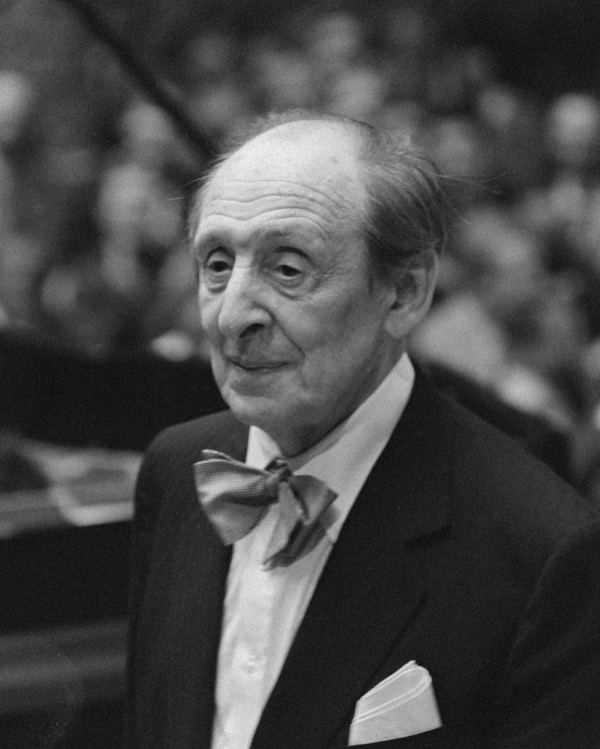
Vladimir Horowitz (1986)
Supposedly, Horowitz studied all the Scarlatti sonatas by returning to surviving sources, researching the period, and even consulting the expert Ralph Kirkpatrick. (André Leme Pédico, Scarlatti and Horowitz: Performance and Authenticity)
Be that as it may, for many pianists, including Charles Rosen, recalling the legend that was Horowitz, his vision of Scarlatti was never surpassed, and never had this composer been more fortunate in an interpreter.
Horowitz approached Scarlatti with a deep understanding of his works, using the resources of the modern instrument to reveal a multitude of colours and expressions.
Horowitz strongly believed that a work should never be played the same way twice. His Scarlatti perhaps demonstrates that philosophy especially well. With every return to this repertoire, Horowitz found something new, and after nearly sixty years, he was still listening.
For more of the best in classical music, sign up for our E-Newsletter