Cécile Chaminade was one of the most famous composers of the nineteenth century – and one of the most unjustly forgotten of the twentieth.
The French pianist and composer published over 400 works in her lifetime, sold out Carnegie Hall, inspired hundreds of women’s musical societies across the United States, and in 1913 became the first female composer awarded the Légion d’Honneur.
When composer Ambroise Thomas heard her perform her own music in 1878, he declared, “This is not a woman who composes, but a composer who is a woman.”
The critical establishment spent the next century trying to prove him wrong, while other musicians have battled entrenched sexism to restore her legacy.
Chaminade’s Childhood and Early Music Studies
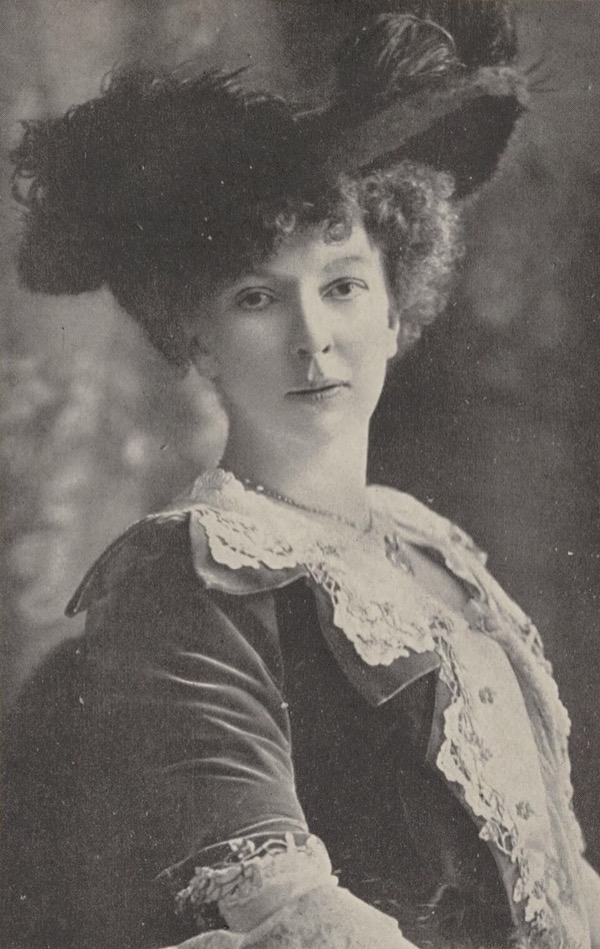
Cécile Chaminade
Cécile Chaminade was born in 1857 in the town of Batignolles, which would be annexed to Paris three years after her birth.
She was the third of six children born to a well-off insurance company manager and his wife. Her father was an amateur violinist; her mother was an amateur pianist and Cécile’s first teacher.
Years later, Chaminade told The Etude magazine that the piano became her closest childhood confidant before she could read or write.
She began composing at the age of seven for her pets and dolls. By eleven, her mazurkas appeared in a Parisian magazine.
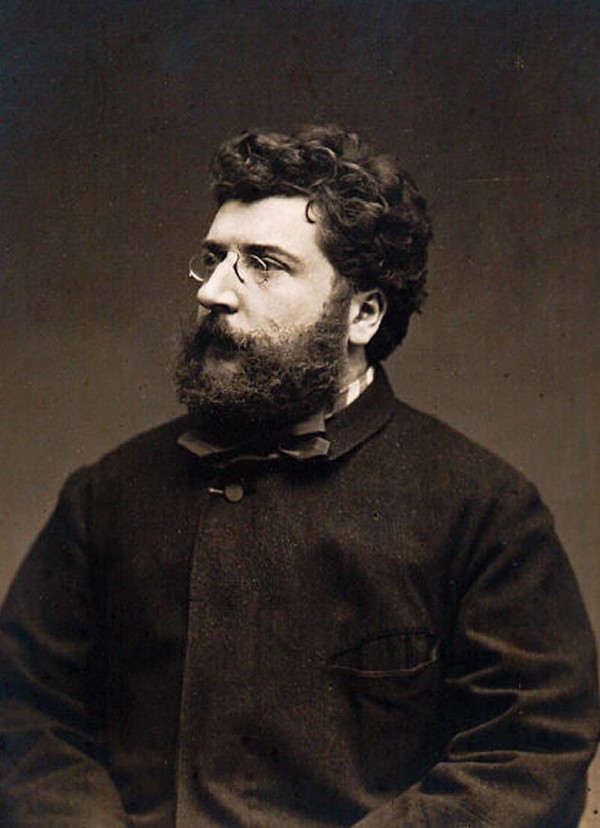
Georges Bizet, 1875 (Photo by Étienne Carjat)
In August 1869, their neighbour Georges Bizet visited, heard Cécile play, and was immediately struck by her talent.
She began studying privately under Félix Le Couppey, a professor at the Paris Conservatoire. Le Couppey urged the Chaminades to let Cécile study at the Conservatoire, but her father vetoed the idea, believing a respectable middle-class girl wouldn’t enrol at the institution.
Instead, she studied piano, violin, and composition with Conservatoire professors – just privately, and on her own, instead of in classrooms full of male students.
Chaminade’s Early Career
She gave her first public recital in 1875, accompanying her violin teacher, Martin Marsick, in a performance of a Mozart violin sonata, to rave reviews.
Two years later, in 1877, she appeared at the Salle Pleyel, formally launching her career as a concert pianist.
In the spring of 1878, she gave a concert of fifteen of her own compositions. Soon, Chaminade became better known for her compositions than for her piano performances.
At that concert, composer Ambroise Thomas famously marvelled, “This is not a woman who composes, but a composer who is a woman.”
Chaminade’s Berceuse, Op. 6 (1878)
How Chaminade Became Famous for Her Salon Music
Early in her career, Chaminade set her sights on large-scale composition – a fact often obscured by her later reputation for salon pieces.
In 1881, the National Society of Music premiered her Suite for Orchestra, to mixed reviews.
She also wrote the opéra-comique La Sévillane in 1882. In the nineteenth century, getting operas performed by professional opera houses in Paris was prohibitively difficult, especially for a 25-year-old woman who had never formally attended the Conservatoire. Instead, it was performed in her parents’ house. It received positive reviews – but no offer from a major company followed.
Then, in 1888, her ballet Callirhoë (featuring her famous “Scarf Dance”) and choral symphony Les Amazones were premiered.
Chaminade’s Callirhoë Suite
Tragedy struck in 1887 when her father died, leaving the Chaminades economically vulnerable. Barriers to getting her larger-scale works performed remained high.
By the end of the 1880s, she found it more rewarding and lucrative to focus on writing smaller-scale piano pieces and chamber music that she could bring with her – and sell – on recital tours.
Chaminade’s British Tour
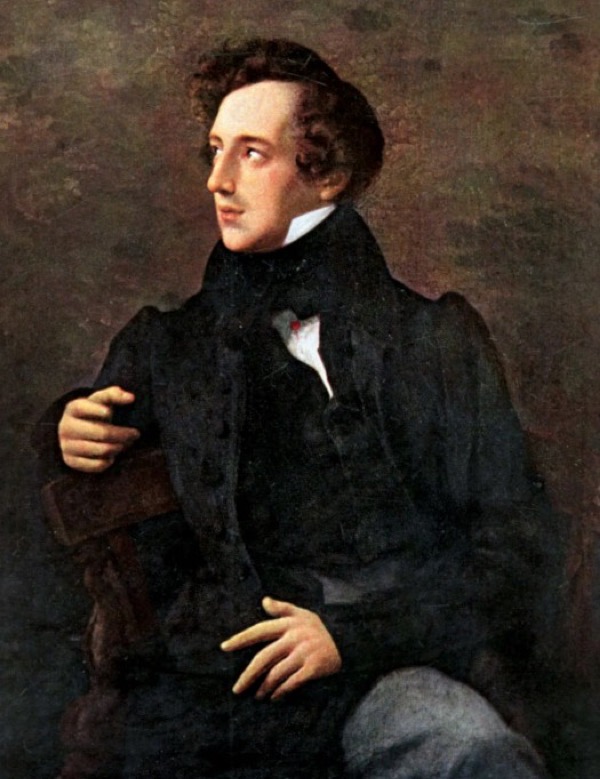
Felix Mendelssohn
In 1892, Chaminade toured Britain for the first time. She was a sensation.
Queen Victoria was one of her most prominent admirers. The queen was famous for her love of music; back in the 1840s, she’d entertained Felix Mendelssohn.
Despite the language barrier, Chaminade charmed the royal family. She even dedicated her song “Reste” to Victoria’s daughter Beatrice.
In 1897, Chaminade received a prestigious Jubilee Medal at the Queen’s Diamond Jubilee.
When Victoria died in 1901, Chaminade’s Prélude, Op. 78 was programmed during the funeral ceremonies.
Victoria’s patronage helped to spread Chaminade’s fame internationally. Her music proved to be especially popular in the rapidly growing middle-class music market.
Chaminade’s Prélude, Op. 78
Chaminade’s Marriage
In 1901, when she was 44, she married Louis-Mathieu Carbonel, a music publisher twenty years her senior and a friend of her mother’s. He had served as a chaperone on her tours after her mother could no longer travel.
Strikingly, she wrote a clause in their marriage contract requiring that the marriage remain unconsummated, and they lived in different cities for much of their relationship. She also never took his name.
We don’t know for sure why she agreed to the marriage; financial and social pressures were likely factors.
In 1903, Carbonel fell ill, and she spent the next few years caring for him. He died in 1907, and she never remarried.
In 1908, Chaminade said in an interview that musically talented women should be cautious when deciding whether to marry:
“If she can throw her love aside as of no importance, all well and good; if she cannot, then she should only marry someone who will appreciate her God-given gift and protect it.”
Chaminade’s Landmark American Tour
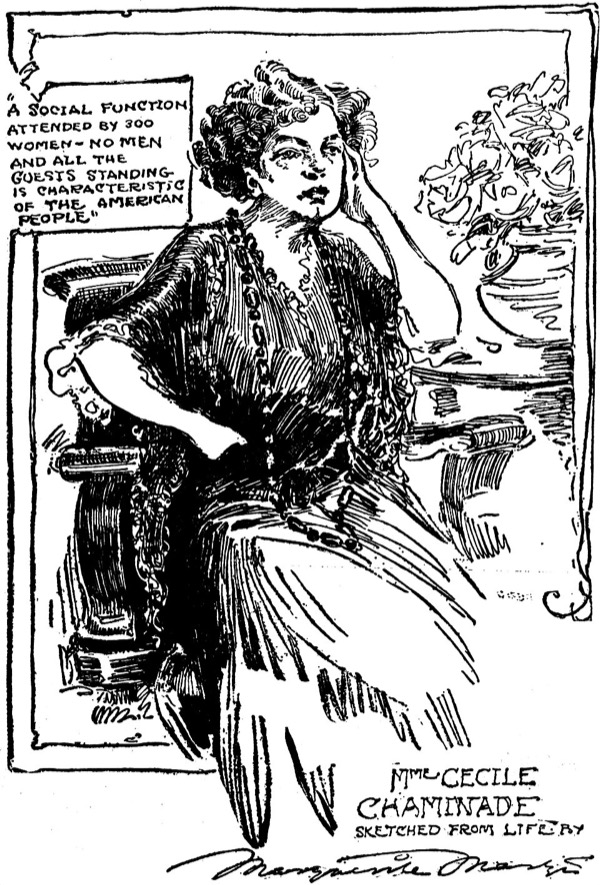
Cécile Chaminade
In 1908, Chaminade came to America for the first time, where she was an enormous success.
She embarked on a massive media tour, speaking to multiple outlets specifically geared toward women. She sold out Carnegie Hall, and 80 per cent of the audience that night was female.
Much of her popularity came from Chaminade Clubs, made up largely of women who gathered to celebrate her music, champion her work, and fund scholarships.
Chaminade’s Concertino for Flute
In 1908, she told The Sun:
“There are Chaminade Clubs formed all over the United States, and I am in correspondence with them and write at least once a year to each of them. Many of the members I shall meet in my tour.”
At her concerts, these super-fans would buy not just her sheet music, but piano rolls that Chaminade had recorded for use in player pianos.
The audience’s embrace of Chaminade’s sheet music, piano rolls, and fan clubs foreshadowed the machinery of modern pop stardom.
Chaminade’s Late Career
In 1913, Chaminade was awarded the Chevalier of the Legion of Honour, the first woman composer to receive the honour.
When World War I broke out, she volunteered to care for injured French soldiers. The war weighed on her, and she composed less and less.
Chaminade, Études de concert, Op.35 No. 2, “Automne”
After the war, as Europe moved into the 1920s, aesthetics shifted in favour of younger modernists like Stravinsky and Ravel. Chaminade’s thoroughly Romantic parlour pieces were increasingly dismissed as old-fashioned.
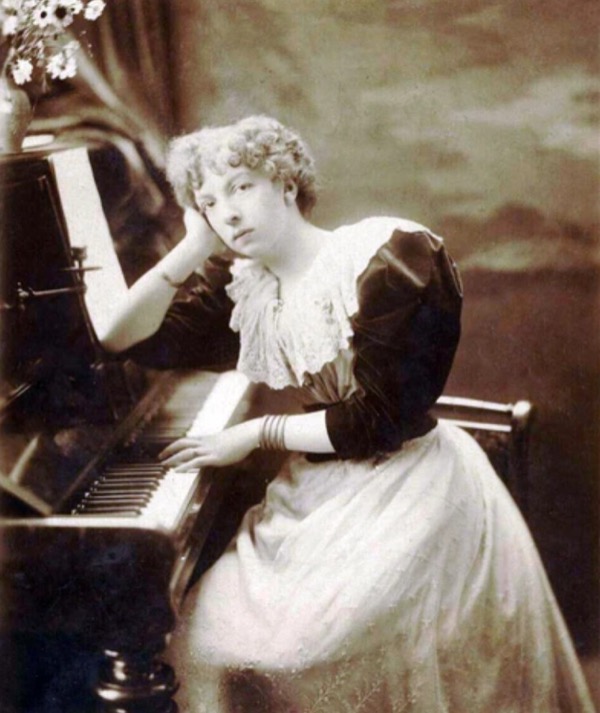
Cécile Chaminade
She published her final work in 1928, at age 71. She moved to Monte Carlo and became increasingly reclusive as she aged, unable to tour as she once had.
During the French occupation of the 1940s, the Nazis seized and liquidated her Jewish publisher, the firm of Enoch & Cie, and her income dropped precipitously.
She died on 13 April 1944, while battling a bone disease and the privations of the Second World War.
At her request, her diaries were destroyed shortly before her death. So much that scholars and future advocates might have learned about her life and inner world was lost.
Chaminade’s Legacy
In the mid-century, critics often dismissed Chaminade’s music.
Still, the fact remains: she was an enormously famous composer in her own lifetime, and her impact on the history of classical music shouldn’t be underestimated.
Today, as interest in women composers grows, more and more musicians and musicologists are reappraising her music and legacy.
Through her accessible piano pieces, successful tours, and ubiquitous presence in early 20th-century mass media, she inspired generations of women.
Her success proved, to millions of women who might otherwise have doubted it, that a life as a composer was possible.
For more of the best in classical music, sign up for our E-Newsletter