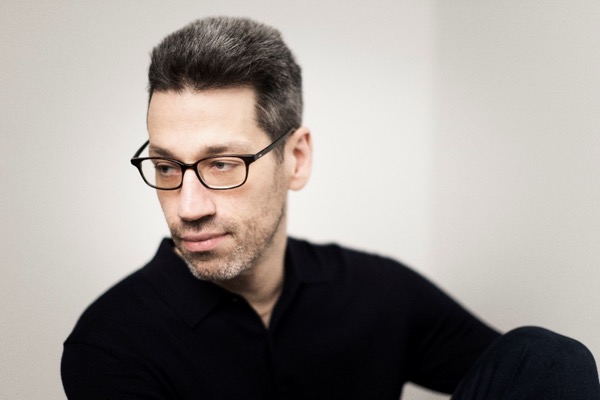
“Are you breaking a world record?” “I think so.” Since 1998, Andreas Schulz has served as the Director of the Leipzig Gewandhaus Orchestra, the world’s oldest civic concert orchestra. Schulz’s devotion to music has been a lifelong endeavour: directing choirs, building up festivals, teaching at conservatories, and reaching out to the public. He will lead the Gewandhaus Orchestra at least until 2028, overseeing artistic management, tour planning, marketing, and sponsorship activities.
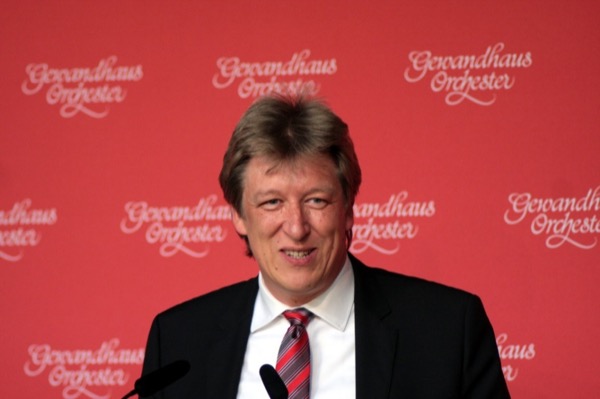
Andreas Schulz (Photo from Leipziger Zeitung / Alexander Böhm)
The Gewandhaus Orchestra has special plans for the 2027 Beethoven Year and will perform Bach’s St. Matthew Passion at the Hong Kong Arts Festival in March 2027. During their 2026 Asian stop in Shanghai, Andreas Schulz shared with me the rich history and vision of this proud Leipzig team. His eloquent and humbling answers strengthened my belief that the spirits of Bach, Mendelssohn, Schumann, Bruckner, Arthur Nikisch, Kurt Masur, Herbert Blomstedt, and other inspiring giants have never quite left their concert hall.
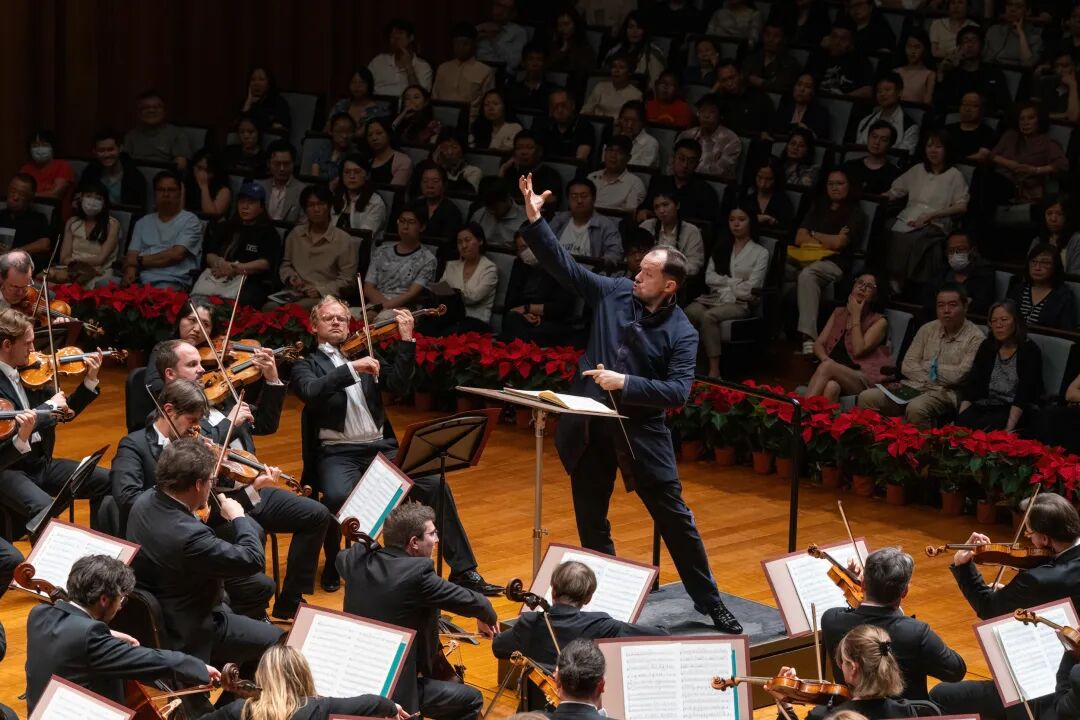
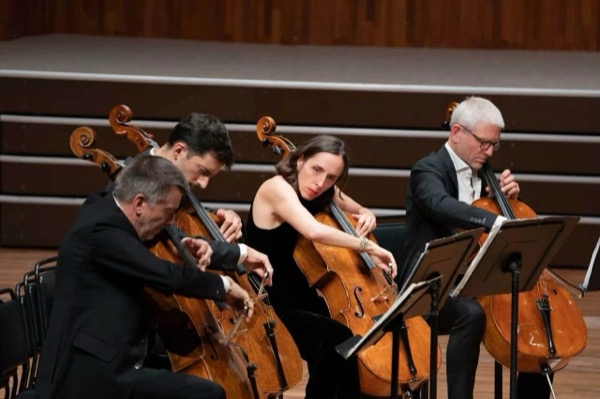
Gewandhaus Orchestra in Beijing (Photo from Music Weekly / Xiaobei Niu)
How would you describe the Klang (sound) of the Gewandhaus Orchestra?
Our signature sound is, in many ways, driven by the strings—especially the lower registers, such as the cellos and double basses. The sound is incredibly rich and earthy, with clear and transparent layers. You can hear this in every program we perform.
What is your interpretation of the motto: Res severa verum gaudium?
The orchestra’s Latin motto comes from the Roman philosopher Seneca and was inscribed on the stage when the theatre first opened in 1781. It has been there ever since. You can translate the German ”Wahre Freude ist eine ernste Sache” as something along the lines of “True pleasure comes from serious work” or “True joy is a serious matter”. It expresses a solemn and important mission: we share good music and bring joy to people.
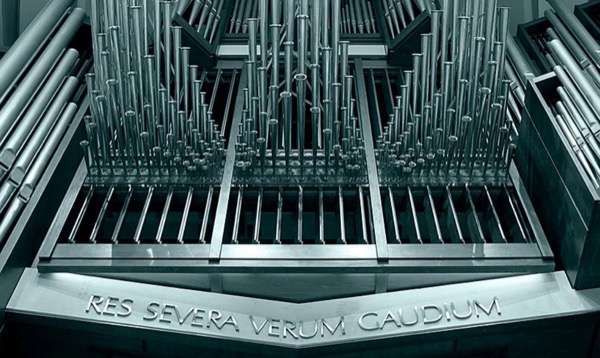
The Gewandhaus Organ and Motto
During your tenure, the Gewandhaus Orchestra has been led by renowned conductors, including Herbert Blomstedt (1998–2005), Riccardo Chailly (2005–2016), and Andris Nelsons (2018–present). What tradition are you collectively carrying forward?
We are honoured to help carry forward the orchestra’s long musical tradition. In the 17th and 18th centuries, there were really only two places in Europe that could be considered true centres of music: Vienna and Leipzig. The Gewandhaus Orchestra had patrons and supporters from the very beginning, with one purpose above all: to provide music for the local community.
At the same time, Mendelssohn founded Europe’s first conservatory in Leipzig. When the school was first established and opened to students from across Europe, it had just four teachers: Mendelssohn himself; Moritz Hauptmann, the music director of St. Thomas Church; and Clara and Robert Schumann. Almost all of the major music publishers and journals were also founded in Leipzig.
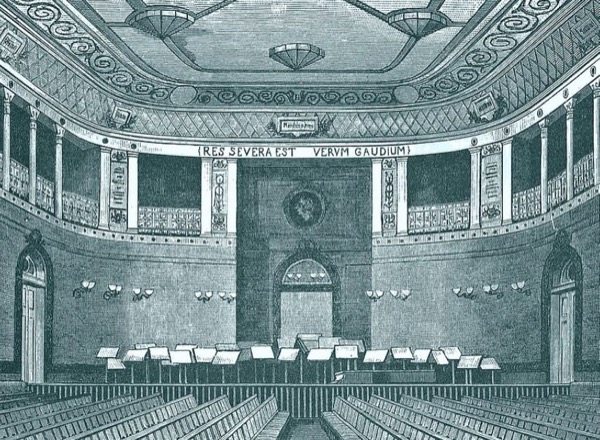
Gewandhaus Concert Hall (1781-1885)
Many of the important works that later came to be regarded as “classical music” were premiered in Leipzig. There was almost a new premiere every week. Of course, you couldn’t do that today, or audiences would suffer from “premiere fatigue” (laughs). For example, the first complete performance of all nine of Beethoven’s symphonies did not take place in Vienna, but in Leipzig. That was during the 1825–26 season, while Beethoven was still alive. Leipzig was also the city where Beethoven’s Piano Concerto No. 5 was premiered.
Ludwig van Beethoven: Piano Concerto No. 5 in E-Flat Major, Op. 73, “Emperor”: I. Allegro (Nelson Freire, piano; Leipzig Gewandhaus Orchestra; Riccardo Chailly, cond.)
There are countless other “world firsts”. The Gewandhaus Orchestra was also the first orchestra in the world to perform all of Bruckner’s symphonies in their entirety. Before the premiere of his Seventh Symphony, Bruckner himself even performed an organ work based on themes at the Gewandhaus Orchestra.
Anton Bruckner: Symphony No. 7 in E Major, WAB 107: I. Allegro moderato (Leipzig Gewandhaus Orchestra; Franz Konwitschny, cond.)
The conductor Arthur Nikisch (1855–1922) was particularly bold and innovative. At the time, he created a series that placed Bruckner’s and Brahms’s symphonies side by side. In those days, the supporters of Bruckner and Brahms were almost completely divided into opposing camps. To program their music together was therefore an extraordinarily daring move.
Johannes Brahms: Symphony No. 4 in E Minor, Op. 98: I. Allegro non troppo (Leipzig Gewandhaus Orchestra; Herbert Blomstedt, cond.)
Could you share some insights into the East German period?
During the era of the German Democratic Republic (GDR), conductor Kurt Masur spearheaded the construction of the third Gewandhaus Orchestra concert hall. The second hall had been destroyed in the bombing raids at the end of World War II, leaving the orchestra to perform in temporary venues for nearly four decades. Masur was instrumental in getting the project off the ground, even speaking directly by phone with the country’s leaders. His efforts ultimately led to the construction of what was, at the time, the only newly built major concert hall in East Germany.
Watch Kurt Masur conducts Beethoven’s Ode to Joy in 1991 here.
But Masur didn’t stop there. He continued to champion the orchestra’s artistic development, encouraging contemporary composers to write new works. The orchestra went on to give many world premieres of contemporary music. For us, then, tradition does not mean conservatism. A spirit of innovation—“Go Ahead”—has always been part of the orchestra’s DNA.
How did things change after German reunification?
After the fall of the Berlin Wall, the orchestra underwent major changes. During Herbert Blomstedt’s tenure as conductor, from 1998 to 2005, more than 43 musicians retired. This brought about a significant shift in the orchestra’s age profile, and we brought in many younger musicians.
Herbert Blomstedt conducts Bruckner’s Symphony No. 7 at Lucerne Festival
Yet despite all these changes, the Gewandhaus Orchestra has preserved a tradition that is virtually unique in the world: it serves the functions of three institutions at once. It is the orchestra of the concert hall, the opera, and the St. Thomas Church, where it performs Bach’s cantatas every weekend.
Today, there are very few orchestras in the world that still maintain such an operation. We currently have 185 musicians, which may sound like a large number. But if Leipzig were to maintain separate orchestras for the concert hall, the opera house, and the church, it would actually need even more musicians.
This is not some model dreamed up by a modern management consultancy like McKinsey or Boston Consulting Group. As early as 1840, the City of Leipzig had formally stipulated that the orchestra was to perform at all three venues. Even today, coordinating the orchestra’s schedule across these three institutions remains an extraordinarily complex task.
Can you tell us about the research you commissioned on the economic benefits that the Gewandhaus Orchestra brings to Leipzig?
Umwegrentabilität (indirect economic return) is a very complex topic. In Germany in particular, local governments and institutions are under considerable financial pressure, so funding is really at the heart of the issue. Most cultural institutions are funded by city or state governments, but public budgets are extremely tight. As a result, there is a constant debate about what can and should be funded—and what cannot.
It hasn’t been easy. Leipzig is not a major city like Munich or Hamburg, but with a great deal of effort, we’ve secured funding for projects that would not have been possible otherwise. Since I became the Director, we’ve built a strong fundraising department. We’ve established initiatives such as the Sponsors Club and the Friends of the Gewandhaus Orchestra to support individual projects and instrument purchases. Whether we’re inviting top artists to collaborate with us or taking the orchestra on international tours, sponsorship and fundraising are essential.
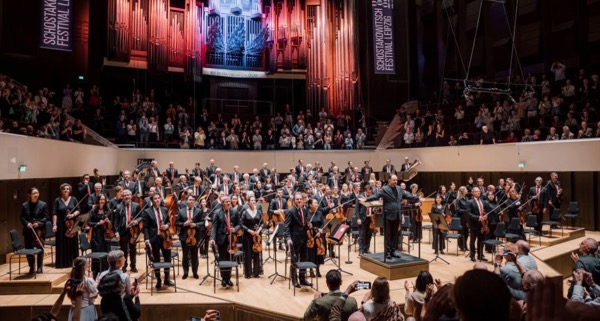
Gewandhaus Concert Hall Interior (Photo from Konrad Stöhr)
In our day-to-day operations, we are constantly in discussions with the city about our plans. In 2014/2015, we conducted a study that found that every euro the city invested in the Gewandhaus Orchestra generated approximately €2.50 in economic value. That was quite remarkable at the time. Major festivals such as the Salzburg Festival can generate €6~8 in economic impact for every euro invested. But an orchestra’s regular concert season is very different from a festival. We operate year-round, which makes things much more complex, and fluctuations in revenue are perfectly normal. Overall, the return is roughly €2.50 for every euro invested.
So you could say the orchestra is not only a cultural institution but also an organisation that relies heavily on financial management. I’m very grateful that I can still immerse myself in music in the evenings. Still, during the day, much of my time is spent on management, organisational, and financial matters.
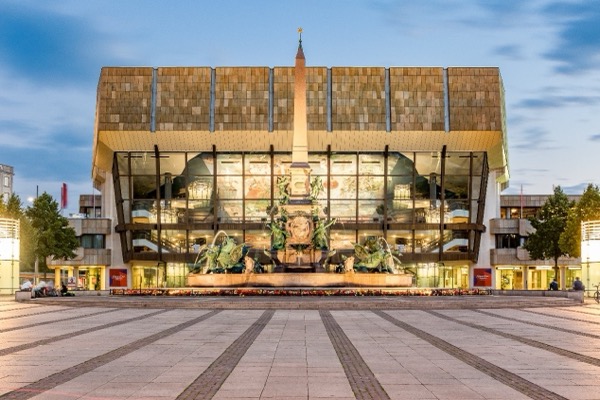
Gewandhaus Concert Hall Exterior
Could you tell us about the Gewandhaus Radio, launched in May 2025?
We had internal discussions about whether to create a brand like Bayerischer Rundfunk, or build a platform similar to the Berlin Philharmonic’s Digital Concert Hall. But we wanted to do something distinctive rather than replicate an existing model. During the Mahler Festival in 2023, we livestreamed all the concerts on our website and attracted more than 50,000 listeners worldwide—all without any advertising.
Watch Riccardo Chailly conducts Mahler’s Symphony No. 8 in 2011 here.
That experience inspired us to create the Gewandhaus Radio. It hasn’t been an easy project to get off the ground, partly because of German regulations and partly because of the orchestra’s close ties to the public sector. Two years ago, we established a dedicated foundation under contract to operate the project. After a long period of preparation, we finally brought it to life. We see the station as a digital channel to showcase our concerts and promote our activities.
Gewandhaus Radio Logo
The Gewandhaus Radio is not an official public broadcaster. Nor does it exclusively air performances by the Gewandhaus Orchestra. It is a dedicated classical music channel. There’s no jazz, crossover, or “greatest hits”. The hosts introduce upcoming broadcasts and provide detailed information about things like our tours. Programs are repeated two or three times a week.
At the same time, we’re thinking about what the future of listening will look like: audio, video, or a combination of both. Today, people are increasingly listening to music and podcasts on their phones with headphones rather than sitting down to watch an entire concert. So we decided to focus on audio. On the website, listeners can access content from our recent Shostakovich Festival in 2025 whenever they like, allowing music lovers around the world to experience the festival remotely.
Andris Nelsons conducts Shostakovich’s Symphony No. 7
What are your plans for the next Asian tour and for 2027?
Since our first visit to China in 2009, we have been greatly impressed by the audiences here. We haven’t finalised the details for our next tour yet, but we do know the next general Asian tour is planned for February or March 2028. In March 2027, the Gewandhaus Orchestra will join the Thomaner Choir Leipzig to perform in Hong Kong. St. Matthew Passion was premiered in 1727, reaching its 300th anniversary in 2027.
Documentary on the Thomaskantor Andreas Reize
2027 will be a Beethoven anniversary year, and we’re planning a Beethoven Festival from mid-May through the end of the month, with a grand finale in Rosental Park during the summer. For the finale of Beethoven’s Ninth Symphony, we’re hoping to invite members of the audience to join the chorus. We expect between 35,000 and 40,000 people to attend, and the total number in the park could reach 80,000. Since having the entire audience sing together would be far too complicated, we’ll present the symphony in a specially adapted version.
Camille Saint-Saëns: Carnival of the Animals: XI. Pianists (Lang Lang, piano; Gina Alice, piano; Leipzig Gewandhaus Orchestra; Andris Nelsons, cond.)
Lang Lang will also take part in the festival and record Beethoven’s piano concertos for Deutsche Grammophon. On behalf of the orchestra, I’d like to invite music lovers everywhere to tune in to the Gewandhaus Radio, pick up the recordings, or, better yet, come to Leipzig and experience it all in person!
For more of the best in classical music, sign up for our E-Newsletter
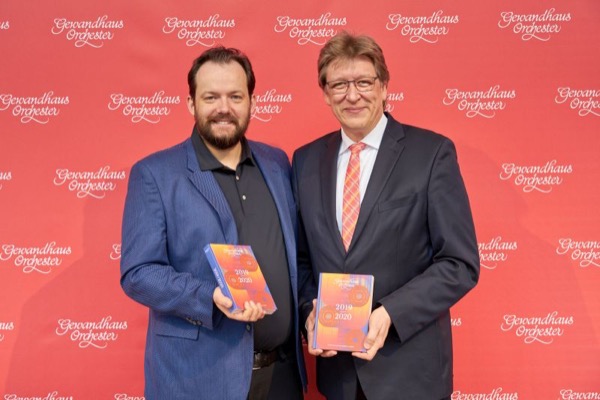
Andris Nelsons and Andreas Schulz (Photo from Gewandhaus Orchestra / Jens Gerber)