
Poldowski is one of the more elusive figures in late Romantic music.
Over the course of her life and career, she was known by many names, including Régine Wieniawski, Irène Wieniawska, and Lady Dean Paul. However, she has entered music history under the genderless self-chosen moniker “Poldowski.”
Although more research remains to be done on her life, what we do know is striking.
Her mother’s family disapproved of her parents’ marriage. She never got to know her famous father. She became a professional composer as a teenager. She married a baronet and had three children: one who died tragically young, and two who led scandalous lives.
Her music is romantic and showy and a little bit emotionally elusive – a bit like the composer herself.
So who was the shape-shifter known as Régine Wieniawski – and why did she choose the name Poldowski?
The Love Story Between Poldowski’s Parents
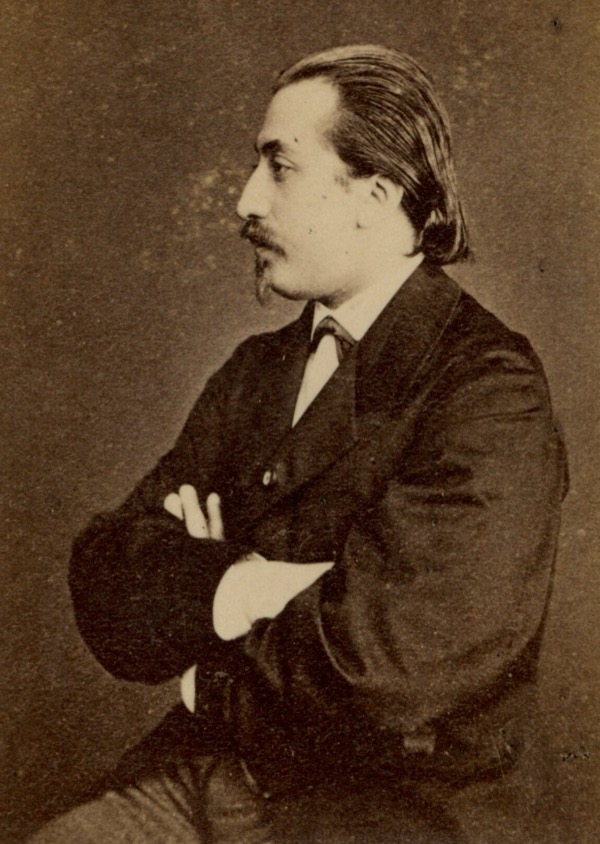
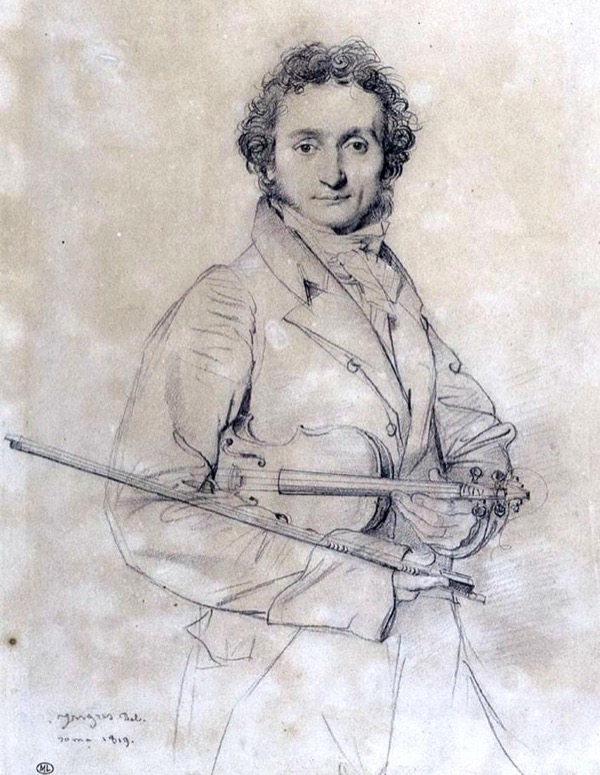
Henryk Wieniawski
Régine Wieniawski was born in Brussels in May 1879.
Her father was the Polish violin virtuoso Henryk Wieniawski, one of the most famous violinists of the nineteenth century.
Wieniawski had fallen in love with his British wife, Isabelle Hampton, in 1859.
According to legend, her parents were initially reluctant to support the marriage. Still, they relented after hearing Wieniawski’s lovely violin-and-piano piece, Légende, which he wrote specifically for her, and which every classical violinist knows today.
(That said, the charm of the music apparently had its limits: her father also insisted that the violinist take out a 200,000-franc life insurance policy ahead of the wedding.)
Wieniawski – Légende Op.17 for Violin and Piano | Classic FM Sessions
The couple was married in Paris in 1860. The ceremony was a star-studded affair. Pianist and composer Anton Rubinstein walked Isabelle down the aisle; Henri Vieuxtemps played violin during the wedding ceremony; and Gioacchino Rossini served as a witness.
We wrote about their love story here: https://interlude.hk/henryk-wieniawski-and-isabella-hampton-music-may-melt-the-heart-of-stone/
Between 1861 and 1879, Isabelle Hampton Wieniawski gave birth to seven children. She raised them largely on her own due to Henryk’s demanding touring schedule.
Régine was their youngest child, born in 1879. She would be the only one of the seven Wieniawski children to go into music professionally.
Tragically, her famous father died in 1880 after many months of poor health, so she never got to know him.
Poldowski’s Early Musical Training
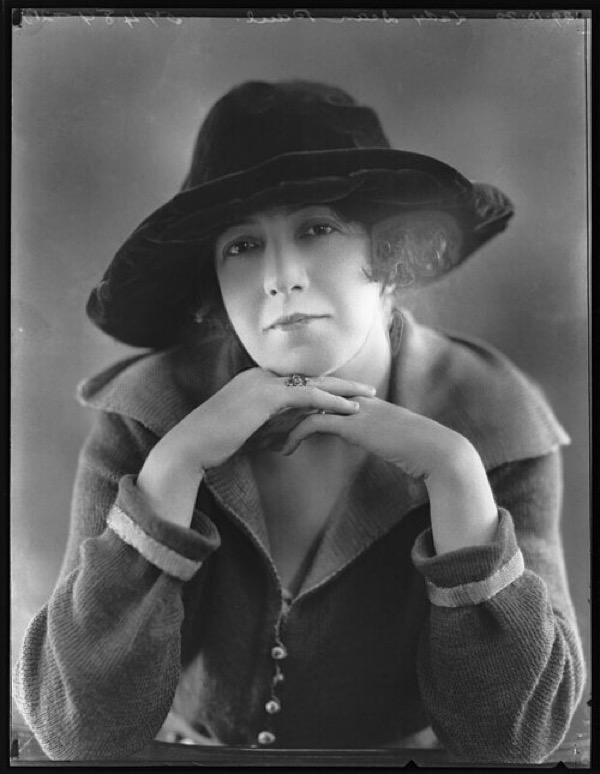
Poldowski
Poldowski demonstrated musical talent from an early age, beginning her studies at age 7. Two years later, she composed an “Oriental Suite.” (This has since been lost.)
She later claimed that in 1892, the year she turned thirteen, she enrolled at the Brussels Conservatory. However, her name doesn’t appear in the conservatory’s official records, so it is possible she just took private lessons from the teachers there.
We know that she studied composition with François-Auguste Gevaert, and piano with Pierre-Jean Storck. Both men have since fallen into complete obscurity.
In 1893, when she was fourteen, she began performing her own compositions in public.
In 1896, she and her mother moved to her mother’s hometown of London. There she studied composition with organist, composer, and conductor Percy Pitt, and piano with Michael Hambourg.
Around this time, she also began using the pseudonym Irène Wieniawska, adopting the feminised form of her famous father’s surname. She became a professional composer and began publishing her music while still in her teens.
Marriage, Motherhood, and Music
In October 1901, when she was twenty-two years old, she married Sir Aubrey Edward Henry Dean Paul. The couple had been introduced by Dame Nellie Melba, the most famous singer of the era.
The couple bonded over their mutual passion for music. Sir Aubrey was a talented amateur baritone, and during their marriage, Régine would often accompany his vocal performances.
They had their first child, also named Aubrey, a year later, in October 1902.
When her son was a year old, she went to Paris to study under composer André Gedalge, the man who taught both Enescu and Ravel.
However, her Parisian studies came to an early end. She got pregnant in the autumn of 1903. Then, a gut-punch of a tragedy: her toddler son Aubrey died in January 1904.
She left Paris after his death and returned to London, giving birth to her second son Brian a few months later, in May 1904.
The death of two-year-old Aubrey hit her hard. Her songs Soir (Evening) and Berceuse d’Armorique (Lullaby of Armorica), as well as her violin piece Berceuse pour l’enfant mourant (Lullaby for the Dying Child), all touch on the tragedy.
Around this time, she also chose a new pseudonym: Poldowski.
We don’t know for sure why she chose it, but it was a combination of her husband’s name and her father’s name, with all indicators of her female identity removed.
At some point between 1904 and 1907, she returned to Paris, this time to study with Vincent d’Indy at the Schola Cantorum, but departed after just one term. Contemporary reports suggest that she felt she learned more by teaching herself than by taking formal instruction.
She gave birth to her third and final child, Brenda, in the summer of 1907.
Poldowski’s Famous Songs
Poldowski’s early reputation, garnered during the Belle Époque, was built on the quality of the songs she wrote in her twenties. Like Debussy and Fauré, she was drawn to setting the mysterious, atmospheric verse of Paul Verlaine.
Her settings of Verlaine’s poetry share similarities with those of Debussy and Fauré: their lush beauty, their mercurial nature and surprising harmonies, and above all, their unmistakable French character.
Poldowski’s “L’heure exquise”
In the spring of 1908, she performed in a concert in London’s storied Bechstein Hall, featuring seven of her songs sung by tenor Gervase Elwes.
She also sang her own work at private British house concerts, a place where many talented musicians hobnobbed while performing for small, appreciative, influential audiences.
Publishers took notice. In 1911, the prestigious Parisian publishing house Durand published three of her songs. More followed.
The Premiere of the Poldowski Violin Sonata
In the summer of 1912, she gave a public concert at the Aeolian Hall in London, where she performed several of her songs.
She also offered an instrumental work that signalled an expansion of her musical palette: a dreamy, moody violin sonata.
Poldowski’s Violin Sonata
The London Times reviewed the concert favourably:
This music is most individual and has a very special motive for existing.
To hear a little of it is to be stung into fresh interest at every moment; to hear much of it would leave one callous to any new sensation.
It exercises the sort of spell which is worked by a brilliant talker when he exhibits all the facets of a truth he does not too seriously believe; the fascination lies in the interplay of the flashes of light, and the diamond might or might not be paste.
It is a work that is perhaps at times emotionally elusive – but that mystery, interwoven with its lush and restless beauty, is also part of its charm.
How Poldowski’s Career Hit New Heights
Poldowski’s musical ambitions continued to grow throughout her thirties.
A few months before the Aeolian Hall concert, Sir Henry Wood, the conductor of the Proms, programmed an unpublished Poldowski work for woodwinds.
He liked it so much that he commissioned music from her. She responded with her Suite miniature and Nocturne for orchestra. They met with mixed reviews, but proved she was more than capable of writing for larger ensembles.
Poldowski: Suite Miniature (arr. G. Barrère) (Sylvan Winds)
In 1919, she appeared at the Proms as a pianist, playing her own work for piano and orchestra, Pat Malone’s Wake.
Between 1919 and 1922, she lived and toured in the United States.
By this time, for reasons that historians have yet to uncover, her marriage had fallen apart; her mental and physical health had deteriorated; and her finances were in ruin.
She and her husband officially divorced in 1921, and she returned to Britain the following year.
Poldowski’s Later Life in Britain
After her divorce, Poldowski continued to make a musical life for herself, giving and organising concerts.
One of her notable accomplishments was organising a series of recitals at the Hyde Park Hotel, featuring Arthur Rubinstein and Jacques Thibaud, two of the greatest performers of their generation.
She also developed a passion for fashion. She opened a boutique and even designed some pieces for the royal family.
In her early fifties, she came down with a severe case of pneumonia that necessitated the removal of a lung.
She died of a heart attack in January 1932.
What Happened to Poldowski’s Children?
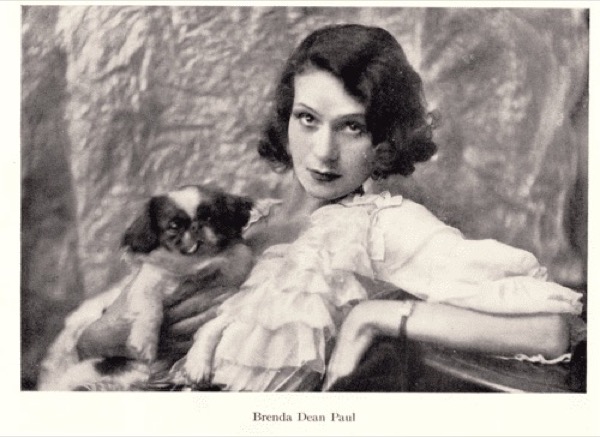
Brenda Dean Paul
Many composers who enter the canon have spouses or children who help to popularise their music after their deaths. In Poldowski’s case, her two surviving children were unable to advocate for their mother’s music after her death, as both suffered from severe mental health issues and addictions.
Both became well-known members of the bohemian social scene of irresponsible young aristocrats who came to be known as the Bright Young Things. Both were queer, and both preferred to live at the edges of respectable British society.
Brian, the son born in 1904, earned the nickname “Napper” because he tended to fall asleep in doorways under the influence.
At various times in his life, he attempted to support himself by running a grill room and cabaret, writing poetry, interior designing – and even committing petty crimes.
His younger sister Brenda Dean Paul preferred to live on the fringes of conventional society. She attempted a career as a silent film actress, but never found sustained professional success. Instead, after a miscarriage and her ensuing addiction to morphine, she became one of the first celebrity drug addicts.
Her colourful criminal life constantly made the newspapers. After Poldowski’s death, her baronet father asked the police to monitor her closely.
Her condition deteriorated anyway. Just months after her mother’s death, she was sent to Holloway Prison for drug-related crimes. While there, she developed bulimia.
She remained addicted to various substances for the rest of her life, and died at the age of 52 in 1959 – the same age her mother had been when she died.
Poldowski’s Legacy
Poldowski died in January 1932, leaving behind a body of work as mercurial and hard to pin down as the woman herself.
She had spent her life slipping between identities – Régine, Irène, Lady Dean Paul, Poldowski. Without children able to champion her music, or the kind of institutional support that had secured the legacies of many of her male contemporaries, her name faded.
But the music didn’t disappear. And in recent years, scholars and performers have begun returning to it – drawn in, perhaps, by the same quality the London Times identified in 1912: that restless, flashing intelligence, that lush beauty with an edge of mystery underneath.
Poldowski resists easy categorisation. She always did. That’s exactly why she’s worth a listen, even today.
For more of the best in classical music, sign up for our E-Newsletter






Thank you for this great article! What a fascinating person!