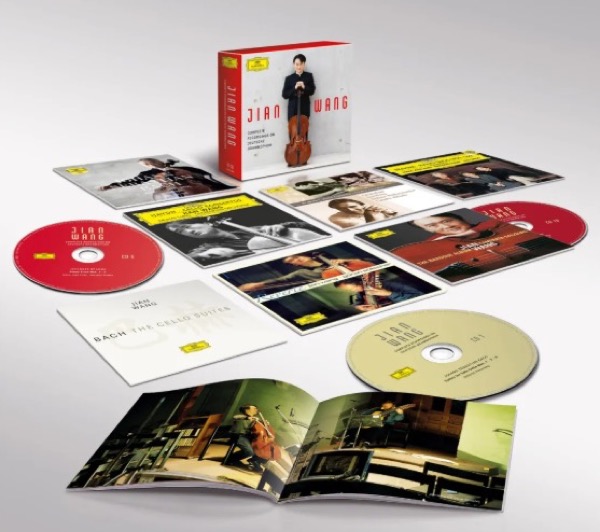
More than three decades ago, the cellist Jian Wang became the first Chinese musician to sign an exclusive contract with Deutsche Grammophon. This June, his 11-CD box set is released, including his thoughtful Bach albums, Baroque and Romantic adventures, plus his extensive collaboration with musicians such as Maria João Pires, Augustin Dumay, Gil Shaham, Claudio Abbado, and Göran Söllscher.
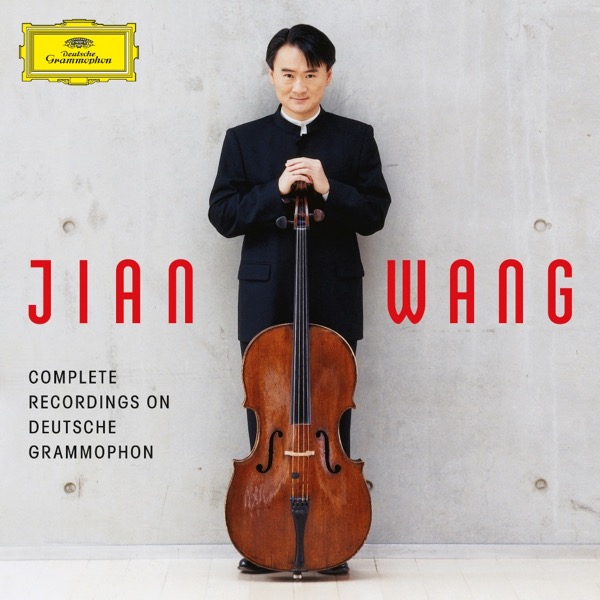
As he opened the box set, Jian Wang was visibly moved by this time capsule: “This is 30 years of my life. One does not get too many 30 years in a lifetime…” Performing, mentoring, and interacting with the public, Jian Wang is now busier than ever. When he had a moment to catch his breath, I asked him to share his insights on Bach, Elgar, cello techniques, and, who would have guessed, Flemish paintings and great popular singers.
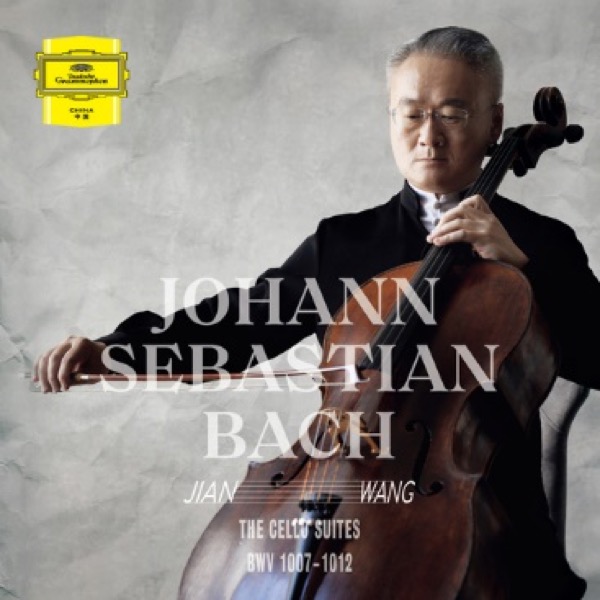
You recorded Bach’s Cello Suites twice, in 2003/04 and 2024. How has your understanding of Bach evolved?
For me, Bach’s Cello Suites are like a dialogue within myself. This discussion will never end. The reason they are so special to every cellist is this quality. It is akin to a revered treasure we have collected in our minds, something we take out often to clean, polish, and, most importantly, admire. Sometimes, we show it to our dear friends. During this lifelong reverence for these masterpieces, we, as cellists, discover and are continually fascinated by the changing aspects, angles, details, and textures of this most amazing craft. The process of discovering these details, being inspired by them, and finding ways to materialise them is, and will always be, one of the most satisfying experiences for us.
Johann Sebastian Bach: Suite for Solo Cello No. 5 in C Minor, BWV 1011: IV. Sarabande (Jian Wang, cello)
I am a big fan of Baroque music. I especially like the sound of the viola da gamba. While this fascination has a great influence on how I want to hear the Bach Cello Suites, I am also very mindful that Bach chose to write these pieces for the cello, an instrument that was perhaps not quite as popular as the gamba family during his time. We must remember that composers, more than others, tend to look towards the future rather than the past. I think that perhaps the longer lines, as well as the more human voice-like quality of the cello, were among the important aspects that propelled the cello to become a solo instrument. For many years, whenever I worked on the Cello Suites, I thought about the kind of sound and rhythms Bach might have heard in his mind, as well as what he wanted to hear from the cello.
Johann Sebastian Bach: Suite for Solo Cello No. 1 in G Major, BWV 1007: I. Prelude (Jian Wang, cello)
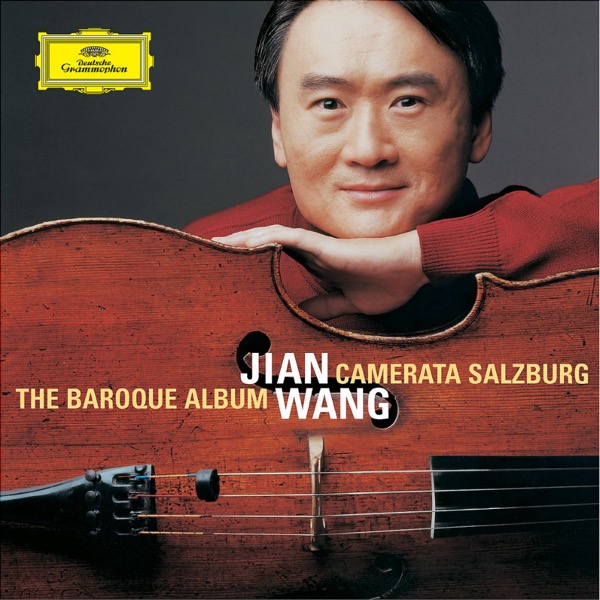
One of your CDs is called The Baroque Album. How did you come to composers such as Luigi Boccherini and Georg Matthias Monn?
The Boccherini Concerto in B-flat major has always been an important concerto for any cellist. However, like many cellists of my generation, the version I first learned was an unfortunate transcription that altered the style into a later, more showmanship-oriented work. When I discovered the wonderful original version, I was so excited that I learned it immediately. I first heard a recording of the Monn Concerto performed by Jacqueline du Pré. Like so many things she did, it left a profound impression on me. That is why I wanted to play it.
Georg Matthias Monn: Cello Concerto in G Minor: I. Allegro (Jacqueline du Pré, cello; Valda Aveling, harpsichord; London Symphony Orchestra; John Barbirolli, cond.)
As a performer and a teacher, what do you wish to convey through Elgar’s Cello Concerto?
I think Elgar’s Cello Concerto is quite unique among the cello repertoire, as well as among his own works. The emotions and atmosphere that emerge from the music are very concentrated and specific. It is an elegy throughout, filled with memories of happier times from the past, perhaps shared with friends and loved ones who were no longer with him… The sadness and tenderness in the score are very evident, as are moments of heroism, where perhaps the composer was wishing he had the power to shield his friends from harm. It is a uniquely emotional composition, and that is why it has become one of the most recognised cello concertos.
Jian Wang Cello Ensemble Plays Elgar’s “Nimrod” at Shanghai Z+ Music Festival
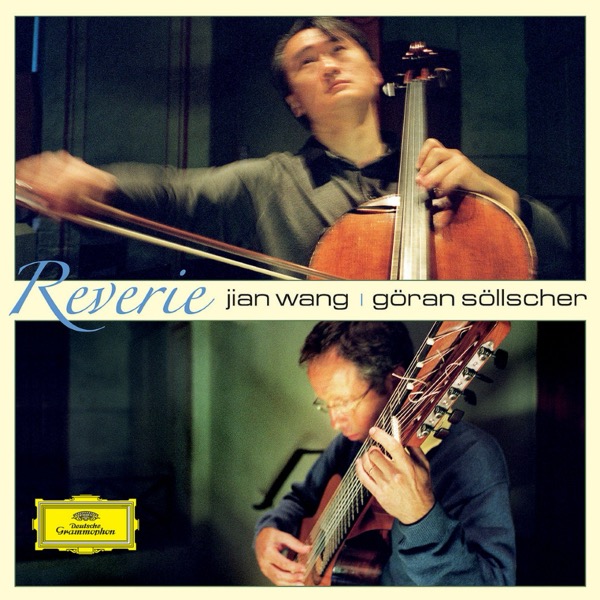
Rêverie included short yet challenging works such as by Piazzolla and Villa-Lobos. It reminded me of your recent performance at the Shanghai Z+ Music Festival.
Among my recordings, Rêverie is one of my favourites. I felt very comfortable with the repertoire because I have always preferred making music to conquering technical challenges. Göran Söllscher is my favourite guitarist, and the guitar is one of my favourite instruments!
From this collection, could you share some memories of recording with your dear musician friends?
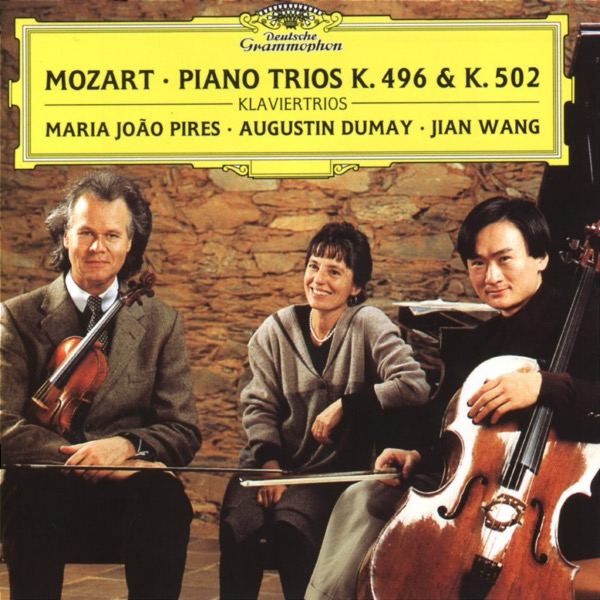
My meeting with Maria João Pires and Augustin Dumay changed my life. I became a better musician after our collaboration because I learned so much from them. I feel very fortunate to have met them. We recorded Mozart‘s and Brahms‘ Piano Trios together.
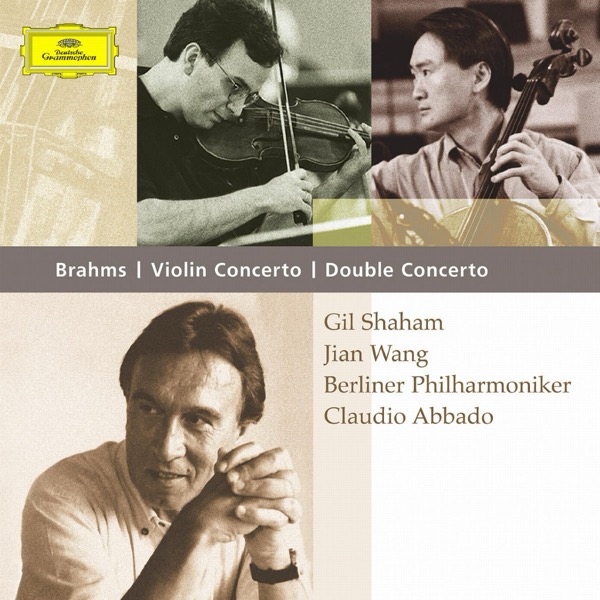
Recording with Gil Shaham and Maestro Abbado was a dream come true. Gil and I were both guided by Isaac Stern during our youth, and we had played together quite often from an early age. Our recording of the Brahms Double Concerto was one of the first recordings Maestro Abbado made after his surgery. He was frail, but the warmth he showed me, both as a person and as a musician, was deeply touching. It remains one of the most inspiring and memorable experiences of my life.
In masterclasses and interviews, you have often compared changes in cello tone to brushwork in Chinese ink painting or to the behaviour of light in physics, describing them in terms of “density.” What is tonal density? Why is it so important?
As long as I can remember, whenever I listen to music intently, I see patterns. These can be lines that slope upward or downward, or shapes that expand and contract, often with different and constantly changing shades within them. I am very sensitive to these visual impressions, and it was only much later in life that I realised the changing intensity of the shades corresponds to changes in the density of the sound.
The expansion and contraction of these patterns are mostly caused by dynamic changes and rhythmic elasticity. While changes in density can parallel changes in dynamics, they often do not. When I hear musical lines with little variation in density, I perceive patterns that are largely two-dimensional. With changes in density, however, the patterns become three-dimensional.
My favourite paintings are those of the great Flemish masters. For me, one of the most remarkable aspects of their work is their use and depiction of light. Light guides our eyes through a painting and draws our attention to what is most important. In a similar way, changes in density guide our ears through musical lines. If dynamic changes move music from left to right, density changes perhaps move it forward and backwards.
Dynamic changes in music are like changes of colour in a painting—they are extremely important. However, when dynamic changes work together with changes in density, the music becomes even more alive.
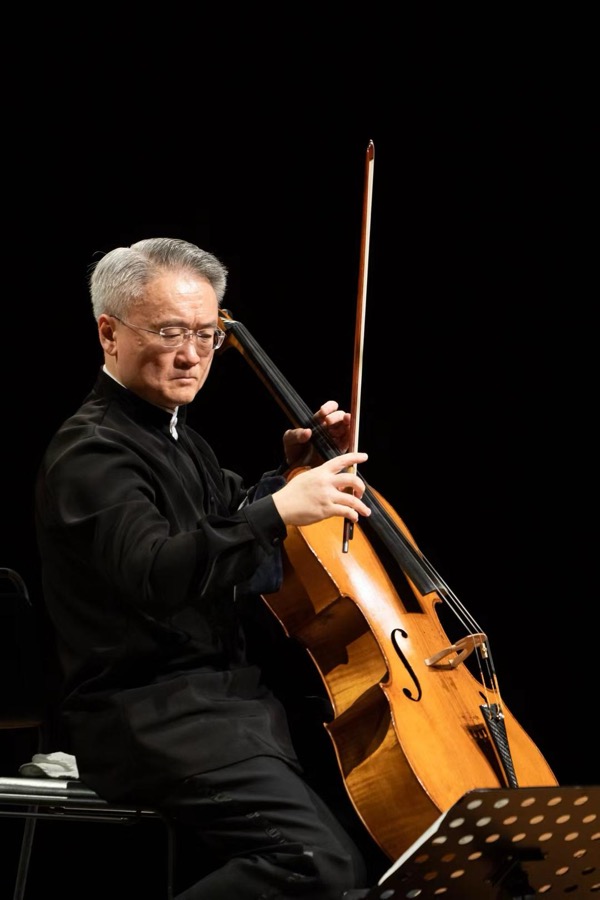
Jian Wang © Li LeWei
In what ways do you feel you have contributed to the development of China’s classical music scene?
Like many Chinese people of my generation—and perhaps the generation slightly older and younger than us—it has been an extraordinary experience to witness the unparalleled transformation of an entire nation. As someone who grew up within that society, then had the rare opportunity to go to the West, return to China, and observe the differences, I feel incredibly privileged.
For example, in 1986, when I was 17, I was the soloist with China’s Central Philharmonic Orchestra, the predecessor of today’s China National Symphony Orchestra. We undertook what I believe was the orchestra’s first-ever tour of the United States—and possibly the first by any Chinese orchestra. That was a historic milestone.
Then, in 1992, I was the soloist with the Shanghai Symphony Orchestra on its first-ever European tour. Later, I had the honour of becoming the first Chinese soloist to perform in China with a major European orchestra: the Royal Concertgebouw Orchestra. We toured China together in 1996, when I was 27. I believe it was the first time Chinese audiences saw a Chinese soloist performing with one of the world’s leading orchestras. Soon afterwards, I toured with the French National Orchestra and continued to perform extensively across the country.
Jian Wang Plays Dvorak Cello Concerto in Paris
One thing I am particularly proud of is having participated in the opening seasons of many of China’s great concert halls. These include the Shanghai Oriental Art Centre, the Shanghai Symphony Hall, the Shanghai Grand Theatre, and the National Centre for the Performing Arts in Beijing. At the NCPA, I was also the first Chinese cellist to give a recital during its inaugural season. I will always treasure these memories, as in a small way, I was able to be part of history.
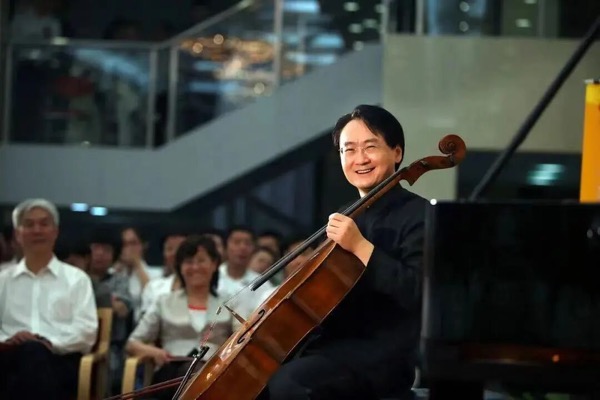
Jian Wang at the NCPA in Beijing in 2012 © Xiao Yi
What made performing in China especially exciting in the early years was that audiences were often hearing many works for the first time. I believe I gave the Chinese premieres of several cello concertos, introducing music that had long been familiar in the West but was new to listeners here. Watching audiences encounter an entirely new musical world was immensely rewarding.
I believe classical music has developed so rapidly in China because Chinese culture has long valued introspection and self-reflection. While every culture has its own strengths, Chinese philosophy has traditionally placed great value on artistic expression and the exploration of the inner life. As a result, Chinese audiences are incredibly receptive to classical music, an inward-looking art form that continues to flourish.
Of course, the development of classical music in China is still very much a work in progress. Compared with the West, the proportion of people who regularly listen to classical music remains relatively small. I am confident that more young people will come to appreciate this music. For musicians like myself, that is our hope: that through our work, we can help people find deeper meaning and enrichment in their lives.
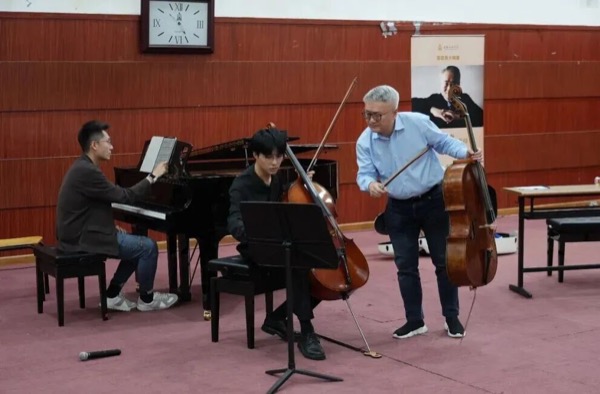
Jian Wang Teaches Masterclasses © Shanghai Conservatory of Music
In a 2018 interview with Interlude, you said your interest in history began during your years at Yale. Have you recently read any works that resonated with you?
Yes, I still read a great deal, although these days much of it is online. One has to be careful, of course, because anyone can publish almost anything. Recently, however, I greatly enjoyed reading a book about the history of salt. It was fascinating to see how something so ordinary has played such an important role in shaping human civilisation.
What history offers, I think, is a fuller and perhaps truer picture of humanity than art does. When you read history, you quickly realise how difficult it is to find anyone who is entirely good or morally perfect. No matter how great a person’s achievements may be, everyone has flaws, contradictions, and a darker side. That is simply the reality of being human.
Paradoxically, this is what makes art so special. Music, in particular, is both an attempt and a pursuit—a search for the most luminous of ourselves. We know this idealised self is not always who we are, but it is who we aspire to become. We may never fully succeed, but through art we can glimpse that possibility. In that world, if only for a moment, music can reveal a version of ourselves that is wiser, kinder, and more complete.
In May, you launched a WeChat social media account to share your reflections. In one article on competition, you wrote: “The performances you get to hear in life are, by and large, those of life’s winners.” How to deal with life’s inevitable adversity?
I think that is a question nobody can fully answer. In fact, I am not sure anyone ever completely succeeds in dealing with it. We are all simply trying our best. For me, one principle has become increasingly important: never give other people control over your happiness.
What I mean is this: today, everyone has an opinion about everything. In the past, people simply did not have the means to comment on others constantly. Now, with the internet, the level of noise is tremendous. People may admire you today and abandon you tomorrow. That is simply the nature of public opinion. While it is wonderful to receive support, it is dangerous to depend on unreliable external validation.
As a musician, I often feel disappointed when I play badly or discover flaws in my playing—which happens more often than people might imagine. Sometimes I torture myself with those regrets. In most cases, time heals a great deal—perhaps not completely, but enough. But the other side of that experience is that nothing makes me happier than discovering a way to improve. Every time I find a better way to play the cello, shape a phrase, or relearn what I think I know, I feel immense joy.
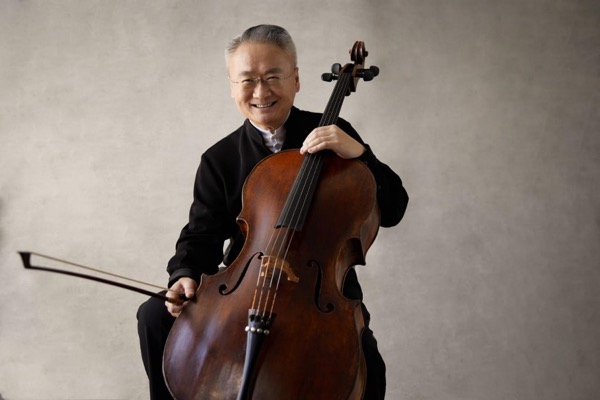
Jian Wang © Universal China
That is why I always give the same advice to my students: compete only with yourself. Competing with yourself is the most effective way to grow, because you know yourself better than anyone else. Competing with other people is ultimately pointless. The moment you surpass one person, you begin comparing yourself to someone else. The cycle never ends. There will always be someone greater, more talented, or more successful.
Only a handful of people in history achieve what we call greatness, and most of us never will. But that is perfectly fine. Greatness is not the point. What matters is becoming a better version of yourself. To me, that is one of life’s greatest pleasures: to become a better person, to improve one’s work, and to contribute positively to the lives of others.
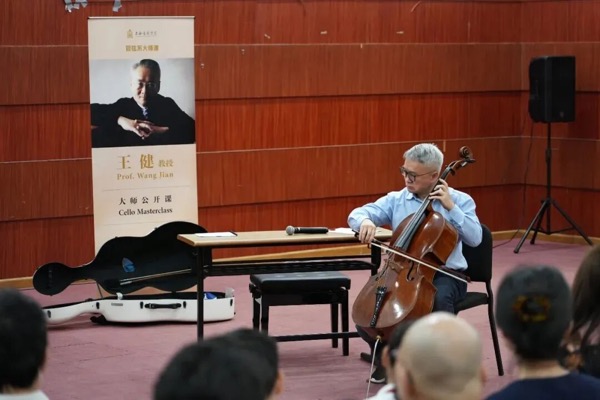
Jian Wang Hosts Public Masterclasses © Shanghai Conservatory of Music
Beyond the cello repertoire, do you listen widely to other kinds of music?
Some of my fans may have the wrong impression, assuming that I listen only to classical music or regard it as the only worthwhile form of music. That couldn’t be further from the truth. In fact, compared with many colleagues, I probably listen to much more popular music.
When I was studying in China, I listened constantly to The Carpenters and admired Karen Carpenter’s beautiful voice and the emotional warmth of their music. Later, in the United States, I spent a great deal of time listening to singers such as Ella Fitzgerald and Patti Page. I was captivated by the artistry, phrasing, and expressive freedom of that golden age of American vocal music. One of my favourite singers is Lea Salonga. Her performances move me deeply with her extraordinary technique and sincerity.
More broadly, I don’t believe in rigid distinctions between genres. To me, excellence is excellence. A beautiful voice is a beautiful voice, whether it belongs to a classical singer, a jazz artist, a Broadway performer, or a pop musician. Artists like Ella Fitzgerald have taught me a great deal. I do not study them analytically, but I draw inspiration from their musicianship and emotional honesty.
That connects to an earlier question about self-doubt. Like any musician, I often wonder whether my music has meaning and whether audiences truly feel anything when they hear me perform. Meanwhile, I am often moved to tears by films, books, stories, and music. Those emotional responses are essential to me. Whenever I am touched by kindness, beauty, or the warmth of the human spirit, I am reassured that I can still make music honestly. Those genuine feelings exist in every art form, but perhaps nowhere more directly than in music itself.
For more of the best in classical music, sign up for our E-Newsletter