
The twentieth century transformed the role of conductor from timekeeper into a powerful cultural figure: not just an orchestra leader, but an authority figure that loomed increasingly large in mass media and pop culture. (Think Stokowski’s silhouette in Fantasia.)
As recordings, radio, and film elevated particular conductors into international symbols, wars, exile, and changing social values reshaped what authority on the podium could look like.
To name a “greatest” conductor for each decade, then, is to identify the figure who most fully embodied the ideals and ambitions of classical music over those specific years.
Today, we’re going decade by decade and looking at the conductors who defined their eras: both in how they conducted and in how they reshaped musical life and the wider culture.
1900–1909: Gustav Mahler
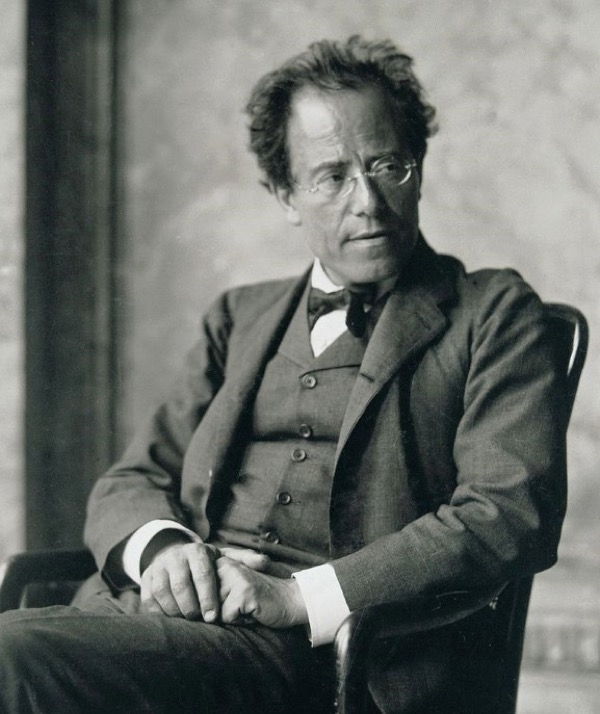
Gustav Mahler
At the dawn of the century, conductors were often composers, and no one embodied that dual expertise more powerfully than Gustav Mahler.
In 1897, Mahler was appointed the director of the Vienna Court Opera, where he imposed unprecedented standards of discipline.
Mahler’s rehearsals were famously exacting. He demanded absolute fidelity to the score while insisting that every detail serve an overarching expressive vision.
His work in Vienna effectively modernised opera production, treating performances as unified artistic statements rather than star-driven events.
Although his fame today rests largely on his symphonies, Mahler’s influence as a conductor was arguably just as important as his influence as a composer.
His belief that conducting and interpreting were also important acts of creation only became more popular with the advent of recordings, when interpretations could finally be permanently memorialised.
1910–1919: Sir Henry Wood
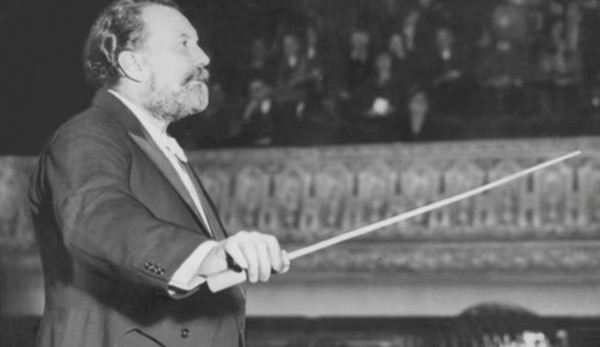
Sir Henry Wood
A news story on Sir Henry Wood from 1938
The second decade of the century was defined by upheaval and war, and no conductor did more to sustain and democratise musical life during this period than Sir Henry Wood through his championing of music education, ticket affordability, and the sheer breadth of the repertoire he programmed.
Best known as the founder and guiding force behind the Promenade Concerts in London (which later evolved into the modern-day Proms), Wood believed passionately that great music should be accessible to the widest possible audience.
During World War I, Wood continued programming an ambitious repertoire under extraordinary conditions, introducing audiences to new works while also maintaining high standards at a time when cultural institutions were under severe strain.
His influence was less about personal charisma and more about building long-lasting infrastructure. Although he’s less famous today than most of the names on this list, he built an audience, educated listeners, and permanently altered Britain’s – and arguably, Europe’s – relationship with classical music.
1920–1929: Wilhelm Furtwängler
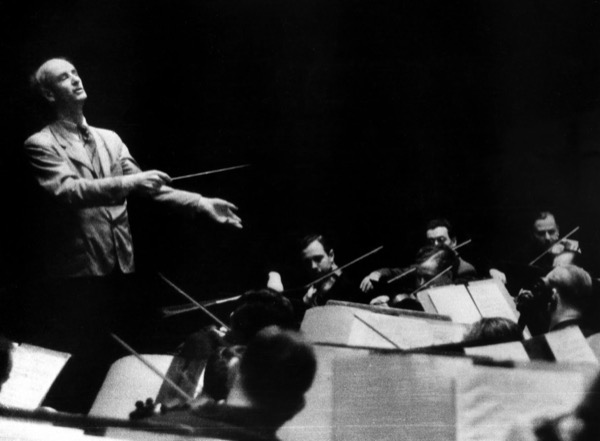
Wilhelm Furtwängler
Wilhelm Furtwängler live in Paris (1954@Palais Garnier)
In the aftermath of World War I, many musicians turned inward, searching for meaning amid the disillusionment it brought.
Wilhelm Furtwängler emerged in the 1920s as the most philosophically serious conductor of his generation.
Appointed to leading posts in Berlin and Leipzig, he quickly became associated with a deeply organic, flexible approach to tempo and structure.
Furtwängler believed music was a living, breathing process. His performances emphasised long lines, structural tension, and an almost metaphysical sense of inevitability.
Unfortunately, after the 1920s, his legacy became somewhat more ambiguous. Despite his opposition to the Nazis, he was pressured to perform at several Nazi-sponsored concerts: appearances that quickly became controversial.
In the years since, it has been revealed that he secretly helped Jewish people flee the Nazi regime, and Joseph Goebbels privately expressed his displeasure with what he viewed as his insubordination…details that have complicated, rather than resolved, debates about Furtwängler’s moral legacy.
1930–1939: Arturo Toscanini
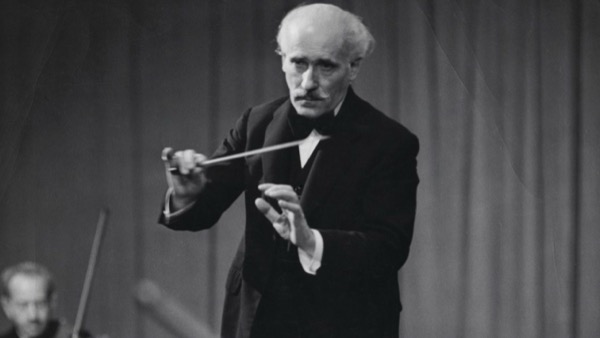
Arturo Toscanini
Toscanini conducting Verdi’s Overture to La Forza del Destino
If the 1920s belonged to philosophical depth, the 1930s belonged to artists who demonstrated moral clarity – and Arturo Toscanini stood at the decade’s center.
Having already built a formidable reputation in opera and symphonic repertoire, Toscanini became a global figure through recordings and, most significantly, radio broadcasts with the NBC Symphony Orchestra. (The rising influence of radio in the 1930s was a major phenomenon in classical music.)
Toscanini’s insistence on precision, fidelity to the score, and rhythmic discipline stood in stark contrast to Furtwängler’s freer elasticity.
His public opposition to fascism also turned him into a symbol of artistic integrity and political conscience in the run-up to World War II.
In an era when authoritarianism threatened Europe’s cultural foundations, Toscanini’s exactitude became an ethical stance as well as a musical one.
1940–1949: Leopold Stokowski
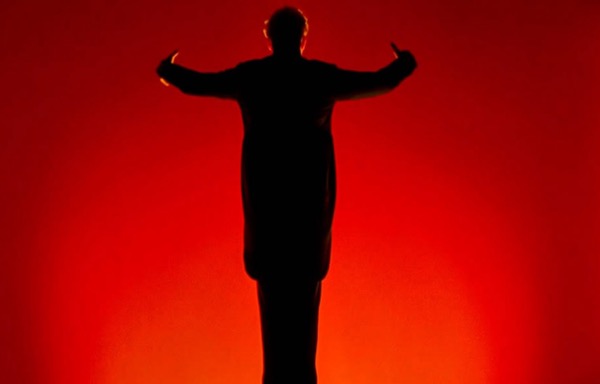
Leopold Stokowski
Stokowski conducting his transcription of Bach’s Toccata & Fugue in D minor
World War II reshaped the global musical landscape, and few conductors adapted to this new reality as imaginatively as Leopold Stokowski.
Born in Britain but based primarily in the United States, Stokowski embraced new media and audiences with enthusiasm, exemplifying a newly ascendant American musical culture.
His collaboration with Disney on Fantasia introduced orchestral sound to millions who might never have entered a concert hall.
At the same time, he experimented relentlessly with orchestral colour, seating arrangements, and even transcriptions.
In a decade defined by displacement and reinvention, Stokowski exemplified classical music’s ability to expand its reach without abandoning its core artistic priorities.
1950–1959: George Szell
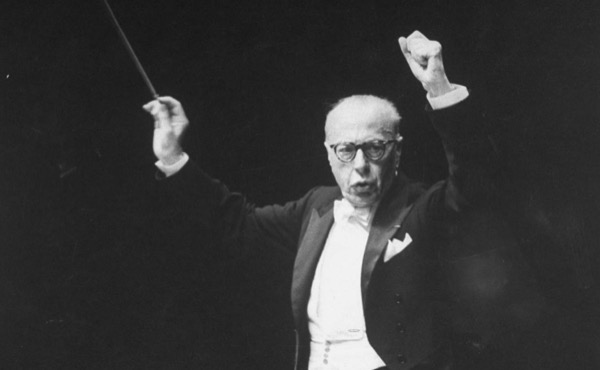
George Szell
Szell conducts Beethoven’s Symphony No. 5
The postwar years demanded a sense of order and the skill to rebuild – and George Szell delivered. Although his zeal and its accompanying cruelty could prove hurtful to musicians, it was also deeply influential.
He established a model of orchestral discipline that became the gold standard during the second half of the century. As music director of the Cleveland Orchestra, Szell transformed a capable regional ensemble into one of the world’s most dazzling orchestras through the force of his personality.
Szell’s rehearsal methods in Cleveland and elsewhere were famously (and in some cases, infamously) rigorous. Following in the footsteps of Mahler and Toscanini, he pursued clarity and balance with uncompromising intensity.
During a time when institutions were being built or rebuilt from the ground up, Szell embodied the belief that achieving excellence was a matter of relentless, driving craft.
1960–1969: Herbert von Karajan
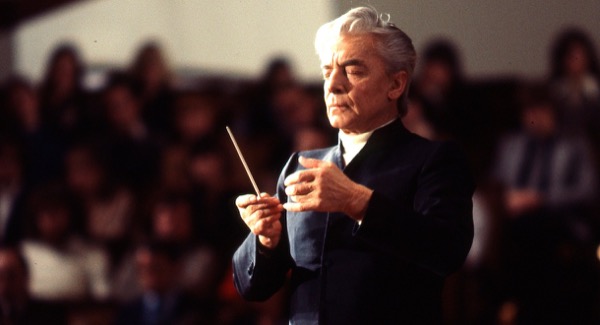
Herbert von Karajan
Karajan conducting Wagner’s Tannhauser Overture
By the 1960s and the rise of modern mass visual media, the aesthetics of conductors became increasingly important to the marketing of orchestras and music directors. One of the first conductors to create a recognizable personal brand for himself was Herbert von Karajan.
As music director of the Berlin Philharmonic, Karajan cultivated a polished, homogeneous orchestral sound and a striking visual language that, combined, came to define the era’s – and the Berlin Philharmonic’s – style.
Karajan’s embrace of recording technology and visual media also made him one of the most recognisable figures in classical music around this time. His filmed performances are instantly recognisable due to their camera angles and dramatic lighting.
However, despite his contributions to the art, his reputation has always been complicated. His career got started during the Nazi regime, and in the years following World War II, he was criticised for joining the Nazi Party. That said, a denazification tribunal in 1946 cleared him of illegal conduct.
1970–1979: Leonard Bernstein
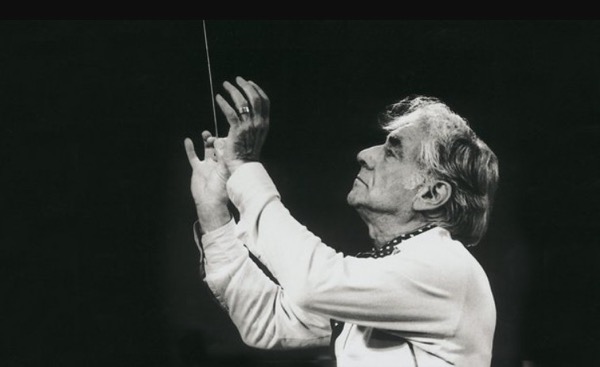
Leonard Bernstein
Bernstein conducting his own Overture to Candide
Especially with the rise of musicians’ unions and empowerment of orchestral musicians in America, the 1970s saw a shift away from authoritarian maestros toward an embrace of collaborative communication – and Leonard Bernstein was one of this change’s most compelling representatives.
Although Bernstein had long been a prominent figure in the New York music scene, this decade marked the culmination of his influence through his Mahler cycles, televised lectures, and a uniquely expressive conducting style.
Bernstein blurred boundaries between conductor, educator, and advocate. He routinely spoke directly to audiences both in-person and over television broadcasts, insisting that classical music was not a museum artefact but a living language.
In doing so, he helped to define what a charismatic modern conductor might look like.
1980–1989: Claudio Abbado
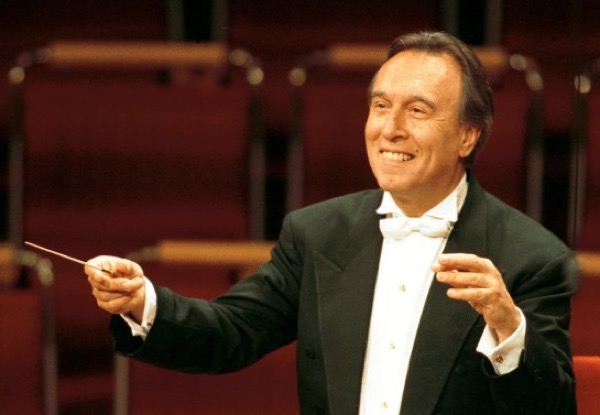
Claudio Abbado
Abbado conducting Mahler’s Symphony No. 5
By the 1980s, pushback against authoritarian styles of orchestral leadership was continuing, and Claudio Abbado offered an alternative model more rooted in collaboration and transparency.
Known for his work with the Berlin Philharmonic, Vienna State Opera, and later the Lucerne Festival Orchestra, Abbado emphasised careful listening and shared responsibility among musicians. Abbado’s rehearsals were quiet, his authority understated.
He championed modern repertoire alongside the canon and fostered organisational cultures based on trust rather than fear.
In a period increasingly concerned with ethics and institutional reform, Abbado represented a humane and persuasive reimagining of what musical leadership could be.
1990–1999: Simon Rattle
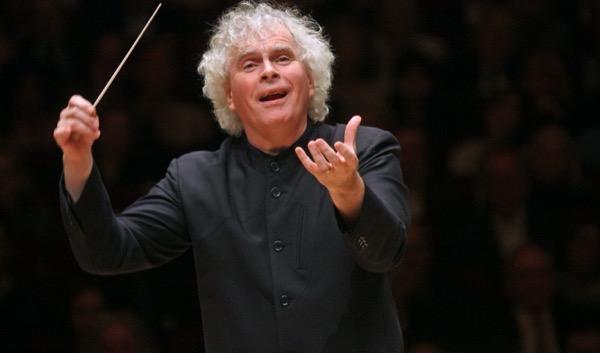
Sir Simon Rattle
Rattle conducting Stravinsky’s Rite of Spring
As the century closed, classical music entered a globalised, post-Cold-War landscape – and Simon Rattle emerged as its genial, emblematic figurehead.
His work with the City of Birmingham Symphony Orchestra demonstrated that ambitious programming, education, and outreach could coexist with artistic excellence.
Rattle embraced the diversity of repertoire and public engagement, pointing toward a future in which, taking cues from Bernstein and Abbado, conductors would act as curators and communicators as much as interpreters.
This approach has resulted in modern-day conductors like Marin Alsop, Gustavo Dudamel, and Osmo Vänskä, all of whom have emphasised artistic achievement alongside serving the educational and emotional interests of their respective communities.
Conclusion
Taken together, these conductors trace a remarkable hundred-year-long evolution: from Mahler’s authoritarian modernism to Rattle’s collaborative pluralism.
The twentieth century didn’t produce a single representative conductor. But it did create a series of figures who redefined what musical leadership could be in the face of a rapidly changing world. Their contributions remain integral parts of classical music culture even today.
For more of the best in classical music, sign up for our E-Newsletter





From this selection I have attended concerts by Karajan (once), Bernstein (once) and Abaddo ( more than once) in the Vienna Musikverein Grosse Saal.
And many radio and TV performances, of course.
( A friend of mine, a music specialist, was indignant that Karajan accepted to direct something as commonplace as the Neujahres Konzert .it was in 1987).
And I saw Stokowsly’s silhouette in Phantasia, when I was four. My parents had to take me out of the cinema because I was terrorisized by the dinausaurs of the Sacre and started to cry. It was an epoque when an effort was made to approach the masses to the beauty of “classical” music.
Yes, Toscanini was extremely strict!! I especially loved his Nutckracker Suite on 78 rpm and his directing of the Symphony of the New World!!
What about Sergiu Celibidache?