
Western classical music is often thought of as cerebral or abstract, but throughout its history, composers have repeatedly been inspired by themes of desire, sensuality, and physical longing.
Because the overt depiction of sex was socially taboo during much of the genre’s history, eroticism in classical music has traditionally been relatively subtle. Rather, it tended to surface indirectly through the use of harmony, orchestral colour, rhythm, and the like.
But over time, composers became increasingly bold. By 1919, one avant-garde work for solo soprano was much more explicit than most pop music heard today.
Today, we’re looking at seven works that chart the evolution of the portrayal of eroticism in classical music: from sublimated longing to performative sensuality to outright explicitness.
Wagner – Prelude from Tristan und Isolde (1857–1859)
Few pieces in Western music history are as saturated with sheer erotic tension as the Prelude to his opera Tristan und Isolde.
At the time he was writing Tristan, Wagner was embroiled in an extramarital affair with Mathilde Wesendonck, the wife of the wealthy patron who was supporting him.
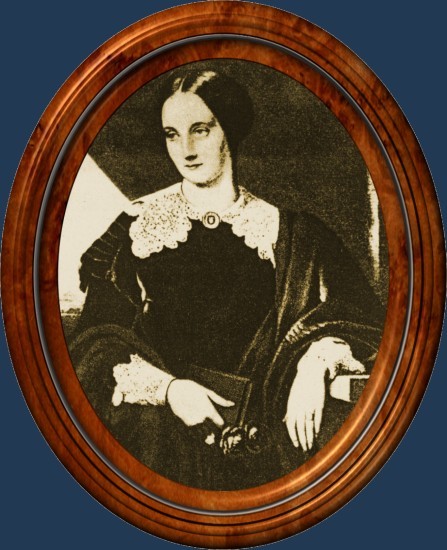
Mathilde Wesendonck
That sexual tension seeped into the work. Here Wagner shies away from depicting sexual fulfilment; instead, he constructs, in painstaking fashion, an almost unbearable state of unresolved desire.
The opening harmony – the notorious “Tristan chord”, which became 19th-century shorthand for romantic pining — never resolves in a satisfying way.
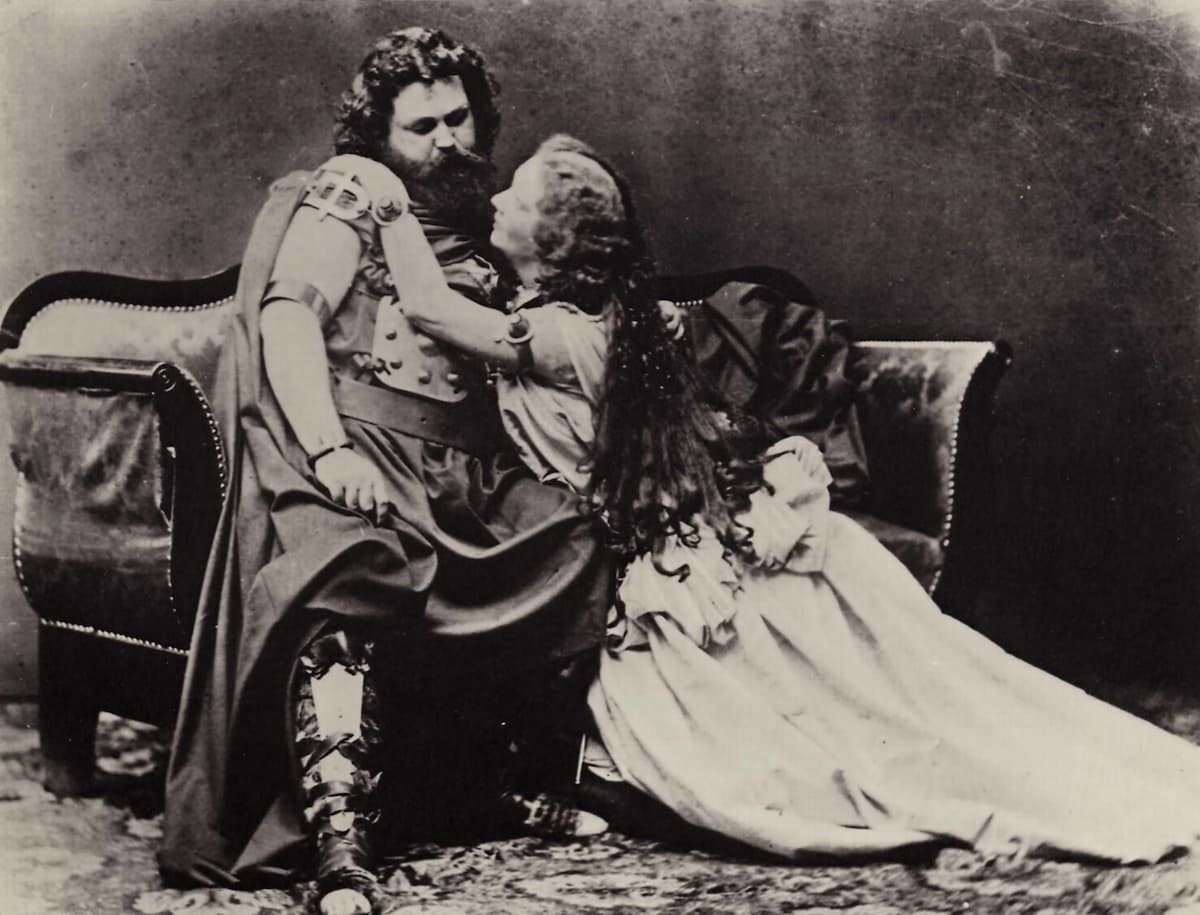
Ludwig and Malwine Schnorr von Carolsfeld in the title roles of the original production of Richard Wagner’s Tristan und Isolde in 1865.
Phrases tilt and yearn forward, dissolve, then begin again.
The end result is a musical experience of longing that feels more physical than almost all of the classical music that came before it.
Debussy – Prélude à l’après-midi d’un faune (1894)
Debussy‘s Prélude à l’après-midi d’un faune (Prelude to the Afternoon of a Faun) was inspired by Stéphane Mallarmé‘s symbolist poem L’après-midi d’un faune.
In Mallarmé’s poem, the faun narrator awakes from an erotic dream, then drifts into very explicit daydreams. He toes the line between sleep, fantasy, and reality until it’s impossible to discern which one he feels most intensely.
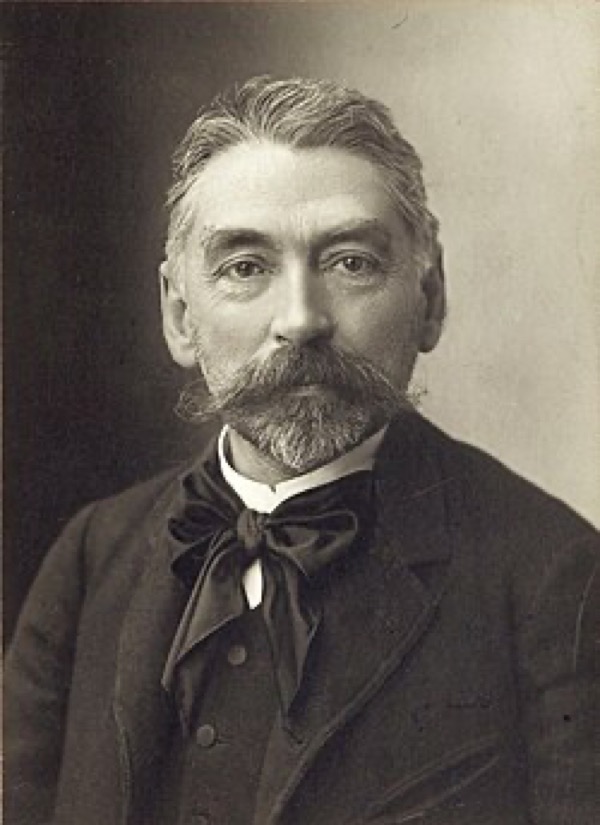
Nadar: Stéphane Mallarmé, 1890
The famous opening flute solo in Debussy’s musical version of the story feels more like breathing than melody: languid, suspended, outside of the boundaries of traditional musical timekeeping.
From there, the music continues to avoid a clear pulse and a firm structure, instead unfolding in a series of sensuous gestures that suggest touch, heat, and longing.
This work quietly redefined what eroticism could sound like in the hands of a savvy orchestra.
Debussy – Chansons de Bilitis (1897)
Debussy’s treatment of the Chansons de Bilitis is even more explicit than his setting of the story of the restless faun.
The lyrics came from a work by his friend, poet Pierre Louÿs. In 1894, he published a celebrated translation of newly discovered Sapphic works by Sappho’s contemporary, the courtesan Bilitis. It turned out that Bilitis was entirely his own invention and that Louÿs had been lying to readers about the poetry’s origins; nevertheless, he fooled some established scholars.
In the second of the three poems that Debussy set, the narrator’s lover describes in detail the night they spent together.
Last night I dreamed. I had your
tresses around my neck. I had your hair like a black
necklace all round my nape and over my breast.
And gradually it seemed to me, so intertwined
were our limbs, that I was becoming you, or you were
entering into me like a dream…
Debussy responds to the suggestive text with music that veers between extreme delicacy and wholehearted, demonstrative passion.
Strauss – Symphonia domestica (1904)
Eroticism rarely appears in classical music as a marital or domestic experience, which is precisely what makes Richard Strauss‘s Symphonia domestica so striking.
Over the course of this 45-minute tone poem, Strauss depicts twenty-four hours of family life in lavish orchestral detail.
That includes the nighttime – and moments clearly intended to represent intimacy between spouses.
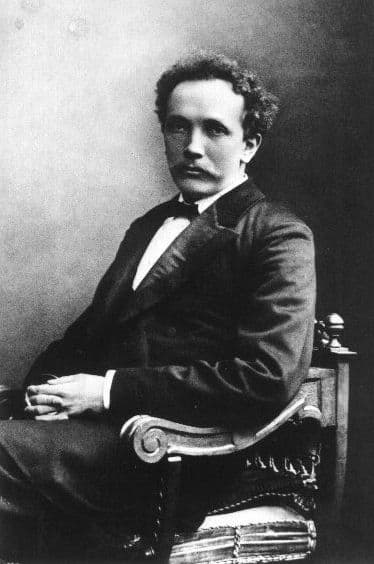
Richard Strauss
The music here is exuberant and occasionally almost embarrassingly personal. The melodies representing Strauss and his wife wind graphically around each other for about six or seven minutes; take from that what you will. (If you want to hear, the love scene begins around 19:20 in the performance above.)
Unlike works that associate eroticism with transgression or danger, Symphonia domestica presents physical intimacy as a joyful, deeply satisfying, even productive experience, central to the ordinary human experience. It was an unusually frank public stance for its time.
Strauss – Dance of the Seven Veils from Salome (1905)
Soon after depicting his own love life in music, Strauss turned to dramatising Oscar Wilde’s retelling of the Biblical story of the princess Salome, who uses her sexuality to bewitch the evil King Herod and order the head of the prophet John the Baptist on a platter.
If any single moment in classical music history up to this point qualifies as overtly erotic, it is Strauss’s Dance of the Seven Veils.
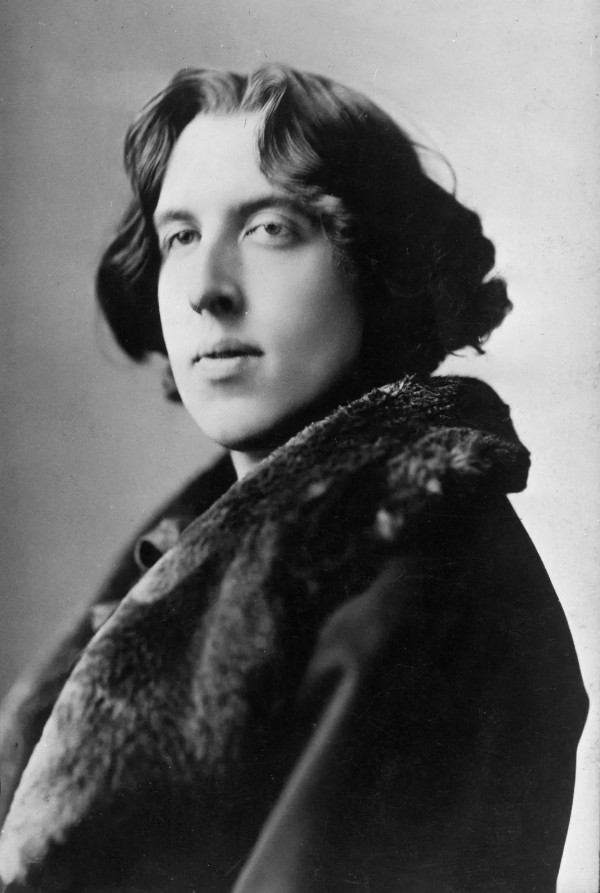
Oscar Wilde
Written as a striptease, the music luxuriates in excess: lush orchestration, swelling climaxes, and destabilising chromaticism. Here, desire becomes so intense that it becomes grotesque, blurring the line between arousal and horror.
And yet Strauss gave the rather bewildering instruction that the dance should be “thoroughly decent, as if it were being done on a prayer mat.” Perhaps he thought that all of the necessary eroticism was contained within the music itself, and that to add any more in the dance would be overkill.
Needless to say, not many productions have followed his advice. The dance and the opera ended up being explicit enough to provoke widespread outrage – and occasional censorship.
Ravel – Bacchanale from Daphnis et Chloé (1912)
Ravel‘s ballet Daphnis et Chloé culminates in a radiant Bacchanale that depicts erotic fulfillment as communal ecstasy.
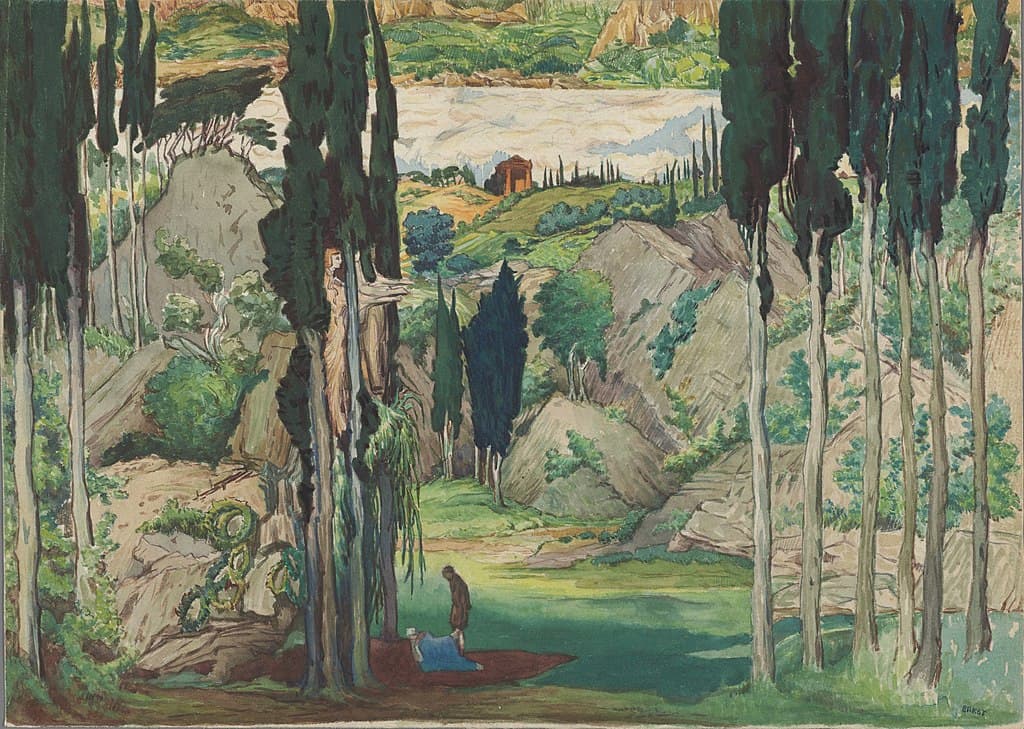
Léon Bakst’s set design for Act 1 of “Daphnis et Chloe”, 1912
After a series of misadventures, the goatherd Daphnis falls in love with a shepherdess named Chloé. The couple represent rural purity and wholesomeness, and it takes them a long time to recognise their desires.
Finally, at the end of the ballet, after long stretches of anticipation and awakening, the music bursts into motion and rhythmic release as the couple celebrates conquering the obstacles that have kept them apart.
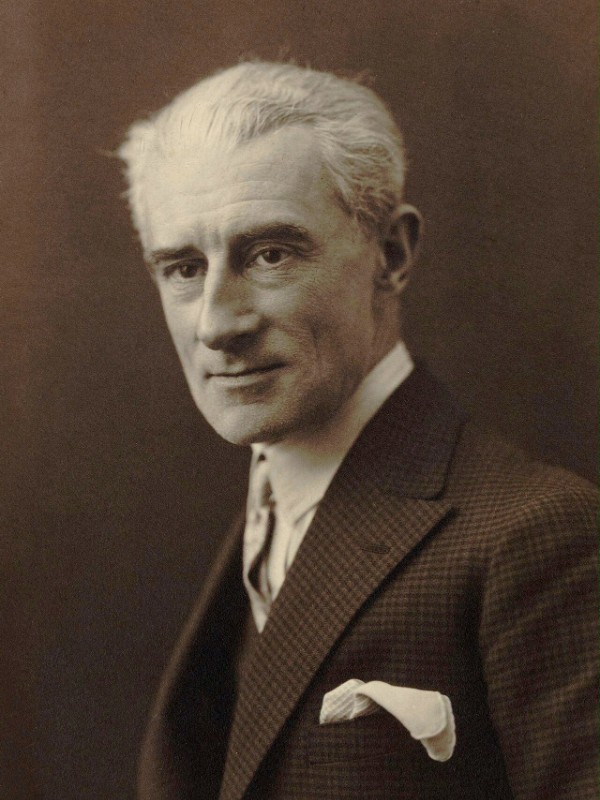
Maurice Ravel in 1925
Unlike Strauss’s Salome, this eroticism is not kitschy or corrosive. It is celebratory and even awe-struck, suffused with orchestral colour and intoxicating momentum.
In this retelling, sex is depicted as part of the natural world, aligned with feelings of light, joy, and triumph.
Schulhoff – Sonata Erotica (1919)
Composer Erwin Schulhoff‘s Sonata erotica ends the tradition of euphemism in classical music entirely.
Written for a breathy female solo voice, the piece consists of exaggerated, notated vocalisations intended to mimic sexual sounds. Trust us: the result is more explicit than even most modern-day love scenes. (You certainly don’t want to listen to the performance above at work!)
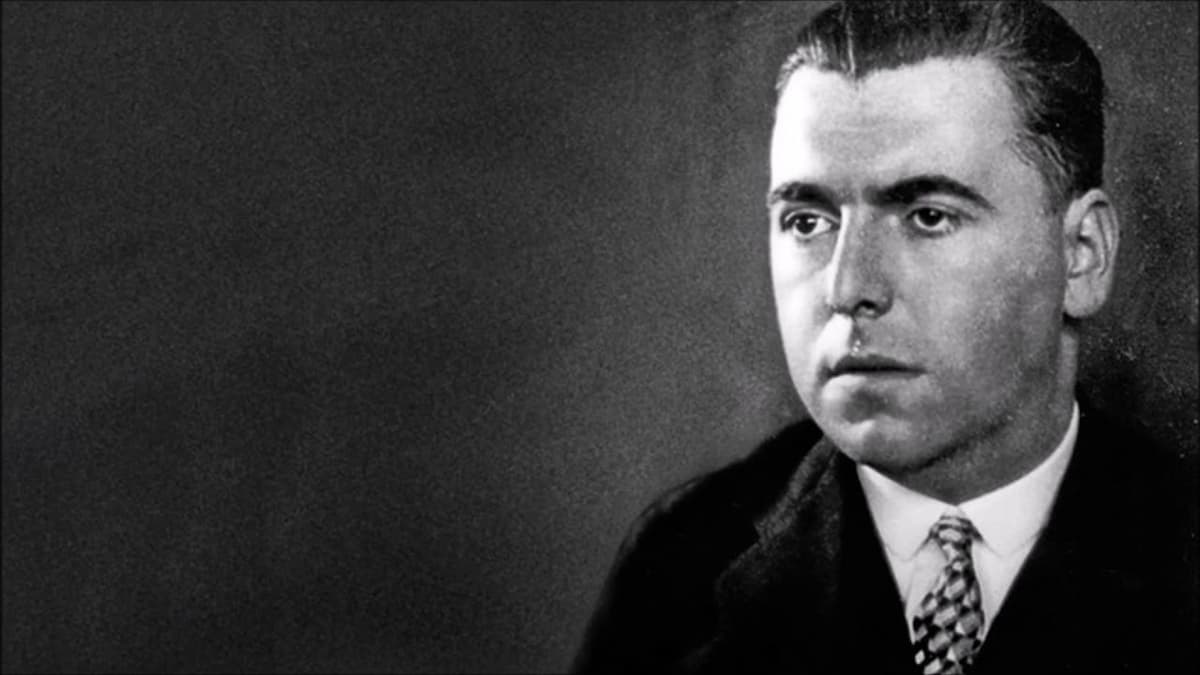
Erwin Schulhoff
Schulhoff’s aim here is partly satirical – he’s mocking Romantic excess in music – but given the time period, the work is also clearly pushing the boundaries of what is appropriate, or even possible, for a musician to portray about sex on the concert stage.
Sonata erotica also marks a breaking point in the history of sex portrayed in classical music. After centuries of sublimation, Schulhoff finally brought into the open what the art had been suggestively circling, in one way or another, for hundreds of years.
Conclusion
Taken together, these works reveal how Western art music gradually moved from encoded longing to an open acknowledgement of lovemaking.
Even before Schulhoff, when sex could not be shown in any kind of overt way, it was heard through tension, instrumentation, rhythm, and more.
Eroticism has always existed in classical music; what changed over time was how openly composers were willing to depict it.
For more of the best in classical music, sign up for our E-Newsletter





Excellent contribution, I enjoyed that. Perhaps Scriabin’s Le Poème de l’extase would not be out of place in this list?
Schulhoff, though… wow! 🙂
And “ mon cœur s’ouvre à ta voix”, Samson et Dalila!
Thanks, it’s a wonderful site where you can learn a lot of lotería.
And where is Ravel’s “Bolero” and Skriabin’s “Le Poème de l’extase”?
Music is an aural , aesthetic and intellectual experience. It has nothing to do with human biological sensation. It represents; it does not reproduce. It is unlike literature, which can evoke erotic sensations. We don’t need sex to explain music or enhance our musical experience. Why do so many people want to imbue music with erotic content? Maybe they are intellectually and aesthetically incapable of
understanding or appreciating music for its own unique attributes?
Glazunov Prelude to From the Middle Ages, Korngold Das Wunder der Heliane.