Franz Liszt was one of the most powerful musical connectors of the nineteenth century.
As a virtuoso pianist, composer, teacher, conductor, and tireless advocate for others’ music, he stood at the center of an international network of composers who admired him and actively sought his approval.
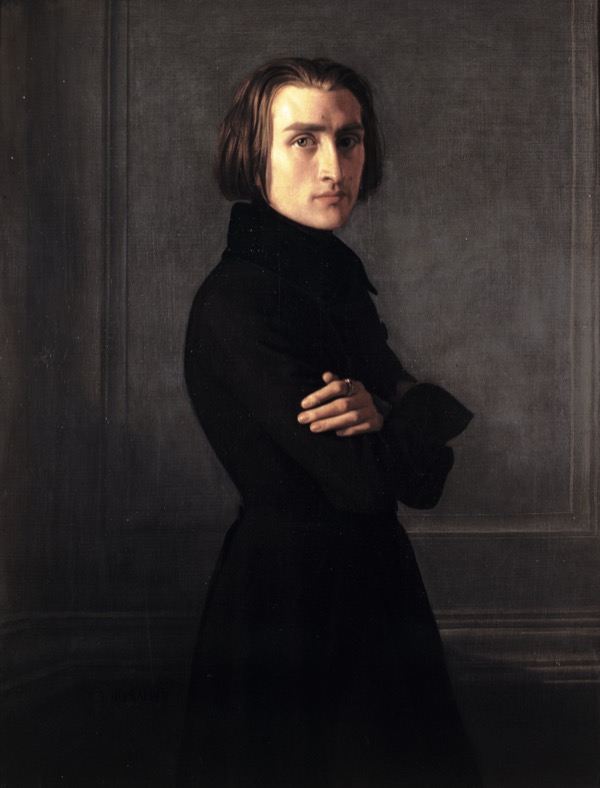
Franz Liszt
One of the clearest ways this admiration manifested was through dedications.
To dedicate a major work to Liszt was not a casual gesture: it was an acknowledgement of artistic kinship and gratitude, as well as a public signal of an implicit endorsement from one of the most influential musicians of the Romantic era.
The works below trace Liszt’s relationships across Europe and beyond: from fellow virtuosi like Frédéric Chopin and Robert Schumann, to younger composers such as Edward MacDowell and Marie Jaëll, to late-career tributes like Camille Saint-Saëns‘s “Organ” Symphony.
Together, they show how Liszt’s influence extended not just through his performing and compositions, but through the personal relationships he nurtured that, in turn, helped to shape the musical canon we know today.
Frédéric Chopin – Études, Op.10 (1833)
Frédéric Chopin (1810–1849) and Liszt were contemporaries and colleagues in the 1830s Parisian music scene. Despite their very different personalities, they admired each other’s talents deeply.
In one 1833 letter to a friend, Chopin wrote:
“I hardly even know what my pen is scribbling, since at the moment Liszt is playing one of my études… I would love to acquire from him the manner in which he plays [them.]”
That same year, he dedicated his first twelve études, Op. 10, to Liszt.
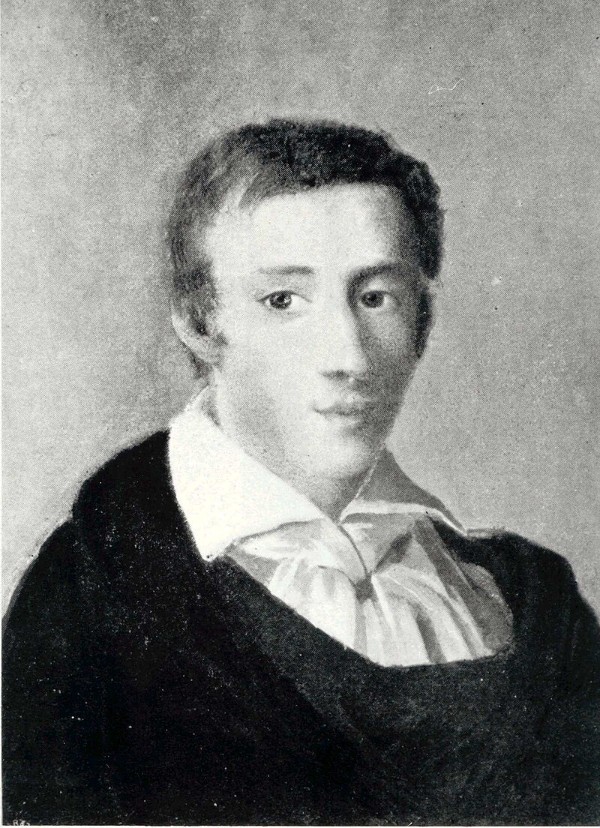
Frédéric Chopin
With his dedication, Chopin acknowledged that Liszt was one of the few living pianists capable of meeting the formidable technical challenges posed by these études.
Although the two pianists drifted apart somewhat later in life, Liszt was devastated by Chopin’s early death from tuberculosis in 1849. He even wrote the first posthumous biography of Chopin.
Robert Schumann – Fantasie, Op.17 (1836–1839)
Robert Schumann (1810–1856) initially became acquainted with Liszt through mutual friends (including Chopin) and later through correspondence.
At the beginning, their friendship was a mutual admiration society: Schumann admired Liszt as a performer and champion of new music, while Liszt admired Schumann’s compositions.
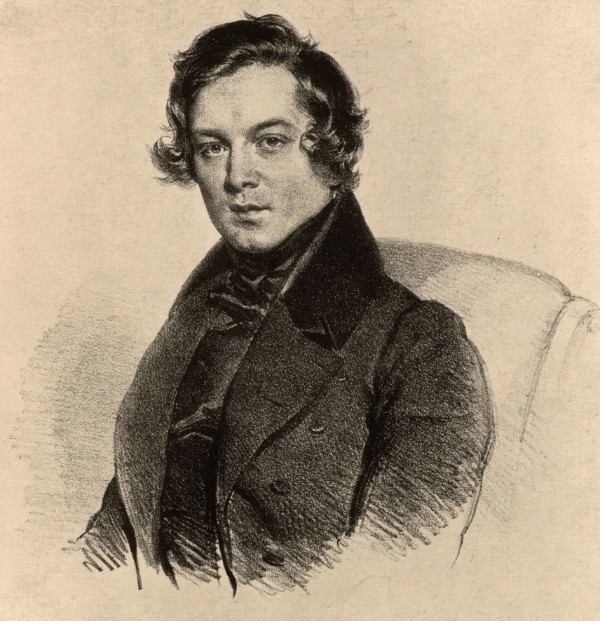
Robert Schumann
Schumann’s Fantasie in C (composed 1836, published in 1839) carries a dedication to Franz Liszt.
This dedication is significant. The first movement (“Ruins”) was initially a lament written while separated from his fiancée Clara Wieck, herself a celebrated pianist. But later, Schumann expanded it into a full-fledged three-movement Fantasy to support a fundraising effort for a monument to Beethoven. Liszt was at the forefront of that project, donating generously and fundraising himself. Schumann acknowledged his hard work by dedicating the entire Fantasy to Liszt, “remembering the Beethoven effort.”
Liszt was deeply honoured by the gesture, writing to Schumann that “the fantasy dedicated to me is a work of the highest class, and I am really proud of the honour you do me in linking my name with so imposing a composition.”
Years later, in 1854, Liszt returned the favour by dedicating his famous Piano Sonata in B minor to Schumann.
Anton Rubinstein – Symphony No. 2, Op. 42, “Océan” (1851)
By the time pianist and composer Anton Rubinstein (1829–1894) composed his Second Symphony in 1850, Liszt had become something of a mentor – from a distance.
Liszt was one of the few non-Russian composers with whom Rubinstein interacted. He admired Liszt’s prowess and innovations, even if he didn’t always agree with his more radical musical ideas.
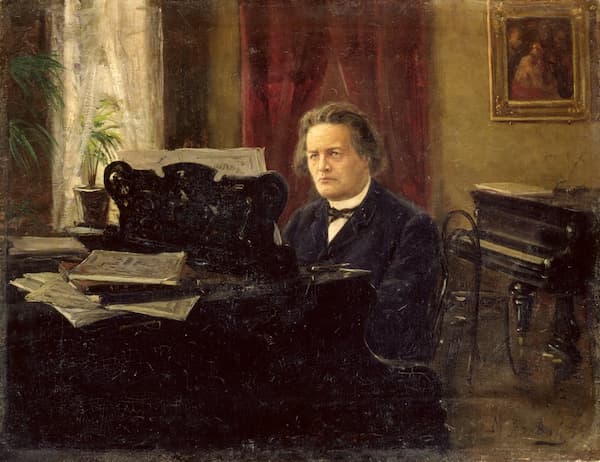
Portrait of Composer Anton Rubinstein by Michail Michailovich Yarowoy
The first version of Rubinstein’s Symphony No. 2 in C major, Op. 42, nicknamed “The Ocean,” was originally composed in 1850–51 and dedicated to Franz Liszt, acknowledging him as one of Rubinstein’s mentors.
At that time, Liszt was writing tone poems and pioneering programmatic orchestral music. Rubinstein’s Ocean featured a descriptive title and depicted the natural world, two trendy practices inspired by Liszt’s example of linking symphonic music to ideas found in nature and literature.
Even where Rubinstein remained aesthetically independent, Liszt had provided an important model for how orchestral music could express extra-musical ideas.
Marie Jaëll – Piano Sonata (1872)
In 1866, 20-year-old pianist Marie Trautmann married fellow virtuoso Alfred Jaëll. Alfred had studied with Liszt as a young man and introduced the two in 1868.
Liszt was impressed by Marie, writing that she had “the brains of a philosopher and the fingers of an artist.”
He, in turn, introduced her to major composers of the era, such as Anton Rubinstein and Johannes Brahms.
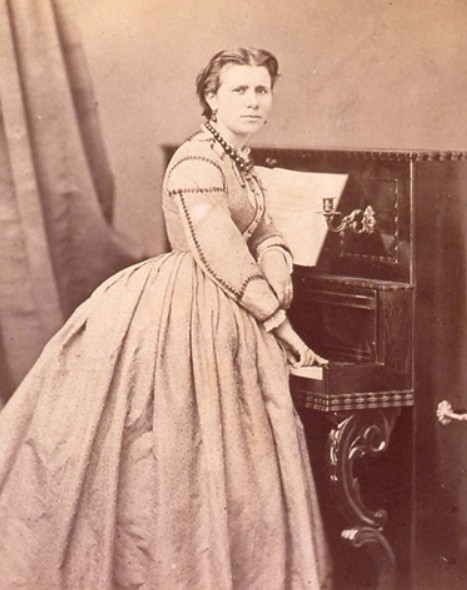
Marie Jaëll
Around 1870, she began work on a piano sonata. It was published in 1872, with the dedication to Liszt prominently featured. The appearance of his name suggested his approval, which would have been a major endorsement, especially for a woman publishing openly under a woman’s name, during a time when women composers of serious works were often dismissed or otherwise marginalised.
Alfred died in 1882, leaving Marie a 36-year-old widow. Instead of remarrying, she doubled down on her interest in composing, moving to Weimar to study with Liszt.
He continued to admire her deeply during this next stage of her career, dedicating his Third Mephisto Waltz to her after she played it for him.
Camille Saint-Saëns once claimed, “Only one person in the world [besides Liszt] who can play Liszt – Marie Jaëll!” By granting her this dedication, Liszt made clear he agreed with the general tenor of the compliment.
Alexander Borodin – In the Steppes of Central Asia (1880)
Alexander Borodin (1833–1887), a Russian composer and member of “The Mighty Handful,” never had a close long-term friendship with Liszt, but he did have a meaningful artistic encounter with him.
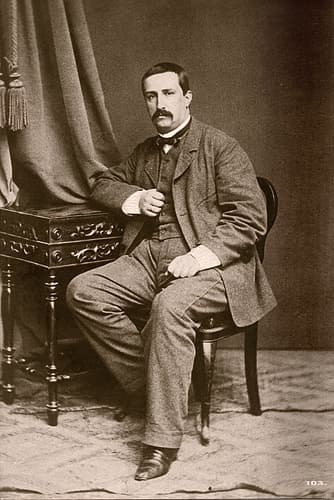
Alexander Borodin
It happened in 1881 when Borodin travelled to Weimar to visit the ageing Liszt. He brought along his new symphonic poem In the Steppes of Central Asia.
Liszt’s reaction was very positive: he was so taken by it that he immediately encouraged Borodin to make a piano four-hands arrangement.
In a letter home from Weimar, Borodin recounted Liszt’s approval to his wife, showing how much the endorsement meant to him.
Edward MacDowell – Piano Concerto No. 1, Op.15 (1882)
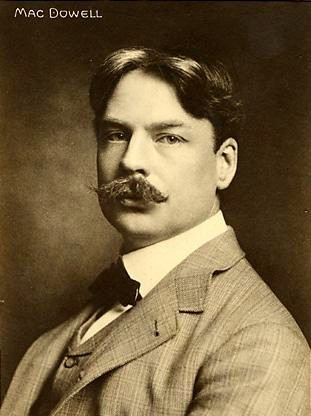
Edward MacDowell, ca 1900
Edward MacDowell: Piano Concerto No. 1 in A Minor, Op. 15 (Stephen Prutsman, piano; Ireland National Symphony Orchestra; Arthur Fagen, cond.)
Edward MacDowell (1860–1908) was born in New York City, where he began his piano studies. In 1877, when he was 16, he and his mother travelled to Paris so he could study piano there.
In 1882, at the age of 21, he visited Liszt in Weimar. He brought the manuscript of his Piano Concerto No. 1 with him.
Liszt welcomed him and listened to the young American perform his concerto. When MacDowell asked – rather boldly – if he could dedicate the work to Liszt, the master accepted the honour with enthusiasm.
It was one of the first works by an American that Liszt endorsed. This was quite the statement, because at the time there was a strong European prejudice against Americans, who were thought by many to be fundamentally unmusical.
Liszt made a number of moves to support MacDowell’s career: accepting him as a pupil, recommending his works to publishers Breitkopf & Härtel, and securing performance opportunities for him.
Camille Saint-Saëns – Symphony No. 3, Op. 78 (1886)
Camille Saint-Saëns (1835–1921) and Liszt enjoyed a long and cordial friendship based on mutual admiration.
They first met in the 1850s when Saint-Saëns was a young keyboard virtuoso; Liszt recognized his talent immediately. Over the years, the two men continued to interact frequently.
Saint-Saëns became an early French advocate of Liszt’s music, championing Liszt’s symphonic poems in France when they were new and controversial.
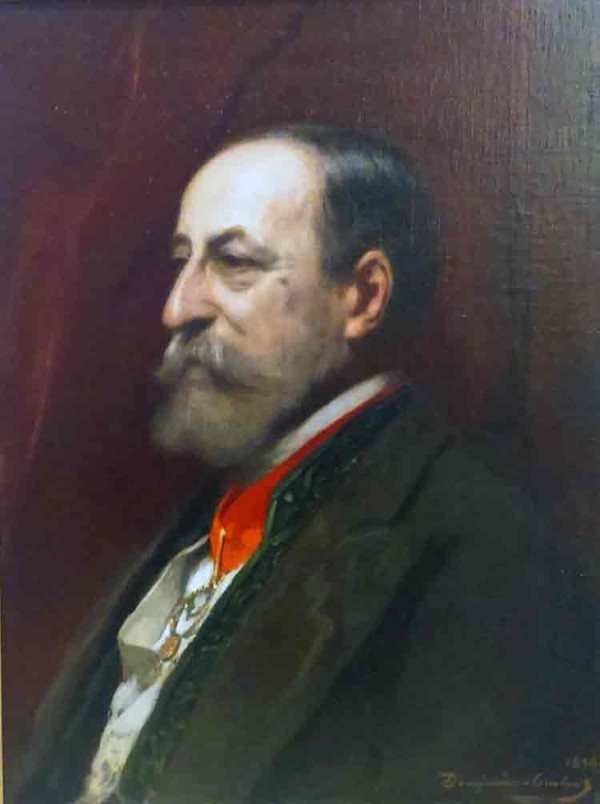
Portrait of Camille Saint-Saëns by Benjamin Constant
Saint-Saëns completed his Symphony No. 3 (nicknamed the “Organ” Symphony) in 1886. Initially, the work was commissioned by the Royal Philharmonic Society in London and was to be dedicated to that society. However, Liszt’s death on 31 July 1886 prompted Saint-Saëns to change the dedication to Liszt’s memory.
The Organ Symphony employs the practice of cyclical thematic transformation that Liszt helped pioneer, where themes recur and evolve across the work’s two large movements.
No other Saint-Saëns composition carries Liszt’s name, but the dedication of this mighty symphony – arguably his best – signalled both the importance of Liszt’s life and the peak of Saint-Saëns’ career.
Conclusion
Taken together, these dedications reveal Franz Liszt not simply as a towering pianist-composer but as a cultural catalyst whose enthusiasm and encouragement could make or break careers, legitimise up-and-coming composers, and bridge traditions and generations.
A dedication to Liszt signified more than token respect: it was praise for a generational figure who actively shaped the musical taste, institutions, and opportunities of the entire nineteenth century.
These compositions stand as lasting evidence of how Liszt’s influence was exercised not only through his own music, but through the composers he supported – and the masterpieces they tied to his legacy.
For more of the best in classical music, sign up for our E-Newsletter