We often imagine the great masterpieces of classical music as being the result of years of painstaking labour. But history tells a more complicated story.
Some of the most enduring works in the classical repertoire were written at astonishing speed: in a matter of weeks, days, or even hours.
These bursts of creativity weren’t accidents – or miracles. They often came at moments of intense pressure, emotional upheaval, professional necessity, or sudden inspiration, when composers were forced to trust their instincts and rely on years of practice.
Today, we’re looking at how talent, technical mastery, and lived experience can all converge to produce music of lasting power – sometimes faster than seems humanly possible.
Robert Schumann – Symphony No. 1
23 January 1841 – 20 February 1841
28 days
Robert Schumann wrote his Spring Symphony during an extraordinary burst of creative energy in the early weeks of 1841.
He had recently married famous pianist Clara Wieck Schumann, who was at the time pregnant with their first child.
After spending much of the previous decade focused almost exclusively on composing works for piano and voice, he turned to orchestral writing in the 1840s, encouraged by his new wife and buoyed by years of intense study of orchestral scores.
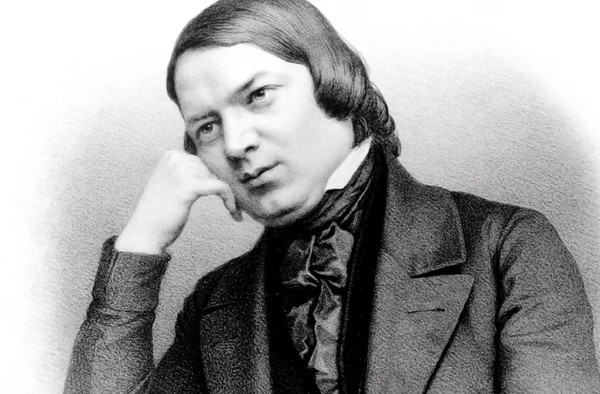
Robert Schumann
Schumann drafted his entire first symphony in just under four weeks. Ideas seemed to come to him fully formed. After the work was completed, he began associating it with themes of spring and new love.
The symphony was orchestrated rapidly and premiered only weeks later on 31 March 1841 by none other than Felix Mendelssohn.
Pyotr Ilyich Tchaikovsky – Violin Concerto
March 1878
c. 28 days
Tchaikovsky wrote his Violin Concerto while convalescing in Clarens, Switzerland, following the collapse of his disastrous six-week-long marriage. Tchaikovsky suffered a nervous breakdown after his wedding.
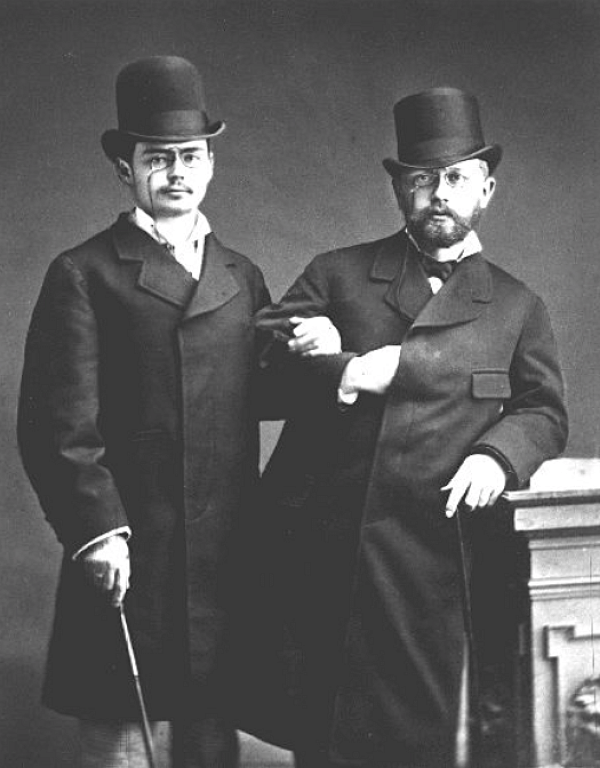
Pyotr Ilyich Tchaikovsky and Yosif Kotek
In Switzerland, he met up with his former student (and former love interest), violinist Yosif Kotek. After looking through Eduard Lalo’s Symphonie espagnole, Tchaikovsky composed and orchestrated the concerto at striking speed, completing it in roughly a month.
Sketches were finished within days, and the full score followed shortly thereafter.
On 28 March, he wrote to his friend Nadezhda von Meck:
“Today I finished the concerto. It still has to be copied out and played through a few times…and then orchestrated. I shall start the copying out and add the finishing touches.”
Tchaikovsky later remarked on how unusually easily the work came to him, despite his fragile mental state.
The concerto’s confidence stands in striking contrast to the personal crisis that surrounded its creation.
George Frideric Handel – Messiah
22 August 1741 – 14 September 1741
24 days
Handel‘s Messiah is one of the most famous examples of rapid composition in Western music history.
Over the course of just 24 days, Handel produced the complete score, containing over 250 pages of music, while working in his London home.
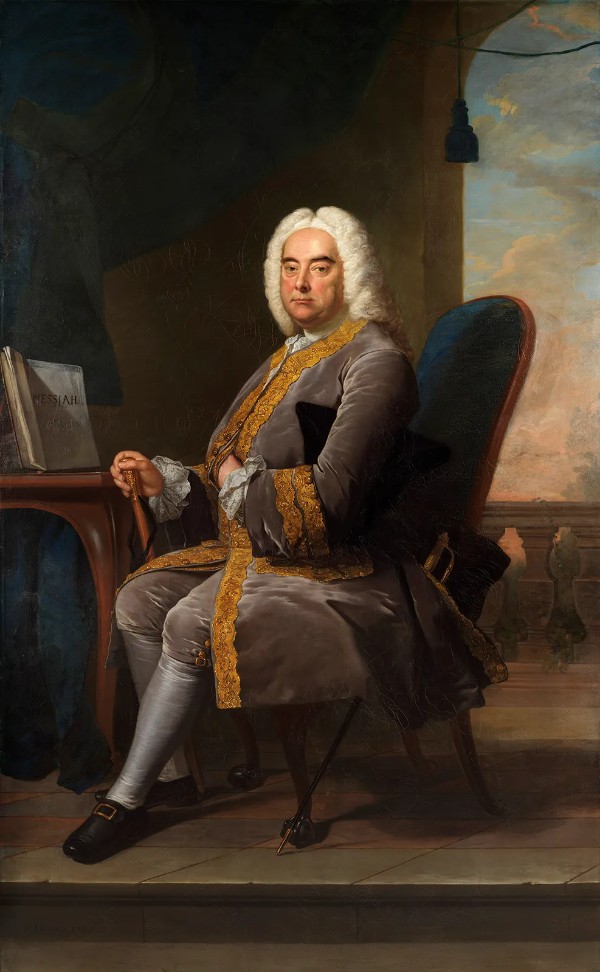
George Frideric Handel
Contemporary accounts describe him rising early, neglecting meals, and working for hours on end.
Like most composers of his era, he also reused some music he’d written earlier, resulting in a shorter composition time.
Handel was an experienced dramatist and technician with decades of compositional practice behind him, but the speed at which he wrote this oratorio, along with its subject matter, gave rise to rumours of divine inspiration.
Gioachino Rossini – The Barber of Seville
Late 1815 or early 1816
c. 13–15 days
Rossini composed his opera The Barber of Seville under extreme deadline pressure for its February 1816 premiere in Rome.
Although the exact dates are not documented, Rossini himself claimed to have written the opera in about two weeks, a timeframe widely accepted by scholars.
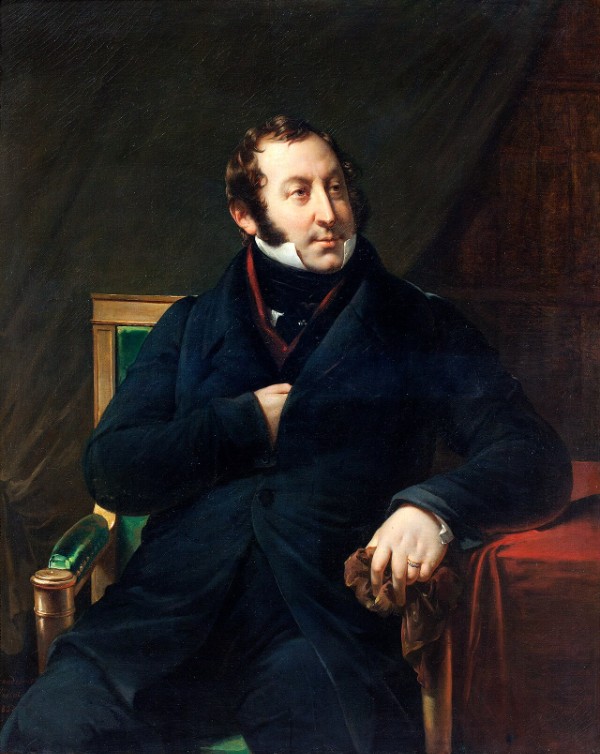
Gioachino Rossini
Working at his customary blistering pace, Rossini reused some earlier material, as was standard practice at the time, but wrote much of the score fresh.
The opera’s famously disastrous premiere, complete with a jeering audience and onstage accidents, belied the speed of its creation. Read more about that disastrous premiere.
However, given more performances, its popularity grew, and it eventually became one of the most successful comic operas of all time.
Wolfgang Amadeus Mozart – Symphony No. 36
31 October 1783 – 3 November 1783
4 days
On 31 October 1783 Mozart wrote to his father:
“When we reached the gates of the city, we found a servant waiting there to drive us to Count Thun’s, at whose house we are now staying… On Tuesday, November 4, there will be an academy [concert] in the theater here and, as I have not a single symphony with me, I am writing a new one at breakneck speed…Well, I must close, because I really must set to work.”
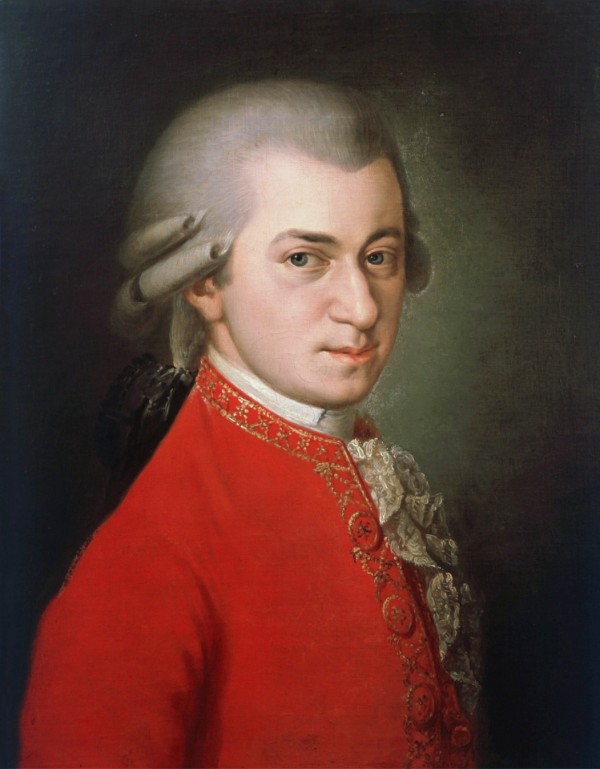
Barbara Krafft: W. A. Mozart, 1819 (Gesellschaft der Musikfreunde)
The end result of his work was his 36th symphony: an expansive, confident, and sophisticated piece of music.
Its slow introduction was unusual for Mozart’s symphonies at the time and demonstrates that his fast speed didn’t constrain his creativity.
Dmitri Shostakovich – String Quartet No. 8
12 July 1960 – 14 July 1960
3 days
Shostakovich wrote his eighth string quartet during a short stay in Gohrisch, East Germany, while working on a film score.
Composed in just three days, the quartet is among his most personal and emotionally devastating works. The speed of its composition suggests a sense of desperate emotional urgency.
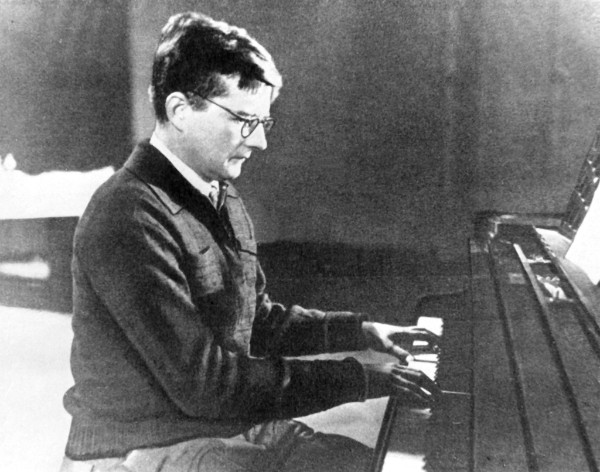
Dmitri Shostakovich
Although officially dedicated “to the victims of fascism and war,” Shostakovich privately referred to it as a kind of self-epitaph. According to his friend, musicologist Lev Lebedinsky, Shostakovich was considering suicide at the time.
It is built obsessively around the DSCH motif (i.e., the notes D-E♭-C-B), which Shostakovich used as his most personal musical signature.
Paul Hindemith – Trauermusik
21 January 1936
1 day
The timelines of the compositions of these works are hugely impressive, but this work by Paul Hindemith has them all beat.
Hindemith composed Trauermusik (Funeral Music) in a single day following the sudden death of King George V.
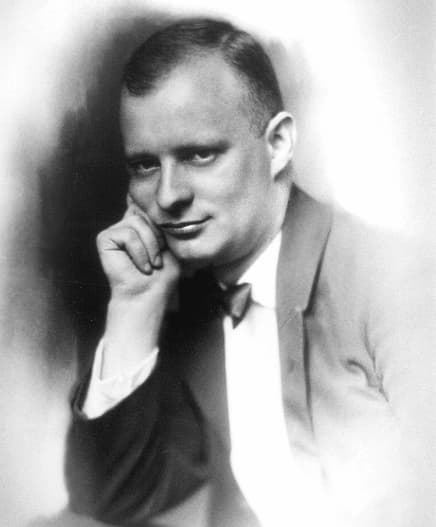
Paul Hindemith, 1923
Written overnight for a BBC broadcast the following evening, the piece replaced a planned concert performance deemed inappropriate for a period of mourning.
Scored for viola and string orchestra, Trauermusik is austere and deeply restrained. Its quick composition may have been dictated by George V’s death, but its spare, eloquent musical language remains effective even today.
Conclusion
Taken together, these works challenge the assumption that greatness requires slowness or deliberation.
In each case here, the composers’ speed was the product not only of their individual talent but of exhaustive preparation: years of study, habit, and artistic discipline that allowed ideas to emerge fully formed when circumstances demanded it.
Listening today with these timelines in mind makes them – and their composers – even more impressive.
For more of the best in classical music, sign up for our E-Newsletter