Arthur Sullivan, born on 13 May in London, trained at the Chapel Royal, the Royal Academy of Music, and the Leipzig Conservatoire. He composed in virtually every musical genre, ranging from the oratorio to the symphony, and from chamber and piano works to the concerto.
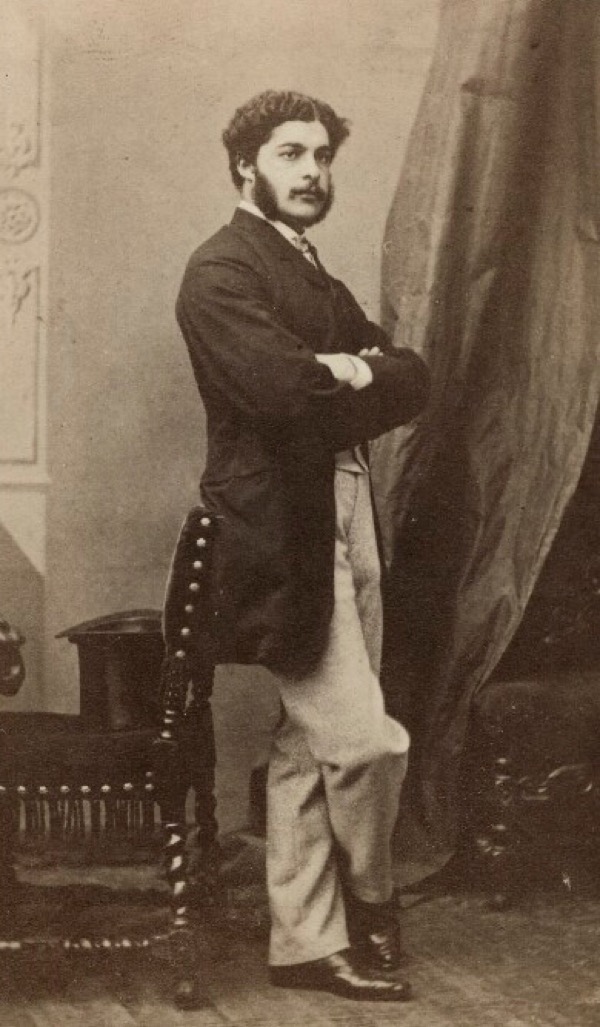
Arthur Sullivan, c. 1864
His widest and most enduring fame emerged from his 14 comic-opera collaborations with the dramatist W.S. Gilbert. While Gilbert wrote satirical and witty libretti, Sullivan contributed memorable melodies that could convey both humour and pathos.
To celebrate Sullivan’s birthday, let’s have a listen to The Mikado, or The Town of Titipu, which opened on 14 March 1885 and ran at the Savoy Theatre for 672 performances. By the end of the year, at least 150 companies had produced the work in Europe and America.
Gilbert and Sullivan: The Mikado
Japan Meets Victorian Satire
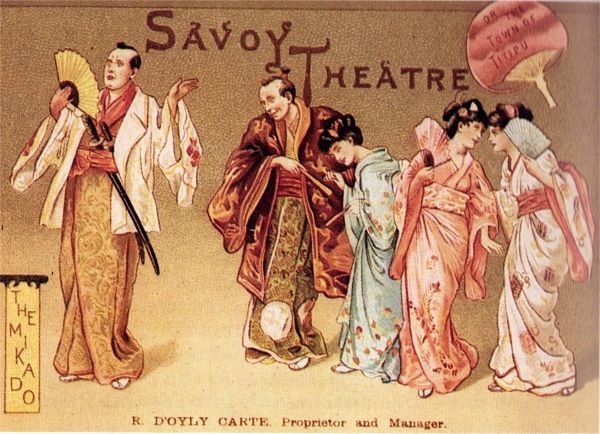
The Mikado at the Savoy Theatre, 1885
The Mikado is widely regarded as the finest Gilbert and Sullivan operetta. Certainly, it is the only one to have gained significant popularity outside the English-speaking world. It is a “Savoy Opera,” created for impresario Richard D’Oyly Carte, who built the Savoy Theatre specifically for their operas. Gilbert and Sullivan were once again ready to satirise British politics, bureaucracy, and social pretensions.
Sullivan, however, had decided to devote himself to more serious music, and even considered ending the creative partnership. After a rather tense exchange of letters, Sullivan eventually agreed to look at a sketch of the plot to The Mikado.
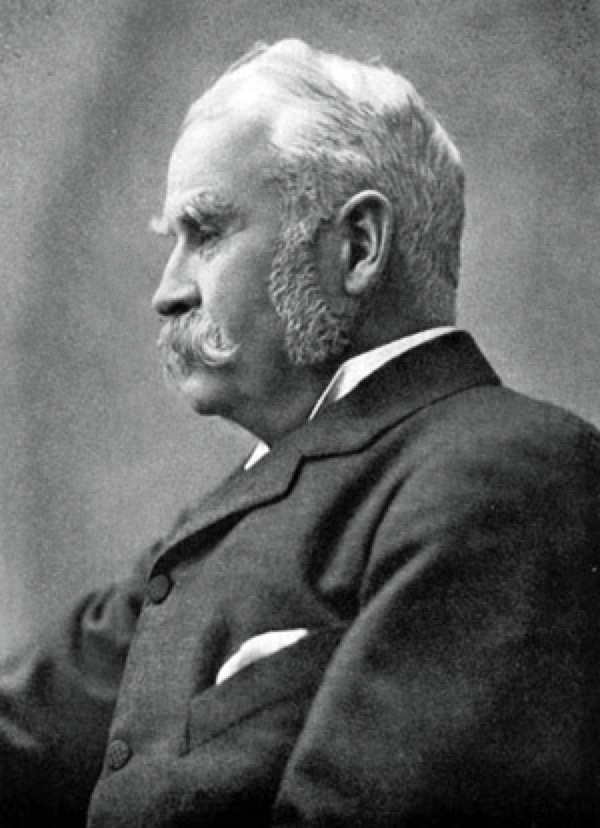
W.S. Gilbert
As Victorian Britain was fascinated by Japanese art and culture, Gilbert decided to set his plot in The Town of Titipu. As he told a journalist, “I cannot give you a good reason for our piece being laid in Japan. It afforded scope for picturesque treatment, scenery and costume, and I think that the idea of a chief magistrate, who is judge and actual executioner in one, and yet would not hurt a worm, may perhaps please the public.”
Gilbert and Sullivan: The Mikado, “The Sun whose Rays”
Love, Law, and Lunacy
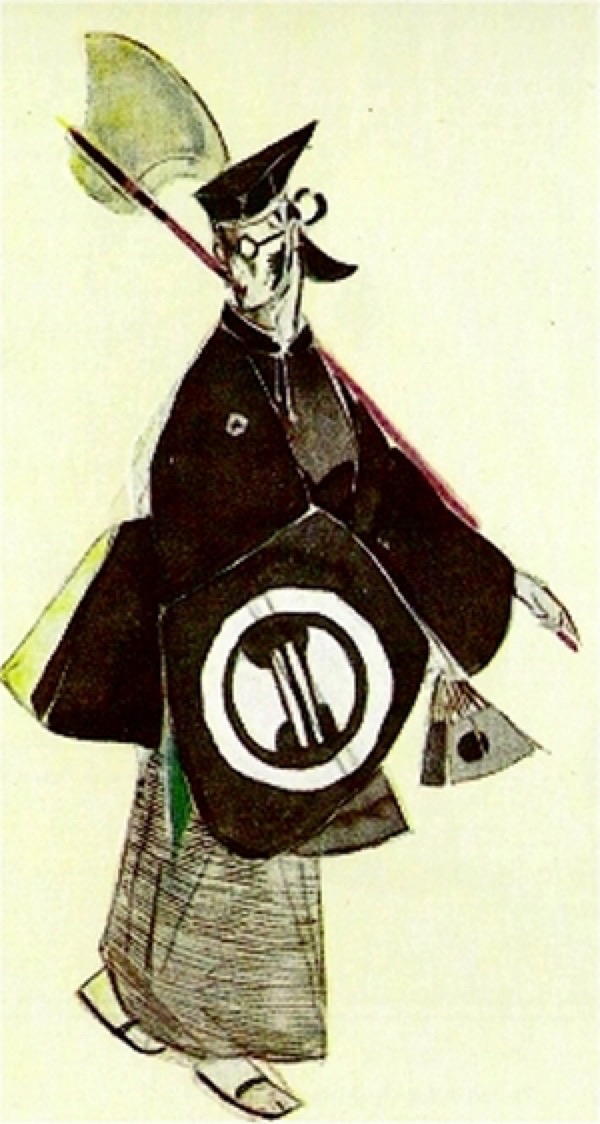
Ko-Ko, 1926 production
A year before the action of this opera begins, Nanki-Poo, son of the Mikado of Japan, fled his father’s imperial court to escape marriage with Katisha, an unattractive elderly lady. Disguised as a wandering minstrel, he met and fell in love with Yum-Yum, the young ward of Ko-Ko, a cheap tailor in the town of Titipu.
When he returns to find his new love, he is devastated to learn that Yum-Yum is engaged to Ko-Ko. Ko-Ko, however, is condemned to death under the Mikado’s severe anti-flirting laws. Ko-Ko has also been appointed Lord High Executioner on the principle that he cannot execute anyone before decapitating himself.
Compelled to stage an execution to satisfy the Mikado, Ko-Ko permits the marriage of Yum-Yum and Nanki-Poo when the latter consents to be beheaded in return. There is another complication, as according to the law, the wife of an executed man must be buried alive.
The Mikado arrives and demands to know why no execution has occurred, and Ko-Ko presents fabricated documents to show that Nanki-Poo has already been executed. When the Mikado reveals that the supposed victim was his own son, Nanki-Poo reappears alive, and Ko-Ko persuades Katisha to marry him. Since she is not married, Nanki-Poo is free to marry Yum-Yum.
Gilbert and Sullivan: The Mikado, “Three Little Maids From School Are We”
Brilliance, Beauty, and Changing Legacy
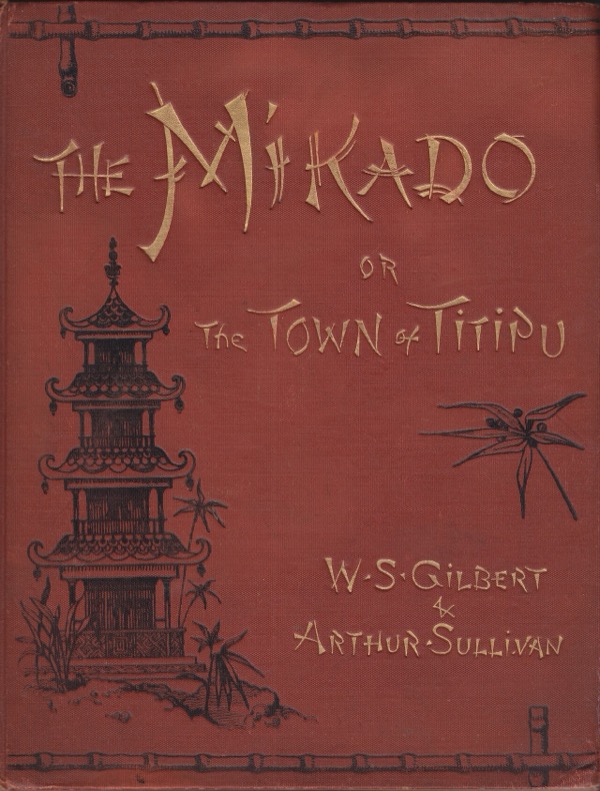
The Mikado, Chappell Vocal Score cover, c. 1895
Sullivan’s score was designed for both comedic impact and romantic charm. We find memorable patter songs, madrigals, and romantic ballads alongside musical jokes, such as a quotation from J.S. Bach‘s G-minor organ fugue.
The girlish portrayal of innocence finds its happiest medium in choruses and ensembles for the schoolgirls, and David Russell Hulme writes, “The Mikado goes beyond the creation of a succession of individually brilliant musical pieces and dialogue scenes. It is the work’s complete artistic cohesion that places it among the greatest operettas ever written.”
While the setting is a Japan of pure invention, completely divorced from any aspect of authentic cultural representation, productions in the United States have drawn criticism for promoting simplistic Orientalist stereotypes.
The Mikado has since been updated with modernised words and lyrics with contemporary references, while more recent productions have eliminated all references to Japan by placing the action in Milan and Scotland.
For more of the best in classical music, sign up for our E-Newsletter