In many respects, Cage and Feldman stand among the most important composers shaping the musical thinking of the twenty-first century. Together, they were central figures of what came to be known as the New York School. If their music is not performed as often as it perhaps should be, it is their ideas that have had the most profound and lasting impact on the musicians who followed them — not only in the United States, but later across Europe as well.
Cage pioneered indeterminacy, electroacoustic experimentation, and the non-standard use of musical instruments. His collaboration with choreographer Merce Cunningham also played a decisive role in the development of modern dance, reshaping the relationship between music and movement. As a leading figure of the American avant-garde in the 1950s, he is frequently cited as one of the most influential composers of the twentieth century.
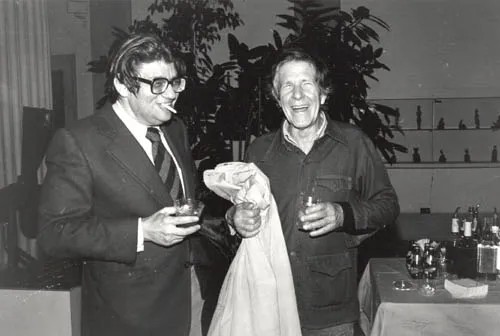
John Cage and Morton Feldman © kirkville.com
Feldman, for his part, stands as another major figure of twentieth-century music. Like Cage, he explored indeterminacy and non-standard musical notation. Yet his concerns often revolved around different questions: the perception of time, the fragility of sound, and the delicate balance between pitch, duration and silence. Feldman challenged conventional ideas of tempo and rhythm — sometimes through their near absence — as well as expectations surrounding structure, dynamics and the sheer duration of a work.
The story of their meeting has become something of a legend. Cage and Feldman first encountered one another in New York during a performance of Anton Webern‘s Symphony. Both were so overwhelmed by the music that they left the hall mid-performance, only to run into each other in the lobby. A conversation began, and a friendship quickly formed. Soon after, joined by composers Brown, Tudor and Wolff, they began to be associated with what critics later called the New York School.
Cage & Feldman in Conversation 1
In his own works, Feldman continually questioned the nature of musical time. He allowed sounds to exist in extended durations, often giving them space to decay naturally into silence. Many of his pieces unfold at an almost suspended pace, where the sense of forward motion is replaced by a quiet unfolding of sound. In his later years, he pushed this idea even further, writing works that could last several hours and invite the listener into an entirely different experience of time.
Cage, meanwhile, challenged the very idea of what an instrument should sound like. He is famously associated with the prepared piano, in which objects such as screws, bolts or rubber are placed between the strings, transforming the instrument into something closer to a small percussion orchestra. Through such experiments, he questioned traditional assumptions about timbre and musical identity. His most radical gesture may remain the piece 4’33”, in which performers do not intentionally produce sound at all. In doing so, Cage reframed silence itself, revealing that the surrounding environment — the rustle of an audience, the hum of a room — is never truly silent.

Silence: Lectures and Writings by John Cage
© Amazon
Feldman approached harmony in an equally unconventional way. Rather than following established harmonic functions, he often treated sounds as colours to be placed side by side. Chords appear less as steps in a progression than as objects in a sonic landscape. Occasionally, these combinations might resemble traditional harmonic patterns, but this happens almost incidentally. The focus is not on exploring new harmonic systems, but on questioning the very process of musical creation — allowing intuition, and sometimes chance, to guide decisions rather than strict intellectual planning.
Both Cage and Feldman were deeply interested in philosophical ideas from the East. Cage, in particular, drew inspiration from Zen Buddhism and the I Ching, using chance operations to determine musical events. This approach aimed to remove the composer’s ego from the creative process, allowing sounds to exist for their own sake. Feldman did not rely on chance procedures in quite the same systematic way, yet he shared a similar openness to unpredictability and to the quiet autonomy of sound.
Their performances and scores often reflected this spirit of experimentation. Unusual forms of notation — including graphic symbols, drawings or textual instructions — challenged performers to rethink their role in interpreting music. The act of performance itself became a creative collaboration rather than the simple execution of a fixed score.
Cage also explored unconventional instruments, such as the toy piano, discovering within them unexpected timbres that sometimes evoke the delicacy of certain Asian musical traditions. These experiments helped loosen the boundaries of what could legitimately be considered a musical instrument.
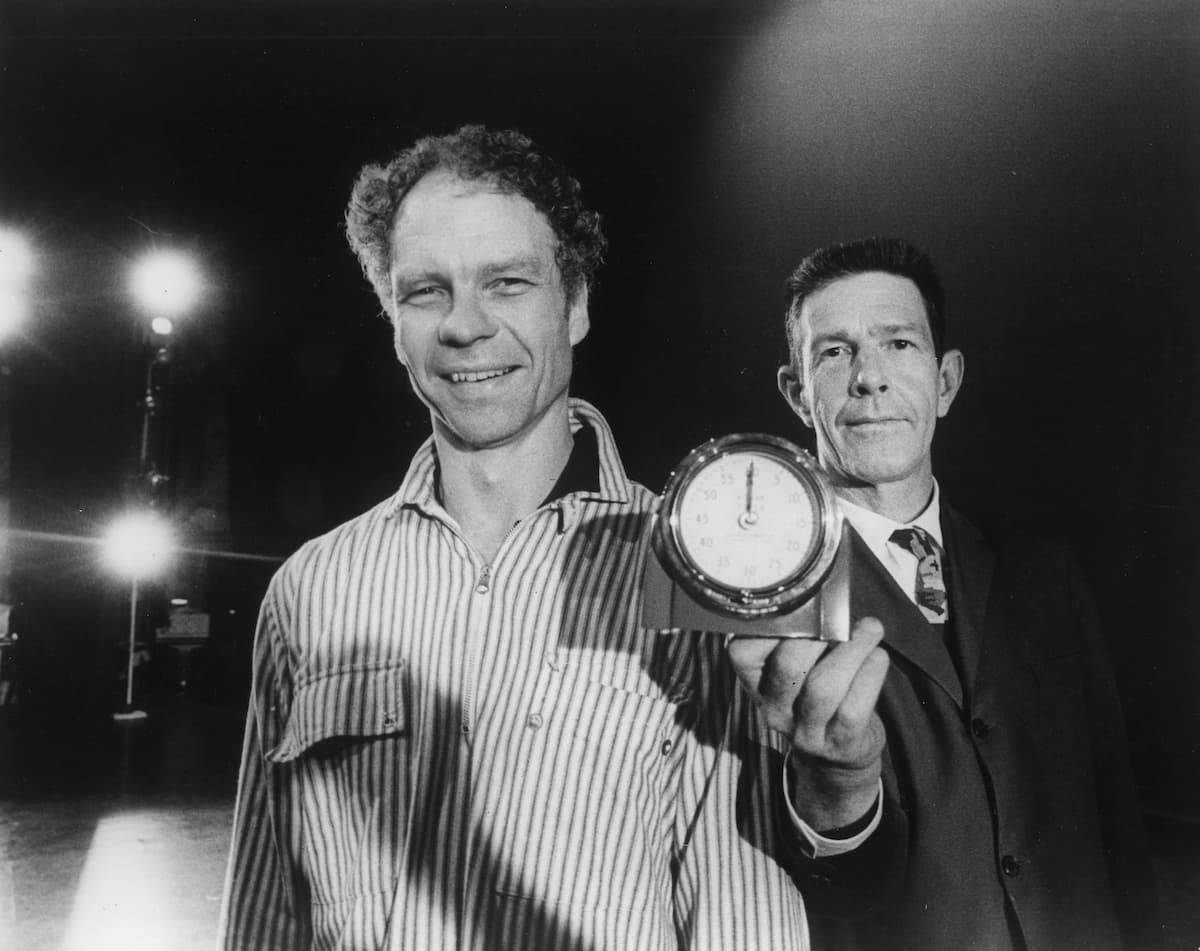
Merce Cunningham and John Cage
Both composers were also deeply connected to artistic worlds beyond music. Cage’s partnership with Merce Cunningham created a new dialogue between dance and sound, where the two elements could coexist independently rather than illustrating one another. Feldman, on the other hand, maintained close relationships with painters of the New York abstract expressionist movement. He was particularly inspired by the works of Mark Rothko, whose vast fields of colour influenced Feldman’s own approach to musical space, stillness and proportion.
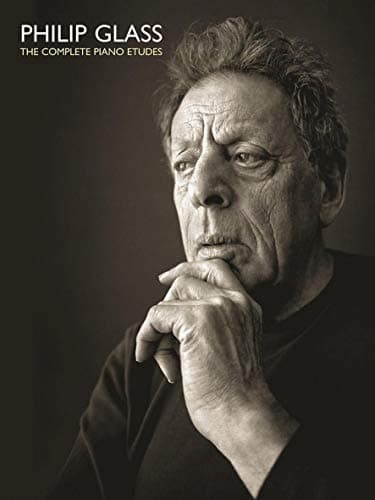
The influence of Cage and Feldman did not end with their own generation. Their ideas helped shape what might be called a second New York wave — the rise of minimalism through composers such as Young, Reich, Glass and Riley. Cage’s book Silence: Lectures and Writings became an essential text for many younger composers searching for alternatives to strict modernism. It is often said that John Adams began moving away from the dense modernist language of his early works after encountering Cage’s ideas. Glass himself once remarked that, among the concerts of Boulez’s famous Domaine Musical series in Paris, the only music that truly excited him was that of Cage and Feldman. Riley has likewise cited Cage as one of the few Western classical influences on his work.
For many musicians today, the legacy of Cage and Feldman lies less in any single technique than in the freedom of thought they introduced. They expanded the field of what music could be — not by replacing one system with another, but by opening doors that had previously remained closed.
For more of the best in classical music, sign up for our E-Newsletter