
The great classical music composers never wrote their music in a vacuum. The people around them always influenced what did – or didn’t – get composed.
During their careers, some of these great composers were in romantic relationships that shaped and promoted their art in integral ways.
Today, we’re looking at eight of the most memorable power couples in classical music history and how those romantic relationships influenced their music-making.
Louise Dumont Farrenc and Aristide Farrenc (1821-1865)
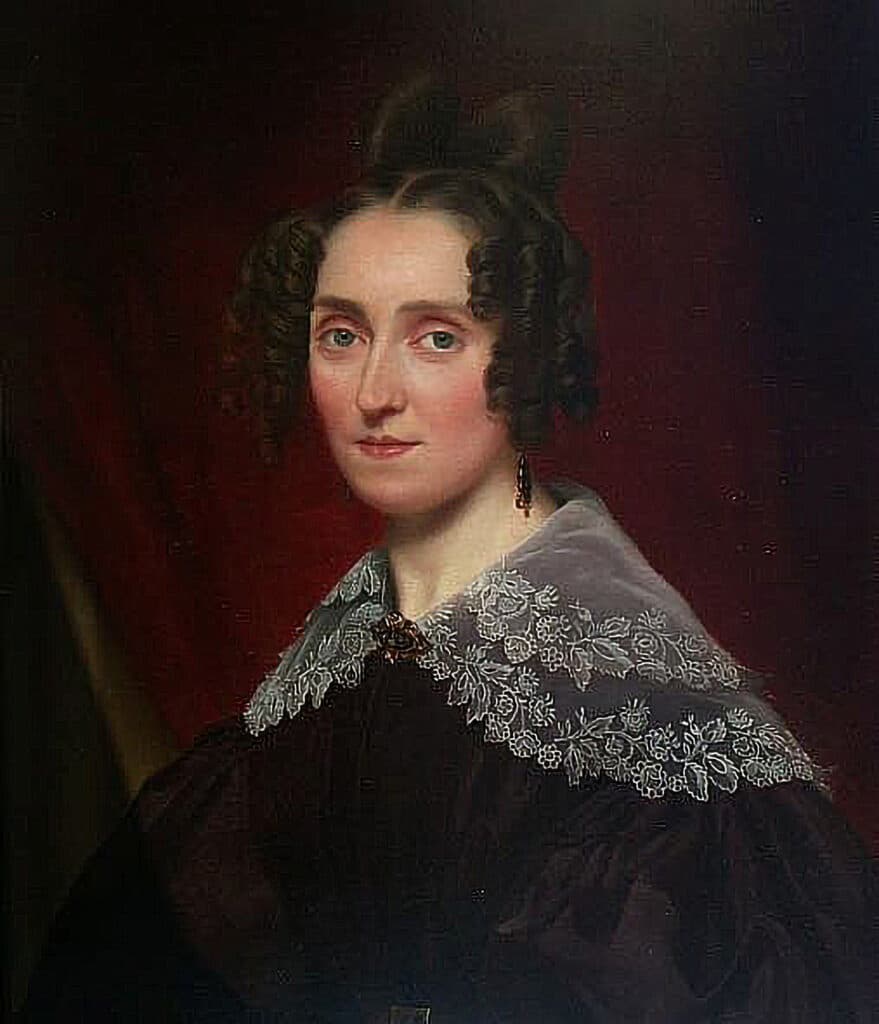
Louise Farrenc
We’re starting our list with a pioneering woman composer named Louise Farrenc and her publisher husband Aristide.
Louise Farrenc was a composer, pianist, and music professor at a time when women rarely pursued those careers professionally.
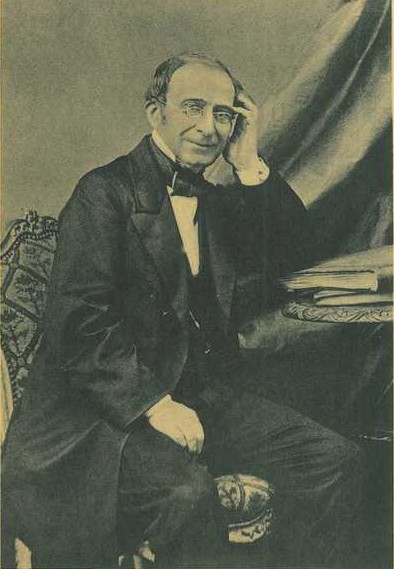
Aristide Farrenc
A few months after her seventeenth birthday, she married Aristide Farrenc, a 27-year-old flutist. Around the time of their marriage, he began publishing music. He eventually founded one of France’s leading music publishing houses, Éditions Farrenc.
Louise Farrenc: Piano Trio in D-minor
Why They’re a Power Couple:
Louise’s impact: She composed symphonies, piano works, and some truly first-rate chamber music, earning enthusiastic reviews from critics like Hector Berlioz. She also became the first female professor of piano at the Paris Conservatoire and (successfully) advocated for pay equality for herself after her Nonet was a triumph.
Aristide’s role: He published her works and promoted them, which gave her a professional advantage over other women composers of the era. He also published French editions of works by other important composers like Beethoven, Hummel, and C.P.E. Bach, thereby helping to shape French tastes more broadly.
Robert Schumann and Clara Wieck Schumann (1837-1856)
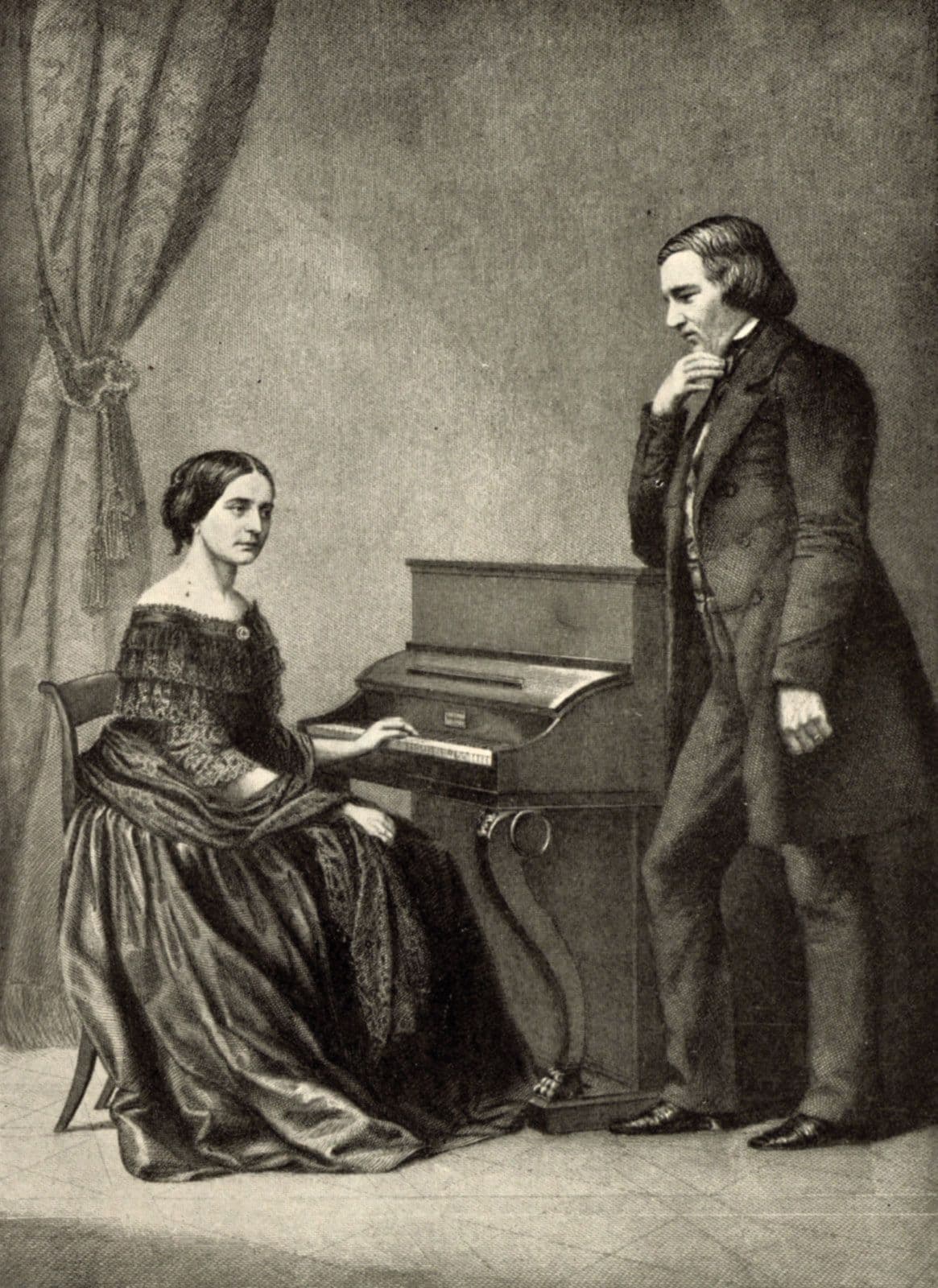
Robert and Clara Schumann, 1850
Robert and Clara Schumann’s romantic relationship began in secret, given the opposition of Clara’s father, teacher, and concert manager, Friedrich Wieck.
Both Robert and Clara were formidable musicians in their own right: Robert was a promising up-and-coming composer, and Clara, despite being a teenager, was already one of the best pianists in Europe. They would inspire each other for years to come.
A brief documentary on Robert and Clara’s relationship
Why They’re a Power Couple:
Robert’s impact: He wrote symphonies, piano works, and songs that helped to define the Romantic Era. Many were inspired and made possible by Clara.
Clara’s role: She regularly premiered Robert’s works, edited his compositions, and supported their household financially by touring, enabling Robert to compose. She was also a composer of lieder, chamber music, and piano pieces herself, which in turn inspired Robert. And she dealt with Robert’s insistence that she keep the house quiet when he was composing.
After Robert’s tragically early death in his mid-forties, Clara kept his legacy alive and helped to establish his work in the repertoire. If Robert had not married Clara, the jury’s out as to whether we’d remember him as fondly and frequently as we do today.
Franz Liszt and Princess Carolyne zu Sayn-Wittgenstein (1847-1860s)
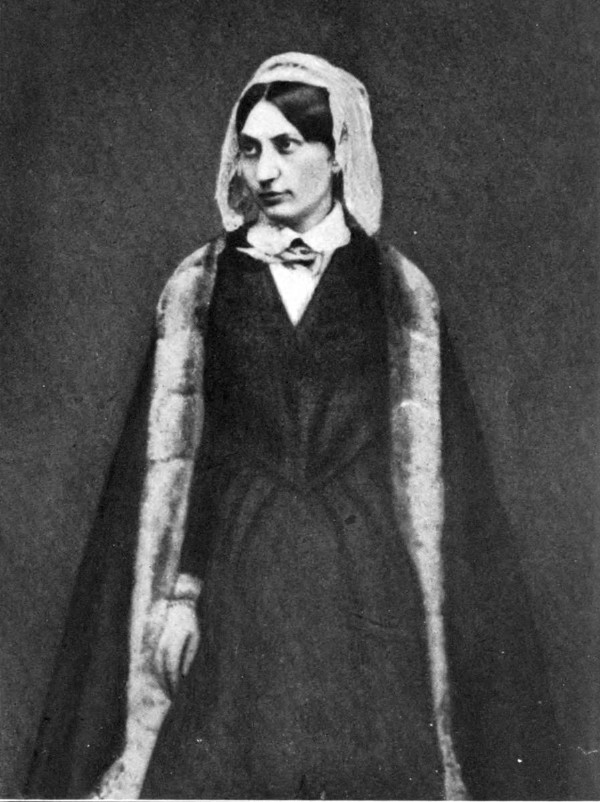
Princess Sayn-Wittgenstein in an 1847
Carolyne zu Sayn-Wittgenstein, a wealthy Polish noblewoman, had been pressured into marriage in 1836, when she was barely seventeen. The marriage was doomed, and within a few years, she had moved out of her husband’s house.
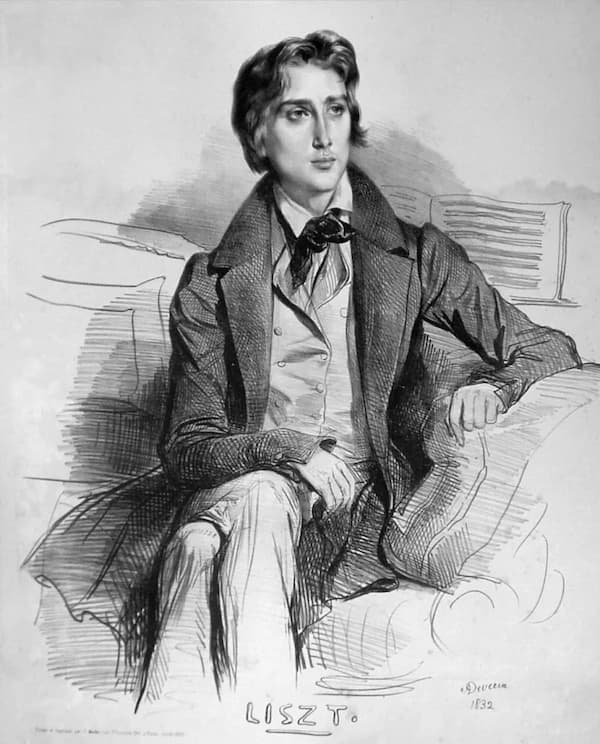
Franz Liszt
A decade later, in 1847, she met Liszt when he was touring in Kiev. The two quickly became romantically involved. They would remain a couple – either romantically or platonically – for forty years.
She encouraged Liszt to turn from full-time touring to composition. She was also a devout Catholic who helped to shape his influential religious life.
Franz Liszt: Les préludes
Why They’re a Power Couple:
Liszt’s impact: He composed some of his most striking piano and orchestral works during their years together, including his religious oratorios, Les préludes, and the Dante Symphony.
Carolyne’s role: She was a valuable sounding board for Liszt’s intellectual thoughts, encouraged his embrace of religion, and edited or even co-wrote some of his prose. She also provided financial and emotional stability as he transitioned in his career from being a performer to being a composer.
Although their longed-for marriage never materialised due to Carolyne’s inability to secure an annulment, they were a couple for many years.
Read more about the fascinating, complex relationship between Liszt and Carolyne zu Sayn-Wittgenstein.
Richard Wagner and Cosima von Bülow Wagner (1863-1883)
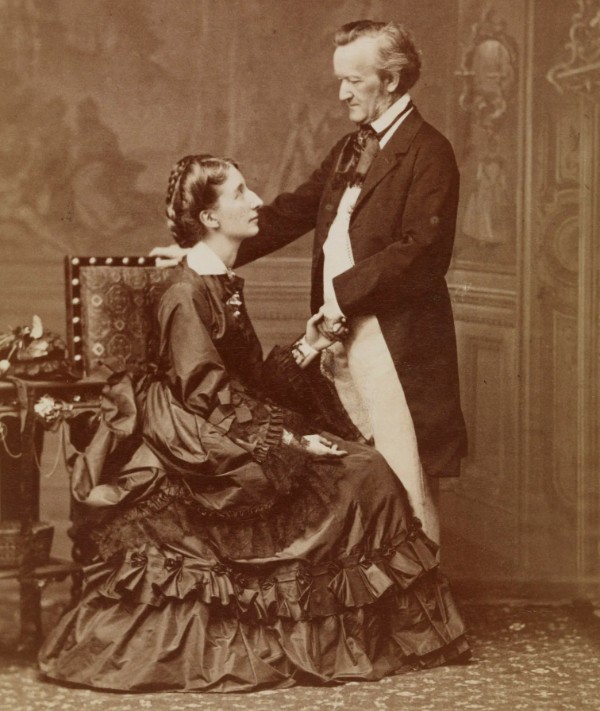
Richard Wagner and Cosima von Bülow Wagner
The wife in the next power couple was Liszt’s daughter: Cosima Liszt von Bülow.
Cosima, who married conductor Hans von Bülow in 1857 as a teenager, left her marriage in 1863 to be with Richard Wagner instead.
Their relationship may have begun scandalously, but it also ended up being one of the most consequential musical partnerships of the nineteenth and early twentieth centuries.
Why They’re a Power Couple:
Wagner’s impact: He finished composing his epic opera cycle Der Ring des Nibelungen, as well as Parsifal, during their years together.
Cosima’s role: She became Wagner’s devoted companion, writing down and preserving many of his thoughts and ideas. She also became the director of the Bayreuth Festival, which she ran for decades after his death, ensuring it stayed a global center of Wagnerian performance. In between, she gave birth to and raised Wagner’s three children.
Cosima both preserved and mythologised Wagner’s legacy and created an entire musical dynasty that still exists today.
Edvard Grieg and Nina Hagerup Grieg (1867-1907)
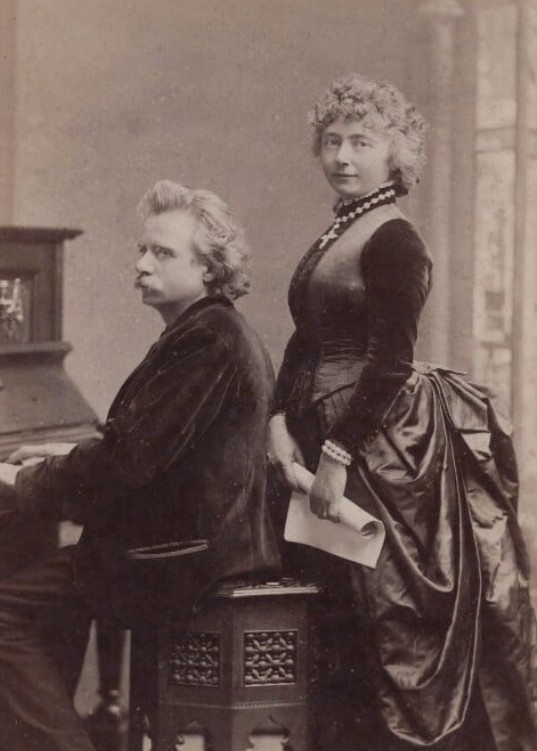
Edvard Grieg and Nina Hagerup Grieg
Edvard and Nina were childhood friends and cousins. He was a composer and pianist; she was a singer. Their marriage blended romance and professional music-making.
However, due to a variety of strains (including the death of their only daughter, a miscarriage, the deaths of Edvard’s parents, and Nina’s difficulty transitioning from being a singer to a housewife), their marriage nearly ended. However, in 1884, they reconciled.
Footage of the Griegs’ graves
Why They’re a Power Couple:
Edvard’s impact: He composed some of the most famous piano works and orchestral pieces of the Romantic Era, as well as over 150 songs meant for Nina’s voice specifically.
Nina’s role: A skilled soprano, she premiered many of her husband’s songs, shaping their interpretation and helping to establish his reputation across Europe.
In 1900, Grieg himself explained their relationship:
“I fell in love with a young girl with a wonderful voice and similarly wonderful interpretation. This girl became my wife and life’s partner right to this day. She has been for me…the only true interpreter of my songs.”
Nikolai Rimsky-Korsakov and Nadezhda Purgold Rimskaya-Korsakova (1868-1908)
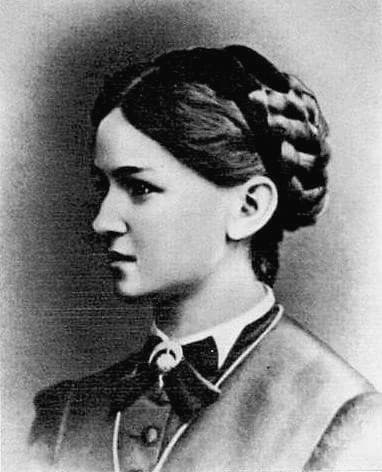
Nadezhda Rimskaya-Korsakova
Nadezhda was a pianist and composer in her own right who had been educated at the St. Petersburg Conservatory. In fact, when she and Nikolai began dating, she was the better-educated musician between the two.
Nikolay Andreyevich Rimsky-Korsakov: Symphony No. 2, Op. 9, “Antar” (arr. N. Purgold for piano 4-hands) (Caroline Clemmow, piano; Anthony Goldstone, piano)
Why They’re a Power Couple:
Nikolai’s impact: A master orchestrator, Rimsky-Korsakov shaped the sound of late nineteenth-century Russian nationalism in works like Scheherazade and Capriccio Espagnol.
Nadezhda’s role: She critiqued, edited, and copied out his works, creating piano transcriptions (like the one above of his second symphony), and supporting his teaching and publishing efforts.
After his death, she published his memoirs and worked to promote his legacy, helping to keep his work in the repertoire for audiences to enjoy today.
Gustav Mahler and Alma Schindler Mahler (1901-1911)
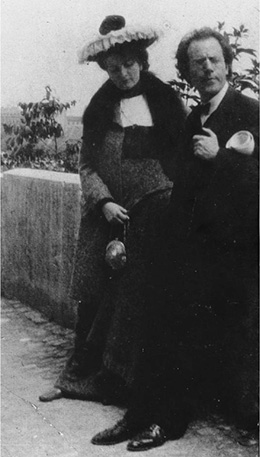
Gustav and Alma Mahler, 1903
Gustav Mahler married Alma Schindler, a 21-year-old woman half his age, on the condition that she stop composing. (He believed that a marriage could only support one composer.)
Their relationship was tempestuous and only lasted a decade due to Gustav’s early death, but Alma ended up having an outsize impact on her husband’s legacy.
Cate Blanchett reads Mahler’s letter to Alma about their relationship
Why They’re a Power Couple:
Gustav’s impact: He wrote monumental symphonies and song cycles that redefined the emotional and structural scope of twentieth-century orchestral music.
Alma’s role: After Mahler’s death, she reveled in her status as his widow. She became a towering figure in Mahlerian scholarship, editing his letters, organising performances, and shaping his legacy generally. And because she was so much younger than Gustav, and didn’t die until 1964, she shaped the myth of Mahler for decades, cementing various narratives (that weren’t always entirely accurate) in the public consciousness.
Benjamin Britten and Peter Pears (1939-1976)
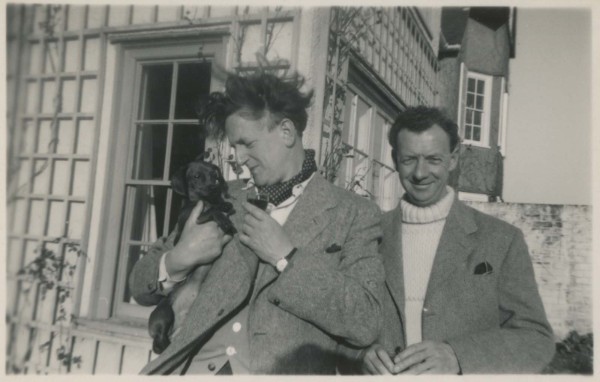
Benjamin Britten and Peter Pears
Composer Benjamin Britten and tenor Peter Pears met in the 1930s. On a 1939 tour to America, they embarked on a romantic relationship which lasted until 1976.
In a time when expressing their love for each other could land them both in jail or worse, they worked together publicly to create and perform some of Britten’s best works.
A brief documentary about Britten and Pears
Why They’re a Power Couple:
Britten’s impact: One of the twentieth century’s greatest composers, Britten wrote operas, orchestral works, and choral pieces, many tailored for Pears’ tenor voice. Britten wrote his works with specific interpreters in mind, meaning Pears had an outsize influence on the development of his creative voice.
Pears’ role: As Britten’s muse and collaborator, Pears premiered key roles in Peter Grimes, The Turn of the Screw, and the War Requiem.
In addition to the music they collaborated on, they also co-founded the Aldeburgh Festival in 1948, which became a fixture in the mid-century European music scene.
Together, despite the risks of pursuing their relationship, they helped to shape the sound of twentieth-century classical music, in the process creating a lasting legacy that listeners are still enjoying today.
For more of the best in classical music, sign up for our E-Newsletter





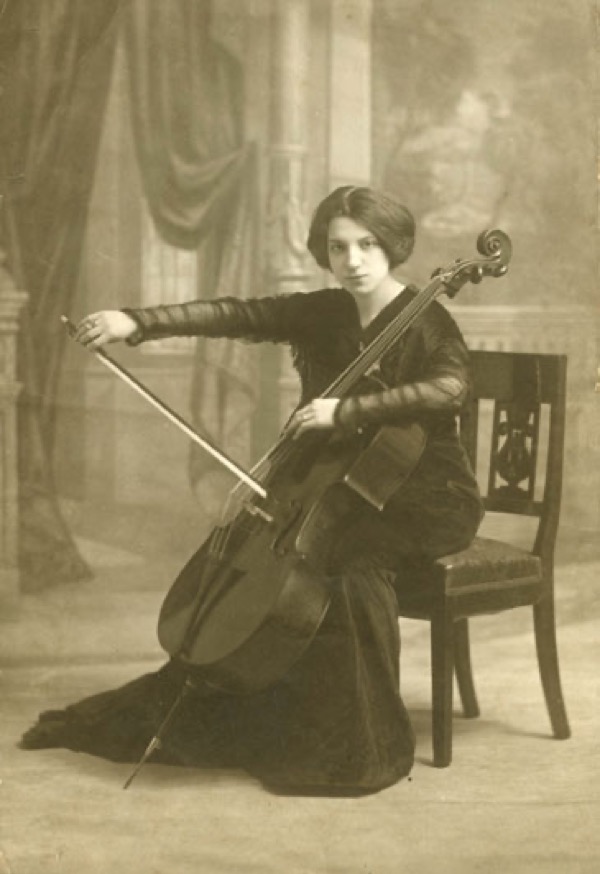

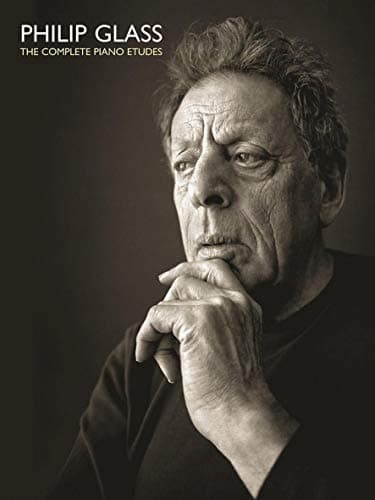
Olivier Messiaen and Yvonne Loriod