In 2025, we mark the centenary of the birth of Sir Charles Mackerras, a conductor who seamlessly combined erudition with vitality, and tradition with innovation. Born on 17 November 1925, Mackerras became one of the most dynamic, scholarly, and open-minded personalities in classical music.

Sir Charles Mackerras
To mark his 100th birthday is not merely to honour a distinguished conductor, but to celebrate an entire philosophy of music-making. Mackerras was a bridge between worlds, between the old and the new, between scholarship and instinct, between Australian openness and Central European depth.
A pioneer of historically informed performance, Mackerras was a passionate advocate for Czech music, especially the operas of Janáček, and a consummate interpreter of Mozart and Handel.
His career was built on the conviction that intellect and emotion are not opposites in music but partners. As one critic memorably wrote, he was “one of the most keenly musical conductors of our time.” As we mark the 100th anniversary of his birth, let’s take a moment to revisit that synthesis and his unique ability to make scholarship sing and passion think.
Charles Mackerras conducts Mozart: Symphony No. 35 “Haffner” (Excerpt)
Conductor as Musical Detective
Charles Mackerras
Born on 17 November 1925 in Schenectady, New York, to Australian parents who soon returned to Sydney, Mackerras was an international citizen from birth. His family’s intellectual curiosity and artistic leanings created a fertile ground for a prodigiously gifted child.
He studied piano, oboe, and composition at the New South Wales State Conservatorium, where even as a teenager he showed signs of the restless mind that would define his career. In 1947, a pivotal scholarship took him to Prague, where he studied with Václav Talich, then a legendary figure of the Czech musical world.
That apprenticeship opened two lifelong paths. Firstly, an immersion in Czech repertoire, especially the operas of Leoš Janáček, and a fascination with the historical and linguistic texture of music.
Talich taught him that a conductor must not only lead but understand, understand why a composer wrote as he did, what the language of the score meant, and how every marking reflected a living idea.
Leoš Janáček: Vec Makropulos (The Makropulos Affair), JW I/10 (Elisabeth Söderström, soprano; Peter Dvorský, tenor; Anna Czakova, mezzo-soprano; Ivana Mixová, mezzo-soprano; Vladimír Krejčík, tenor; Václav Zítek, tenor; Dalibor Jedlička, bass; Beno Blachut, tenor; Jiří Joran, bass; Zdeněk Švehla, tenor; Blanka Vítková, contralto; Vienna State Opera Chorus; Vienna Philharmonic Orchestra; Charles Mackerras, cond.)
Authenticity without the Museum Smell
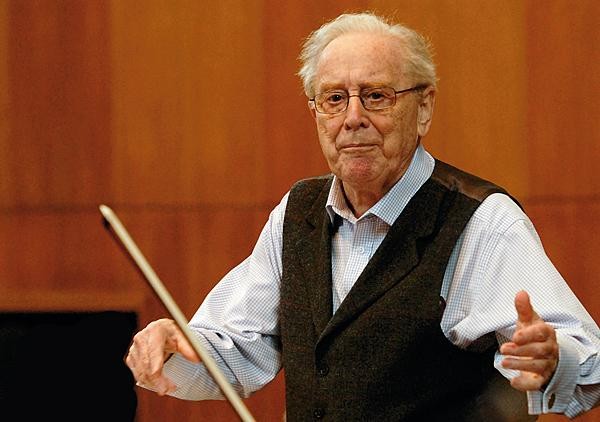
Sir Charles Mackerras
Mackerras was, first and foremost, a musical thinker. His scores were famously annotated in microscopic detail, and his preparation was exhaustive. Yet his scholarship never felt dry. He was not a historian working in the safety of archives, but a performer who wanted knowledge to come alive in sound.
In the 1950s, long before historically informed performance became fashionable, Mackerras was experimenting with Baroque ornamentation, original instruments, and 18th-century performance practices. His 1959 recording of Handel’s Music for the Royal Fireworks with the London Symphony Orchestra, using period-style brass and winds, was a revelation. It crackled with energy and grandeur but also with historical insight.
He brought the same rigour to Mozart, championing editions that reflected the composer’s original intentions, and rethinking tempos and articulation. Yet in the concert hall, these choices translated not into academic precision but into a sense of freshness.
Mackerras’ approach showed that authenticity was not about archaeology but about truthfulness and a way of letting music speak in its native tongue.
George Frideric Handel: Music for the Royal Fireworks, HWV 351 (London Symphony Orchestra; Charles Mackerras, cond.)
Transparency with a Pulse
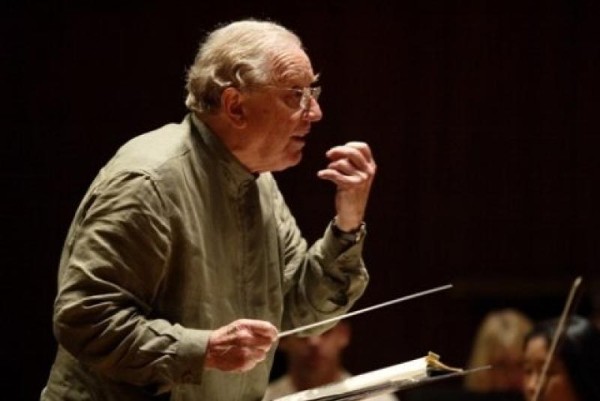
Sir Charles Mackerras
But to describe Mackerras only as a scholar is to miss his essence. His performances pulsed with humanity, warmth, and drama. He was deeply sensitive to emotional flow, on how tension builds and releases, and how silence can speak as powerfully as sound.
His lifelong devotion to Janáček illustrates this dual nature perfectly. In Janáček’s jagged rhythms, fragmentary motifs, and speech-inflected phrasing, Mackerras found both an analytical puzzle and a well of emotion.
He painstakingly reconstructed authentic versions of the operas, stripping away later editorial improvements, yet his performances were anything but austere. They glowed with compassion for Janáček’s characters, and under his baton, their voices seemed to speak directly to the heart.
Listeners often remarked that his conducting combined clarity with warmth, a transparency that revealed structure but never stripped away the soul.
Charles Mackerras conducts Janáček: Glagolitic Mass
Classical Music without Snobbery
For Mackerras, communication was sacred. He believed that a conductor’s first responsibility was to transmit the composer’s meaning vividly to both orchestra and audience. His rehearsal style reflected this balance of intellect and empathy.
It was meticulous yet encouraging, insistent on precision but always aiming for expression. Musicians admired him for knowing every part of the score but never losing sight of the bigger emotional picture.
That balance extended beyond the podium. Mackerras had an educator’s instinct. He spoke and wrote with clarity, explaining complex musical ideas without pretension. His interviews and program notes were models of lucidity, as he wanted listeners to understand what they were hearing, not to be mystified by it.
Mackerras helped to open up classical music to a wider audience, demonstrating that knowledge enhances rather than diminishes the emotional experience.
Charles Mackerras conducts Beethoven: Violin Concerto
Citizen of Every Stage
Mackerras’s international career embodied his open-mindedness. He was Principal Conductor of the English National Opera, Music Director of the Welsh National Opera, Chief Conductor of the Sydney Symphony, and a frequent guest at Covent Garden, Glyndebourne, Vienna, and beyond.
Wherever he went, he adapted to local traditions yet infused them with his characteristic blend of scholarship and spontaneity. He also took pride in his Australian roots, often returning to conduct in Sydney and Melbourne, helping to raise the profile of classical performance in his homeland.
Today, a century after his birth, Mackerras’s legacy feels more relevant than ever. In an era often split between authentic performance specialists and emotive traditionalists, he reminds us that the two need not be at odds.
His life was proof that knowledge deepens feeling, and the more intimately one knows a work, the more freely one can make it speak.
Charles Mackerras conducts Holst: The Planets (Excerpt)
The Eternal Fusion
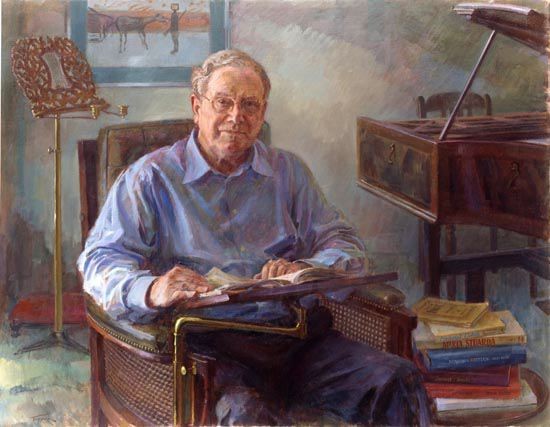
Portrait of Sir Charles Mackerras by June Mendoza
Sir Charles Mackerras believed that music could never be reduced to mere sound. It was a form of understanding, a dialogue between intellect and emotions. To him, conducting was an act of translation, taking what lies silent on the page and giving it living breath, with both fidelity and imagination.
He often said that a conductor must serve two masters, the composer and the audience. What made Mackerras remarkable was his ability to hold opposites in harmony. He revered scholarship but resisted pedantry, he pursued authenticity without rigidity, he sought expression without indulgence.
In a century that often prized extremes, vacillating between cold precision and theatrical excess, Mackerras offered balance. His performances showed that intellect need not freeze passion, and that emotion need not obscure form.
A hundred years after his birth, Mackerras stands as more than a figure in the history of conducting. He represents an ideal of how music should be approached with respect for its structure, empathy for its spirit, and joy in its sharing. To celebrate Mackerras is to celebrate music itself as a meeting place of knowledge and love, reason and wonder, discipline and delight.
For more of the best in classical music, sign up for our E-Newsletter