
Trying to compare the net worths of classical composers across the centuries is tough. Currencies have changed; governments have fallen; and financial systems of the 1720s aren’t particularly comparable to those of the 2020s.
And yet despite all that, it’s undeniable that more than a few composers were actually rich.
Today, we’re looking at the financial situations of seven composers. When possible, we’ve guessed at what their net worth at the time of their death would be worth in 2025 American dollars.
Of course, this isn’t a definitive ranking, but rather a generalised look at what we know about the wealth of composers like Handel, Rachmaninoff, Puccini, and others…and how they gained and spent it.
George Frideric Handel (1685–1759)
£20,000; approx. $6.4 million (2025 USD)
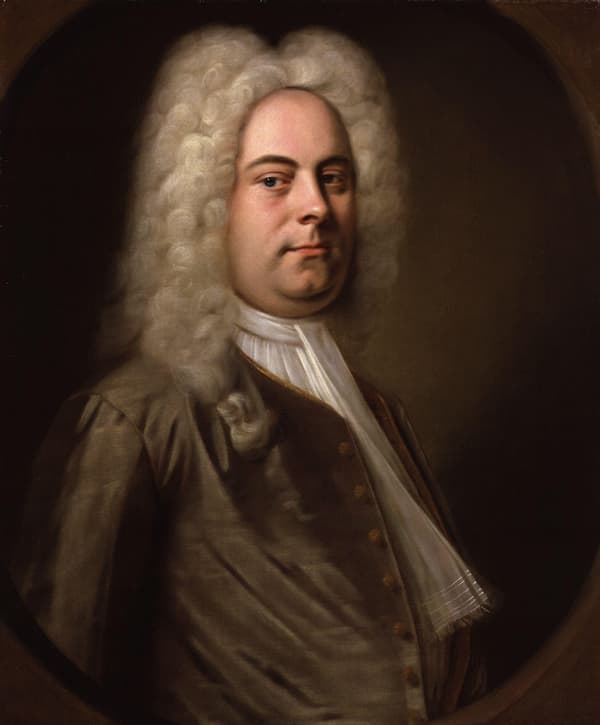
George Frideric Handel
Net worth:
According to The Smithsonian Magazine, when Handel died in 1759, his estate was valued at £20,000.
How he made his money:
Entrepreneurship drove Handel’s wealth. Unlike some composers who were dependent on royal patronage, Handel became an impresario: he produced Italian operas in London theaters, and later began writing English oratorios, which were cheaper than operas to produce, but also extremely popular.
He also earned money from the music that he published, although the majority of his income came from performing.
Handel then took that money and invested it in non-musical pursuits. For instance, he bought South Sea Company stock, cashing out before the bubble burst in 1720. (That investment has been criticised in the modern day, given the South Sea Company’s complicity in the Atlantic slave trade.)
How he spent his money:
He died childless and gave his money to charity.
Sergei Rachmaninoff (1873–1943)
$700k (1943); approx. $13 million (2025 USD)
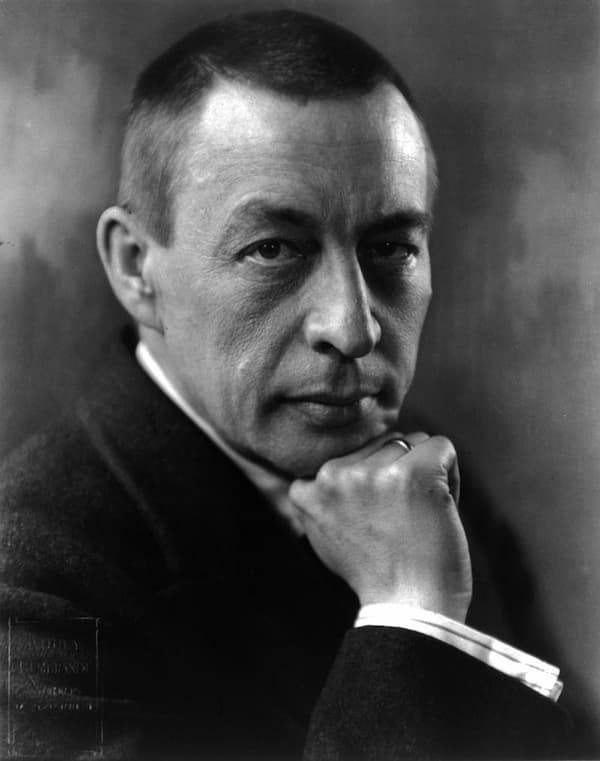
Kubey-Rembrandt Studios: Sergei Rachmaninoff, 1921
Net worth:
According to historian Robin Sue Gehl’s 2008 dissertation, Rachmaninoff’s net worth upon his death in 1943 was somewhere north of $700,000.
Nowadays, that would be worth around $13 million.
How he earned his money:
Rachmaninoff earned his money primarily through performing.
After he fled Russia during the Revolution, he lost his inherited wealth. However, he enjoyed an international career as a piano soloist throughout the 1920s and 1930s, and he eventually became one of the best-paid artists on the concert circuit.
He also earned royalties from performances of his popular works (including his second and third piano concertos, his Rhapsody on a Theme of Paganini, and others).
We actually wrote about how he once remarked he wrote the Rhapsody on a Theme of Paganini “for his agent” (i.e., for financial benefit).
How he spent his money:
In 1932, Rachmaninoff and his wife, Natalia, bought a plot of land on the shores of Lake Lucerne in Switzerland. They named the estate Villa Senar (SE for Sergei, NA for Natalia, and R for Rachmaninoff).
Unfortunately, they didn’t have much time to enjoy the villa before World War II began. They left in 1939. Nowadays, that villa is worth millions of Swiss francs. (A lot of that value was accrued after Rachmaninoff’s death.)
Gioachino Rossini (1792–1868)
2.5 million francs; approx. $18 million (2025 USD)
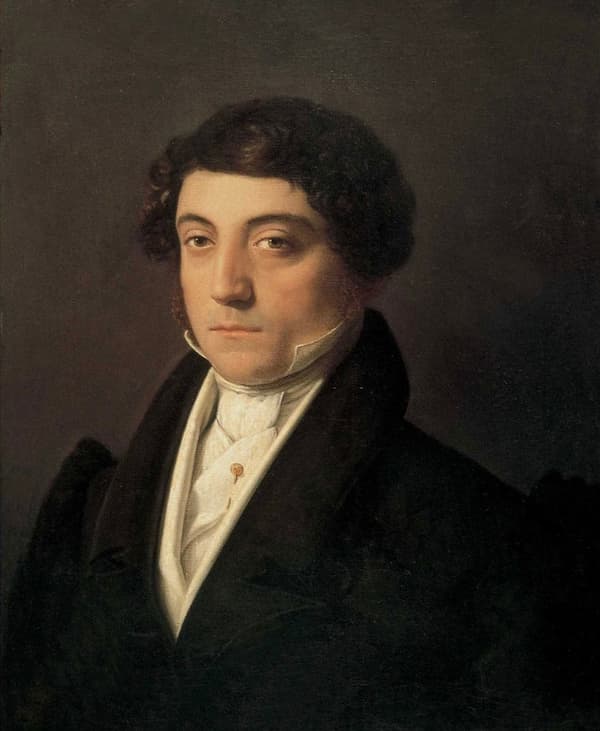
Portrait of Gioachino Rossini
Net worth:
According to Herbert Weinstock’s 1968 biography, Rossini’s estate was valued at 2.5 million francs upon his death in 1868. That would be around $18 million USD in 2025.
How he made his money
Rossini’s extraordinary productivity in the lucrative field of opera helped to make his fortune. By his late thirties, he’d written nearly forty operas!
He also worked as a music director in Naples, and (cleverly) negotiated a cut of the gambling concessions at the Naples opera house.
On top of that, he was a famous opera conductor and could earn massive fees as a guest conductor and vocal teacher.
He was also bestowed a generous pension by King Charles X of France in recognition of his contributions to the field of opera. After Charles abdicated in the July Revolution of 1830, Rossini spent several years in Paris fighting for his pension in court.
He took all of this money and reinvested it into land holdings and securities.
How he spent his money
After his retirement from opera composing at 37, Rossini lived a very comfortable life. He pursued his passion for French and Italian gastronomy, even writing a cookbook!
You can learn more about Rossini’s fortune.
Johann Strauss II (1825–1899)
Approx. 1m Gulden; approx. $15-20 million (2025 USD)
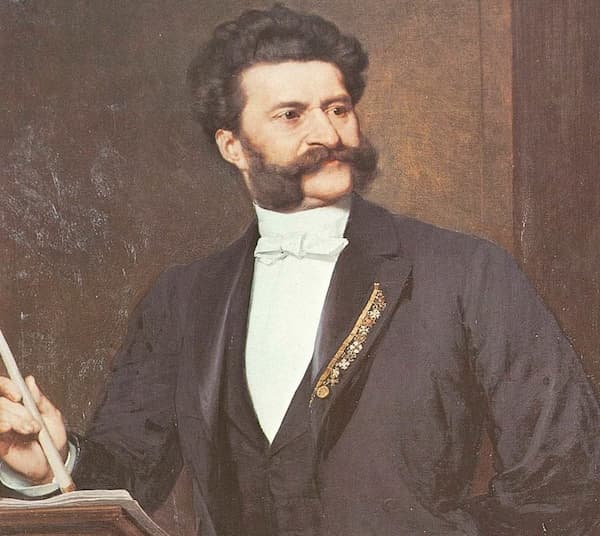
Johann Strauss II, 1888
Net worth:
According to Der Pragmaticus, “Johann Strauss Jr. left behind, in addition to three houses in Vienna and a villa in Bad Ischl, a fortune of 835,000 guilders, equivalent to more than fourteen million euros in today’s purchasing power.”
How he earned his money
Strauss earned his money from a variety of sources.
First off, he was a hugely prolific composer, and he sold his sheet music. He also earned income from arranging his work.
But the biggest driver of his income was his performances. Strauss led a famous dance orchestra that was basically a mid-nineteenth-century rock band. He could charge the modern equivalent of $35,000 per public appearance.
Sometimes he could earn even more. In 1872, he earned the rough equivalent of a million dollars during a concert tour to Boston.
How he spent his money
Strauss invested in real estate. Like the Pragmaticus article says, he died owning a villa and three homes.
Learn more about Johann Strauss II’s fortune.
Giuseppe Verdi (1813–1901)
Approx. 12.5 million Lire; approx. $35 million (2025 USD)
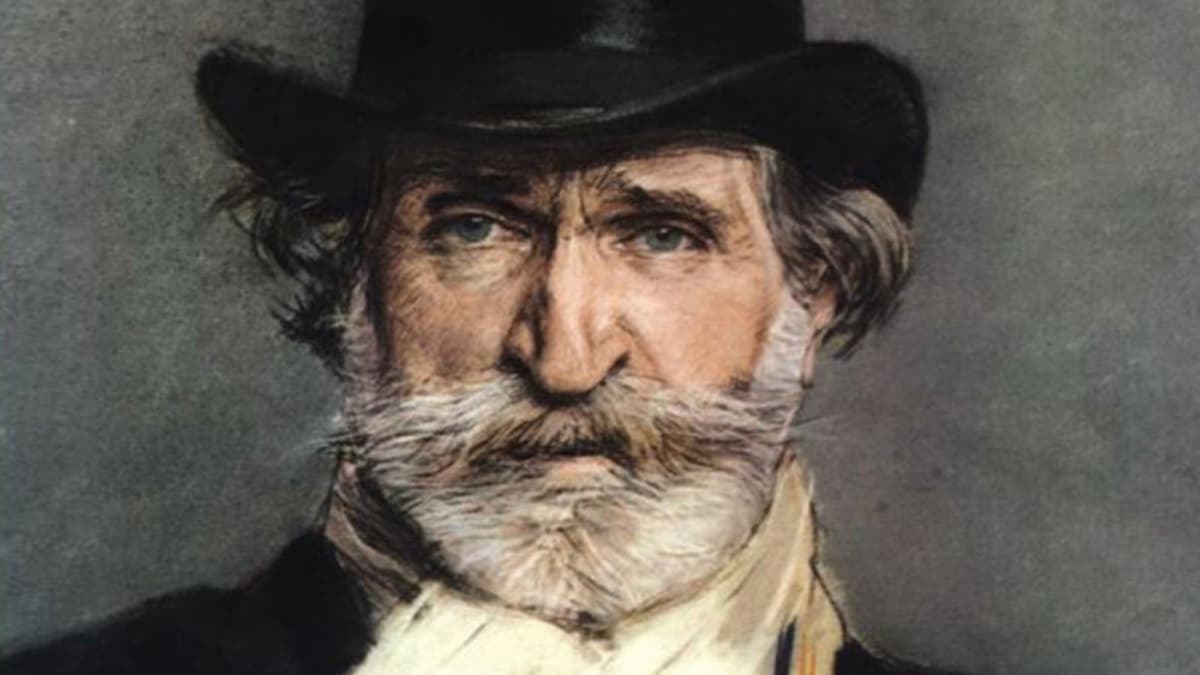
Giuseppe Verdi © dallassymphony.org
Net worth:
According to Investor’s Business Daily, at the time of his death, Verdi’s estate was worth the modern equivalent of $24 million. Conductor Cesare Civetta pegged it closer to $35 million.
How he earned his money
Opera commissions and royalties served as Verdi’s main income. According to the Guardian, he wrote Aida for 150,000 francs (a rough modern equivalent to $1 million USD today).
He also negotiated his contracts with opera houses and impresarios to receive a percentage of ticket receipts.
In addition to that, he received royalties from performances of his roughly thirty operas.
Apart from music, he became a landowner, eventually accumulating over 1000 hectares. He then earned rental income from the farmers who worked that land.
How he spent his money
Verdi owned a collection of stagecoaches. He also had an icehouse built on his property that provided year-round ice…no small luxury in a time before refrigeration! (He’d invite friends over every August 15 to enjoy ice cream.)
After his death in 1901, he funded a hospital and a musicians’ retirement home. These institutions still survive today.
He also left a number of generous donations to the poor and needy, and insisted on a simple and inexpensive funeral.
Joseph Haydn (1732–1809)
55,713 Gulden; Approx. forty houses
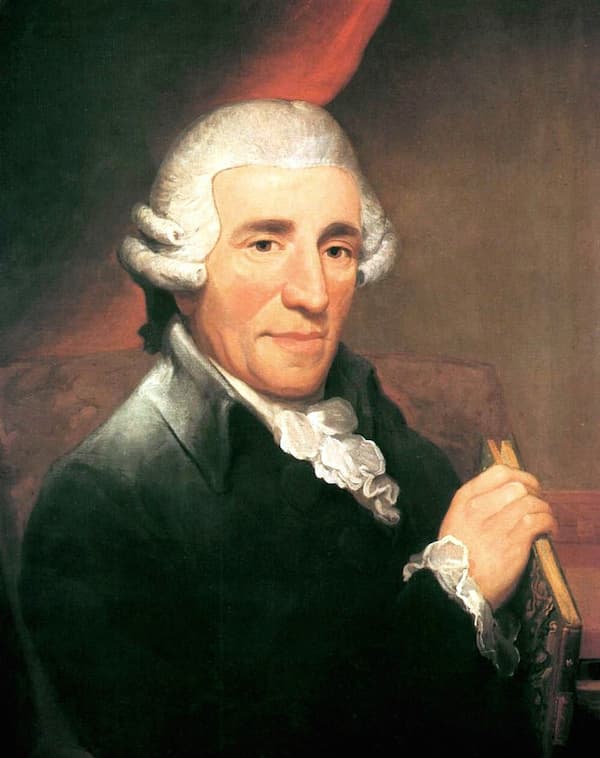
Thomas Hardy: Franz Joseph Haydn, ca. 1791 (London: Royal College of Music Museum of Instruments)
Net worth:
According to David Wyn Jones’s 2009 Haydn biography, when Haydn died in 1809, his estate was valued at 55,713 Austrian florins (Gulden).
To put that in perspective, the suburban house that he owned only cost 1,370 florins in 1793. So he could have bought many houses with his savings.
It’s difficult to accurately convert florins from 1809 to dollars in 2025. But Haydn was wealthy enough to (theoretically) buy around three dozen homes in his own time. So he was certainly rich, even if it’s tough to put an exact number on his fortune, given the fluctuating costs of housing.
How he made his money:
For nearly thirty years, Haydn was employed as Kapellmeister working for the noble Esterházy family. Eventually, he earned 1000 florins a year there, plus bonuses, while having his room and board paid for.
He was also able to sell his work for publication, and he could sell the same work multiple times to different countries.
In the 1790s, after his retirement, he traveled to England, where he concertized for a few years. He came back from those trips having earned around 15,000 florins.
He then took that money and invested it, which provided additional returns.
Giacomo Puccini (1858–1924)
Approx. 70 million Lire; approx. $235 million (2025 USD)
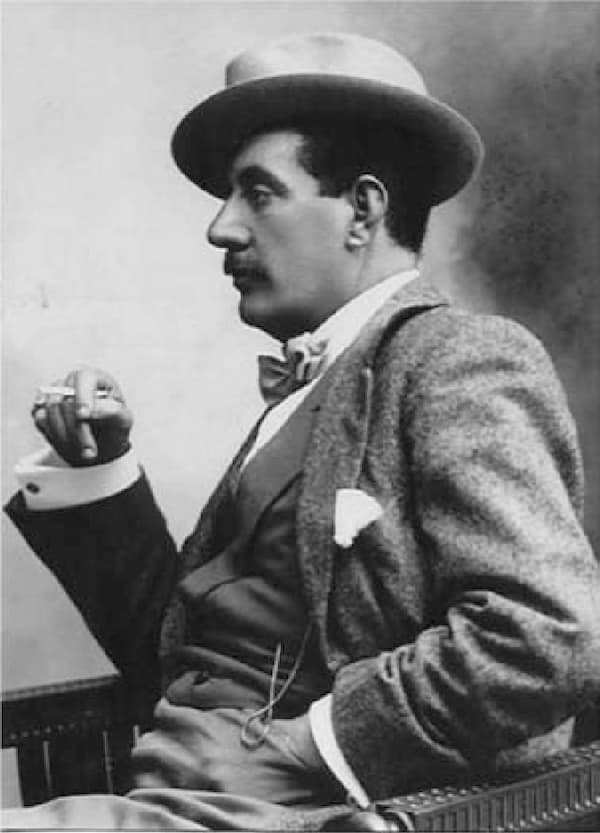
Giacomo Puccini
Net worth:
According to The Florentine, Puccini’s net worth at his death was around 70 million Italian lire, which is roughly equivalent to €200 million in today’s money, or roughly $235 million USD today.
How he earned money
Over the course of his career, Puccini wrote operatic hit after operatic hit: La Bohème, Tosca, Madama Butterfly, Turandot.
These works were performed internationally, and those performances earned him handsome royalties.
He also made money by negotiating premiere rights and publishing rights.
Plus, apart from music, he invested in real estate. In 1899, he bought a genteel lakeside villa in the Italian town of Torre del Lago. Today, the villa is a museum dedicated to his life and work.
How he spent his money
Puccini was famous for his love of fast modern cars. (In fact, a car accident nearly killed Puccini and his family in 1903.)
He also owned speedboats, and his hobbies included recreational hunting.
Aside from modern film and musical composers (who are another matter entirely; Andrew Lloyd Webber, for instance, was a billionaire before the pandemic, and John Williams is worth somewhere around $300 million), Puccini may have been the wealthiest composer in the entire classical canon.
For more of the best in classical music, sign up for our E-Newsletter





Quite odd to not have Franz Liszt mentioned here?!