The 1994 film Immortal Beloved, about the mysterious woman Beethoven called his “Immortal Beloved”, is one of the more famous composer biopic movies.
It begins with the death of Beethoven and follows the journey of his secretary, Anton Schindler, as he searches for the mysterious woman known only as the “Immortal Beloved” in Beethoven’s papers.
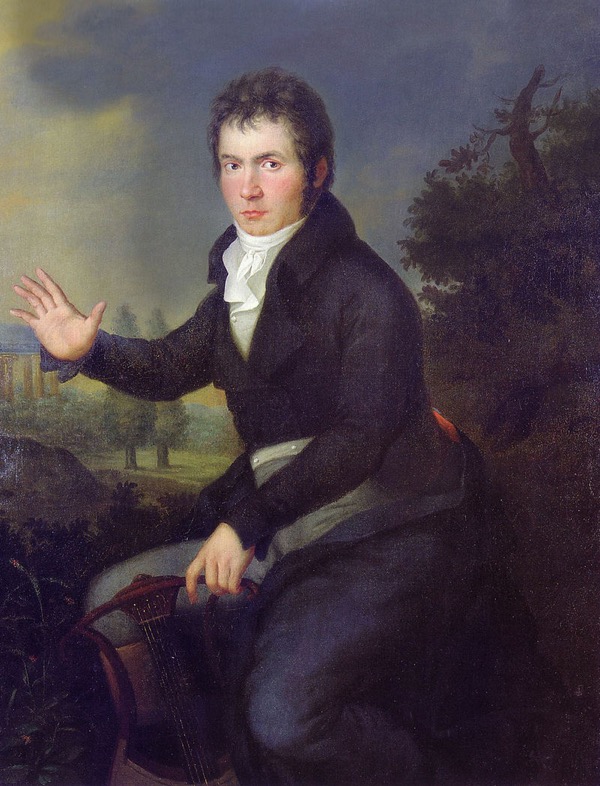
Joseph Willibrord Mähler: Beethoven, 1804 (Vienna Museum)
Music lovers who watch the film might wonder which parts of the movie are true and which are fictional. The real-life story is so dramatic, sometimes it can be hard to tell!
Here is the real story behind Immortal Beloved.
Immortal Beloved trailer
Did Viennese citizens really mob Beethoven’s coffin?
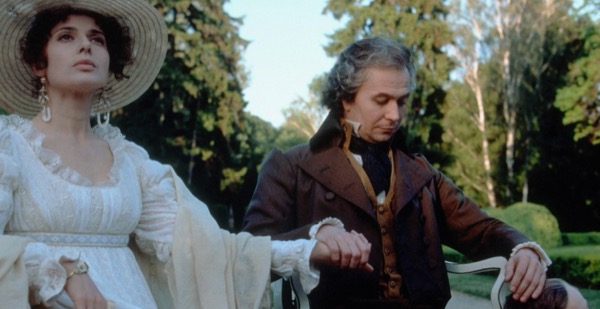
Immortal Beloved (1994)
The film opens with a long shot of Beethoven’s coffin being carried from the church onto a wagon, the surrounding street packed with people.
Was the death of a composer really such a major event?
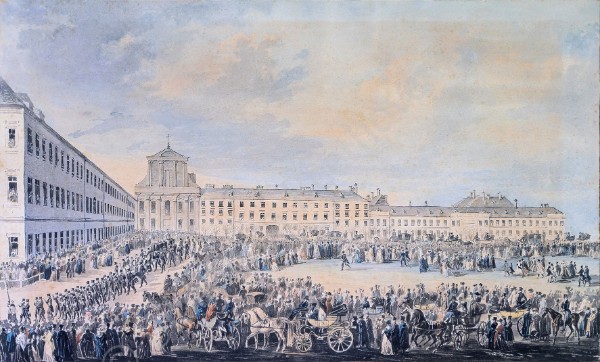
Beethoven’s funeral as depicted by Franz Xaver Stöber (1795–1858)
Yes! Beethoven’s funeral took place on 29 March 1827, and it has been estimated that between 10,000 and 30,000 people lined the streets to pay homage to his funeral procession.
In 1830, just three years later, Vienna would boast a population of 400,000 – meaning that, roughly, anywhere from between 2.5% to 7.5% of the city’s population may have shown up to pay tribute.
We wrote about Beethoven’s funeral here: https://interlude.hk/behind-the-curtain-beethoven-funeral-music/.
Did Beethoven leave his estate to his immortal beloved?
Beethoven wrote three wills.
The first was an impassioned letter dating from 1802, which has since become known as the Heiligenstadt Testament, after the town where it was written.
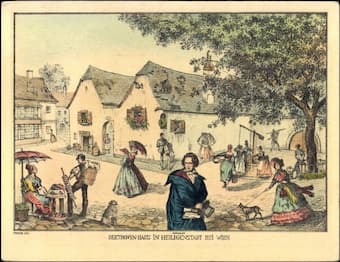
Postcard of Beethoven in Heiligenstadt
This document was written during a personal health crisis when Beethoven was in a state of great emotional distress. It was addressed to his brothers and discusses the misery of his hearing loss. He also leaves his “small fortune (if it can be called that)” to his two brothers to split between themselves.
His second will, dated 1823, was a letter to his lawyer instructing that his nephew Karl become the sole beneficiary of his estate.
The third will is a codicil to the second and was written to his lawyer in 1827, as he was nearing death. Karl remained the beneficiary.
The immortal beloved doesn’t appear in any of these documents.
A passionate love letter was discovered in Beethoven’s papers after his death, addressed to an unnamed woman he called “Immortal Beloved.” For generations, historians have speculated about the mystery woman’s identity.
But one thing we know for sure is that the Immortal Beloved was never named as the beneficiary of his estate.
Did Beethoven ever throw a chair out the window of his hotel?
Beethoven once wrote to his friend, piano maker and musician Nanette Streicher, that he threw a “heavy armchair” beside his bed at a servant whom he felt was a poor employee.
Although chair throwing may have been in-character, there’s no evidence Beethoven ever did so at a hotel specifically.
Was Beethoven’s brother ever his secretary?
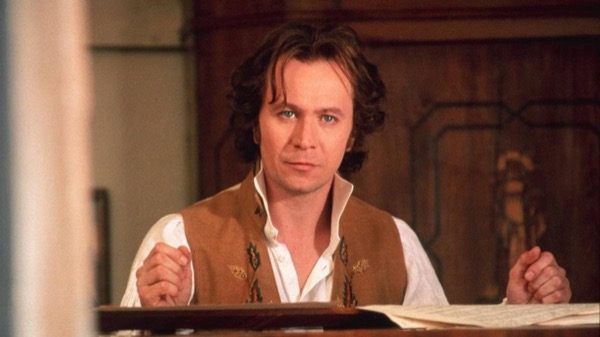
Immortal Beloved (1994)
In the movie, there’s a brief time period before Beethoven hires secretary Anton Schindler when his brother works for him.
His younger brother Kaspar did indeed work as Beethoven’s secretary as a young man. Starting in 1800, he was put in charge of the financial arrangements with his brother’s music publishers.
Unfortunately, he did a poor job at it – and things eventually got so bad that the two brothers ended up in a physical altercation over their disagreements.
Did Countess Julie Guicciardi fall in love with Beethoven?
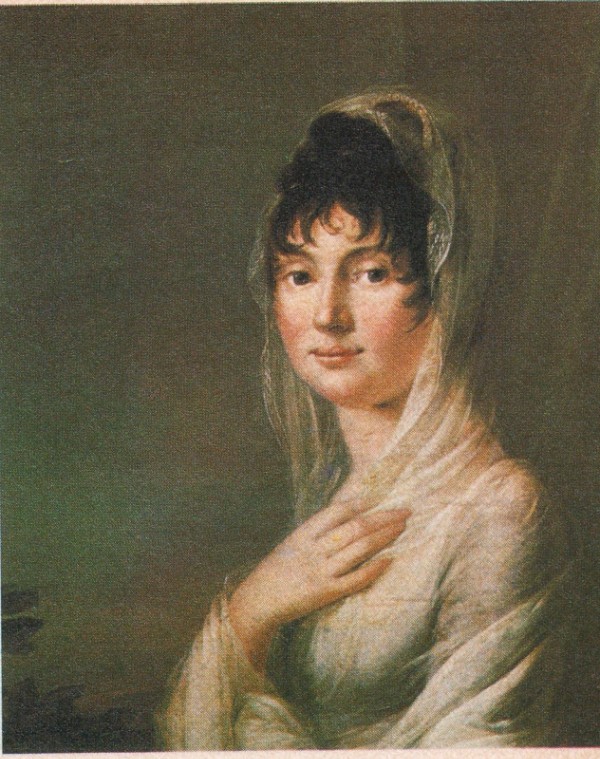
Julie Guicciardi
In the movie, Countess Julie Guicciardi falls in love with Beethoven. She buys a piano for the composer and secretly watches him with her father as he plays the first movement of the Moonlight Sonata.
In late 1801, Beethoven began teaching piano to Julie Guicciardi. She was in her late teens, and he was thirty.
Not long afterwards, he wrote letters that suggested they were in love and would get married. However, we don’t have any letters from her perspective describing her feelings.
In any case, their romantic relationship soon ended, and she married composer Wenzel Robert von Gallenberg in 1803.
Moonlight Sonata scene from Immortal Beloved
Did Beethoven’s deafness manifest itself in uncomfortable sounds?
Many people don’t understand the severity of Beethoven’s experience with hearing loss. He didn’t suddenly fall into peaceful silence; on the contrary, he struggled with unbearable bouts of tinnitus. In 1801, he wrote to his friend Franz Wegeler, “My ears buzz and rumble incessantly, day and night.”
The movie portrays this through unnerving sequences in which it sounds as if the listener is underwater. If anything, this part of the movie understated the reality of what Beethoven experienced.
We talked about his hearing loss here: https://interlude.hk/ludwig-von-beethoven-the-sounds-of-silence-the-cause-of-beethoven-hearing-loss-and-series-of-treatment/.
Did Beethoven burst in on his brother’s wedding night with the police?
No.
Johanna van Beethoven was, however, six months pregnant when she married Beethoven’s brother Kaspar (the same one who had failed at being a secretary).
Did Countess Erdődy’s son die?
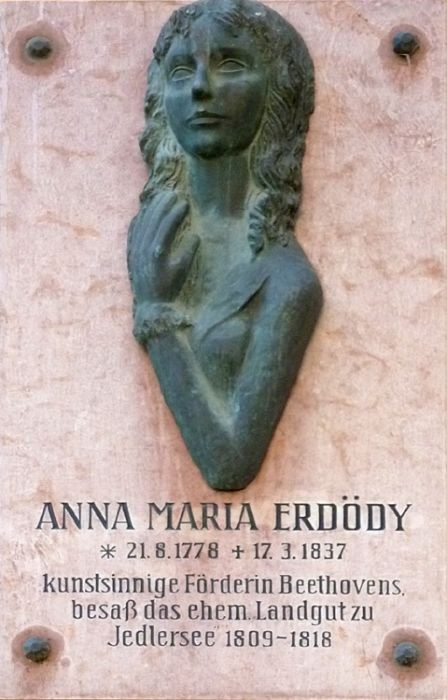
Countess Anna Maria Erdődy
In the movie, Countess Anna Maria Erdődy’s son dies during Napoleon’s invasion of Vienna, and Beethoven goes to comfort her.
In real life, the countess had two sons, one who died in 1816 and another in 1819, years after the 1805 invasion of Vienna.
However, it seems likely that this scene was inspired by a real-life story: when Beethoven’s student, Dorothea von Ertmann, lost her young son in March 1804.
He visited Dorothea while she was in mourning and improvised for her, saying, “We will now talk to each other in tones.”
Was George Bridgetower, the famous virtuoso from Africa, real?
Yes. However, Bridgetower wasn’t from Africa; he’d been born in Poland to a white woman and a Black man who was likely from the Caribbean (though he claimed to be an African prince).
Bridgetower became a celebrated violinist, and Beethoven wrote his most famous violin sonata, his ninth, for him.
The dedication originally read, “Mixed-race sonata composed for the mixed-race Bridgetower, madman and mixed-race composer.”
Unfortunately, the two men argued (reportedly over a woman), ending their friendship, and Beethoven crossed out the dedication to Bridgetower. He re-dedicated the work to violinist Rodolphe Kreutzer, which is why his ninth sonata is known today as the Kreutzer Sonata.
Beethoven’s Kreutzer Sonata
Was Beethoven named his nephew’s legal guardian?
In 1815, Beethoven’s brother Kaspar died of tuberculosis. His son Karl was nine years old.
Days before his death, Kaspar drew up a will, dividing custody of Karl between his wife, Johanna, and his brother, Ludwig.
However, Ludwig protested and had Kaspar cross out Johanna’s name. He loathed his sister-in-law and didn’t want to be forced to make decisions about Karl’s future with her.
Later, without Ludwig’s knowledge, Kaspar added a codicil to the document: “God permit [my wife and brother] to be harmonious for the sake of my child’s welfare.”
His wish wasn’t to be. Immediately after Kaspar’s death, both Johanna and Ludwig were named co-guardians, and the acrimonious legal battle that followed was traumatic for everyone.
We wrote about Karl’s life and the devastating custody struggle here: https://interlude.hk/beethovens-nephew-karl-inside-the-family-scandal-that-changed-music-history/.
Did Karl try to kill himself?
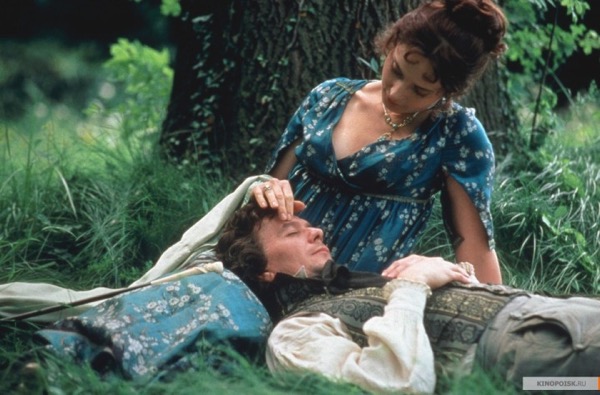
Immortal Beloved (1994)
Even after Karl turned eighteen, Beethoven was obsessed with knowing what he was up to.
Tragically, the pressures of the legal battle weighed on Karl. Just as in the film, in July 1826 Karl travelled to the ruins of Burgruine Rauhenstein with two pistols. He shot himself there, but the bullet only grazed his head. A wagon driver discovered him. Karl asked to be brought to his mother’s house.
When the police took a statement from Karl about the incident, he explained, “My uncle has tormented me too much… I became worse because my uncle wanted me to be better.”
And here is the final question from the movie. Spoiler alert! Don’t scroll any further if you don’t want the ending spoiled.
Ode to Joy scene from Immortal Beloved
Did Beethoven really fall in love with Johanna?
There is zero evidence that Beethoven fell in love with his sister-in-law.
For more of the best in classical music, sign up for our E-Newsletter