At the height of his career, cellist Gregor Piatigorsky (1903-1976) was widely considered one of the greatest string players of all time. His playing possessed a glorious low-register sound, and his vibrant tone had infinite shadings.
Piatigorsky was able to execute all manner of bowing, and his wonderful imagination led him to explore the subtle shades of articulation. Some of the greatest composers of his day composed dedicated works for him, but Piatigorsky was also a composer.
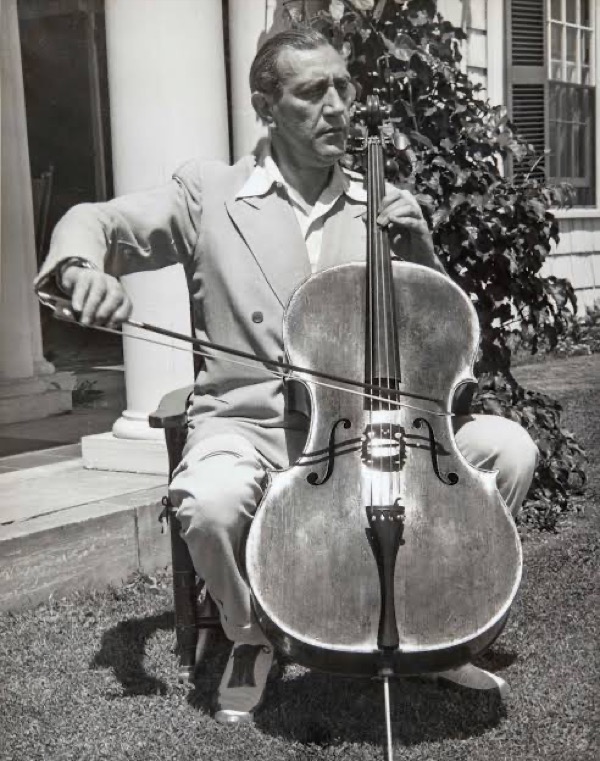
Gregor Piatigorsky
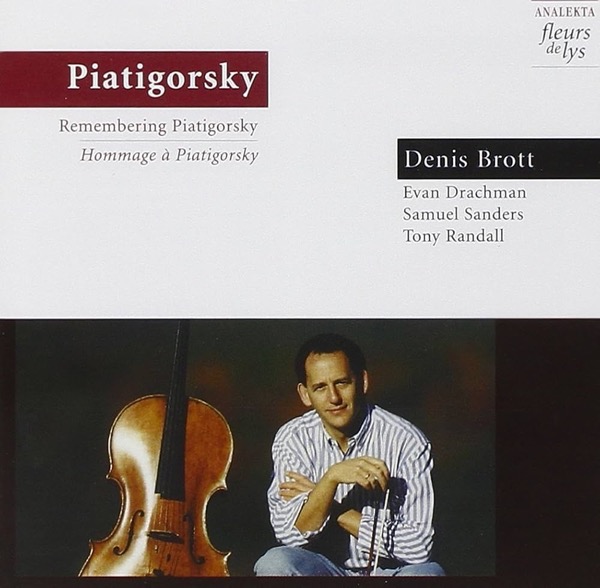
His reputation as a composer has always remained in the shadows, and to commemorate Piatigorsky’s passing on 6 August 1976, let us explore the album Remembering Piatigorsky, inspired and recorded by one of his most distinguished students, Denis Brott.
Gregor Piatigorsky: Variations on a Theme of Paganini
Portraits in Music
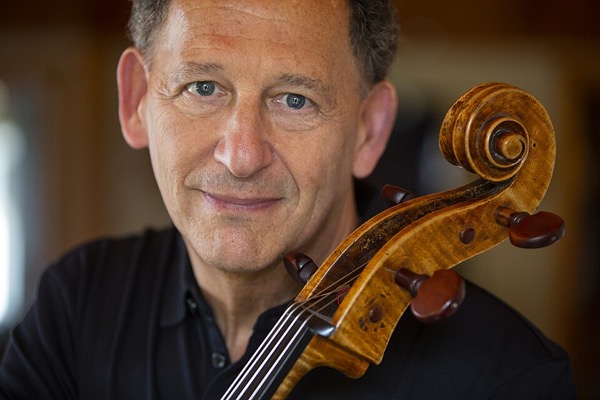
Canadian cellist Denis Brott
The Variations on a Theme of Paganini are unquestionably Gregor Piatigorsky’s compositional centrepiece, and according to Denis Brott, each movement portrays one of Piatigorsky’s musical colleagues and friends. Thus, we find musical portraits ranging from Pablo Casals and Paul Hindemith to Jascha Heifetz and Vladimir Horowitz.
The recording is a personal tribute conceived by Denis Brott, and it honours a teacher and mentor who touched and inspired several generations of cellists. It also reflects Piatigorsky’s artistic values and his impact as a gifted composer.
Gian Carlo Menotti: Suite for Two Cellos and Piano (Denis Brott, cello; Evan Drachman, cello; Samuel Sanders, piano)
A Friendship That Became Music
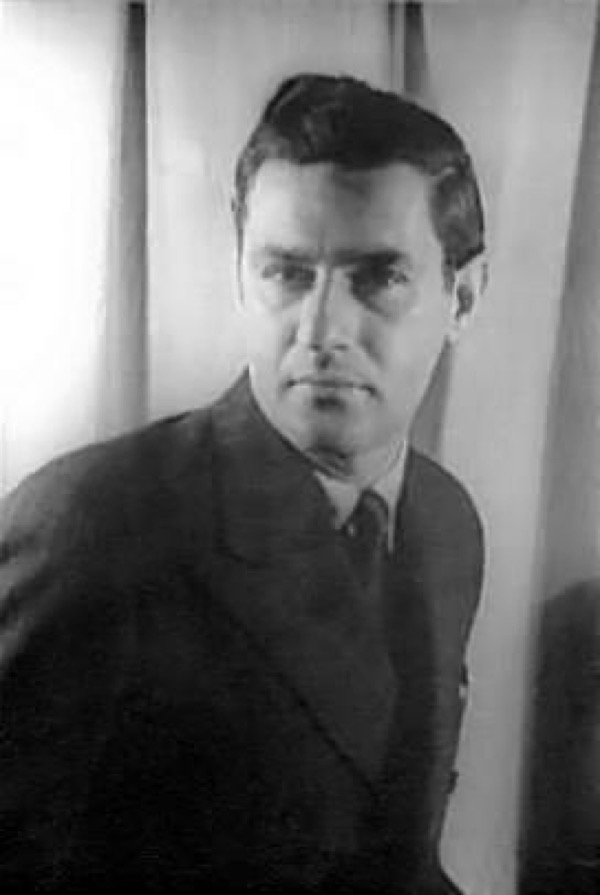
Gian Carlo Menotti
Gian Carlo Menotti and Gregor Piatigorsky were teaching at the Curtis Institute in Philadelphia, and they often crossed paths in the common room or on the main stairway. As Menotti explains in the liner notes, Piatigorsky frequently asked him to write a cello piece.
Menotti writes, “I never took the invitation seriously, treating it more as the sort of polite, friendly greeting that interpreters think befit composers. ‘One day soon, I promise,’ was my equally polite, non-committal answer.”
Piatigorsky insisted and wanted a cello concerto with a huge orchestra and as loud a sound as possible. “I can always be heard and no orchestration can cover the sound of my cello,” insisted Piatigorsky.
As the weeks went by, Piatigorsky changed his mind and commissioned a “lovely chamber music piece. What about two cellos and piano?” And thus the Suite for Two Cellos and Piano was born, first performed in 1973 by Piatigorsky and Leslie Parnas on the cellos, with Charles Wadsworth at the piano.
Gregor Piatigorsky: Syrinx (Denis Brott, cello)
A Personal Tribute to Debussy
According to Denis Brott, Piatigorsky was a man with “impeccable taste, replete with an eye for quality and a disregard for vogue. He loved and acquired Impressionist art before it became fashionable.” In fact, Piatigorsky owned paintings by Degas, Soutine, and others.
Piatigorsky championed the music of Debussy, and performed his Cello Sonata countless times around the world. As a tribute to Debussy, Piatigorsky composed one of his most personal lyrical miniatures. The title “Syrinx” is taken from Debussy’s famous solo flute composition, but Piatigorsky’s piece is not an arrangement.
It comes from a tradition of short and atmospheric pieces based on the Greek myth of the nymph Syrinx, who transforms into a reed to escape the pursuit of the god Pan. Piatigorsky’s Syrinx unfolds as a single flowing melody over a warm, tonal harmony. With the cellist singing an intimate monologue, it recalls the tradition of salon pieces that Piatigorsky loved to perform.
Grant Beglarian: Of Fables, Foibles and Fancies (Denis Brott, cello; Tony Randall, narrator)
Humour and Storytelling
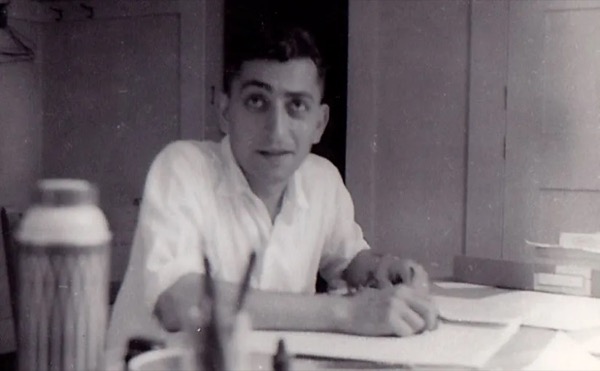
Grant Beglarian
Remembering Piatigorsky also contains a composition by Grant Beglarian (1927-2002), written specifically for Denis Brott. Beglarian was born in Georgia to Armenian parents, grew up in Iran, and eventually settled in the United States.
His Of Fables, Foibles and Fancies appears on the album because it embodies the humour, imagination, and narrative flair Brott associated with his late teacher. The work is unusual because it is written for cello and spoken narration, with each movement telling a short humorous or moral tale.
“The Tree” is inspired by a BBC news report about villagers of the Solomon Islands who believe they can kill trees by screaming at them. “The Waitress” is based on a reflection by Harry Golden, who humorously tells us that compared to celestial complexities, humanity’s domestic digestive concerns are delightfully trivial.
“Poisonous Root” relates an African folk tale from Tanganyika, in which a wife’s attempt to poison her rival backfires when her rival gains great strength and energy. “The Tower” is a Persian folktale with a comic ending, as it suggests that a tower is simply an upside-down well.
Piatigorsky was famous for his storytelling and his love of entertaining audiences. His autobiography Cellist is full of delightful anecdotes, and Beglarian’s work captures that artistic temperament as the cello becomes a second storyteller.
Joseph Haydn: Divertimento (arr. Piatigorsky) (Denis Brott, cello; Samuel Sanders, piano)
Musical Rediscovery
In the tradition of David Popper and Emanuel Feuermann, Gregor Piatigorsky sought to expand the cello repertoire by adapting music for the instrument. He transcribed works by Bach, Schubert, and Rachmaninoff as a natural extension of performance.
Among his best-known transcriptions is the Divertimento by Joseph Haydn. Haydn entered into the services of the Esterházy family in 1761, and the Prince was an avid baryton enthusiast. A bowed string instrument of the viol family, it featured six or seven strings arranged over a fretted fingerboard, plus a lower set of wire strings that vibrate sympathetically.
Over the years, Haydn wrote hundreds of compositions for the baryton literally, but that instrument has long since been forgotten. Much of this wonderful music, showcasing Haydn’s genius, remained silent until Piatigorsky brought the Divertimento back to life. His transcription brings us back to the charm and elegance of the 18th century.
A Legacy Beyond Performance
Gregor Piatigorsky
We all remember Gregor Piatigorsky as a legendary virtuoso and charismatic performer. However, he was also a gifted composer, imaginative arranger, and musical humanist who embraced everything from Haydn to Debussy.
Denis Brott’s affectionate tribute reminds us that Piatigorsky’s greatest legacy lies not only in the celebrated recordings he left behind. His legacy lives in the music he wrote and championed, and in the generations of musicians and composers he inspired.
For more of the best in classical music, sign up for our E-Newsletter
Gregor Piatigorsky: Promenade (Denis Brott, cello; Samuel Sanders, piano)