When we’re usually presented with a Fado concert in a classical setting, it’s often an imitation of a café setting: singer at the centre and players gathered ‘round. A guitarist with a high-sounding Portuguese guitar, other guitarists, a bit of bass, perhaps some percussion, perhaps some atmospheric lighting place us in a café.
When Fado is reclaimed by the classical performers, however, they have a different goal.
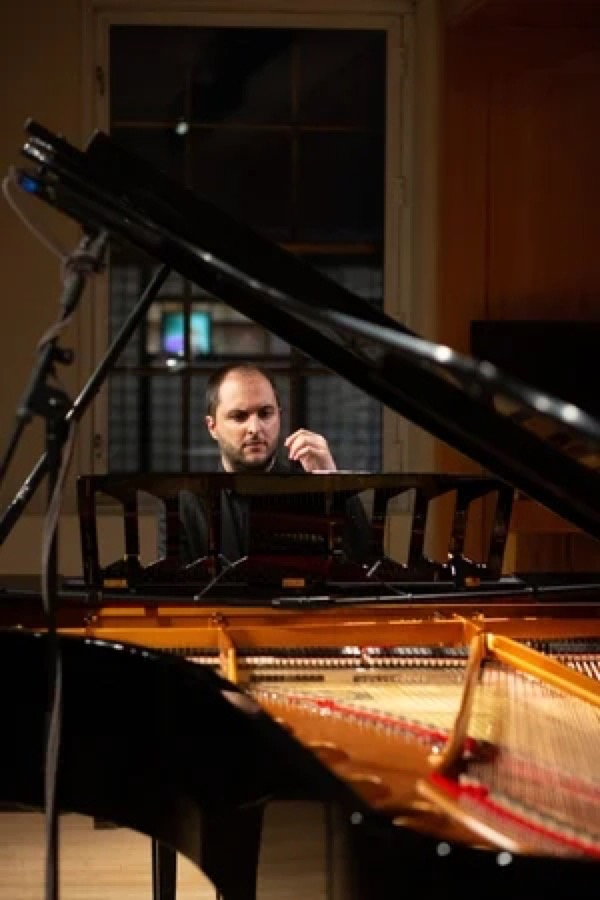
Nuno Marques, 2022
In his new recording, Pennas d’Amor, Portuguese pianist Nuno Marques talks about Fado and the family. The 20th-century political history of Fado made it an element of pro-national propaganda, and it’s only in recent years that Fado has been able to extricate itself from those sticky entanglements and regain its former position. Marques describes Fado as something familiar from home and school. The poetry was something that everyone knew. He spoke of listening to his grandfather simply singing Fado poetry to himself.
Combining all of this memory into an album would be a difficult task, except that Marques brings us into the family circle. He plays Alexandre Rey Colaço’s Nine Fados for Piano, interspersed with readings of Fado poetry.
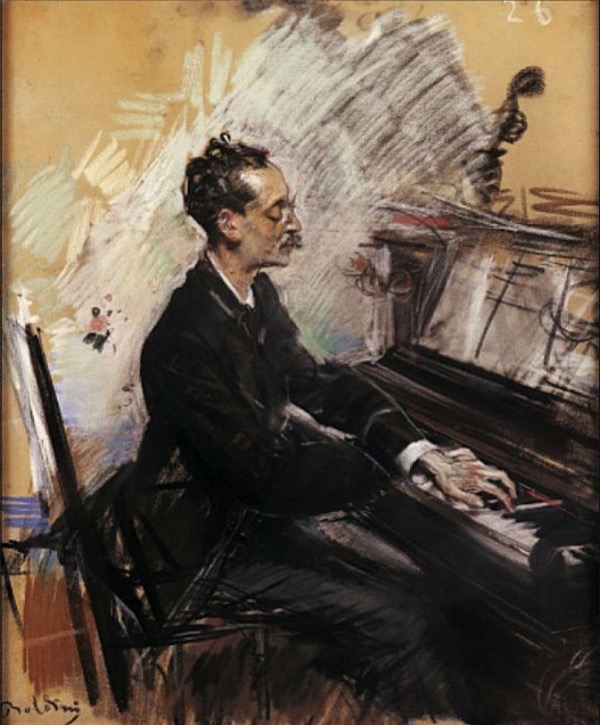
Giovanni Boldini: The Pianist A. Rey Colaço, 1883 (private collection)
Alexandre Rey Colaço (1854–1928) was an influential part of the musical life of Portugal. He was born in Morocco to a Spanish–Portuguese mother and a French father, and then went to Madrid in his youth. He studied at the Madrid Royal Conservatory and gave his first performances in Lisbon in 1881. The Count of Daupias attended his debut and sponsored Colaço for a trip to Paris, where he studied with Chopin’s last student, Georges Mathias. Continuing on to Berlin, he studied at the Royal Academy of Arts and was later invited to teach there. In 1887, he returned to Lisbon, became a citizen, and served as piano teacher to Portuguese Prince Manuel of Saxe-Coburg and Gotha Braganza, who was to become King Manuel II of Portugal, the last king of Portugal. Colaço was appointed professor at the National Music Conservatory in 1897.
Colaço published his Fados para piano (Fados for Piano) in January 1912 and, ahead of each piece, added some Fado poetry. Some of it was love poetry (‘O pobre pede a riqueza’ / The poor man prays for riches) or ‘Lograssem águas passadas’ / If only waters passed’ by Manoel da Silva Gayo (known as Mondego), poetry on his beloved’s beauty (‘Sobrancelhas como as tuas’ / Eyebrows such as yours), and other poems of love and longing. In this recording, Marques captures this link between music and poetry by having the poems recited. Most are recited by Marques’ 93-year-old grandfather, Libório Silva and one by his 6-year-old nephew Tiago Rodrigues. These ground the music in a familiar reality for the performer. As he says, ‘This is how Fado was heard in my household, and how those words linger in my mind as I perform these Fados for piano. In this unusual separation — where music and text coexist but do not overlap — we find new phrasing, new space for silence, and new emotion within the genre’.
Each of the works has a different flavour: one Fado is a fast corrido and is based on a well-known Fado in Lisbon, another is labelled ‘Hylario’ and is based on the style of Fado from Coimbra, best-known through the works of Augusto Hilário (1864–1896), a legendary Fado singer and guitarist. Another, Fado No. 7, is a dialogue between a legato voice and a staccato second voice.
Alexandre Rey Colaço: Fado No. 3 (Hylario)
Fado No. 3 (Hylario) is dedicated to ‘Ao seu discipulo, Eduard Burnay’ and it is Burnay’s Fado (aka Fado Burnay) that concludes the album. Eduardo Burnay (1877–1924) was the most important of Colaço’s students and had an important place in the musical life of early 20th-century Lisbon, both as a performer and as a patron (he was the son of the Count of Burnay). His Fado Burnay was later arranged for 2 pianos and is most often heard in its orchestral arrangement, being one of the most popular of the concert Fados.
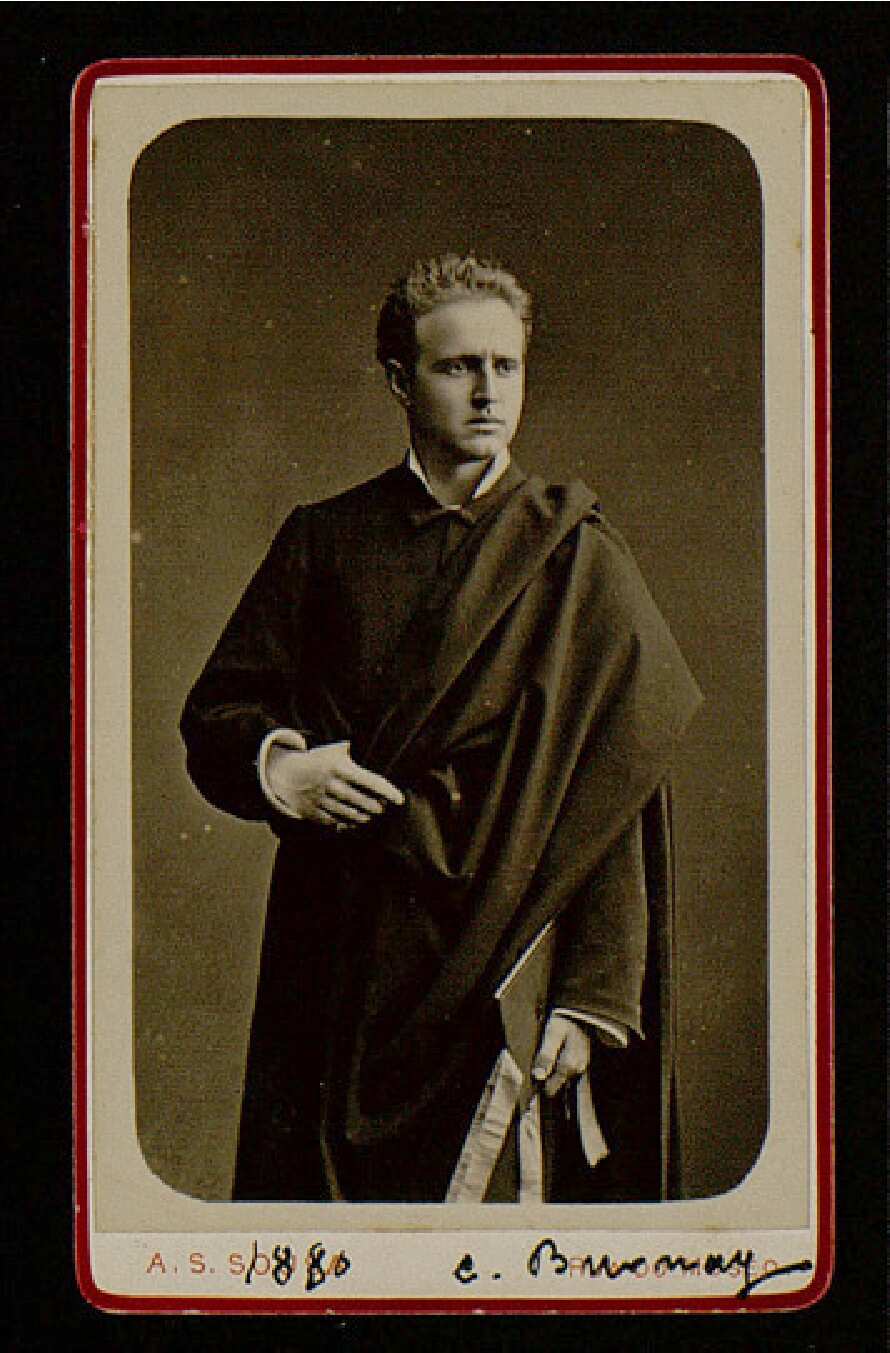
Eduardo Burnay in 1880 at graduation from the University of Coimbra
Eduardo Burnay: Fado Burnay
Between the poetry and Colaço’s music, Fado as you think you know it becomes something quite different. There are few recordings of Colaço’s Fado cycle, and this is a welcome addition to the Fado world. By making the poetry and the music live together, the genre takes on a new life. Instead of being a passive observer of a staged café show, you can read and understand the meaning(s) in the poetry and hear that in the music. A long-awaited performance of both words and music.
Nuno Marques is also the founder of the Porto Pianofest, held in Porto, Portugal, from August 1-11, 2026. The album will receive its launch on 4 August at the festival.
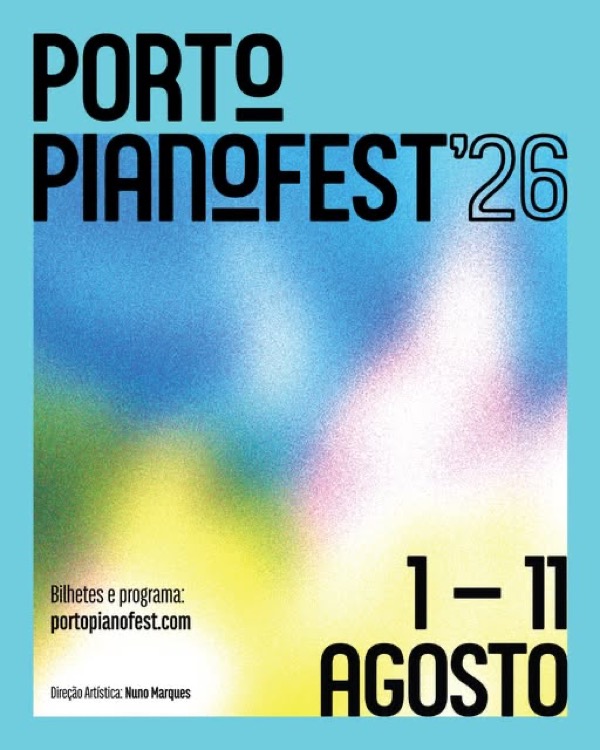
Porto Pianofest
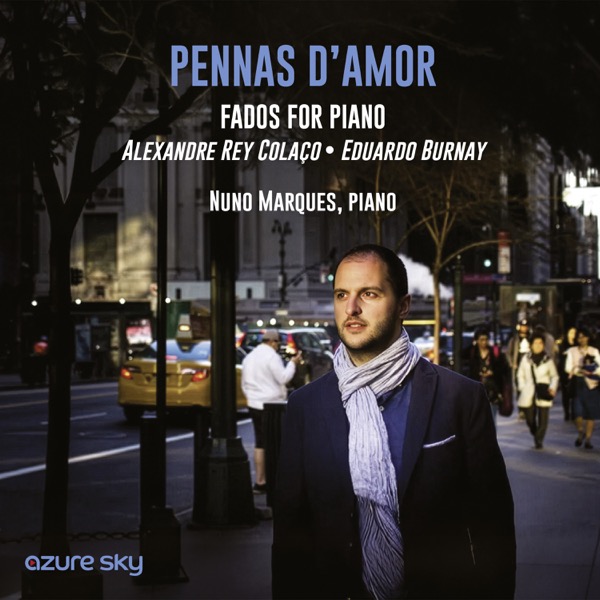
Pennas d’Amor: Fados for Piano by Alexandre Rey Colaço and Eduardo Burnay
Nuno Marques, piano
Azure Sky Recordings AZ1029
Release date: 4 August 2026
For more of the best in classical music, sign up for our E-Newsletter